
Zankou is a DoT-focused S-Class Incantation main DPS whose first-look kit revolves around swapping between Reality and Illusion, stacking Heartwrench, then cashing out with Bloodfeast Reverie into a free enhanced Inferno Flamenco.
Zankou looks built for players who like a busy main DPS loop rather than a simple on-field combo string. Her kit mixes Incantation damage, follow-up attack tagging, DoT spreading, form management, and a two-part Ultimate window that punishes sloppy timing.
This is a first-look skills breakdown, not a final pull verdict. Exact final tuning can still shift, and one early description conflicts with the stronger Incantation Esper kit by calling her ice-focused and burst-oriented, so the useful read right now is how her mechanics fit together.
- Zankou’s combat role and first-look context
- Zankou kit summary
- Reality and Illusion form mechanics
- Bloodfeast Reverie and Inferno Flamenco
- Zankou’s open-world and city skills
- Awakenings and Ravenous Blade
- Early build and team direction
- Zankou first impressions and common mistakes
- Frequently Asked Questions
Zankou’s combat role and first-look context
Zankou is positioned as a Main DPS, DoT, Follow-up Attack character in Neverness to Everness. Her strongest identity is not just hitting with a big sword; it is building pressure through Heartwrench, spreading DoTs in Illusion, and lining those effects up with her Ultimate chain.
Her typing is Incantation, and the first-look kit presents her as an S-Class damage dealer who wants meaningful field time. She can support a DoT shell through teamwide DoT Crit DMG effects, but her own kit clearly asks the player to drive the rotation, swap forms, and finish the window correctly.
Zankou kit summary
| Part | What it does |
|---|---|
| Role | S-Class Incantation main DPS focused on DoT and follow-up attacks. |
| Forms | Sanguine Dash enters Illusion; Soulcross returns to Reality. |
| Main buffs | Hunt boosts Zankou’s own damage; Delusion boosts team DoT Crit DMG. |
| Main DPS | Heartwrench deals Incantation damage over time and can stack. |
| Damage window | Bloodfeast Reverie enables a free enhanced Inferno Flamenco. |
| Utility | Formless and Shadowless gives stealth and faster movement for infiltration. |
| Signature Arc | Ravenous Blade gives Crit Rate and stacking Crit DMG from Incantation damage. |
At a glance, Zankou’s kit is a loop between a personal-damage form and a DoT-spreading form. Reality gives her Hunt and standard Incantation pressure, while Illusion turns her attacks into follow-up damage and leans harder into Heartwrench.
Reality and Illusion form mechanics
Reality is Zankou’s Hunt side. In this form, Wildfire is her five-hit basic attack chain, dealing Incantation damage and pulling enemies on the final hit. Holding the basic attack during the early Wildfire hits triggers Flickering Shadow, giving her another way to pressure enemies before shifting forms.
Illusion is the Delusion side, and it is where her DoT kit starts to open up. Her basic attack becomes Nightmare Waltz, a four-hit sequence that applies Heartwrench, pulls enemies earlier in the chain, and spreads up to four DoT effects from a target to nearby enemies. Attacks in Illusion are treated as follow-up damage, which makes this form important for both damage tags and team synergy.
Heartwrench is the center of the kit: it deals Incantation Esper once per second for 30 seconds and stacks up to 10. That means Zankou is not simply swapping forms for animation variety; she wants to apply, spread, and preserve DoT pressure before spending her major window.
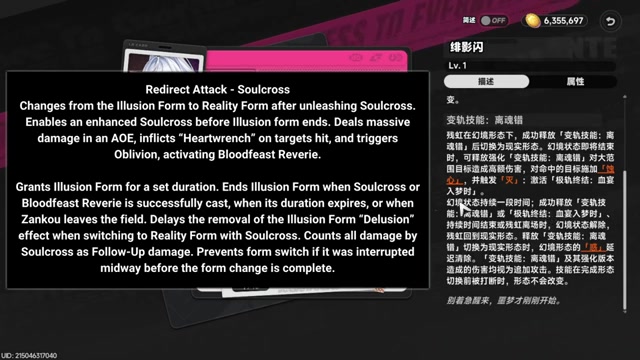
The form-switch timing matters because Sanguine Dash moves Reality into Illusion, while Soulcross moves Illusion back into Reality and can trigger Oblivion when used at the right moment. If Zankou gets interrupted during the swap, the setup can fall apart, so the kit rewards players who watch the Illusion timer instead of mashing through the sequence.
Bloodfeast Reverie and Inferno Flamenco
Zankou’s Ultimate system has two paths. If Bloodfeast Reverie is inactive, casting the Ultimate uses the regular Inferno Flamenco route. That still gives her a major Incantation damage moment, but it is not the full payoff loop her kit is pushing toward.
When Zankou sets up Bloodfeast Reverie through her Illusion-side flow, the first Ultimate cast triggers Bloodfeast Reverie instead. That hit is treated as follow-up damage, applies another Incantation Esper effect, and opens a short window for a second Ultimate cast that costs no Ultimate energy.
Key That second cast is the prize: a free enhanced Inferno Flamenco. The early rotation direction is simple to understand but easy to drop in practice: enter Illusion, build DoT pressure, trigger Bloodfeast Reverie, then spend the free enhanced Ultimate before the window disappears.
Zankou’s open-world and city skills
| Skill | Use |
|---|---|
| Formless and Shadowless | Enters stealth for 20 seconds, prevents enemy discovery, and increases movement speed by 50%. |
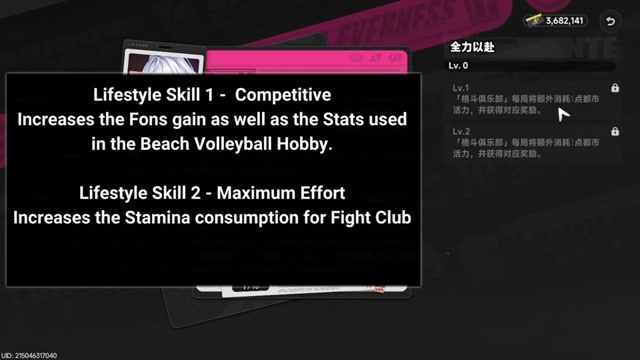
| Competitive | Improves character attributes for serving and ball-hitting activities, while increasing funds gained from those matches. |
| Maximum Effort | Increases city stamina consumption in Fight Club, letting Zankou burn city stamina faster. |
Zankou’s non-combat tools are useful, but they are secondary to the combat kit. Formless and Shadowless is the standout because it gives her a stealth state for infiltration-style moments where being detected matters.
The stealth tool is most relevant for detection-heavy routes and previewed infiltration scenarios. Specific mission use can vary by regional coverage, so treat the combat loop as the main reason to evaluate Zankou.
Awakenings and Ravenous Blade
| Upgrade | Main effect |
|---|---|
| A1 | Keeps Hunt and Delusion active, raising Zankou’s self damage and team DoT Crit DMG. |
| A2 | Lets Zankou build Kindling through the Scorch or Hex cycle for stronger Ultimate damage. |
| A3 | Adds skill levels and an Ultimate damage increase. |
| A4 | Extends the Ultimate package by tying Kindling value into Bloodfeast Reverie and Inferno Flamenco. |
| A5 | Adds break support through enhanced Sanguine Dash, with boss value centered more on break damage than the guaranteed break clause. |
| A6 | Improves DoT-scaling damage, including extra value based on DoT stacks on affected targets. |
| Ravenous Blade | Grants Crit Rate and stacking Crit DMG when the equipped unit deals Incantation damage. |
Zankou’s awakenings lean into keeping her form buffs active, improving her Ultimate payoff, and scaling her DoT-heavy finishers. From the first look, A1 stands out the most because it keeps Hunt and Delusion active even through form changes or leaving the field, only dropping if she dies.
Ravenous Blade fits Zankou cleanly because her kit repeatedly deals Incantation damage. Its passive can stack Crit DMG up to seven times, refreshing as Incantation hits continue, so it lines up with her multi-hit, DoT-forward combat style.
Early build and team direction
Zankou’s first-look build direction points toward DoT damage, Incantation damage, Crit, and anything that rewards follow-up attack behavior. Her Delusion buff also makes DoT teammates more interesting because it increases the Crit DMG of DoT effects across the team.
The Scorch and Hex cycle appears relevant because of Kindling and Silent Sunset. Zankou also has support-side value that interacts with Scorch and cycle value, which is why Cycle Intensity may become part of serious testing once final builds settle.
Avoid locking her into one fixed gear list or one strict team this early. The kit clearly wants DoT uptime, form swaps, and a clean Ultimate window, but final stat priorities depend on live tuning and how her best teammates shake out.
Use Illusion to stack and spread Heartwrench before spending the Ultimate; Zankou loses a lot of her kit’s point if you sit in Reality and fire Inferno Flamenco without Bloodfeast Reverie active.
Zankou first impressions and common mistakes
| Mistake | Fix |
|---|---|
| Staying in Reality too long | Use Sanguine Dash to enter Illusion and access Nightmare Waltz, Delusion, and follow-up damage. |
| Treating Heartwrench as minor | Keep applying and spreading Heartwrench before the Ultimate window. |
| Mistiming Soulcross | Watch for the Illusion timing cue and use Soulcross before the form expires. |
| Casting Ultimate without setup | Activate Bloodfeast Reverie first when going for the main burst window. |
| Missing the free follow-up | Cast the enhanced Inferno Flamenco within the limited window after Bloodfeast Reverie. |
Zankou looks mechanically dense in a good way. Her damage is not just “press Ultimate when ready”; it comes from setting up Heartwrench, using Illusion for follow-up-tagged DoT pressure, then cashing out through Bloodfeast Reverie and the free enhanced Inferno Flamenco.
That also means she will feel worse in the hands of players who ignore the form system. The likely gap between average and optimized Zankou play will come from Soulcross timing, DoT awareness, and remembering that the second Ultimate cast is part of the damage window, not an optional flourish.
Related Neverness to Everness guides
Frequently Asked Questions
Is Zankou a main DPS or sub-DPS?
Zankou is a main DPS first. Her DoT Crit DMG support and follow-up tagging can help a DoT team, but her own form-switching, Heartwrench stacking, and Ultimate chain all ask her to be actively driven on field.
Does Zankou need Ravenous Blade to work?
No. Ravenous Blade strengthens the exact things Zankou wants, especially Crit Rate and stacking Crit DMG from Incantation damage, but her core loop comes from her base skills: Reality, Illusion, Heartwrench, Soulcross, Bloodfeast Reverie, and Inferno Flamenco.
Is Zankou useful outside combat?
Yes. Her Formless and Shadowless open-world ability gives stealth, enemy avoidance, and faster movement for a short duration, while Competitive and Maximum Effort support city activities rather than direct combat damage.
Video help



Leave a Reply