
- The short version
- Design, finishes, and display differences
- A20 Pro performance and vapor chamber cooling
- How the Main camera’s variable aperture works
- Camera reach, photo controls, and Apple Reference Image
- Video modes and recording requirements
- Battery life and fast charging
- Wireless connections, USB-C, SIMs, and satellite access
- iOS 27, Siri AI, and Apple Intelligence availability
- Storage, starting prices, and launch dates
- FAQs
The short version
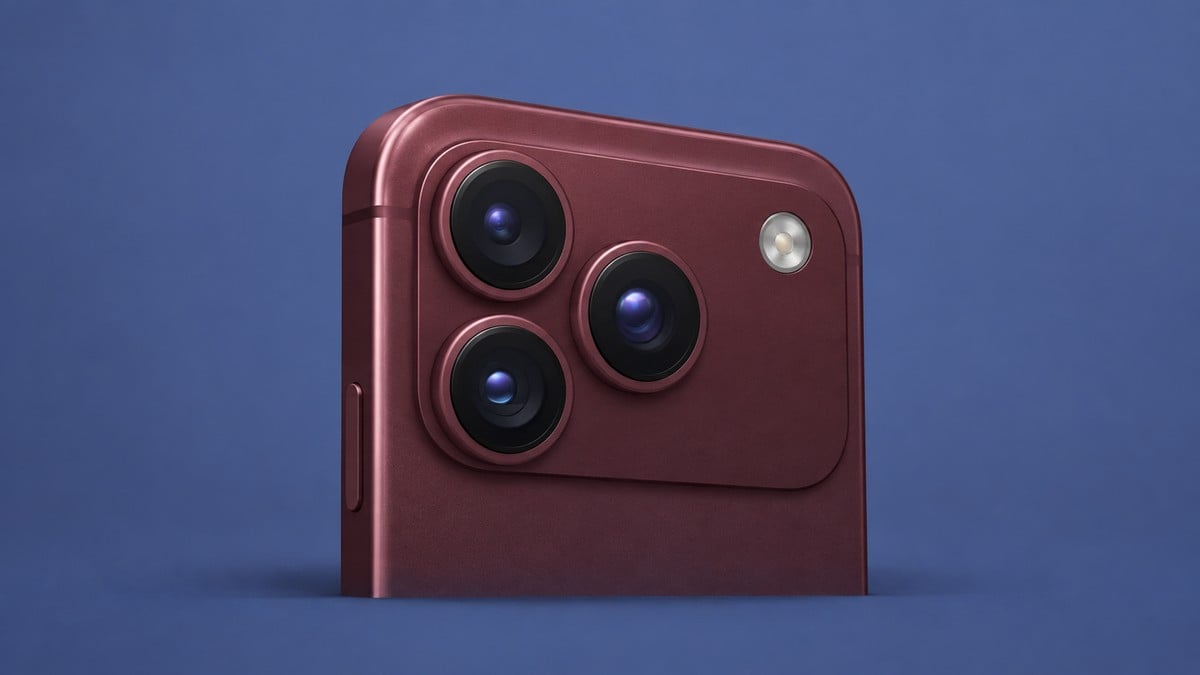
- iPhone 18 Pro and iPhone 18 Pro Max share A20 Pro and a 48MP Fusion Main camera with variable aperture.
- U.S. starting prices are $1,199 for iPhone 18 Pro and $1,299 for iPhone 18 Pro Max.
- Pre-orders begin September 12, 2026, with availability starting September 18.
iPhone 18 Pro and iPhone 18 Pro Max combine A20 Pro, an upgraded camera system, a redesigned Dynamic Island, and Siri AI in two display sizes.
Design, finishes, and display differences
Both phones have a smaller, redesigned Dynamic Island that displays up to three Live Activities simultaneously, including sports scores, navigation, and music. Face ID remains available for unlocking your phone, authenticating purchases, and signing in to apps.
Display and body specifications compared
| Specification | iPhone 18 Pro | iPhone 18 Pro Max |
|---|---|---|
| Display size and type | 6.3-inch Super Retina XDR OLED | 6.9-inch Super Retina XDR OLED |
| Resolution | 2622-by-1206 pixels at 460 ppi | 2868-by-1320 pixels at 460 ppi |
| Width | 71.9 mm | 78.0 mm |
| Height | 150.0 mm | 163.4 mm |
| Depth | 8.75 mm | 8.75 mm |
| Weight | 211 grams | 249 grams |
| Finishes | Black, Silver, Glacier, Burgundy | Black, Silver, Glacier, Burgundy |
| Construction | Aluminum unibody design | Aluminum unibody design |
| Front protection | Ceramic Shield 2 | Ceramic Shield 2 |
| Back protection | Ceramic Shield | Ceramic Shield |
| Always-On display | Yes | Yes |
| ProMotion | Adaptive refresh rates up to 120Hz | Adaptive refresh rates up to 120Hz |
| Maximum brightness, typical | 1000 nits | 1000 nits |
| Peak brightness, HDR | 1600 nits | 1600 nits |
| Peak brightness, outdoor | 3000 nits | 3000 nits |
| Minimum brightness | 1 nit | 1 nit |
Measured as standard rectangles, the diagonals are 6.27 inches for iPhone 18 Pro and 6.86 inches for iPhone 18 Pro Max; the rounded corners reduce the actual viewable area.
Compare size, battery, weight, and price
Model picker: choose iPhone 18 Pro or iPhone 18 Pro Max to compare display size, battery ratings, weight and US starting price.
Camera Control provides access to taking photos, recording video, and adjusting camera settings. The customizable Action button launches your chosen feature when pressed and held, including Silent Mode, Translate, or a Shortcut. A new Wrist Strap offers a hands-free way to carry iPhone.
A20 Pro performance and vapor chamber cooling
A20 Pro uses a 2-nanometer process. Its 6-core CPU contains 2 super cores and 4 efficiency cores, the 7-core GPU includes Neural Accelerators, and the chip supports hardware-accelerated ray tracing. A Dual 16-core Neural Engine provides 32 cores for on-device AI and computational photography.
Apple says A20 Pro delivers 50% more memory bandwidth than A19 Pro. It separately claims up to 40% faster GPU performance and double the AI processing power compared with A19 Pro.
The chip packaging places the silicon die and memory side by side. This removes memory from the chip’s thermal path and lets A20 Pro connect directly to the next-generation vapor chamber. The chamber uses new materials and has three times the surface area of the previous generation.
Apple attributes up to 40% better sustained performance than iPhone 17 Pro to the redesigned cooling system working with A20 Pro. That covers extended workloads such as demanding games and larger on-device AI models.
How the Main camera’s variable aperture works
The 48MP Fusion Main camera uses six laser-cut blades to adjust its aperture automatically for lighting and depth of field. Its four settings are ƒ/1.48, ƒ/1.8, ƒ/2.8, and ƒ/4.0. The widest setting gathers the most light, while the default ƒ/1.8 balances light gathering and depth of field. The narrower settings keep detail in focus farther back in the scene.
You can also select an aperture manually through Pro controls in the Camera app.
Camera reach, photo controls, and Apple Reference Image
The 48MP Fusion Ultra Wide has a 13 mm focal length, ƒ/2.2 aperture, and support for 48MP macro photography. The 48MP Fusion Telephoto provides 4x at 100 mm, plus a 12MP optical-quality 8x option at 200 mm. Apple lists a 16x optical-quality zoom range across the system, spanning the 0.5x Ultra Wide view through 8x.

Compare camera specifications and uses
Camera explorer: tap each rear or front camera to see its specs and what Apple built it for.
The 18MP Center Stage front camera supports autofocus and tap to zoom and rotate, including switching between portrait and landscape framing without rotating the phone. It automatically fits more people into group photos and supports Center Stage for video calls. Smart focus tracking maintains focus on a moving subject in photos and video, including when the subject leaves and reenters the frame.
Pro controls lets you customize quick access to shutter speed, white balance, and a histogram for checking exposure across the scene. Photographic Styles 3 adds adjustable texture and grain alongside tone and color controls. You can soften skin detail or apply a film-like appearance, then change or reverse those effects later.
Apple Reference Image is an opt-in capture feature that signs data from the Main camera sensor. Private Cloud Compute develops that data into an unalterable reference image, which you can compare with the main image in Photos to see edits. At launch, the feature is unavailable in China; capture is unavailable in the EU, where developing and viewing reference images remain supported. Separate support for SynthID, intended to help identify AI-generated or AI-edited images, arrives in a software update later this year.
Video modes and recording requirements
You can add Cinematic mode effects after recording, while Audio Mix separates music and voices from unwanted background noise. Rear-camera Cinematic mode supports up to 4K Dolby Vision at 60 fps. The front camera’s Cinematic mode reaches 4K Dolby Vision at 30 fps.
The Fusion Main records 4K Dolby Vision at up to 120 fps. Stabilized time-lapse supports up to 4K Dolby Vision, and Dual Capture records the front and rear cameras simultaneously at up to 4K Dolby Vision at 30 fps.
ProRes RAW supports RAW video workflows through compatible apps. Apple Log 2 supports color grading, while genlock synchronizes multicamera recording and requires compatible third-party hardware and software. ProRes video recording reaches up to 4K at 120 fps with external recording.
Apple also lists improved low-light video at 1080p, with automatic adjustments to aperture and frame rate for dark scenes. The phones have four studio-quality mics and support Spatial Audio and stereo recording.
Battery life and fast charging
Apple measures typical use with a profile combining active and passive use across messaging, photos, music, streaming, games, browsing, and navigation.
U.S. model battery life ratings
| Battery measure | iPhone 18 Pro | iPhone 18 Pro Max |
|---|---|---|
| Typical use | Up to 24 hours | Up to 30 hours |
| Video playback | Up to 36 hours | Up to 45 hours |
| Video playback, streamed | Up to 33 hours | Up to 40 hours |
The local video playback ratings for the U.S. models apply to eSIM-only hardware, which uses the space formerly occupied by the physical SIM for a larger battery. In India, Apple lists up to 43 hours of video playback for iPhone 18 Pro Max.
Both models support up to 50% wired charging in around 15 minutes with a 60W-capable adapter or higher with Adjustable Voltage Supply and a USB-C charging cable. Wired fast charge is supported with a 60W-capable USB-C cable and a USB PD 3.1 (or better) power adapter with AVS. Apple also says iPhone 18 Pro Max can gain around seven hours of video playback from five minutes of wired charging.
Wireless charging reaches up to 50% in 30 minutes with a 35W adapter or higher paired with a MagSafe Charger. Both MagSafe and Qi2 support wireless charging at up to 25W. Battery and charging figures come from Apple’s testing of preproduction units; results vary with use, configuration, cellular network, signal strength, adapter, settings, and environmental factors.
Wireless connections, USB-C, SIMs, and satellite access
Both models include the Apple N1 wireless networking chip, Wi-Fi 7, Bluetooth 6, Thread, the second-generation Ultra Wideband chip, and NFC. They support 5G, including mmWave on U.S. models. The iPhone 18 Pro includes Apple’s C2 cellular modem; Apple says it offers faster uploads and consumes 15% less energy than C1X.
The USB-C connector supports charging, DisplayPort output, and USB 3 transfers up to 10Gb/s with a compatible 10Gb/s USB 3 cable. U.S. models support Dual eSIM, with two active eSIMs and storage for eight or more. They have no physical SIM compatibility and require an eSIM-supporting carrier and service plan.
Messages, Emergency SOS, Roadside Assistance, and Find My work via satellite outside cellular and Wi-Fi coverage, and are included free for two years with activation. Some need a carrier plan, and SMS rates or roadside provider fees may apply.
iPhone Handoff lets you switch the same phone number back and forth between two iPhone models. It launches with T-Mobile in the U.S. and Telekom Germany in Germany.
iOS 27, Siri AI, and Apple Intelligence availability
Siri AI is an entirely new version of Siri, powered by Apple Intelligence, that is more personal, capable, and conversational. It uses personal context to find what you need across messages, emails, and photos, acts on what is on your screen, and answers questions about virtually any topic. iOS 27 arrives as a free update on Monday, September 14, and Siri AI rolls out with it in beta in English, with French, Japanese, Korean, Portuguese, and Spanish following in October. Siri AI is not initially available in the EU and is not available to users under 13. Some features that rely on server-side models, including Siri AI and the intelligent photo editing tools, have daily usage limits.
With Apple Intelligence, Spatial Reframing reframes a photo after it is taken, Extend expands the shot, and the enhanced Clean Up removes even larger objects with higher-quality infill. Call Context surfaces relevant information from across your apps when you call a business, like a confirmation code from Mail when you call an airline.
Storage, starting prices, and launch dates
iPhone 18 Pro and iPhone 18 Pro Max each come in 256GB, 512GB, 1TB, and 2TB storage capacities.
Starting purchase prices by market
| Market | Model | Starting price |
|---|---|---|
| U.S. | iPhone 18 Pro | $1,199 |
| U.S. | iPhone 18 Pro Max | $1,299 |
| India | iPhone 18 Pro | ₹1,64,900 |
| India | iPhone 18 Pro Max | ₹1,79,900 |
India’s listed pricing is the Maximum Retail Price, inclusive of all taxes. Apple announced the phones on September 9, 2026. Pre-orders open Saturday, September 12 at 5:00 a.m. PT in the U.S. and 5:30 PM IST in India. Availability begins Friday, September 18, followed by 20 other countries and regions on Friday, September 25.
FAQs
What comes in the box?
You get the iPhone with iOS 27 and a USB-C Charge Cable, 1 m. The power adapter is sold separately.
What does the IP68 rating cover?
Both phones have an IP68 rating under IEC standard 60529, tested in controlled laboratory conditions at a maximum depth of 6 meters for up to 30 minutes. Splash, water, and dust resistance can decrease with normal wear. Liquid damage is excluded from the warranty, and a wet iPhone should not be charged.
How much advertised storage is available to use?
Usable storage is lower than the advertised capacity. A standard configuration uses approximately 12GB to 24GB for iOS 27 and included apps. Apple Intelligence on-device models use approximately 7GB and can be deleted if Apple Intelligence is turned off; turning it back on downloads them again. The amount of available space varies with software version, settings, and model.
Related guides



Leave a Reply