

Where Winds Meet Version 2.0’s Hidden Mountain update overhauls the visuals with a new realistic lighting system, higher-detail environmental textures, ray-traced lighting reported in previews, and fully revamped wind field effects for foliage, mist, terrain, and machinery.
The Hidden Mountain expansion lands on July 23, 2026 and pushes Where Winds Meet into its 2.0 era. This isn’t a standalone graphics patch — the visual work sits inside a much larger update that reworks world scale, exploration, combat, and storytelling. But the rendering side is a genuine leap on its own, built to sell the fusion of natural mountain scenery and a sprawling clockwork civilization, and it’s the part that changes how the game looks and feels the moment you load in.
- What Version 2.0 changes about the way Hidden Mountain looks
- The new realistic lighting system
- Ray tracing: what’s confirmed and what isn’t
- Rebuilt textures and environmental surfaces
- Revamped wind field effects
- How the visuals map onto Hidden Mountain’s terrain
- Performance and graphics settings expectations
- Frequently Asked Questions
| Feature | What changes |
|---|---|
| Lighting | New realistic system with smoother time-of-day and environment transitions |
| Ray tracing | Previews describe ray-traced lighting for shadows and reflections; platform and settings details not given |
| Textures | Higher-detail rocks, water erosion, clockwork architecture, and dynamic flora |
| Wind fields | Rebuilt simulation driving foliage, mist, and mechanism interaction |
| Mist | Dynamically reacts to terrain, fading peaks and the mechanical city in and out of view |
| Mechanical detail | Gears, lamps, and contraptions woven into the lit, living environment |
The overhaul touches almost every layer of the picture at once: how light moves through the world, how surfaces are detailed, how wind pushes on everything around you, and how the mechanical city reads at night. Everstone Studio built it specifically to support a region this vertical and this dense, so the tech and the terrain are meant to be experienced together. Here’s the fast scan before we go through each piece.
The new realistic lighting system
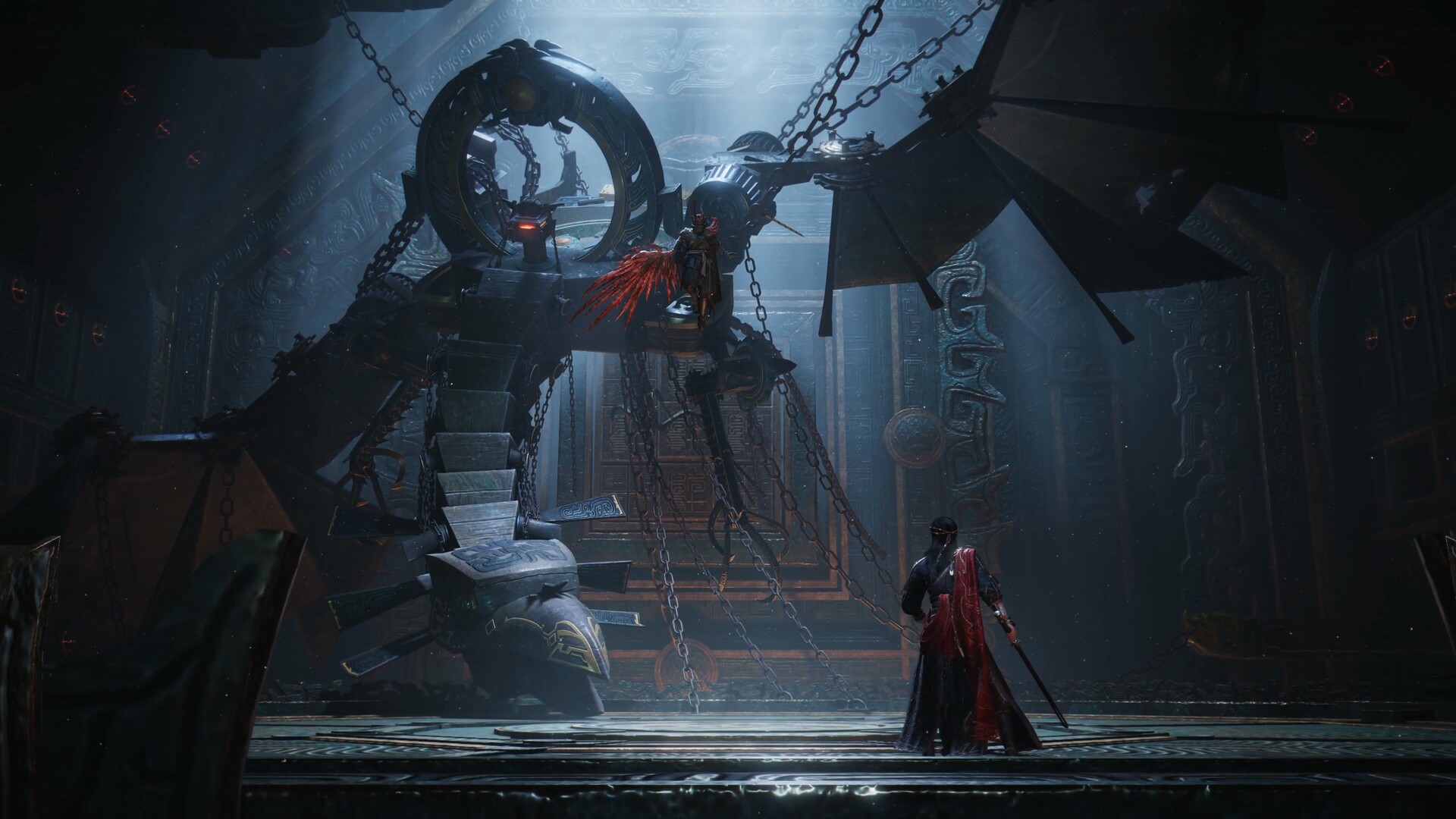
The centerpiece is a brand-new realistic lighting system that smooths light and shadow transitions across different times of day and different environments. In the morning, sunlight filters through the forest and throws rich, layered shadows across cliffs, trees, and buildings — the kind of soft, directional light that makes a slope feel like it has real depth rather than a flat texture.
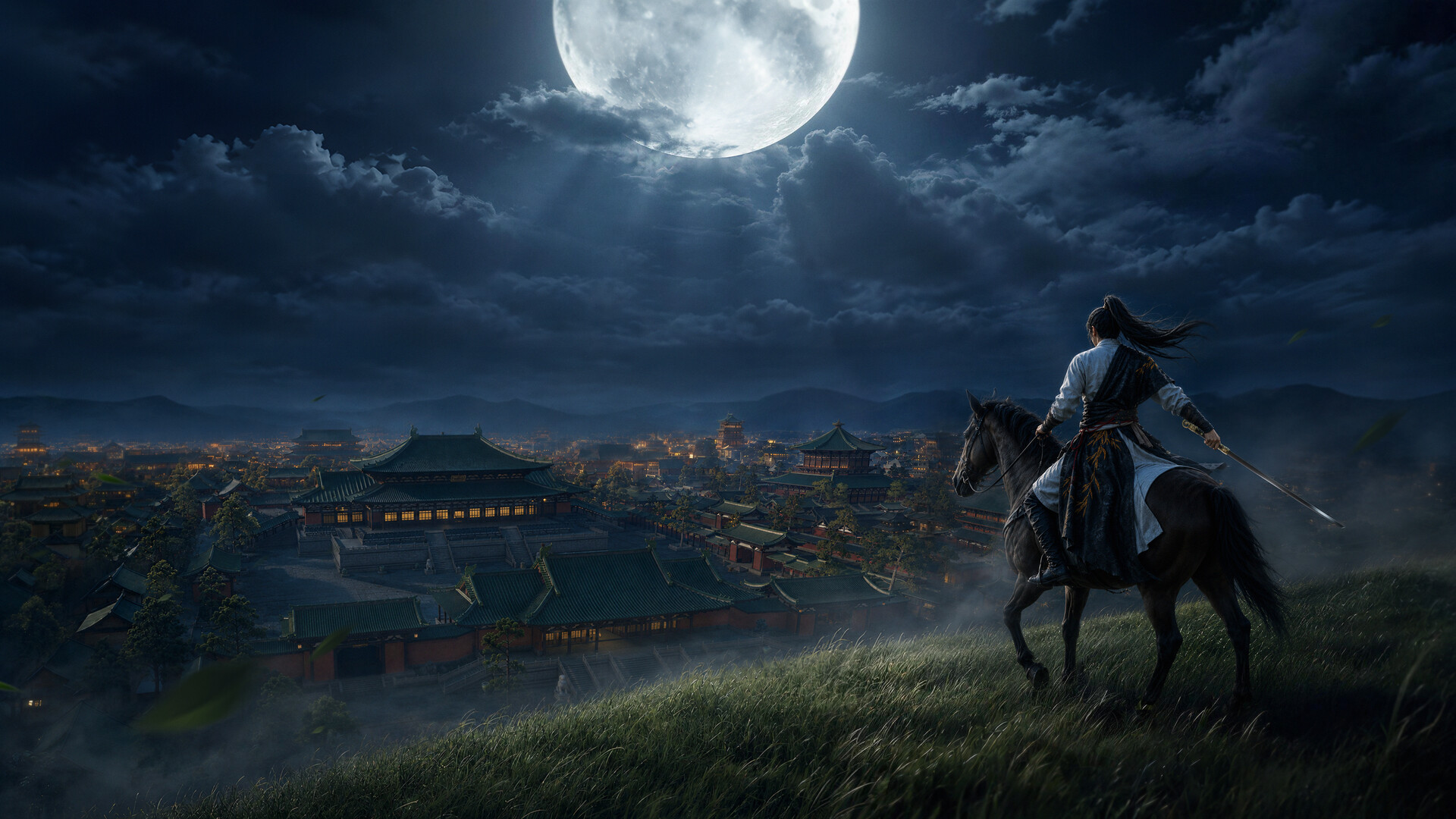
Weather and elevation feed into it too. As mist rolls along the peaks, the distant mechanical city flickers in and out of view, so visibility genuinely shifts as you climb and the fog moves. The payoff is clearest after dark: at night, the glowing lamps and moving gears of Mohist City intertwine into a look that leans hard into the game’s traditional-wuxia-meets-clockwork identity, where warm artificial light plays off metal and machinery instead of flat ambient glow.
Ray tracing: what’s confirmed and what isn’t
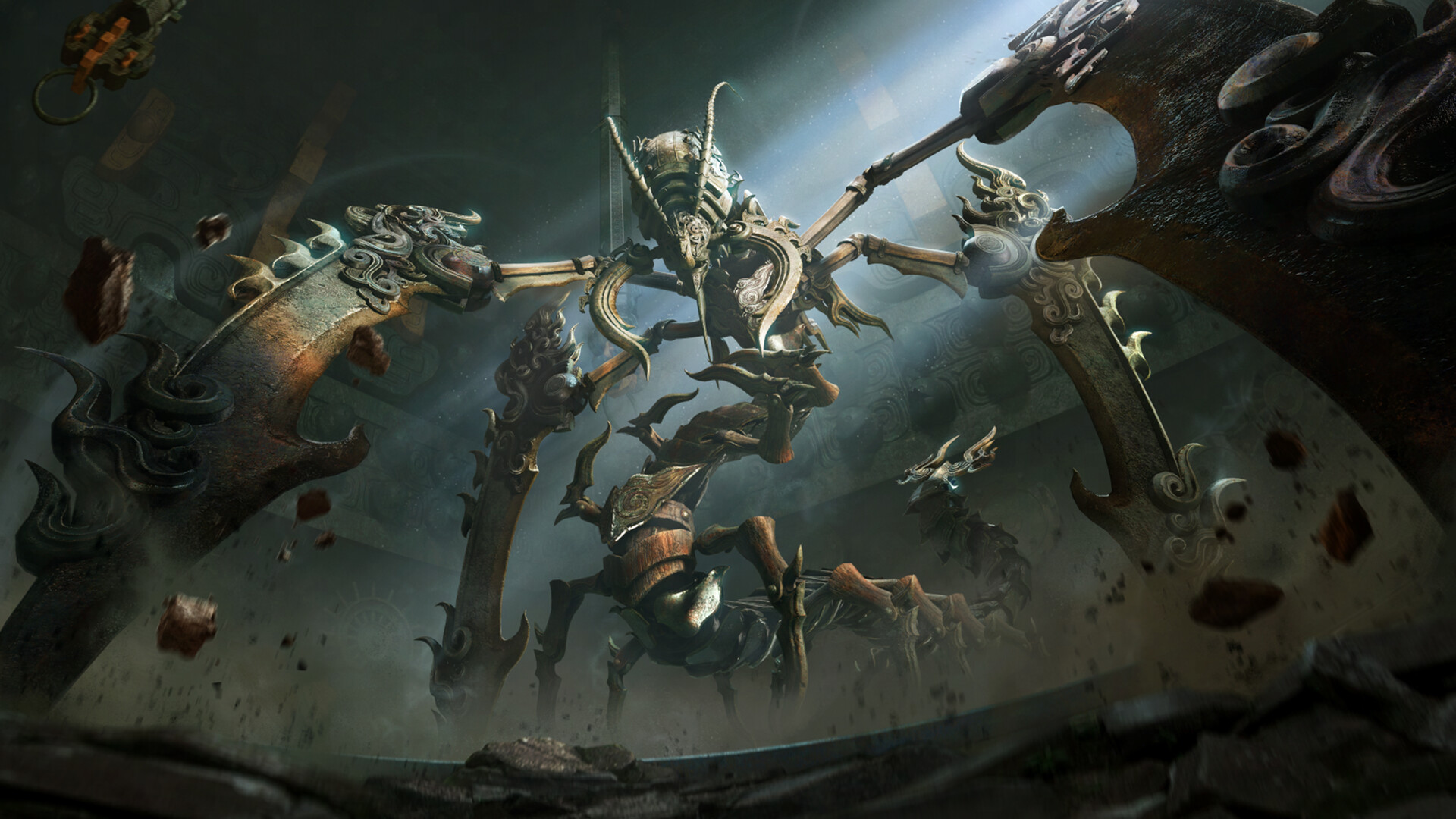
Preview coverage of the update describes a ray-traced lighting and rendering upgrade layered on top of the new lighting system, aimed at making shadows and reflections on rock and metal respond more realistically to sun position and artificial light sources. That framing is consistent across multiple hands-on impressions, and it’s treated as a real rendering feature rather than a minor toggle.
What’s not spelled out is the practical detail. The official material doesn’t state which platforms get ray tracing, what the graphics settings are called, whether it’s on by default, or what it costs to run. So the honest picture is that ray tracing is present in how the update is being shown off, but there’s no published menu, platform list, or default behavior to point to yet — with the update now live, players can open the settings and confirm these for themselves.
Rebuilt textures and environmental surfaces
Alongside the lighting, the team completely overhauled environmental textures and detail. The weathered patterns on mountain rocks, the smooth erosion left by flowing water, the intricate structural work of the clockwork architecture, and the dynamic flora all get high-detail passes. The goal is that natural wear from wind, water, and time reads convincingly on a surface instead of looking painted on.
KEY!The point of all that surface work is continuity. From the foothills to the peaks, from raw natural scenery to the mechanical city, every corner of Hidden Mountain is meant to feel like a real, lived-in place — a mountain that has clearly been standing and working for a long time, not a set of clean set-dressing tiles. It’s the detail layer that keeps the vertical world from thinning out visually the higher or deeper you go.
Revamped wind field effects
| Element | Effect |
|---|---|
| Foliage | Wind through the valleys rustles trees and vegetation |
| Mist | Follows the terrain, revealing and hiding peaks and structures |
| Terrain | Wind fields shift with the mountain’s steep vertical layout |
| Mechanisms | Operating gears and contraptions interact with surrounding dust and fog |
| Atmosphere | Layered movement ties weather to the living environment |
Wind is the subtle system doing the heavy lifting here, and it’s the effect the topic is named after. The wind field simulation was completely revamped so that environmental shifts feel natural rather than looped or canned. It ties together the two things Hidden Mountain is built around — open natural valleys and constantly moving machinery — by having air actually push on both.
Wind sweeping through the valleys rustles the foliage; mist dynamically reacts to the terrain; and operating mechanisms interact with the atmosphere around them instead of standing in still air. Because the region climbs and drops so sharply, these effects also do a lot to sell the vertical geography — the way fog behaves at a shadowed valley floor reads differently from how it moves around an exposed clockwork tower far overhead.
None of this exists in a vacuum — the rendering pipeline was upgraded specifically to carry the new region. Hidden Mountain features 4 main areas and 14 sub-regions, with vertical exploration depth exceeding 2,000 meters. That range runs from shadowed valleys and surface trails down into underground caverns and underwater ruins, then back up through the multi-level streets of Mohist City, the cloudways nestled in the peaks, and sky-high clockwork towers.
A world that stacks this much scenery on top of itself is exactly why the lighting, textures, and wind all needed rebuilding at once. Mechanisms are seamlessly blended into the environment rather than bolted on as props, so the same systems that light a forest at dawn also have to handle a gear-driven clockwork civilization suspended in the clouds. The visual tech is what keeps every climb, descent, and turn reading as one coherent place instead of a series of disconnected biomes.
Performance and graphics settings expectations
There are no official FPS figures or benchmarks for the Version 2.0 lighting, ray tracing, or wind upgrades yet, so anything you see quoted as a hard number right now is guesswork. It’s also worth setting aside older tuning habits: Version 1.8 graphics-settings guidance was written before any of this existed and doesn’t account for the new ray-tracing options or the revamped wind fields, so it can’t tell you how 2.0 will actually run.
To see the overhaul at its strongest, visit Mohist City at night — the mixed lamp-and-gear lighting is where the new system, the clockwork textures, and the wind-driven atmosphere all show up at once.
The realistic move is to wait for post-update testing before locking in settings. Once the update is live, exact FPS impact and sensible presets for mid-range and high-end hardware can be measured directly rather than extrapolated from a build that didn’t have these features.
Frequently Asked Questions
Does Hidden Mountain add ray tracing to Where Winds Meet?
Preview coverage describes it as a ray-traced lighting and rendering upgrade, so yes — it’s part of how the update is being shown. The nuance is that the official dev letter itself only names a “realistic lighting system,” so there’s no confirmed, named ray-tracing toggle to point to yet.
What does the new lighting system change most?
The biggest shift is that lighting is now dynamic and environment-wide rather than static — light and shadow transition with the time of day, and mist and weather actively change what you can see, so the same location looks meaningfully different at dawn versus night.
Are the wind field effects just visual?
No. On top of moving foliage and mist, the wind fields feed the audio: layered wind acoustics make gales sound different as you move through canyons, cliffs, and open platforms, so the revamp is a combined visual-and-soundscape upgrade, not a cosmetic skybox tweak.
Do we know the performance cost of the graphics overhaul?
Not yet — no official FPS numbers or benchmarks for the 2.0 lighting, ray tracing, or wind systems have been published, so the real performance picture only becomes clear once players can test the live update on their own hardware.
Is the graphics overhaul only for Hidden Mountain?
The changes are showcased in Hidden Mountain, but they’re a rendering-stack upgrade delivered as part of the broader Version 2.0 update — a new lighting and wind pipeline for the game, not a region-locked visual skin applied to one map.
Video help




Leave a Reply