

The Blood of Dawnwalker is Rebel Wolves’ open-world vampire RPG out now on PC, PS5, and Xbox Series X|S — it unlocked on Steam on September 2, 2026, with the console release on September 3 — you play Coen, a human swordsman by day and a vampire by night, with only 30 in-game days to save your family.
This is a game built around a few unusual systems that reward you for understanding them going in, and punish you for treating it like a typical open-world RPG. The 30-day rescue timer, the split between Coen’s human and vampire forms, and a world that gets harder the more you provoke it all interlock in ways that shape how you should play from the very first hour. Here is what actually matters now that the game is out.
- A single-player open-world RPG from ex-Witcher developers
- Coen, Brencis, and the fight for Vale Sangora
- How the 30-day clock really works
- Day and night: two completely different combat styles
- Notoriety, edicts, and disrupting vampire operations
- Exploring the open world and finding loot
- Skill trees, manuals, and how progression works
- Romance and factions cost you time
- Enemies pulled from Slavic folklore
- Editions, pricing, and pre-order bonuses
- Performance modes, difficulty, and PC requirements
- Where Rebel Wolves wants to take Dawnwalker next
- Frequently Asked Questions
A single-player open-world RPG from ex-Witcher developers
| Detail | Info |
|---|---|
| Release date | September 2, 2026 (Steam) · September 3, 2026 (PS5, Xbox Series X|S) |
| Platforms | PC, PS5, Xbox Series X|S |
| Developer | Rebel Wolves |
| Publisher | Bandai Namco |
| Engine | Unreal Engine 5 |
| Mode | Single-player |
| Setting | Vale Sangora, 14th-century Carpathians |
| Est. length | ~40–70 hours (preview estimate) |
The Blood of Dawnwalker comes from Rebel Wolves, a Warsaw studio staffed largely by developers who worked on CD Projekt Red’s Witcher games, and it is published by Bandai Namco. The Witcher comparison is fair as a matter of pedigree and structure — a dense open world, mature branching quests, a predefined protagonist — but this is its own thing, and combat in particular pulls as much from directional-duelling games as it does from Geralt’s swordplay.
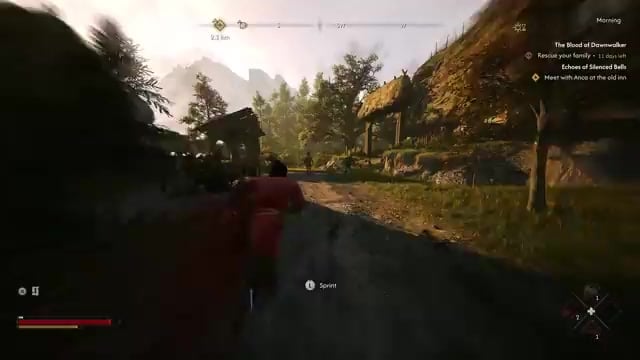
One thing to settle immediately: this is a purely single-player experience. There is no multiplayer, no co-op, and no live-service layer — any expectation otherwise is wrong. The design philosophy is density over scale, so the handcrafted map is not the biggest you have seen, but it is packed rather than padded with filler.
Coen, Brencis, and the fight for Vale Sangora
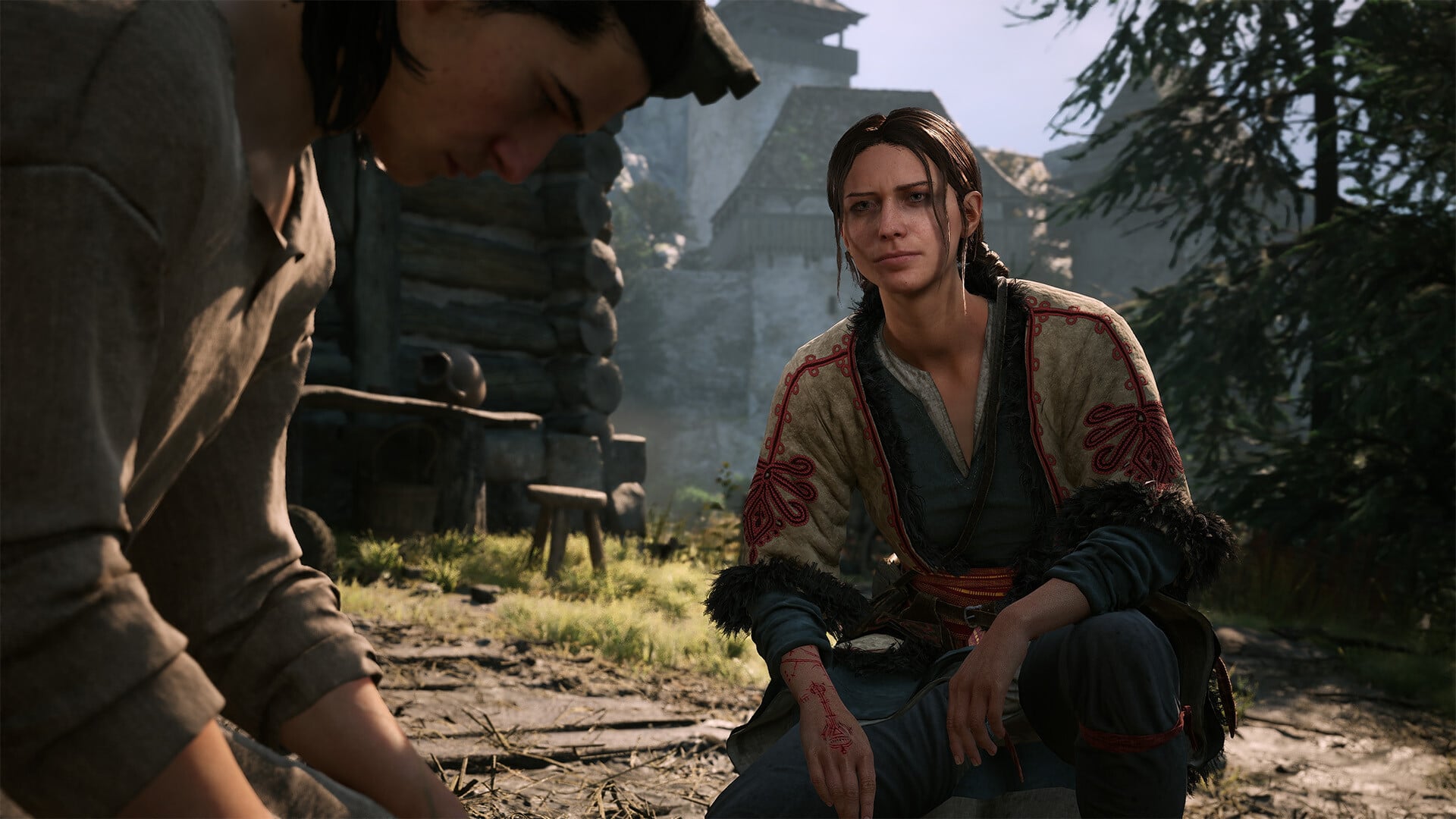
You play Coen, a peasant in a plague-ravaged, 14th-century Carpathian valley called Vale Sangora. When his stricken family is condemned, they are “saved” at the last moment by an ancient vampire lord named Brencis — salvation that comes at the price of Coen being forcibly turned. Years of labor in a silver mine cause his body to partially reject the curse, leaving him a half-turned Dawnwalker: fully human under the sun, vampire once night falls.
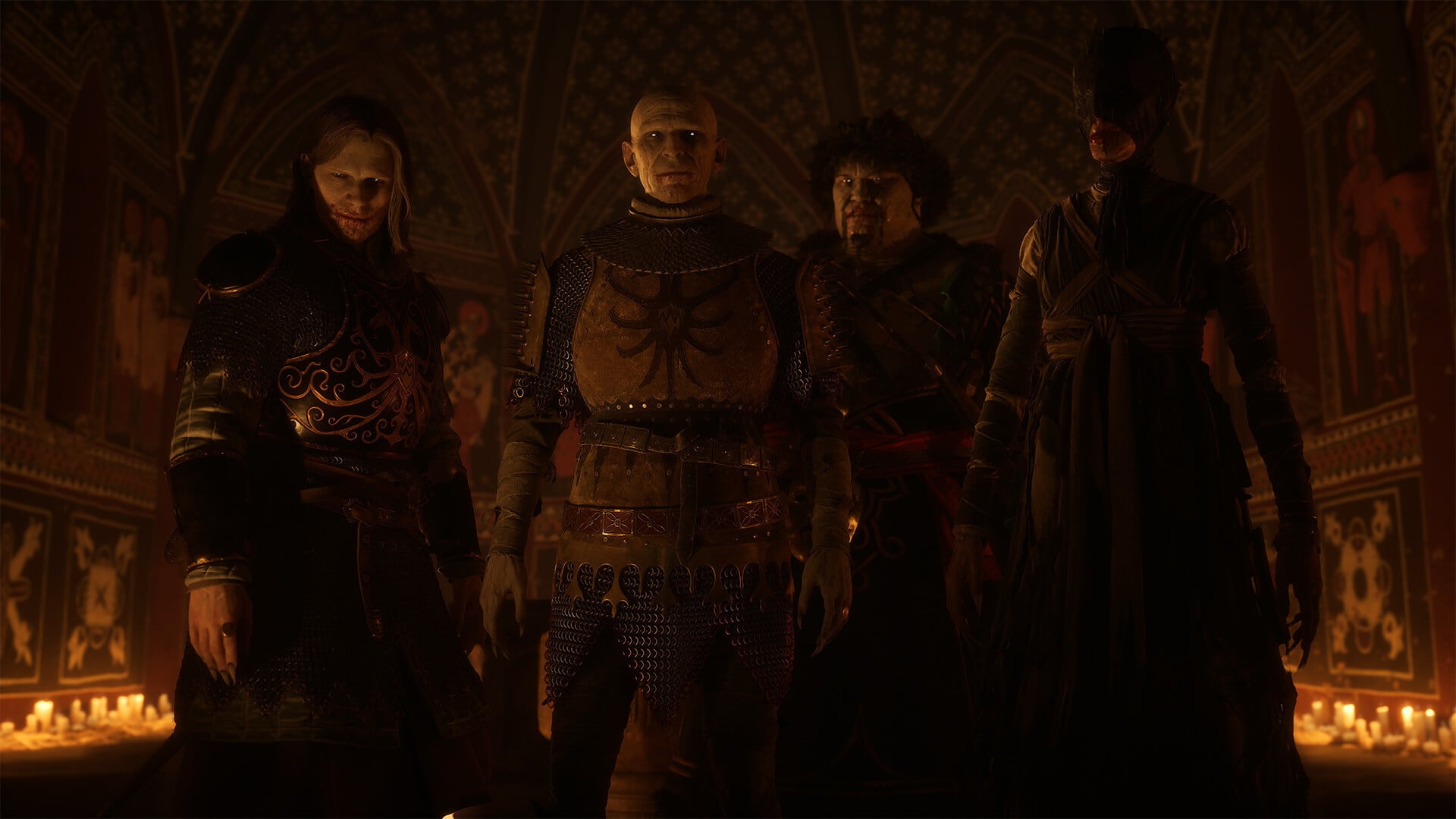
Brencis rules the valley through a court of lieutenants — Ambrus, Xanthe, and Bakir — each controlling a different dominion, its blood taxes, and its guards. Coen is caught in the middle of that politics with one goal and a hard deadline: 30 in-game days to save his family before it is too late.
How the 30-day clock really works
Key This is the system every player needs to understand first, because it is the one most people get wrong. The 30-day clock is a spendable resource, not a real-time countdown. Standing still does nothing to it; you can explore, fight, and loot for as long as you like and the timer will not budge. It only moves when you take a major action — advancing a heavy quest line, training a skill, making a key narrative choice, or going on a date.
The game always tells you before you commit. Time-advancing options carry an hourglass icon next to them, and a tracking wheel in the upper-right of the screen, split into eight segments, shows where you stand in the current cycle. The journal lists every active quest alongside exactly how much time it will cost — or whether it costs any at all, since not every objective moves the clock. You can even advance time manually at shrines, but that eats into your budget too, so do it deliberately.
Crucially, running out of time is not a game over. There is no “mission failed” screen and no forced reset. If the clock expires, your family is simply lost for good, the world reacts to that failure, and the story branches down a darker path you can choose to follow. The real consequence of the timer is that you cannot do everything — helping one village or faction usually means abandoning another. Plan on specializing your route rather than chasing full completion.
Day and night: two completely different combat styles
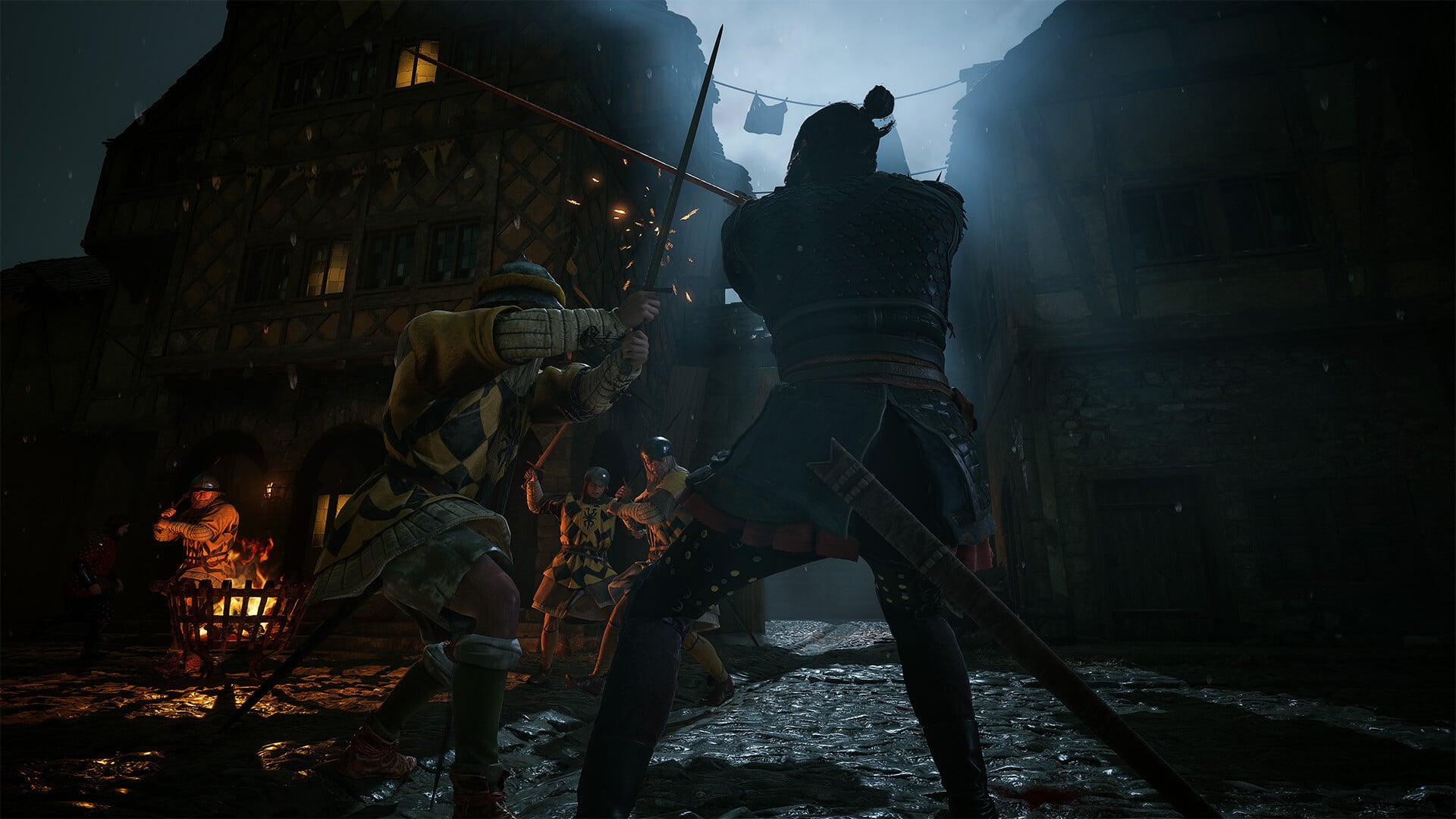
Combat runs on a directional system. You hold a direction — up, down, left, or right — before attacking or blocking, and both your swing and your guard map to that angle, so bypassing an enemy’s defense and parrying their strike is about reading trajectory, not mashing. Regular attacks, blocks, and dodges drain stamina, but a perfect parry costs none and can leave enemies staggered. If precise directional inputs are not for you, there is an optional omnidirectional auto-mode that handles it automatically at the cost of higher stamina use. Some abilities, like a shoulder charge, carry across both forms.
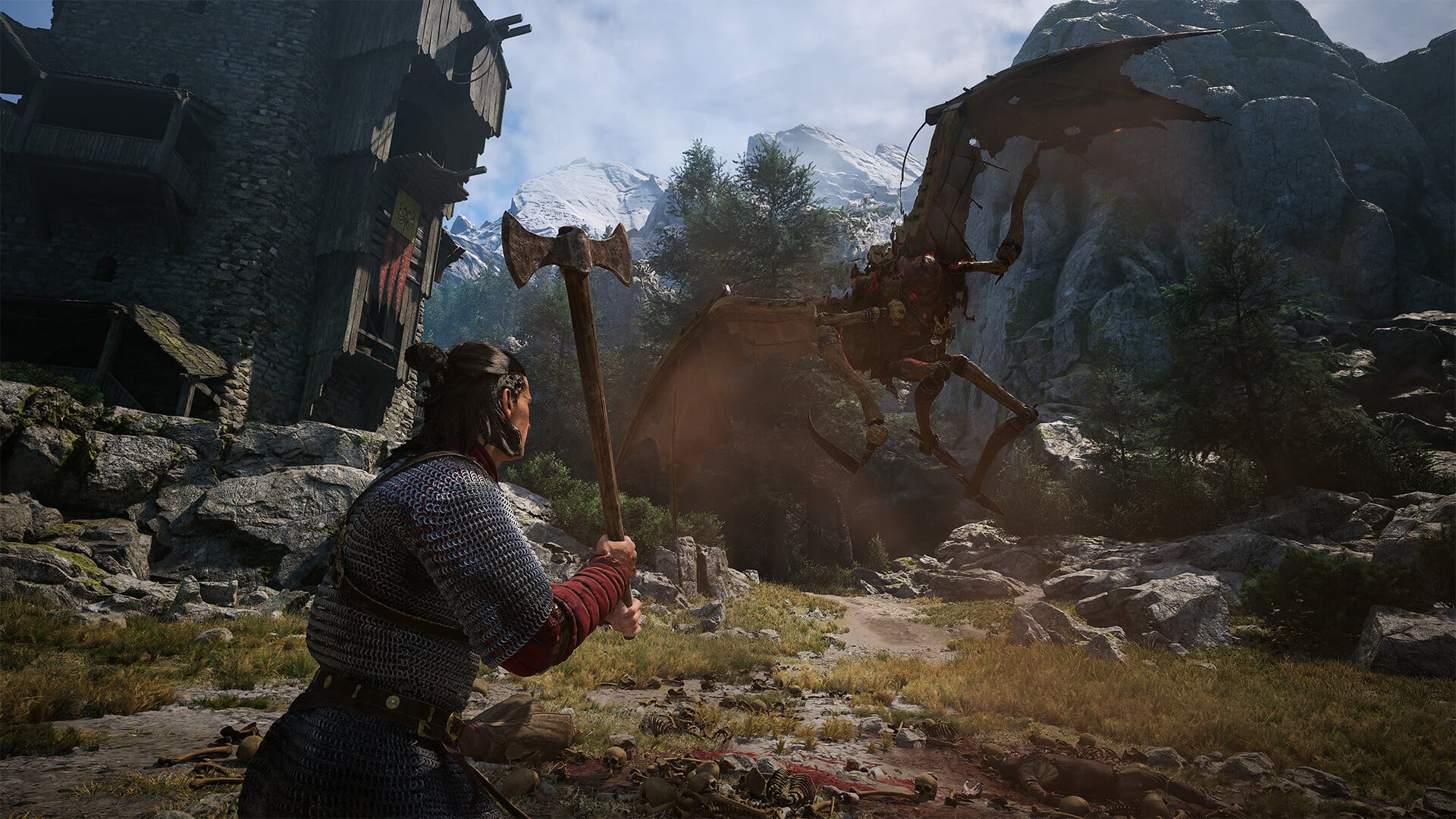
By day, Coen fights as a human swordmaster using medieval fencing stances and longswords, backed by sacrificial hex magic — spells that damage him but deliver powerful effects like igniting his blade, tangling enemies in thorny vines, or wrapping him in a protective shield. There is no passive healing in this form, so you lean on potions, food, and other consumables to stay alive.
By night, he trades the sword for razor claws and supernatural powers — Voracious Bite, Shadow Step, mind control, and a blood-fueled rage mode called Crimson Rush. His health bar doubles as a hunger gauge that you refill mid-fight by grappling and feeding on targets; feeding on humans is far more efficient than on wild animals. Every feed also raises Coen’s corruption, and higher corruption unlocks stronger vampire perks.
The hunger system carries a genuine trap. If your gauge runs empty, Coen starts losing his grip on his monstrous side — and you will enter dialogue on empty hunger and slip into a feral frenzy that kills the NPC you are talking to. Because nearly every NPC in the game is killable, that means accidentally slaughtering an important quest giver mid-conversation.
Feed before you talk to anyone important at night. Starting a conversation with an empty hunger gauge triggers a frenzy that kills the NPC — often a quest giver you needed.
Notoriety, edicts, and disrupting vampire operations
Much of the open world revolves around dismantling Brencis’s regime. You can liberate enemy camps and burn the blood warehouses where prisoners are drained and their blood stored for the vampire armies. Every one of these acts raises your notoriety, and that number cuts both ways.
On one hand, angering the lieutenants whose operations you keep wrecking opens up new side quests targeting them — usually ending with you hunting them down, which brings the biggest rewards. On the other, rising infamy pushes Brencis to issue edicts that crank up the difficulty valley-wide: documents like “On Prices and Tolls”, “On Increased Vigilance”, and “On Protection of Habitations” add extra patrols, more checkpoints, and higher shop prices. Every activity here is optional, so this is a real risk/reward dial — the more infamous you become, the harder the world pushes back.
Exploring the open world and finding loot
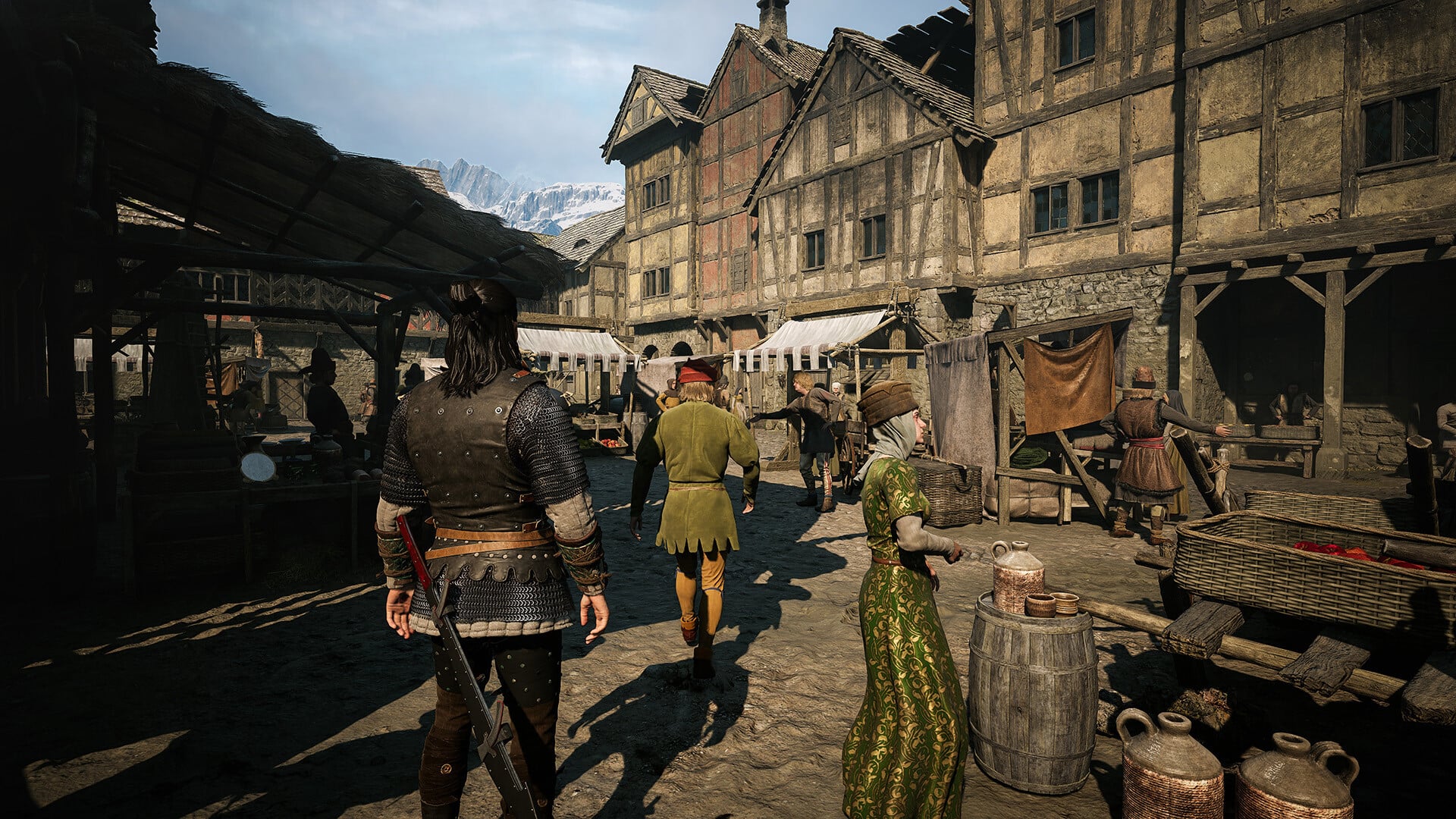
Traversal changes with the clock. At night Coen can transform into a wolf for a big speed boost, and by day there is a learnable hex speed ability that serves a similar purpose. You scout using vantage points that trigger a flyover to mark points of interest — but note a genuinely useful catch: some scouting towers can only be climbed at night in vampire form, because reaching the top needs Shadow Step. Spot one during the day and you either pass time or come back later.
Roadside shrines are your hubs — they handle fast travel, resting, item storage, and skill upgrades. Some arrive broken and need a heart item returned to them, which usually means clearing a nearby enemy camp and pulling the heart from a chest inside before the shrine’s full functions come online. Loot is everywhere, from bodies and containers to buried caches, and it is color-coded from common up to legendary. Keep an eye out for treasure maps too — one found in a random house pointed to a chest guarded by a bear, which paid out a strong weapon and a unique consumable recipe.
Skill trees, manuals, and how progression works
Progression splits across three trees: Witchcraft, Swordmastery, and Vampirism. They do not all level the same way. For Swordmastery and Witchcraft, you cannot simply buy perks — you first have to find and read a manual out in the world (looted from chests or enemy bodies), and only then can you spend XP at a shrine to unlock the node. Witchcraft has a second route: Haunted Sites, daytime-only spectral combat trials that require blood magic to enter and reward you with witchcraft manuals when cleared.
Vampirism works differently again — its unlocks are gated by your corruption level, which you raise by drinking blood rather than by finding books. And here the time system bites once more: spending skill points itself can cost in-game days, so even building your character trades against the rescue clock.
Romance and factions cost you time
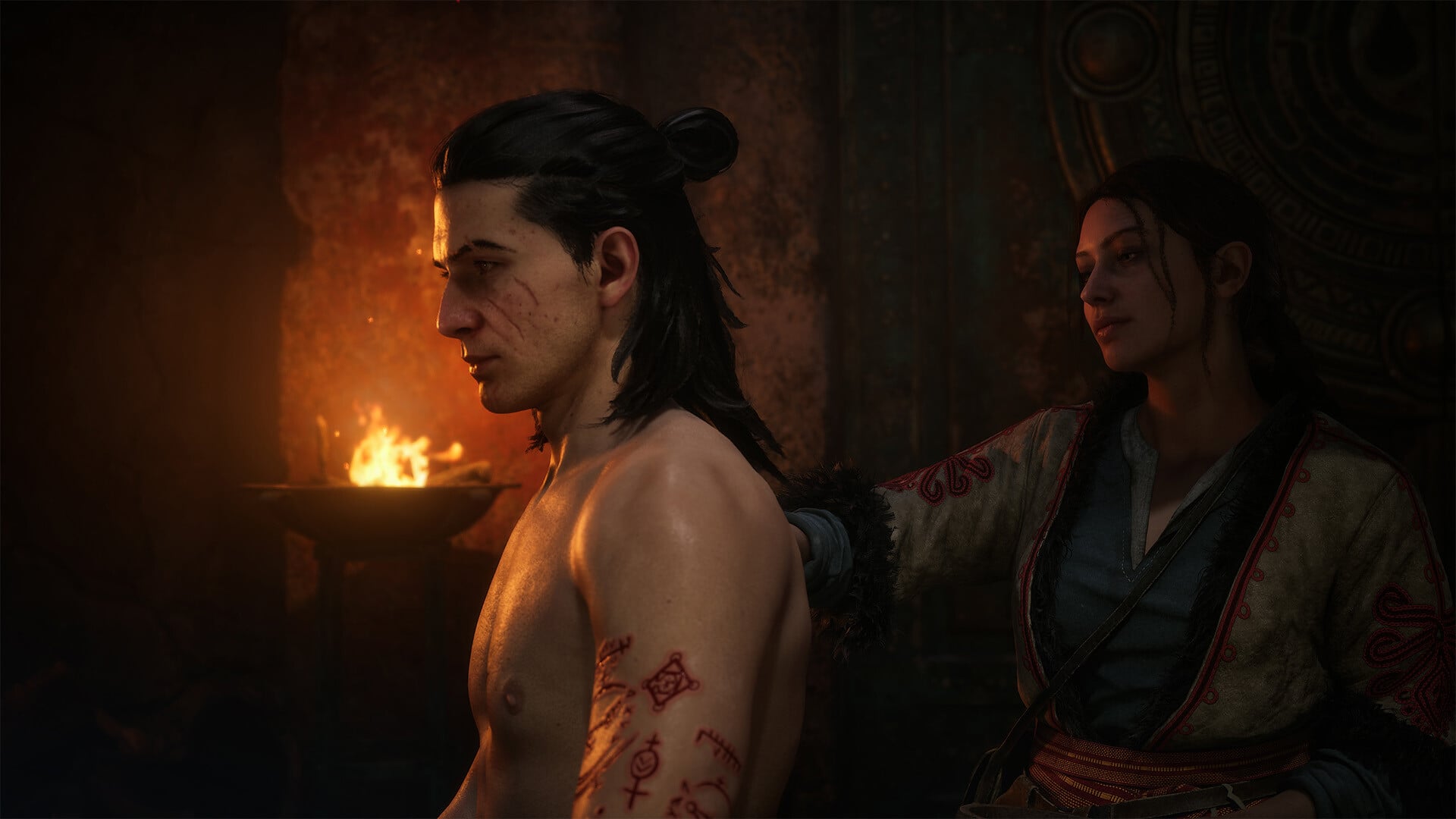
The Blood of Dawnwalker has a romance system with multiple romanceable characters and branching outcomes — including Anca, a witch Coen can flirt with early on, and a second route the on-screen glossary lists as Lunka. There are factions to align with as well, such as Marat‘s underground resistance, which you prove your loyalty to.
The reason romance belongs in a before-you-play primer is that it is wired directly into the time system. Pursuing a relationship and going on intimate dates counts as a major activity, and a single date can burn a full day/night cycle. Every hour spent courting someone is an hour not spent saving somebody else.
Enemies pulled from Slavic folklore
Rather than generic vampires and beasts, the bestiary leans hard into Slavic and Eastern European folklore — restless spirits, demonic creatures, feral cave-dwellers, winged fairies, and giant mountain-dwelling folk. The glossary names creatures like Uriash (the word means “giant” in Romanian), Sanhani, and Vrakhir. Not everything is a fight, either: some of these beings, the mountain giants among them, can actually be spoken with.
Editions, pricing, and pre-order bonuses
| Edition | Price | Includes |
|---|---|---|
| Standard | $69.99 | Base game; pre-order adds the Sangoran Wayfarer’s Armor Set |
| Eclipse | $79.99 | Standard, plus digital soundtrack, comic, and world compendium |
| Collector’s | $199.99 | Eclipse extras, plus a physical map, hardcover compendium, and Coen figurine |
There are three listed editions. The Standard Edition runs $69.99, the digital Eclipse Edition is $79.99, and the Collector’s Edition sits at $199.99. Pre-ordering adds the Sangoran Wayfarer’s Armor Set as a bonus. These are the launch prices, and the tiering is straightforward.
Performance modes, difficulty, and PC requirements
| Mode | Target |
|---|---|
| Quality | Dynamic 4K, 30fps |
| Balanced | Dynamic 4K, 40fps |
| Performance | Dynamic 4K, 60fps |
On console, Rebel Wolves has shown three graphics modes. A 60fps Performance mode is planned for launch via the day-one patch, though it was described as still being finalized rather than fully locked, so treat it as coming at launch.
The settings menu is unusually granular. Difficulty presets run from Story up to Duelist — the toughest, with no directional indicators, aggressive low-HP enemies, and less stamina for Coen — but you can also tune RPG difficulty and Action difficulty separately, so you can, for example, keep enemy health low while making them attack far more often. Other options include Auto Block (the omnidirectional guard), toggleable directional indicators, and near/far camera distance settings for both exploration and combat. For PC, the game showed a system-requirements table with Minimum, Recommended, and Ultra tiers, so plan around those three brackets when the exact specs land.
Where Rebel Wolves wants to take Dawnwalker next
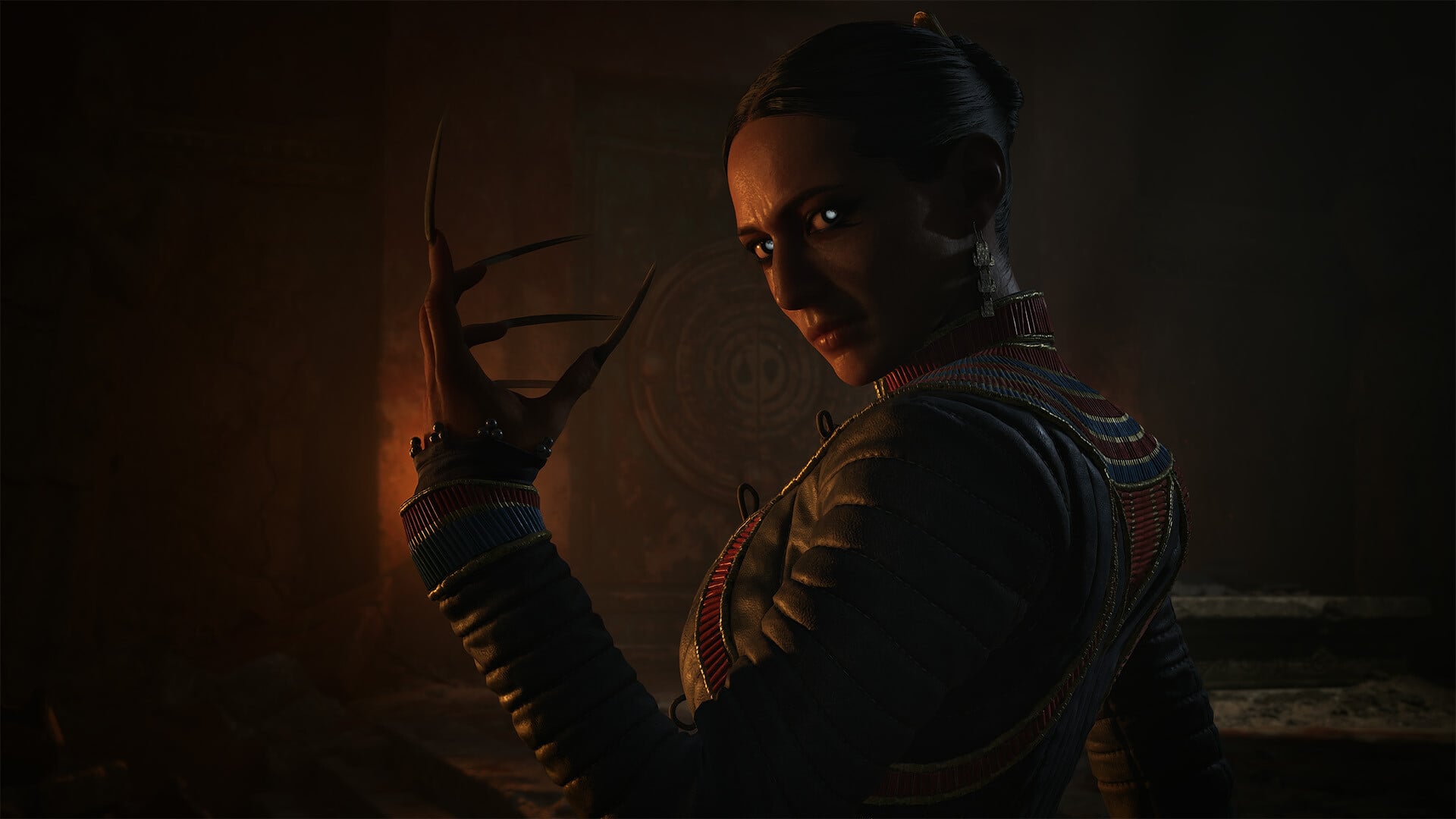
One last thing worth knowing to avoid confusion: Rebel Wolves intends Dawnwalker to become a multi-game saga spanning different historical eras and cultures. A teaser showing Coen alive in a neon-lit future city led some to assume time travel — but the studio has clarified that this game is strictly 14th-century. That futuristic glimpse was a broad reveal for the overall Dawnwalker Preview, setting up future entries in other periods, not something you will play through here.
Frequently Asked Questions
Can you create your own character?
No. Coen is a predefined protagonist with his own fixed background and story, much like Geralt in The Witcher. You shape his abilities, gear, and the choices he makes — not his identity or appearance.
Do the more expensive editions get early access?
No. Rebel Wolves unlocks every edition at the same time, so paying more for Eclipse or Collector’s does not let you start playing sooner.
Is The Blood of Dawnwalker out now?
Yes. It unlocked on Steam on September 2, 2026, and the PS5 and Xbox Series X|S versions followed on September 3. Rebel Wolves is tracking launch problems in a known issues and workarounds thread on the game’s Steam forum, and our guides for the game are collected under the Blood of Dawnwalker tag.
Is it coming to PS4, Xbox One, or Nintendo Switch?
No. The only announced platforms are PC, PS5, and Xbox Series X|S. There is no PS4, Xbox One, or Switch version.
Video help



Leave a Reply