


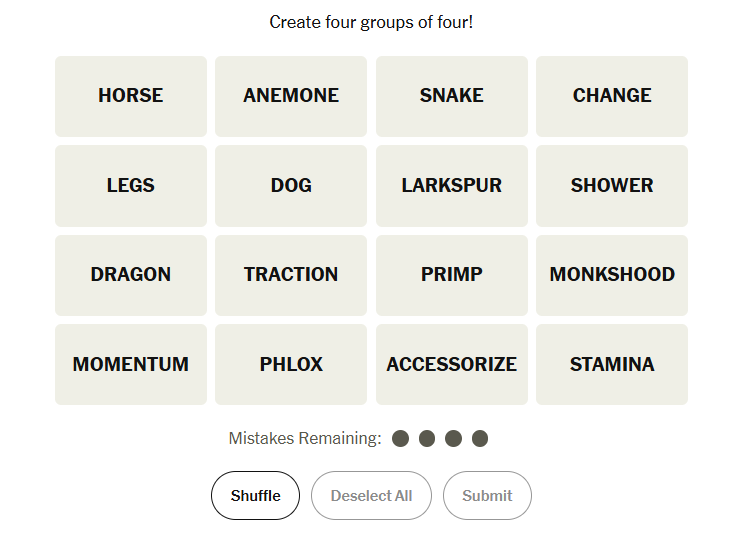
The New York Times Connections puzzle challenges players to sort 16 seemingly unrelated words into four connected groups. Each group shares a hidden link. Today’s grid blends physical actions, clever rearrangements, and nostalgic references, making it both playful and slightly deceptive. Below you’ll find gentle hints to guide your thinking, followed by the complete solutions once you’re ready to check your work.
NYT Connections Puzzle Overview: 15 June 2026
Today’s puzzle felt balanced, with one category built around common figurative language, another focused on personal routines, a culturally themed group, and a set of flower names. Solvers likely identified a few categories quickly before spending extra time separating the more deceptive words from their correct groups.
NYT Connections Hints: 15 June 2026
Category 1:
- This group is associated with lasting success.
- Think about what helps something continue moving forward.
- These words often appear in sports, business, and performance discussions.
- The theme revolves around sustained effectiveness.
Category 2:
- These actions commonly happen before leaving home.
- Think about preparing for a social event.
- Several words describe personal grooming or appearance adjustments.
- The category focuses on getting ready.
Category 3:
- All four words represent creatures.
- They belong to a traditional system used in East Asian culture.
- These animals are linked to years and personality traits.
- Think of a famous zodiac cycle.
Category 4:
- Every answer is a plant known for its blooms.
- Gardening enthusiasts may recognize them quickly.
- They are often found in flower beds and bouquets.
- The category is entirely botanical.
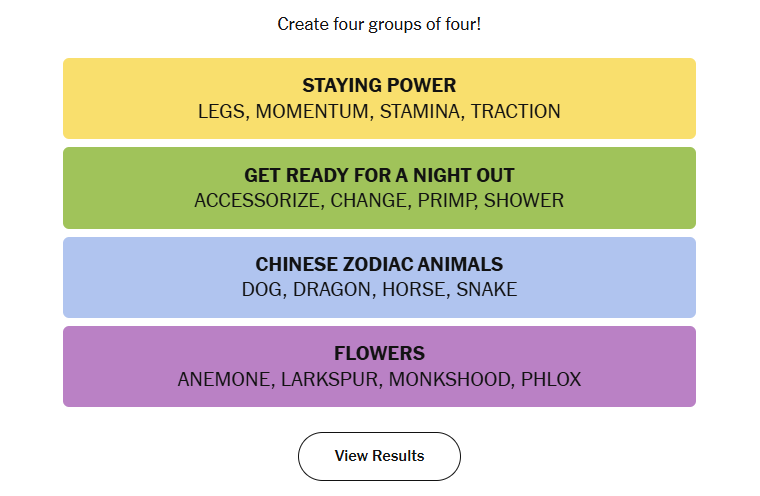
NYT Connections Answers: 15 June 2026
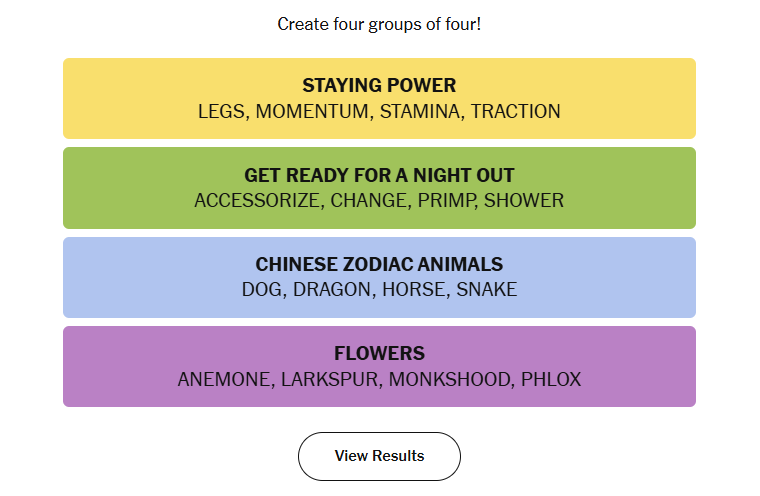
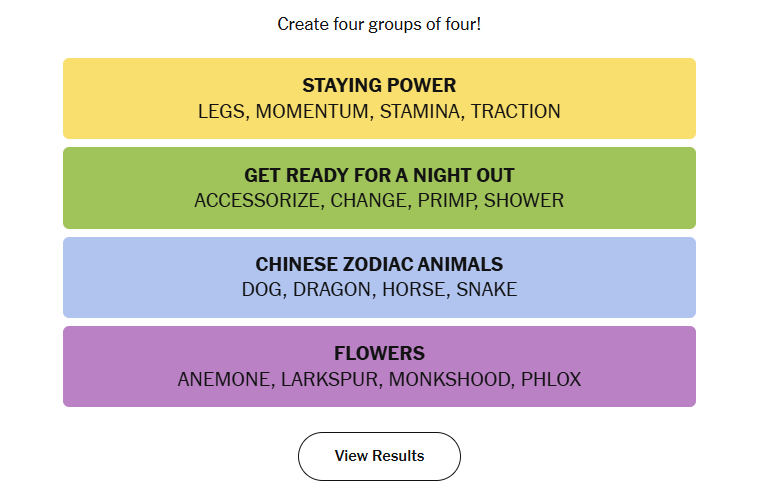
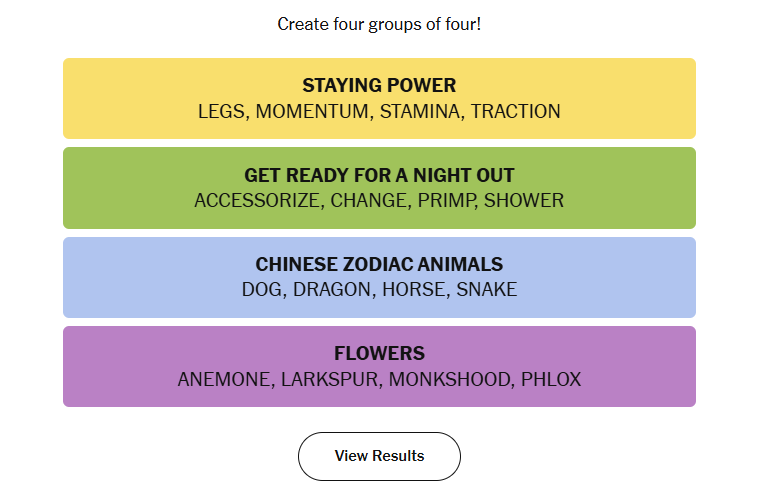
Here are the answers, grouped by category.
Category 1:
Category 2:
Category 3:
Category 4:
Conclusion & Quick Strategy Tip
The 15 June 2026 Connections puzzle balances straightforward action words with trickier conceptual links, making it satisfying once everything clicks. Quick strategy tip: lock in obvious verb groups early, then examine remaining words for structural patterns or shared cultural references.






Leave a Reply