
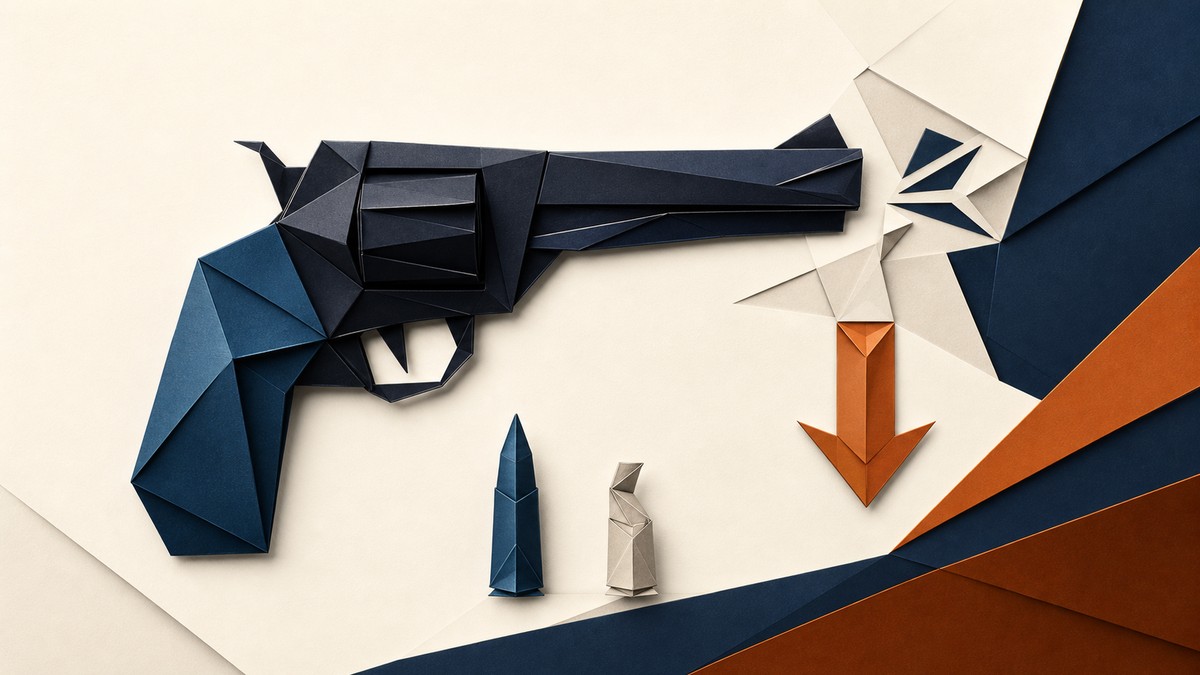
VALORANT Patch 13.01 makes the Outlaw’s second shot less forgiving by increasing first-shot recovery, adding second-shot spread, and adding vertical recoil after the first bullet.
The Outlaw has always been the cheap answer to an Operator: two barrels, two chances, and a second shot that used to come out almost as clean as the first. Patch 13.01 leaves that first bullet alone and goes after the follow-up instead, stacking a longer recovery window, a real spread cone, and an upward kick onto everything that comes after it. Riot frames the change as room for skill expression, and that’s an honest description — the gun still hits like a sniper, it just stops handing you the double-tap for free.
- The Outlaw’s second shot got worse in Patch 13.01
- Recovery, spread, and recoil after the first bullet
- How the double-tap felt before 13.01 versus now
- What the Outlaw still does well at 2400 credits
- Bandit numbers, fire-rate delays, and other mix-ups
- Playing the Outlaw after the nerf
- Frequently Asked Questions
The Outlaw’s second shot got worse in Patch 13.01
| Stat | Change | Effect |
|---|---|---|
| Recovery after first shot | 0.10s to 0.15s | The weapon takes longer to settle, so early follow-ups land inside the unrecovered window |
| Spread after first shot | 0 to 2.25 | The second bullet can now deviate inside a cone instead of tracking your crosshair exactly |
| Recoil after first shot | 0 to 4.0 | The gun kicks up, so the second shot flies high unless you re-center |
Nothing about the opening shot changed. It deals the same damage, it costs the same 2400 credits, and it still ends most duels it starts. What changed is the moment right after it, where the Outlaw used to be unusually generous for a budget sniper: no extra spread, no recoil, and a short recovery meant a fast second click was nearly as reliable as the first. Three numbers move at once now, and they all point the same direction.
KEY!Treat those decimals as the working numbers players are drilling against — the behavior they describe is what you feel the moment you chain two shots. And they belong to the Outlaw alone; the Bandit tuning from Patch 13.00 is a different weapon on a different patch.
Recovery, spread, and recoil after the first bullet
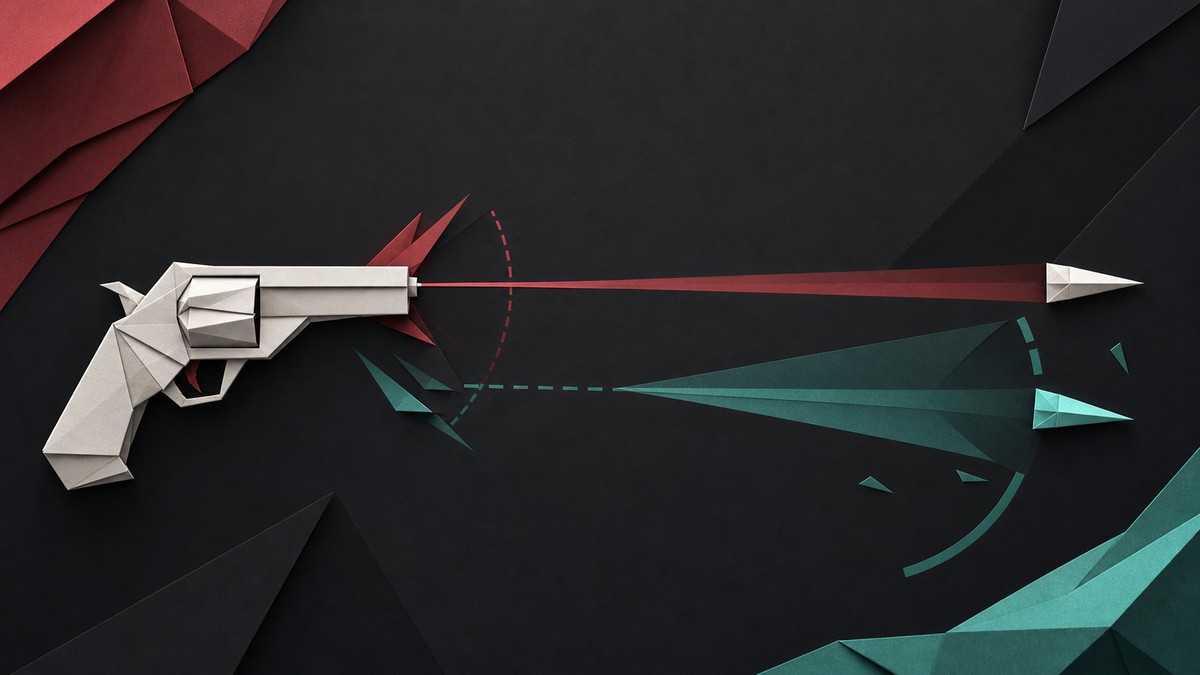
These three penalties get lumped together in conversation, but they punish you in completely different ways, and knowing which one is eating your shot is the difference between fixing the habit and just missing louder. Recovery is a timing penalty. At 0.15 seconds instead of 0.10, the gun spends longer in an unsettled state after the first round, and any click you make inside that window fires from a weapon that hasn’t finished resetting. The Outlaw’s 2.75 rounds per second fire rate never stopped you from clicking fast — it just means the fire-rate delay and the recovery window are no longer the same thing.
Spread is the one you can’t out-aim. A value of 2.25 where there used to be 0 means the second bullet leaves inside a cone rather than dead center, and the cone doesn’t care how good your crosshair placement is. Perfect aim at long range can still miss a body that a pre-patch Outlaw would have clipped. This is the penalty that quietly changes what the gun is for, because it scales with distance in a way nothing else in the change does.
Recoil is the friendly one, relatively speaking. 4.0 units of vertical kick after the first bullet is a predictable, learnable pull — the shot goes up, and you bring it down. It’s the part of the nerf you can practice away. It’s also the part that fools people, because pulling down feels like it should fix everything, and then the spread cone eats the shot anyway.
KEY!Put them together and the decision in front of you every time you fire is simple: double-tap now and accept a shot that’s late, randomized, and kicked upward, or take the extra beat, re-center, and fire something closer to a normal Outlaw bullet. Neither is always right. But the free version of the first option is gone.
How the double-tap felt before 13.01 versus now
| Before Patch 13.01 | After Patch 13.01 |
|---|---|
| Rapid follow-ups fired from a settled weapon after 0.10s | Rapid follow-ups fire inside a longer 0.15s recovery window |
| Second shot tracked the crosshair exactly, no spread | Second shot can drift anywhere inside a 2.25 cone |
| Long-range double-taps were near-guaranteed if aimed | Long-range double-taps lose reliability even with clean aim |
| No aim correction needed between shots | Vertical kick of 4.0 has to be pulled down or reset |
The old Outlaw let you treat two shots as one action. You clicked, you clicked again, and the second bullet went roughly where the first one did — which is exactly why the gun punched so far above its price on eco rounds and why Riot wants you to commit more carefully to rapid follow-ups. The same muscle memory now produces a materially different result.
The gap widens the further away the fight is. Up close, the spread cone barely matters and the recoil is a small pull. Across a long angle, the same panic double-tap that used to trade you a kill now trades you a reload — and the Outlaw’s 3.8-second reload is a long time to be standing in the open with an empty break-action.
What the Outlaw still does well at 2400 credits
This is a nerf to one habit, not a rewrite of the weapon. The Outlaw is still a double-barrel, break-action sniper with a 2-round magazine, 80% move speed, a 1.25-second equip, and a price tag of 2400 credits that puts it in reach on rounds where an Operator is a fantasy. That first shot is untouched, and the first shot is the entire reason you buy the thing.
Its niche is intact too. Against light armor and on eco buys, the Outlaw remains brutal — an early pick from an angle nobody wants to challenge is exactly the value it has always sold. What Patch 13.01 sharpens is the drop-off: in a full gun round, where rifles and an actual Operator are on the table, leaning on the Outlaw’s follow-up as your safety net is a worse plan than it was last patch.
Bandit numbers, fire-rate delays, and other mix-ups
Three misreads of this patch are doing the rounds, and all three will cost you rounds. The first is assuming the second shot is clean as long as you respect the fire-rate delay. It isn’t — the spread and recoil penalties apply to the follow-up regardless of how patiently you clicked. Waiting helps because recovery finishes and you get time to re-center, not because the penalties switch off on a timer.
The second is pinning every miss on recoil. Recoil is visible and satisfying to blame, so people pull down harder and keep missing. When the shot vanishes at range with a crosshair that looked perfect, that’s the 2.25 spread doing its work, and no amount of downward pull fixes randomness.
The third is a straight identity mix-up. Patch 13.00 changed the Bandit: recovery from 0.45 to 0.4, tap efficiency from 3 to 4, and max pitch recoil from 4 to 3. Those are Bandit values on the previous patch, and they get pasted around as if they describe the Outlaw. They don’t. The Outlaw’s numbers move in the opposite direction — it gains recoil where the Bandit lost it.
Playing the Outlaw after the nerf
The adjustment is mostly about patience. Fire, let the weapon settle past the 0.15-second recovery, drag your crosshair back down through the kick, and only then take the second shot. It feels slow the first few times and then it feels normal, and the shots start landing again.
Everything else follows from that. Panic double-taps at long range are now the single worst thing you can do with this gun, because that’s where spread and recoil compound; if the first bullet misses across a long angle, repositioning beats reflex-clicking almost every time. Close range is where a fast follow-up is still defensible, since the cone is tight enough to forgive it. And the biggest lever hasn’t changed at all — it’s the angle you chose before you ever pulled the trigger. The Outlaw rewards a first shot you set up properly, and it now punishes the second shot you threw away.
Re-center your crosshair during the recovery window instead of after it — pulling down through the 4.0 kick while the weapon is still settling means your second shot fires from a stable, correctly-aimed gun rather than a high one.
Frequently Asked Questions
Did Patch 13.01 nerf the Outlaw’s first shot?
No. The first shot is untouched — same damage, same accuracy, same role. Every change in this patch applies to what happens after that first bullet, which is why the Outlaw is still an excellent opening-pick weapon.
Is the Outlaw’s second shot still accurate if you wait?
Waiting helps a lot, but it isn’t a reset switch. The 0.15-second recovery finishing means the weapon is settled and you’ve had time to correct your aim, which removes most of the practical error. The spread and recoil penalties on the follow-up still exist, so a patient second shot is far more reliable than a rushed one without being identical to the first.
Do you need to pull down for the second Outlaw shot now?
Yes. The first shot adds 4.0 of vertical recoil, so the gun is pointing above where you left it. If you fire the second round without dragging your crosshair back down or re-centering, it goes high.
Are the Patch 13.00 Bandit recoil numbers the same as the Outlaw changes?
They’re unrelated. The Bandit’s 0.45 to 0.4 recovery, 3 to 4 tap efficiency, and 4 to 3 max pitch recoil are Patch 13.00 changes to a different weapon. The Outlaw’s Patch 13.01 changes are recovery 0.10 to 0.15, spread 0 to 2.25, and recoil 0 to 4.0.
Is the Outlaw still worth buying after Patch 13.01?
On eco rounds and against light armor, absolutely — a 2400-credit gun that one-taps for that kind of damage is still one of the best-value buys in the game. What you should stop doing is treating the second barrel as a guaranteed backup. Buy it for the first shot, play the angle that makes the first shot count, and treat the follow-up as a bonus you have to earn.

Leave a Reply