
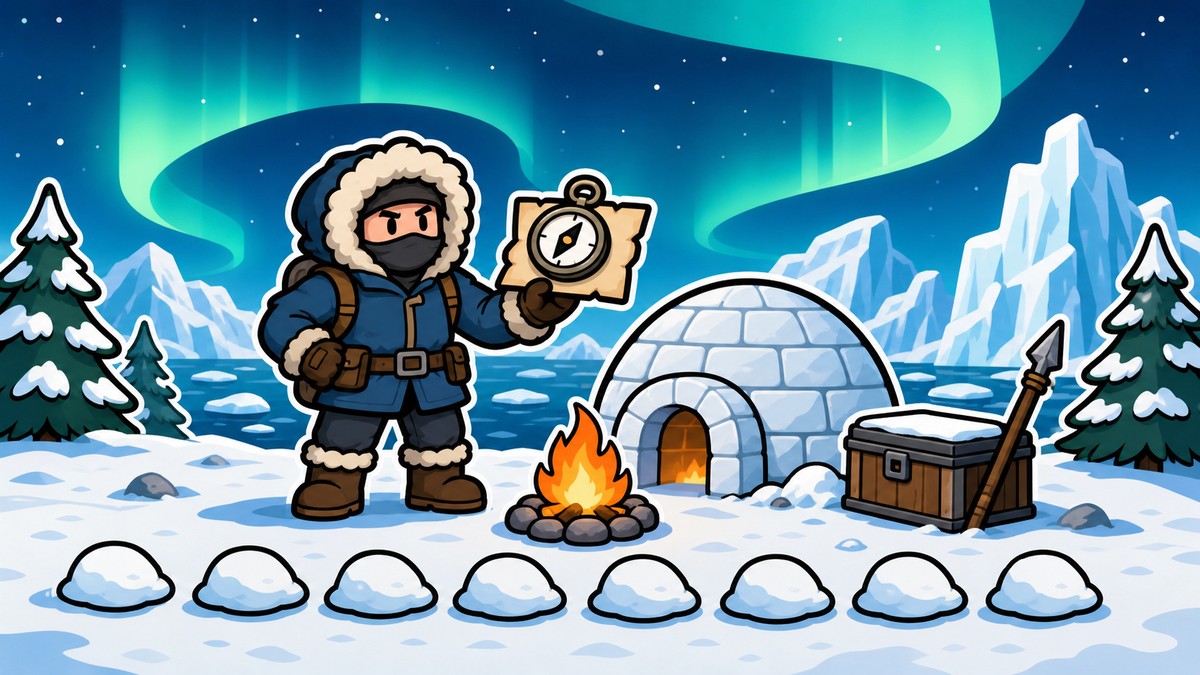
To survive all seven days in Survive 7 Days in Arctic, prioritize food first, prepare your cave before the blizzard, stay sheltered through Days 4 and 5, then watch for the rescue helicopter on Day 7.
Survive 7 Days in Arctic gets much easier when you stop treating every day like a random loot run. The safer beginner route is a schedule: secure shelter, build a food cushion, haul wood, sit out the storm, then stay alive long enough to board rescue.
- Seven-day survival schedule
- Food and warmth come before extra wood
- Early mistakes that ruin the run
- Day 2 food route
- Day 3 wood and cave setup
- Days 4 and 5 blizzard shelter plan
- Days 6 and 7 rescue routine
- Mistakes to fix before another attempt
- Multiplayer role splits for repeat runs
- Frequently Asked Questions
Seven-day survival schedule
| Day | Main focus |
|---|---|
| Day 1 | Set up shelter, start a fire, and learn your nearby resource area. |
| Day 2 | Make fishing the priority and begin cooking your catch. |
| Day 3 | Haul wood quickly and organize the cave before bad weather. |
| Days 4-5 | Stay sheltered through the blizzard and manage hunger and warmth. |
| Days 6-7 | Hold supplies, stay near shelter, and board the rescue helicopter. |
Beginners should play by a timetable instead of clearing every tree in sight. The early days are when outside jobs are still manageable; the middle of the week is when your earlier prep has to carry you.
If you finish a day’s main job early, use the extra time to cook, warm up, or tidy the cave. Stretching one more long trip usually creates more risk than value.
Food and warmth come before extra wood
Food is the early failure point. A huge wood pile feels productive, but a solo run usually falls apart faster from running out of fish than from running out of fuel.
Use 13 to 15 fish as your solo comfort target. Hitting that number early gives you enough room to wait out ugly weather instead of taking emergency trips when cold and visibility are working against you.
Warmth never becomes a background stat. When the cold meter climbs, get back near a campfire, make a temporary fire from nearby trees if the fishing spot is too far, and sleep if body temperature drops into danger.
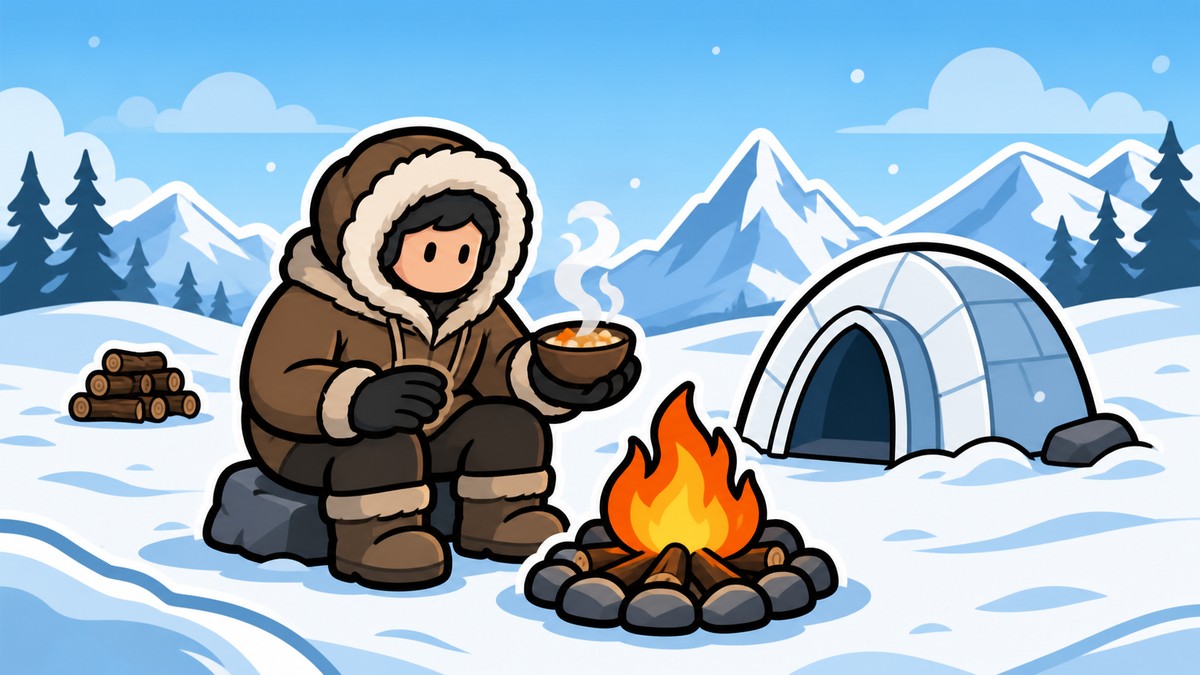
Cook fish before the storm whenever you can. A cooked stack lets you eat from shelter instead of juggling raw food, fire, and weather at the worst point of the week.
Early mistakes that ruin the run
Over-farming wood on Day 1
Build enough to stay warm, then shift toward food before hunger becomes the bigger problem.
Leaving fishing until too late
Day 2 should carry most of the food work, because storm fishing is much more dangerous.
Stacking logs beside the fire
Stored wood needs several steps of space from a burning campfire so your fuel pile does not catch.
Dragging the sled inside before the blizzard
After hauling logs in, leave the sled outside so snow buildup can help insulate the entrance.
Wandering during the storm
Once the blizzard starts, treat outdoor travel as an emergency move, not normal farming.
Day 2 food route
Use the nearest ice fishing hole
Keep the route short enough that you can return to fire before cold becomes dangerous.
Fish toward 13 to 15 total fish
This is the solo comfort target for a clean seven-day clear.
Cook what you catch
Cooked fish should be ready before storm days so every meal can be eaten quickly in shelter.
Warm up when the cold meter climbs
Return to a campfire, or build a temporary fire from nearby trees if the hole is too far from camp.
Sleep if body temperature becomes dangerous
Sleeping restores warmth, so use it before cold turns into a panic run.
Day 3 wood and cave setup
Cut trees but keep full logs
Do not spend the whole day splitting every fallen tree into small pieces.
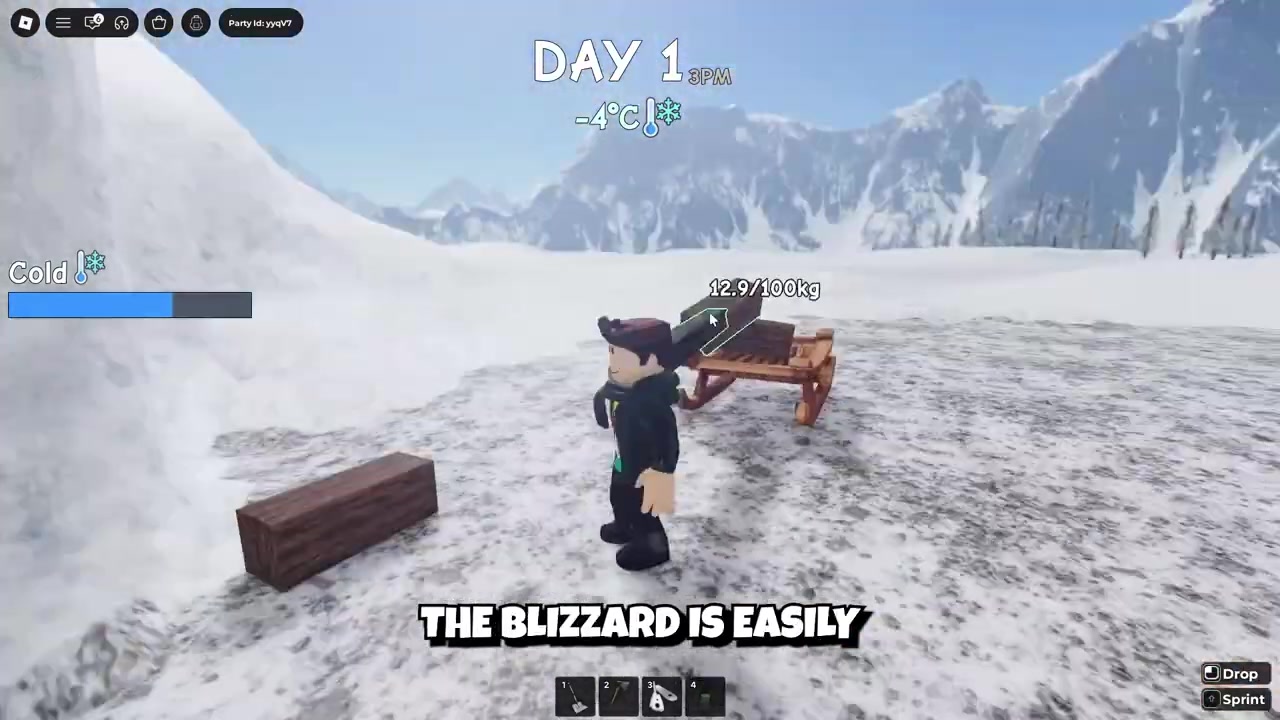
Drag full logs to the sled
Whole logs are heavy, but the sled can transport them and saves a lot of chopping time.
Haul the sled back to the cave
Bring the wood home before spending time on smaller organization jobs.
Dig storage from the cave edges
Expanding from the edges creates usable room with less wasted tunneling than cutting through the middle.
Separate fire from supplies
Leave several steps between the campfire and stored logs so spreading fire cannot wipe out your fuel.
Finish the storm kit
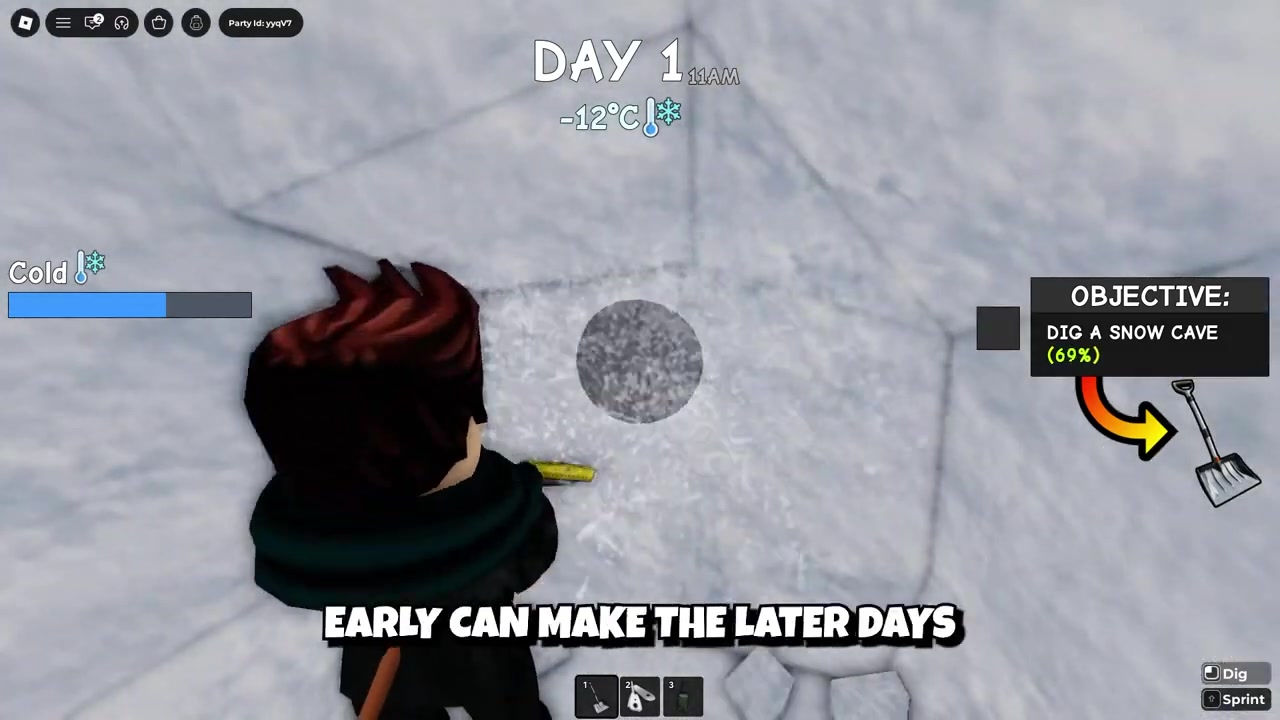
Before Day 4, aim for three full logs, at least four cooked fish, and a safe campfire space.
Haul whole logs on the sled before splitting them; the saved chopping time is what lets you finish cave storage before the storm.
Days 4 and 5 blizzard shelter plan
| Need | Target |
|---|---|
| Food reserve | 13-15 fish overall |
| Ready meals | At least four cooked fish before the blizzard |
| Fuel | Three full logs |
| Fire safety | Several steps between fire and stored logs |
| Sled position | Leave the sled outside after hauling supplies in |
KEY!The blizzard is the danger phase because cold rises faster and visibility drops enough to turn simple resource runs into survival problems. If your food and wood are ready, your job is to stop traveling, not squeeze in one more trip.
Keep the fire alive at a safe distance from stored wood. Fire can spread between logs, and a tight stack beside the campfire can turn your fuel reserve into the thing that destroys itself.
During the storm, eat cooked fish when hunger needs it, warm up before cold becomes an emergency, and stay inside the cave unless you have no food left. Some runs put the worst storm pressure on a slightly different day, but preparing for Days 4 and 5 gives beginners the buffer they need.
Days 6 and 7 rescue routine
Keep hunger and warmth topped up
Eat from reserves and feed the fire before either meter becomes a problem.
Stay near shelter
Short trips are safer than wandering, especially when rescue can appear close to home.
Watch Day 7 around 1:00 PM
Look for the helicopter near your shelter; sirens, a green flare, or rescue coordinates may also cue extraction.
Board as soon as it lands
Waiting too long can turn a completed survival run into another cold-management problem.
Ignore it only for extra survival
You may continue past Day 7, but another rescue helicopter is not guaranteed.
Mistakes to fix before another attempt
| Mistake | Better move |
|---|---|
| Collecting too much wood before food | Build basic safety, then fish early. |
| Leaving camp during storms | Stock the cave first and stay inside. |
| Letting the fire die | Feed it before warmth becomes dangerous. |
| Storing logs too close to fire | Keep fuel several steps away. |
| Sprinting or wandering too far | Save stamina and keep return routes short. |
| Failing to cook fish before the blizzard | Cook meals before shelter becomes mandatory. |
If your runs keep ending after the early setup, the problem is usually timing rather than one missing item. Use this table as a quick reset before starting again.
Multiplayer role splits for repeat runs
The same plan works in team runs, but players should not all chase the same job. One player can fish, another can tend fire, another can cook, and another can haul logs or fuel back to shelter.
Lobbies can support up to 25 players, so organized groups can build a much larger safety buffer. For beginners, though, the solo-friendly schedule still matters: food first, cave ready before the storm, rescue on Day 7.
Frequently Asked Questions
How many fish do you need to survive seven days solo?
Aim for 13 to 15 fish. It is a comfort target for a solo clear, so beginners should not plan around perfect hunger timing or last-minute fishing.
Should beginners gather wood or fish first?
Fish first, after your basic shelter and fire are working. Wood becomes the main job once your food supply can carry you through the storm.
When does the blizzard happen?
Plan around Days 4 and 5. If the harshest weather shifts later in your run, the same preparation still helps because your cave is already stocked.
Can you leave the cave during the blizzard?
You can, but beginners should treat it as an emergency move only. If hunger drops under about 25% and you have no cooked fish, build a heat path with fires before attempting a food run.
What time does the rescue helicopter arrive on Day 7?
Watch around 1:00 PM on Day 7. Stay close enough to board quickly if the helicopter lands near your shelter or the extraction cue points you away from it.
More questions⤵
Can you keep playing after Day 7?
Yes. Ignoring the helicopter can let you keep surviving beyond Day 7, but that becomes an extra survival run because another helicopter is not guaranteed.
Video help





Leave a Reply