
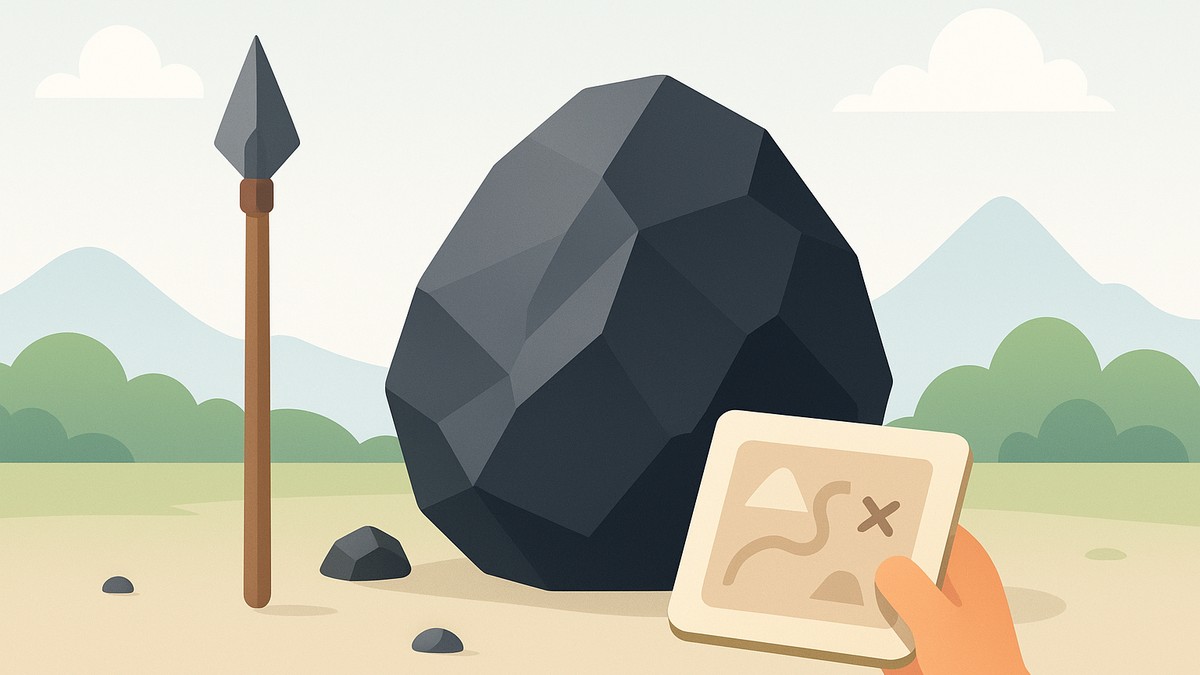
The best Obsidian farm in ARK: Survival Ascended Genesis Part 1 is the Volcanic biome, especially around the lava falls and the volcano cave, but you can also find reliable nodes in the Ocean, Snow, and Lunar biomes.
Obsidian shows up as smooth, glossy black rock, and in Genesis Part 1 it clusters in a handful of biomes rather than being sprinkled evenly across the map. The Volcanic biome carries the heaviest concentration by a wide margin, but the Ocean islands, the snowy mountains at the edge of the map, and even the Lunar biome all hold usable nodes if you know exactly where to land. Below are the biome-by-biome coordinates, what each spot looks like on arrival, and how to mine it without getting buried under the weight.
Best biome to farm Obsidian first
KEY!If you only want to visit one place, go to the Volcanic biome. The lava falls and the volcano cave are packed with Obsidian scattered across the floor, and the same runs hand you crystal, metal, element shards, and black pearls on the side. It is the densest and most efficient source on the map.
The Ocean biome is the safer, more spread-out alternative — several resource-rich islands carry Obsidian alongside crystal, metal, and oil, so you can sweep them at a relaxed pace without cave hazards. The Snow biome offers a smaller mountain route toward the end of the map, and the Lunar biome is a low-density fallback where each spot is only a few nodes. When you genuinely need volume, come back to the volcano.
All Obsidian coordinates by biome
| Biome | Coordinates | Landmark |
|---|---|---|
| Ocean | 91.3, 13.3 | Resource-rich island with Obsidian, crystal, metal, and oil |
| Ocean | — | Island with the blue lighthouse and mine tunnels |
| Ocean | 80.9, 23.4 | Island with the large building |
| Ocean | 69.4, 34.7 | Island with nodes scattered across the floor |
| Snow | 68, 6.9 | Mountain approach at the edge of the map |
| Snow | 65, 9.1 | Node cluster next to four or five metal nodes |
| Snow | 70.6, 2.8 | Small spot far at the end of the map |
| Snow | 76, 4.2 | Little mountain near the map’s edge |
| Volcanic | 2.7, 77.1 | Lava-edge spot at the end of the map |
| Volcanic | 10.3, 84.3 | Ground near the falling lava waterfall |
| Volcanic | 27.9, 95 | Volcano cave entrance |
| Lunar | 4.7, 21.6 | Small three-node spot |
| Lunar | 44.3, 13.2 | Cluster of three to four nodes |
| Lunar | 58.4, 6.2 | Small three-node spot |
Here is every location worth flagging, grouped by biome. The landmark column tells you what to look for on arrival so you know you are in the right place before you start swinging.
Some players also point to broad mountain clusters in the Bog and Arctic biomes, but those sit outside the routes mapped above, so treat the coordinates here as your reliable starting set and confirm any others in-game before committing a long run to them.
For raw volume, fly straight to the Volcanic lava falls around 10.3, 84.3 — the floor there is blanketed in Obsidian, and the nearby volcano cave at 27.9, 95 stacks even more on top.
Ocean biome Obsidian islands
| Coordinates | What to check |
|---|---|
| 91.3, 13.3 | Shoreline, far left, top node, and bottom node |
| Blue lighthouse island | Mine tunnels in the cliff platform, both halves of the island |
| 80.9, 23.4 | Floor, sides, and top of the large building |
| 69.4, 34.7 | Floor nodes on both sides of the island |
The Ocean biome is dotted with resource-rich islands, and the best approach is to land on one and sweep it completely rather than grabbing the first node you see. The island at 91.3, 13.3 has Obsidian right at the shoreline, more toward the left, a node up at the top, and a bit down at the bottom — and while exploring you will also pull crystal, metal, and oil.
Another island carries a distinctive blue lighthouse with mine tunnels built into the cliff platform. Run those mines and you will find metal, crystal, gems, and Obsidian throughout; the island itself is split in two, and both halves are loaded with resources. There is no clean map coordinate for this one, so use the lighthouse itself as your marker. The island at 80.9, 23.4 is easy to spot by its large building, with Obsidian on the floor, along the sides, and up on top of the structure. The island at 69.4, 34.7 rounds out the Ocean run with more floor nodes on both sides.
Snow biome mountain spots
| Coordinates | What to check |
|---|---|
| 68, 6.9 | Mountain approach through the trees; first nodes appear here |
| 65, 9.1 | Exact node area beside four or five metal nodes |
| 70.6, 2.8 | Standing nodes plus a few on the floor |
| 76, 4.2 | Small mountain a little back from the map’s edge |
The Snow biome Obsidian sits on the mountains right at the end of the map, so head for the edge and climb. The approach at 68, 6.9 takes you up through a stretch of trees where the first Obsidian appears; push further down and you will find most of it clustered near a group of four or five metal nodes. That exact node area is at 65, 9.1, which is the coordinate to punch in if you want to skip straight to the metal-and-Obsidian pocket.
Two more spots sit even further out. At 70.6, 2.8 there is Obsidian standing up and some laying on the floor, and a short hop away at 76, 4.2 a little mountain holds a bit more. The snow all looks the same out here, so lean on the coordinates rather than the scenery.
Lunar biome fallback nodes
| Coordinates | Node count |
|---|---|
| 4.7, 21.6 | Three nodes |
| 44.3, 13.2 | Three to four nodes (one hides beneath another) |
| 58.4, 6.2 | Three nodes |
The Lunar biome is not a serious Obsidian source. There is no dedicated field here — every spot is only about three nodes, so treat it purely as a top-up if you happen to be in the area. If you actually need a lot of Obsidian, the Volcanic biome is where you should be.
What to bring and how to mine Obsidian
Obsidian is mined from the smooth black rocks — the glossy nodes, not ordinary dark stone — and the practical early-game tool is a Metal Pick, which gives a solid yield per hit. Once you have a harvesting dino, an Ankylosaurus or a Magmasaur pulls far more per node and is the better call for real farming runs.
The catch is weight. Obsidian is heavy, and a full run will bog you down fast, so plan for it — ride a high-weight dino, or drop Storage Boxes and haul the stone out in stages rather than trying to carry everything at once. The Volcanic and Snow nodes double as metal spots, so it is easy to overload without noticing.
Buying Obsidian through the Hexagon Exchange

If travel or danger is blocking a farming trip, you can buy Obsidian through the Hexagon Exchange at 5 Obsidian for 180 Hexagons. It is a fine emergency top-up when you cannot safely reach a node, but the rate is steep for anything approaching bulk, so keep it as a backup rather than your main supply.
Mistakes that waste your Obsidian runs
The most common trap is mining decorative black rock that looks the part but yields nothing — only real nodes drop Obsidian, so check the harvest before you commit to a spot. The second is assuming every biome is dense; the Lunar biome in particular only ever gives you a few nodes at a time, so do not build a route around it.
Finally, do not underestimate the volcano cave. It is far more dangerous than it first appears once creatures and hazards spawn in — lava, aggressive predators, and tight spaces all bite hard — so go in prepared rather than treating it like an open-field grab.
Frequently Asked Questions
Which biome has the most Obsidian in Genesis Part 1?
The Volcanic biome, without question. The lava falls and the volcano cave have Obsidian scattered everywhere, and it is the densest, most efficient source on the map.
Can you find Obsidian in the Ocean biome?
Yes. Several resource-rich Ocean islands carry Obsidian along with crystal, metal, and oil — start with the islands at 91.3, 13.3, 80.9, 23.4, and 69.4, 34.7, plus the blue lighthouse island with its mine tunnels.
Is the Lunar biome good for Obsidian farming?
No. There is no dedicated Obsidian field there, and each spot is only about three nodes, so it works as a top-up at best. Head to the Volcanic biome when you need volume.
What tool or dino should you use to harvest Obsidian?
A Metal Pick is the practical early-game choice. When you have one available, an Ankylosaurus or Magmasaur gathers much more per node and is better for serious farming.
Can you buy Obsidian with Hexagons?
Yes — the Hexagon Exchange sells 5 Obsidian for 180 Hexagons. It is handy when you cannot safely reach a node, but too expensive to rely on for bulk crafting.
Video help


Leave a Reply