
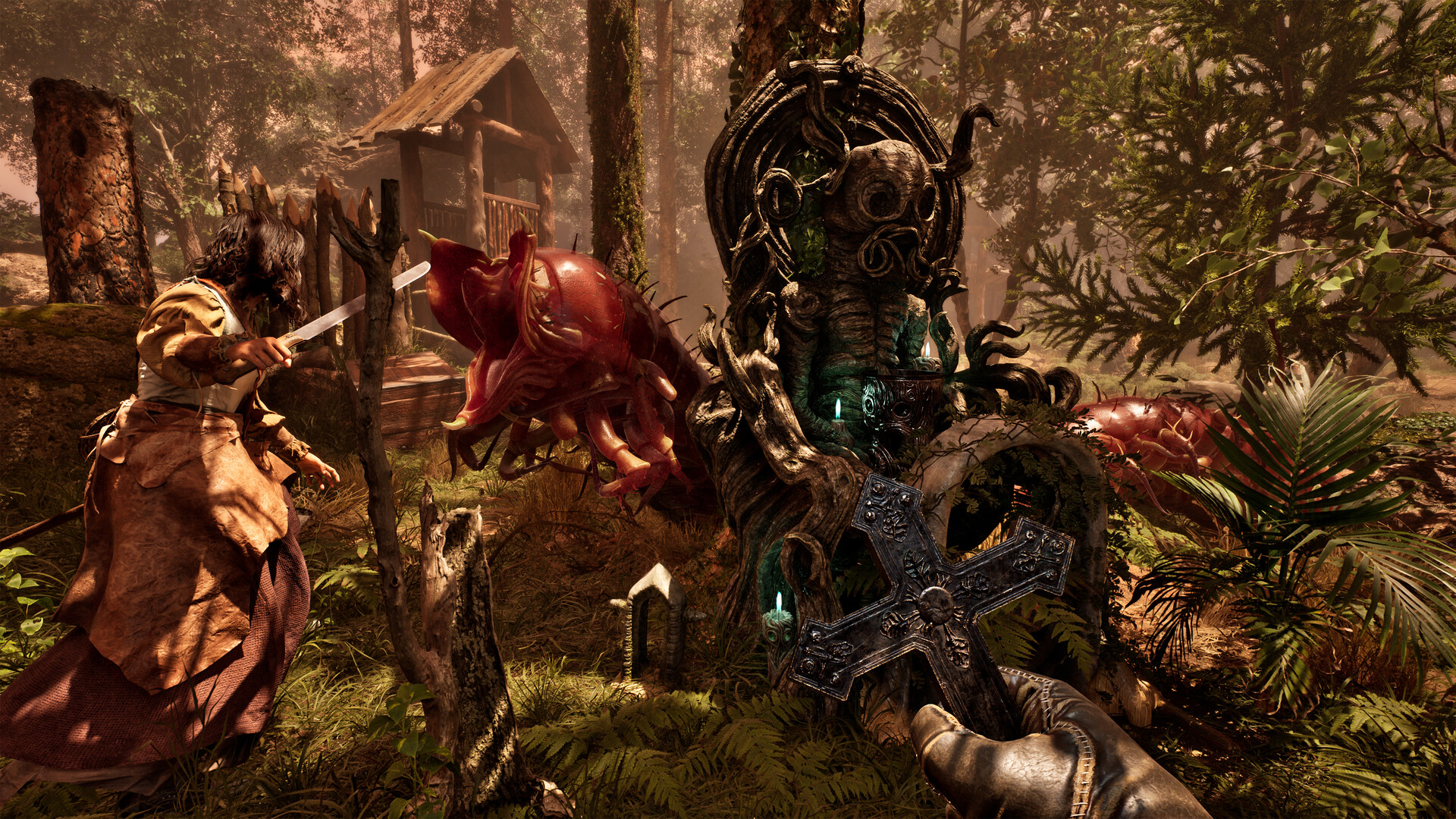
The Mound: Omen of Cthulhu runs on a madness-driven altered-perception system where each player can see and hear unreliable threats differently, with up to four-player co-op, solo play backed by an AI companion you can switch off, and crossplay that has been described as fully supported but is not nailed down yet.
The Mound: Omen of Cthulhu drops a team of treasure hunters into a cursed South American jungle where the real enemy is your own perception. As madness builds, the world quietly lies to you — sights, sounds, even teammates can turn into things that aren’t there. Here’s how the madness system, solo support, four-player co-op, and crossplay actually shake out.
- The short version on madness, solo, co-op, and crossplay
- How madness twists what you see and hear
- What piles on sanity and hallucination pressure
- Why your screen and your teammate’s don’t match
- Playing The Mound solo
- Four-player co-op and how a run flows
- Where crossplay stands
- Mistakes that wreck a run
- Frequently Asked Questions
The short version on madness, solo, co-op, and crossplay
| Feature | Answer |
|---|---|
| Madness system | Altered perception that distorts sight and sound as pressure builds |
| Solo play | Supported, with an AI companion you can switch off |
| Co-op | Up to four players |
| Crossplay | Described across PS5, Xbox Series X|S, and PC, but not confirmed to bank on |
If you only want the headline answers: madness is an altered-perception system, not a health bar you babysit. You can play alone with an AI partner, you can bring a full squad of four, and crossplay has not been officially confirmed. The rest of this guide unpacks each of those.
How madness twists what you see and hear
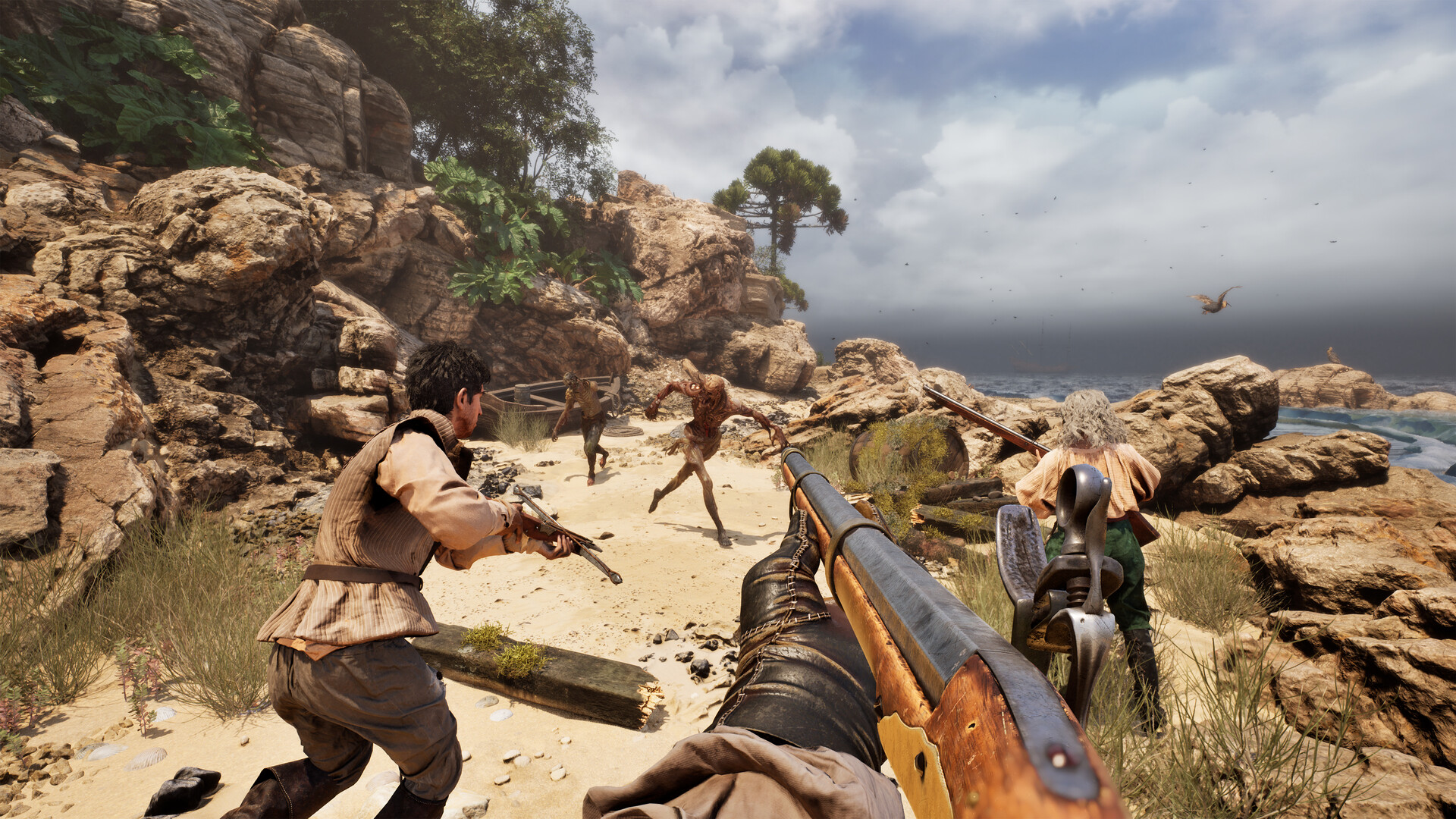
Madness is the beating heart of The Mound. Instead of a curse that just drains a stat, it’s a pressure system that makes the jungle actively play with your senses the deeper you go and the worse your run gets. As it climbs, threats stop being predictable and the line between what’s real and what’s illusion starts to blur.
That shows up in concrete ways. The world can appear drenched in blood, traps can read like harmless mirages, and your vision can shift enough that navigation and threat assessment become unreliable. Audio gets deceptive too, so a growl to your right or a voice calling for help might be the jungle rather than a real cue. Add darkness and isolation on top and paranoia sets in fast — you stop trusting the map, the noises, and eventually each other.
What piles on sanity and hallucination pressure
| Pressure | What |
|---|---|
| Noise | Move and fight quietly — the jungle reacts to loud runs |
| Injury and bleeding | Patch up fast; a bleeding ally keeps the pressure high |
| Traps | Watch your footing, especially when your vision is compromised |
| Rain | Expect worse sight and sound; slow the pace down |
| Fallen allies | Rescue or revive quickly instead of pushing on a man down |
| Moving slowly | Keep momentum toward the target; lingering costs you |
| Greed | Bank what you have and leave before it snowballs |
| Separation | Stay in contact — a lone member is what the jungle hunts |
| Forest awakening | Treat late-run escalation as your cue to extract |
You can’t see a precise gauge, but you can absolutely feel what makes things worse. Madness pressure spikes when the expedition gets loud, hurt, greedy, slow, or scattered — so the smart play is to manage the run like a stealth-survival mission, not a smash-and-grab. The stressors below are the ones to respect; think of them as risk to defuse rather than numbers to track.
Why your screen and your teammate’s don’t match
Here’s the part that makes co-op genuinely unnerving: madness is per-player. One person can see hallucinated creatures or a warped environment that nobody else does, which means a callout like “monster on the left” might be true for the caller and empty air for everyone else. Your squad’s shared picture of the map quietly falls apart.
Taken far enough, that subjective reality can make a teammate look like a hostile figure — so someone panics, swings or shoots, and now you’ve got friendly fire and fractured trust in the group. This isn’t a visual filter slapped on top of the game; it’s the core Lovecraftian design, using perception itself as the thing that breaks the team apart.
Because madness is per-player, get a second set of eyes to confirm a threat before you attack it — if only you can see the “monster,” it may be a hallucination or an ally.
Playing The Mound solo
Solo is supported, but it isn’t a stripped-down lone-wolf mode. Drop in by yourself and you’re assisted by an AI-controlled companion, so you still have a partner to lean on while the jungle works on your head. That keeps the co-op survival loop intact even when nobody else is online.
You can also disable the AI companion if you’d rather go it truly alone. Expect that to make things noticeably harder — a solo run with no partner and no one to confirm what’s real is a much steeper survival test, so ease into it once you know the ropes.
Four-player co-op and how a run flows
Four-player co-op is the point of the game, not a bonus mode — the whole design is built around a team collaborating under uncertainty, choosing contracts and surviving together. A typical expedition follows a loose loop from the ship out to the jungle and back, and knowing that flow keeps a fresh squad from falling apart on its first contract.
Every run roughly follows the same rhythm, from picking a contract to extracting with the loot before the jungle turns on you.
Pick a contract on the Tempestad
Choose your expedition from the ship and commit the team to it.
Read the mission info and value target
Check the objective and the value you need to hit before anyone moves out.
Split gear at the table
Share weapons, torches, and survival supplies so nobody’s caught empty-handed.
Bring the ox-wagon
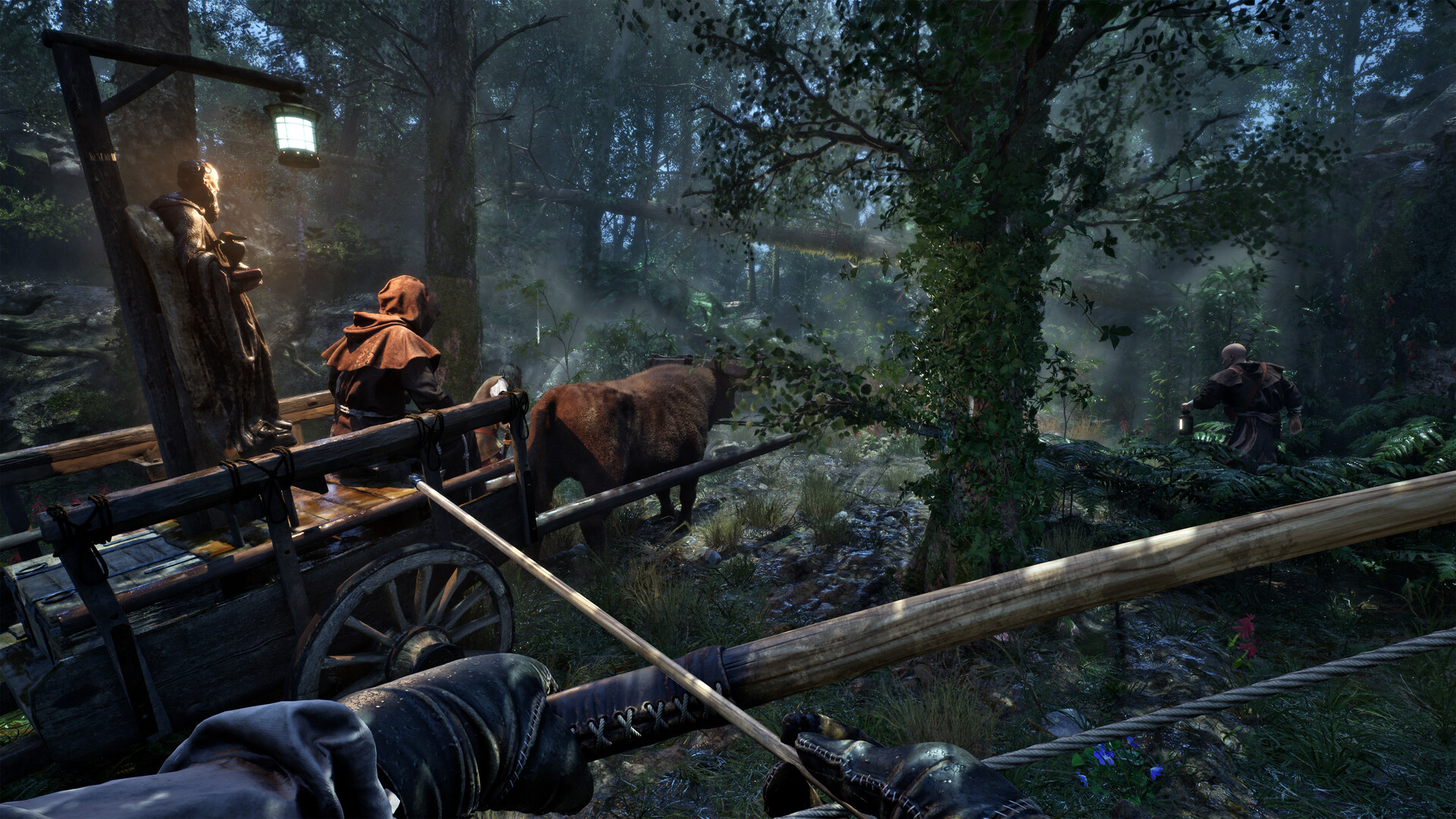
Call Father Escalona’s ox-wagon with G and use its storage as shared loot space and your return anchor.
Loot toward the target
Push into the jungle and gather until you meet the contract’s value requirement.
Manage noise and sanity pressure
Move quietly, stay close, and watch for the stressors that spike madness.
Rescue and revive allies
Pull downed teammates out and use rescue tools such as Ammonia Salts when you have them.
Extract before it snowballs
Head for the wagon and leave before greed or the forest’s escalation breaks the run.
Video help
Where crossplay stands
Crossplay is the one answer to hold loosely. The game has been described as launching with full cross-play so players on PlayStation 5, Xbox Series X|S, and PC can share sessions — but that hasn’t been pinned down firmly, and cross-progression details like shared saves or cosmetics across platforms are even less clear. Until it’s confirmed live for your platform, don’t build a squad around it working.
Mistakes that wreck a run
| Mistake | Better habit |
|---|---|
| Expecting a simple treasure sweep | Read the contract and plan the run before you move |
| Ignoring mission information | Check the objective and value target first |
| Splitting up | Stay together and keep callouts flowing |
| Over-looting | Extract once you’ve hit the target |
| Making too much noise | Move quietly — noise draws the jungle to you |
| Assuming teammates see the same thing | Confirm a threat before acting on a callout |
| Trusting every cue | Question strange sights and sounds, especially deep in a run |
Most failed expeditions come down to treating The Mound like a normal loot game. It punishes greed, poor communication, and blind trust in what’s on your screen, so a few habits go a long way toward getting your team home with the riches instead of losing everyone to the jungle.
Frequently Asked Questions
Is there a visible sanity or madness meter?
The game is built to avoid an obvious UI bar and instead communicates your state through the environment — shifting lighting, textures, and sounds — so you read your madness off the world rather than a gauge. Exactly how much of that stays purely diegetic isn’t fully spelled out, but you shouldn’t count on a clean on-screen meter.
Can different players see different hallucinations?
Yes. Madness effects are per-player, so one teammate can see hallucinated creatures or a warped environment that nobody else does. That’s why callouts can disagree with what’s actually on someone else’s screen.
Can you play The Mound: Omen of Cthulhu solo?
Yes, solo play is supported. You aren’t dropped in completely alone by default — you get an AI companion to help you survive the expedition.
Does solo mode include an AI companion?
It does, and you can turn it off. Playing without the AI partner makes a solo run considerably harder, since you lose both the extra hands and anyone to confirm what’s real.
How many players can play co-op?
Up to four. The whole experience is designed around four-player co-op and team coordination as madness escalates.
More questions⤵
Does The Mound: Omen of Cthulhu support crossplay?
It’s been described as supporting full cross-play across PS5, Xbox Series X|S, and PC, but that isn’t locked down, and cross-progression is even less clear. Treat crossplay as unconfirmed until you see it working on your platform.
What should a team do when one player sees something others do not?
Hold fire and confirm before anyone acts. Because madness is individual, a “monster” only one person sees may be a hallucination or even a teammate, so verify the threat as a group rather than reacting to a single callout.





Leave a Reply