
To tame a Tidepup in ARK: Genesis Ascended, injure yourself or a nearby tame to very low health, let the wild Tidepup heal it, then feed the Tidepup during its tired resting window and repeat the loop until it is tamed.
The Tidepup is one of the shoulder companions added with the Tides of Fortune content for ARK: Genesis Ascended, and it does not tame like anything you knock out. There are no traps, no tranq arrows, and no narcotics involved. Instead you lean on its healing instinct: hurt a target badly, let the Tidepup rush in to patch it up, and feed the little salamander while it rests. Get the loop going and it comes home as a support pet you can keep on your shoulder.
What kind of tame the Tidepup is
The Tidepup is a small, semi-aquatic salamander-style creature built around healing and cleansing rather than dealing damage. This is a passive support-heal tame, not a knockout tame, so its whole taming method is triggered by its urge to heal badly injured allies near it.
It is tied to the Tides of Fortune adventure content and functions as a shoulder pet once tamed, healing survivors and tames over time and stripping harmful effects. Because it rides on your shoulder, it still leaves room for a second shoulder companion alongside it.
Where Tidepup spawns
Tidepups spawn all along the beaches in the Ocean biome, and they are a very common spawn there, so you rarely have to hunt for one.
Players also report them showing up in shallow coastal zones, streams, and beach shallows rather than out in the deep ocean, which fits the revamped Ocean biome the Tides of Fortune content is built around. Look at the water’s edge, not the depths.
What to bring before taming
| Item or setup | Use |
|---|---|
| Controllable tame (or self-damage) | The patient you drop below 10% health to trigger the Tidepup’s heal |
| Regular Kibble | Preferred food, fastest taming |
| Raw Prime Meat / Raw Mutton | Strong backup foods when you have no kibble |
| Raw Meat | Works in a pinch, slower progress |
| Safe beach or shallows | Cleared of predators so your bait tame is not killed mid-heal |
The taming loop is cheap, but the one thing you cannot skip is a patient to injure — a tame you can safely drop to very low health, or your own character if you are careful. Whatever you use as bait needs enough health to survive being taken almost to zero, because if it dies before the Tidepup finishes healing, the loop resets.
For food, Regular Kibble is the best and preferred option, taming fastest. If you do not have kibble on hand, Raw Prime Meat and Raw Mutton are strong backups, and plain Raw Meat works too, just more slowly.
How to tame a Tidepup in ARK: Genesis Ascended
The whole tame is a repeating heal-and-feed loop, so once you have a Tidepup and a tame to injure, you just cycle these steps until the bar fills.
STEP 1/5
Find a Tidepup on the beach
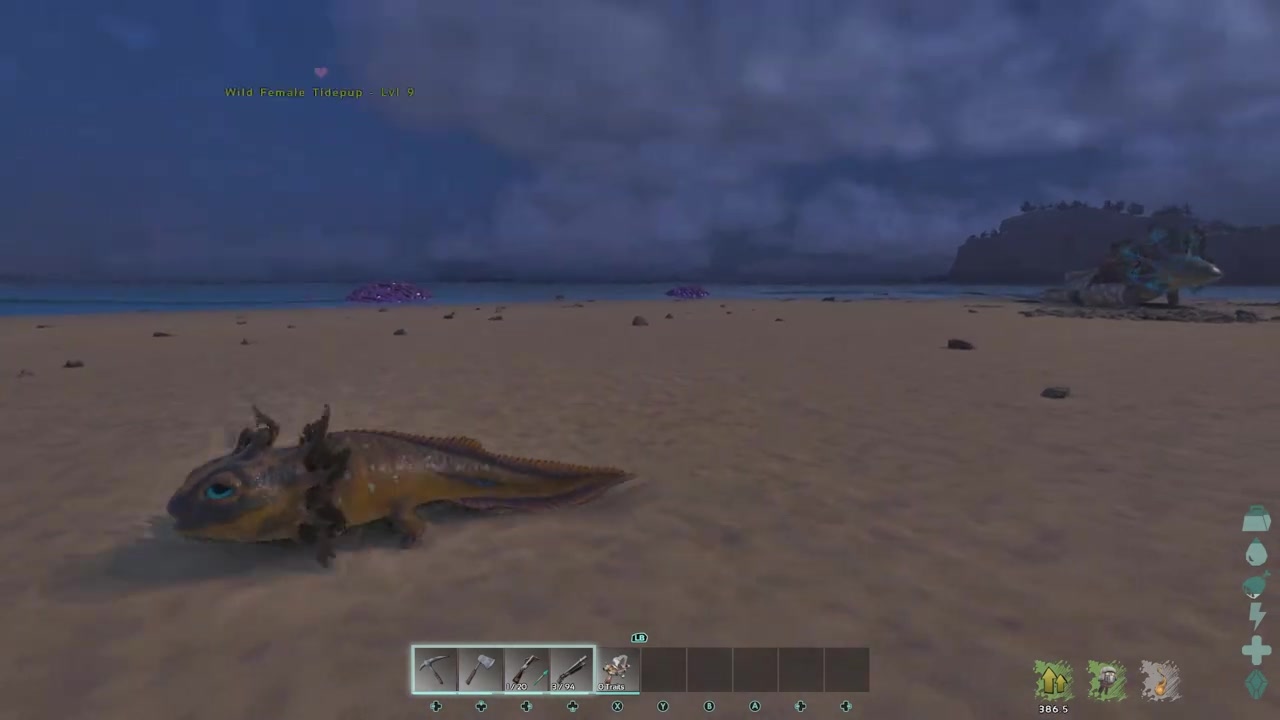
Head to the beaches in the Ocean biome, where Tidepups are a common spawn.
STEP 2/5
Bring a tame in close
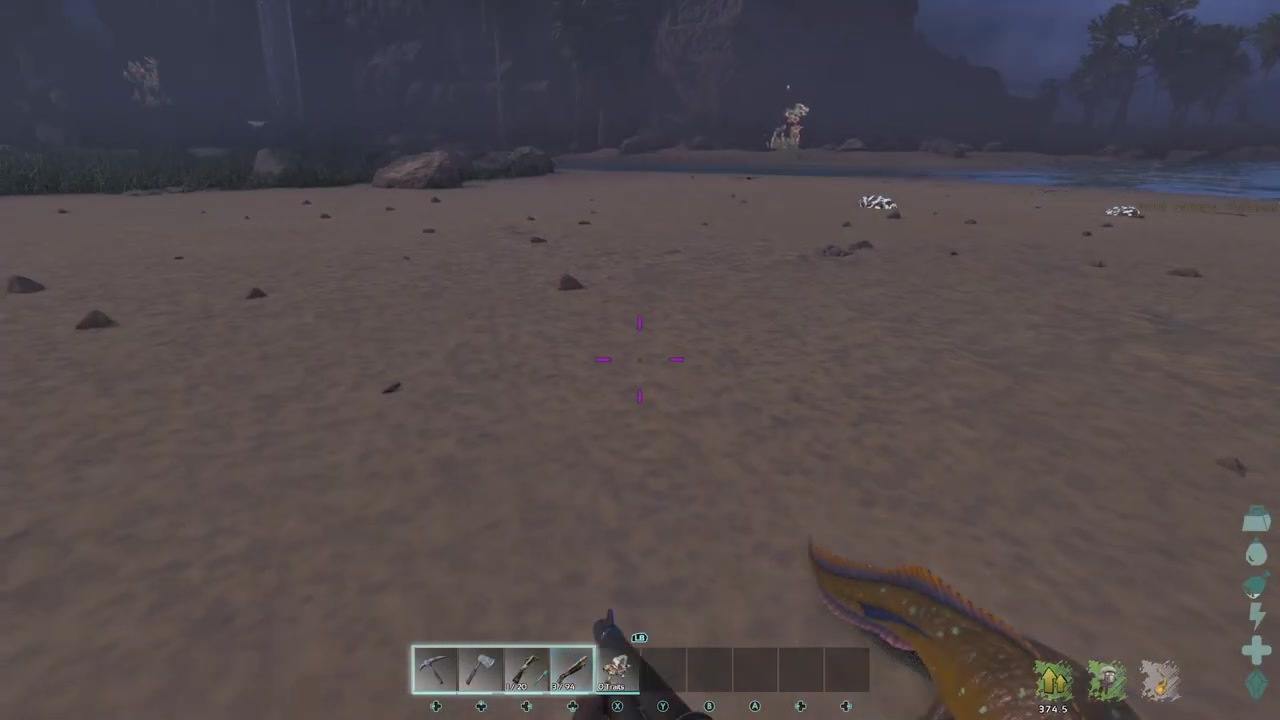
Any tame with reasonable health works as the patient — walk or ride it right up to the Tidepup.
STEP 3/5
Drop the tame below 10% health
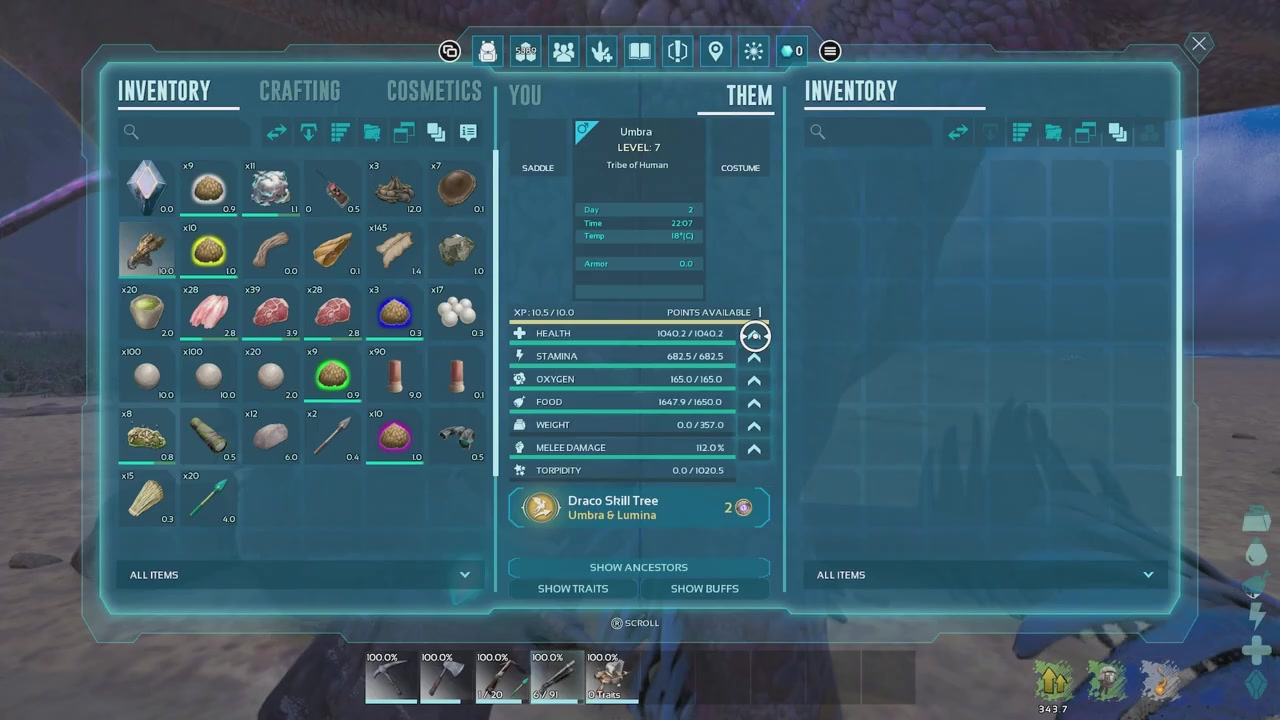
Damage the tame to under 10% of its max — a tame with 1,040 health, for example, has to sit below 104.
STEP 4/5
Wait for the companion animation
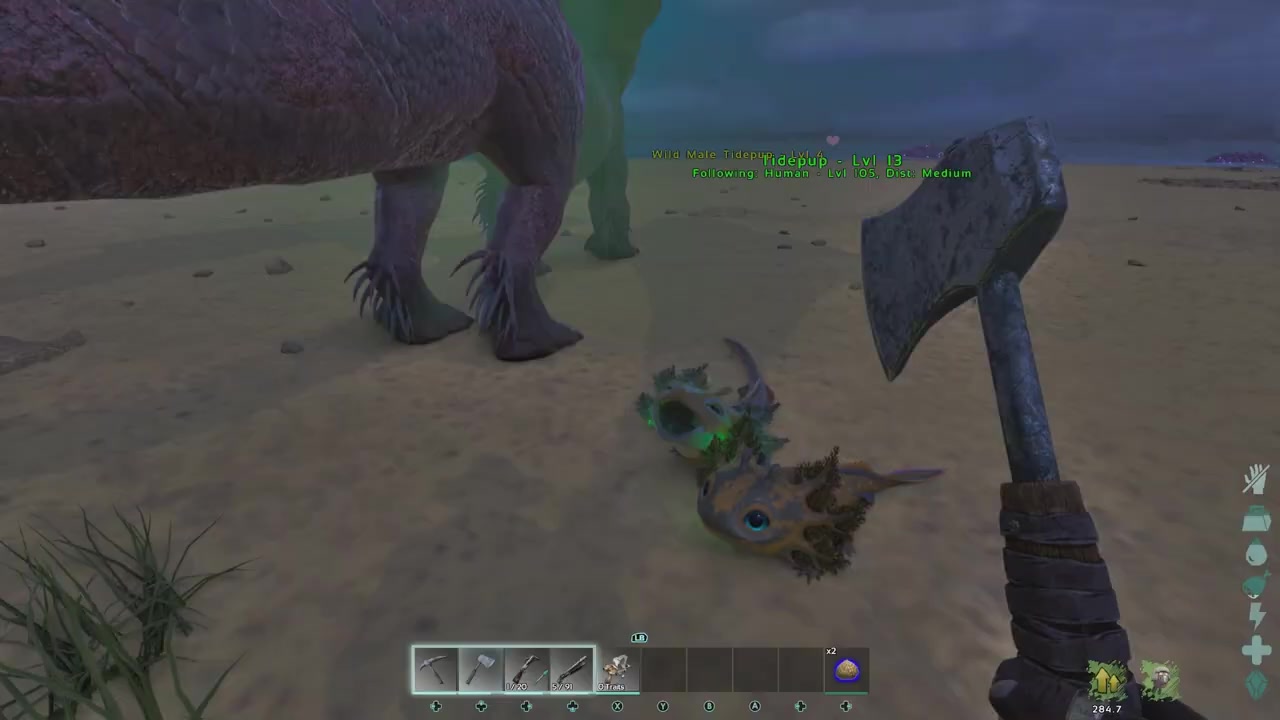
Once health is low enough the Tidepup plays its little companion animation and then gets tired.
STEP 5/5
Feed the Tidepup while it rests
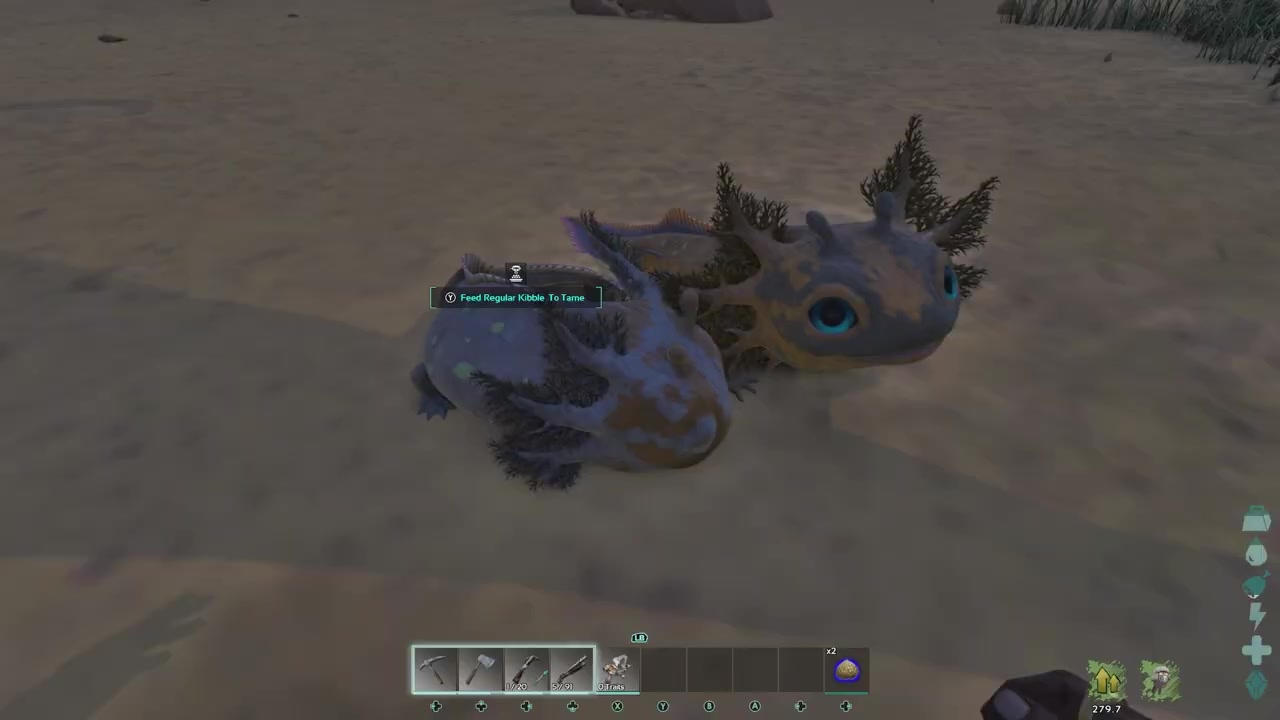
Feed it Regular Kibble, or Raw Prime Meat, Raw Mutton or Raw Meat, and repeat the loop until it is tamed.
Use a sturdy tame as your patient, not a fragile one — it has to survive being dropped under 10% health over and over, so more max health means more margin before an accidental hit kills it and resets the loop.
Video help
Mistakes to avoid while taming
The biggest error is treating this like a normal tame and trying to knock the Tidepup out — torpor does nothing here, and narcotics are never needed. The second is hitting the Tidepup itself while you swing at your bait; that can spook it or set your progress back, so aim your damage only at the patient. If several Tidepups are nearby, a stray hit on another one can scare off the one you want.
Keep the fight area clean of predators before you start, because the moment your low-health bait tame takes an extra hit from a wild creature it can die, and a dead patient means no heal to feed off. For the same reason, use controlled damage and watch the bait’s health bar closely rather than burst it down. Don’t wander off either — leaving the area can make the Tidepup lose interest in the healing job.
You can use yourself as the patient instead of a tame, and community methods include draining health with a Syringe, a Blood Pack, or standing in a Campfire. It works, but self-damage is riskier than injuring a tame you can top back up, so keep an eye on your own bar. Note that the exact trigger is a little contested — most players use below 10% health, though some report it kicking in closer to 20% or less, so treat 10% as the reliable number.
What Tidepup does once tamed
| Ability | Effect |
|---|---|
| Stasis / regeneration buff | Enhanced regeneration plus damage reduction you can share with other creatures |
| Life sense | Marks nearby creatures with a heart and their exact health percentage |
| Zone heal | Heals your creatures in an area, similar to a Daeodon |
| Reversal | Instantly heals you after you take damage, triggered manually |
| Dispel | Clears a status effect like bleed or shock (it can return once the timer resets) |
| Lunge | A short hop to get out of the way of danger |
| Shoulder pet | Rides on your shoulder and still leaves room for a second companion |
The reason it is worth the effort is the support kit. A Tidepup heals and regenerates allies, hands out a damage-reduction and enhanced-regeneration buff you can push onto other creatures, and can dispel nasty status effects. It is genuinely handy support in a shoulder-pet package, and it stacks well with a second shoulder companion.
Its zone heal is comparable to a Daeodon’s area healing — arguably a touch better — and it is far less of a chore to get and keep fed than a Daeodon, which makes it an easy pick for boss prep and cave runs. The abilities below come into their own on the larger evolved form, which is rideable and fully support-focused, but the taming itself gives you the core healer first.
How Tidepup evolution works
Once tamed and sitting on your survivor, a Tidepup can slowly build an evolution meter — shown as a little DNA-style icon in the corner. You feed it by taking damage on yourself in controlled bursts; each qualifying hit ticks the meter up a small amount, and filling it takes a while rather than a couple of quick attempts. The gain per cycle varies, so treat it as a patient, take-your-time process, not a fixed grind.
KEY!
When the meter hits 100% you get a choice: metamorphosis turns it into the large, rideable form, while neotenic stabilization keeps it as the small axolotl but enhances its abilities for even better healing. One important warning: if your Tidepup dies, it cocoons instead of dying permanently — a little soul-ball drops that you can pick up and carry, and it stays immortal as long as you don’t lose it. But bringing it back resets its evolution progress, so any meter you had built is gone and you start that part over. Be careful with it out in the field.
Frequently Asked Questions
Is Tidepup a knockout tame?
No. It is a passive support-heal tame — there is no torpor, no traps, and no narcotics. You trigger its heal on an injured target and feed it while it rests.
What food does Tidepup prefer?
Regular Kibble is its preferred food and tames fastest. Raw Prime Meat, Raw Mutton, and plain Raw Meat all work as backups, just more slowly.
How low does health need to be for Tidepup to heal?
Below 10% of the patient’s max health is the reliable trigger. A tame with 1,040 max health, for instance, needs to sit under 104. Some players report it triggering nearer 20%, but 10% is the safe target.
Can you use yourself instead of a tame?
Yes. Draining your own health with a Syringe, a Blood Pack, or a Campfire works, but self-damage is riskier than injuring a tame you can heal back up, so watch your own health bar carefully.
Where does Tidepup spawn?
Along the beaches in the Ocean biome, plus shallow coastal zones, streams, and beach shallows. It is a common spawn near the water’s edge rather than in the deep ocean.
More questions⤵
What happens if your Tidepup dies?
It cocoons instead of dying for good. A soul-ball drops that you can pick up and carry, keeping it effectively immortal — but bringing it back resets any evolution progress you had built.
Can Tidepup evolve into a bigger form?
Yes. Build its evolution meter by taking controlled self-damage while it rides you, and at 100% choose metamorphosis for the large, rideable form or neotenic stabilization to keep it small with enhanced abilities.

Leave a Reply