

Mutations are rare Palworld 1.0 breeding outcomes that can hatch a stronger Alpha Pal with 90-100 IVs, two rainbow passives, two condensation stars, and a high-level active skill, with mutation-focused cakes raising the observed odds in testing.
Mutations are one of the biggest breeding changes in Palworld 1.0, because they can turn a normal breeding attempt into a much stronger result. Instead of simply giving you a cleaner version of the parents, a mutation can jump to a different, higher-tier Pal and attach a full bundle of endgame bonuses.
The important part is that mutations are still rare. Regular Cake can trigger them, but the new mutation-focused cakes are the real farming tool if you are chasing Alpha Pals, rainbow passives, or strong IV rolls.
Breeding mutations create higher-tier Pals
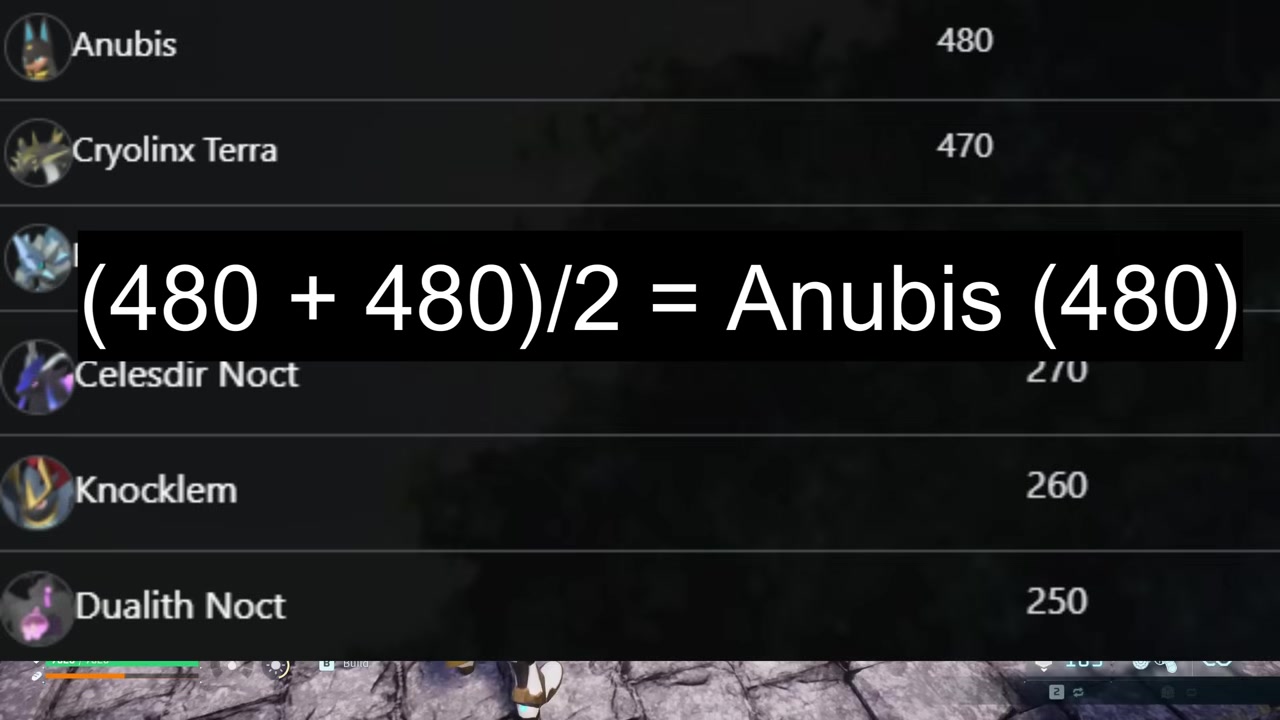
A mutation is a special breeding outcome that overrides the normal egg result. In regular breeding, the game uses internal breeding values assigned to each Pal, combines the parents, and produces the usual species from that calculation. A mutation pushes that result upward into a Pal the game treats as better, rarer, or stronger.
That means a mutation is not just “the same baby with better stats.” It can hatch as a different species, and that species can be above what the parent pair would normally produce without chain breeding.
This is why the system feels confusing at first. You may breed two familiar parents, expect the standard result, and instead get an Alpha version of another Pal with stronger passives, high IVs, and built-in condensation progress.
Mutated Pal rewards and stat bonuses
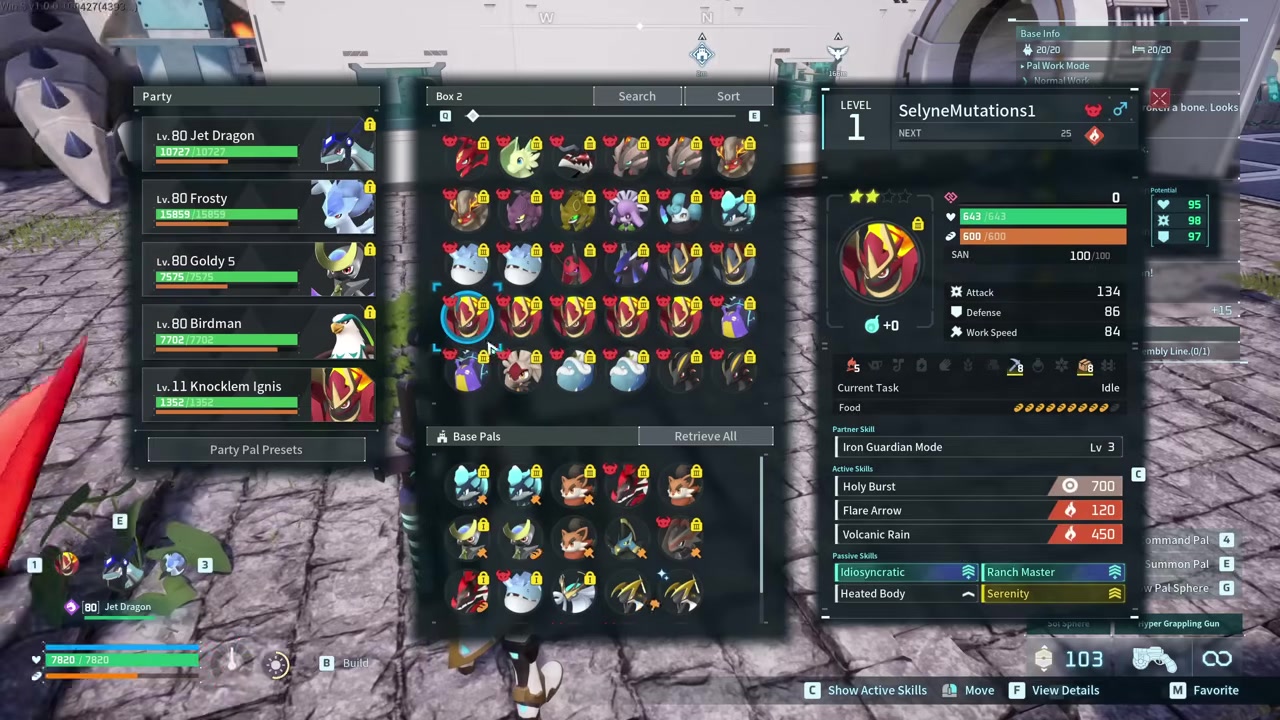
| Mutation reward | What it means |
|---|---|
| Higher-tier species | The egg can hatch into a Pal above the normal breeding result. |
| Alpha status | The mutated Pal hatches as an Alpha Pal. |
| Two condensation stars | The Pal starts with two levels of condensing, equal to 12 Pals worth of condensation progress. |
| 90-100 IVs | The mutation rerolls IVs into the 90-100 range instead of copying the parents perfectly. |
| Two rainbow passives | One passive comes from a newer mutation pool, and one comes from the broader catchable rainbow passive pool. |
| High-level active skill | The Pal gains one strong active skill based on its first element type. |
When a mutation hits, the reward is a full package rather than a single stat bump. The mutated Pal gets Alpha status, two condensation stars, 90-100 IVs, two rainbow passives, and a strong active skill tied to its element.
The IV reroll is strong, but it is still a reroll. If your parents already have perfect 100 IVs, a mutation can land lower than the parent value while still staying inside the high 90-100 range.
The active skill follows the Pal’s first element. For dual-element Pals, that matters: a Pal with Fire as its second element may still pull its bonus move from the first element’s skill pool instead of getting a top Fire move.
Mutation odds and cake effects
| Cake | Effect |
|---|---|
| Regular Cake | Can trigger mutations, with observed results around 0.7% in a 1,000-cake sample. |
| Vegetable Cake | Produces two Pal Eggs at once, giving more mutation rolls per breeding cycle. |
| Deluxe/Extravagant Vegetable Cake | Boosts mutation odds; naming differs by source or localization, but this is the main mutation-focused cake effect. |
| Mushroom Cake | Slightly increases the chance that newborn Pals have higher stats. |
| Special Cake | Improves the chance of inheriting multiple passive skills from the parents. |
Regular Cake can produce mutations, but the rate is low. In a hatchery sample of 1,000 regular cakes, mutations appeared 7 times, which is 0.7%. With 1,800 mutation cakes, mutations appeared 57 times, just over 3%.
KEY!Plan around regular Cake being roughly a half-percent to 1% mutation chance, while mutation cakes sit closer to the 3% range in that sample. Other early numbers put rates around 1%, 3%, 5%, or 5-10%, and the hatchery may behave differently from a standard Breeding Farm if it has a hidden rate effect, so the most useful fact is the direction: mutation-focused cakes are a major upgrade, not a guarantee.
Use Deluxe/Extravagant Vegetable Cake for mutation farming; it raised observed mutation hits from 7 in 1,000 regular cakes to 57 in 1,800 mutation cakes.
Rainbow passive slots on mutations
| Passive slot | Passives |
|---|---|
| First rainbow slot | Babysitter, Idiosyncratic, Immortality, Heavily Armored, Skirmisher |
| Second rainbow slot | Demon God, Eternal Engine, Diamond Body, Lavish Hospitality, and other catchable rainbow passives |
| Not added by the mutation roll | Legend, Siren of the Void, Savior, Invader, and similar non-catchable special passives |
Every mutation gives two rainbow passives, and the two slots are not pulling from the same list. The first slot comes from a newer pool that includes passives like Babysitter, Idiosyncratic, Immortality, Heavily Armored, and Skirmisher.
The second slot comes from the broader set of catchable rainbow passives. That includes familiar high-end passives such as Demon God, Eternal Engine, Diamond Body, and newer ones like Lavish Hospitality.
Several newer passives are not breeding-only; they can also appear through captures or disposable implants. Mutation breeding is still valuable because it bundles those passives with Alpha status, high IVs, condensation stars, and a stronger species result.
Parent inheritance still works alongside the mutation roll. So while a mutation will not roll Legend by itself, a parent that already has Legend can still pass it down to the mutated offspring.
Species results use internal Pal values
The species part of mutation breeding follows the game’s internal value system. In normal breeding, the parent values are averaged to decide the offspring. In a mutation, the game moves to a better internal value, and “better” means a lower number in that internal ranking.
That is why two Anubis can mutate into Noxlum instead of producing another Anubis. The mutation is not trying to preserve the parent species; it is jumping to a Pal the game ranks higher than the normal result.
High-tier examples show the same pattern. Breeding two Bellanoir Libero can point to Astegon as the mutation result because the top-tier and tower boss-style options above that range are removed from the pool. Breeding two Frostallion, meanwhile, can lead to Jormuntide Ignis or Astegon, because both sit as improvements from that breeding result.
The exact mutation species pool, cutoff range, and excluded top-tier list are still being mapped. The practical rule is clear enough for farming: mutations move upward within a limited range, so low-tier pairs can improve, but they will not suddenly jump all the way to the very top of the internal list.
Common mutation mistakes that waste cakes
The biggest mistake is treating mutations like normal stat inheritance. A mutation’s 90-100 IVs are rerolled, so perfect-IV parents do not force perfect-IV mutation babies. You are getting a high floor, not a guaranteed copy of the best parent value.
Another common mistake is expecting the offspring to match the parents. Mutations can hatch as a different Pal, because the system is choosing a stronger species result based on internal breeding values.
Cakes are also easy to misunderstand. Deluxe/Extravagant Vegetable Cake improves mutation odds, and Vegetable Cake can increase egg volume, but no cake makes every egg mutate. You should expect long batches, especially if you are chasing a specific species and passive spread.
Finally, mutation rolls do not hand out every special passive or every top-tier Pal. Passives like Legend, Siren of the Void, Savior, and Invader are not added by the mutation roll, and top-tier or tower boss-style Pals may be excluded from the mutation species pool.
Frequently Asked Questions
Can mutations happen with regular Cake?
Yes. Regular Cake can trigger mutations, but the observed rate is low: 7 mutations from 1,000 regular cakes, or 0.7%.
Do mutation cakes guarantee a mutation?
No. Mutation-focused cakes improve your odds, but they do not guarantee a mutation. In a 1,800-cake batch, they produced 57 mutations, which is just over 3%.
Can a mutated Pal inherit passives from its parents?
Yes. A mutation adds two rainbow passives, but parent passive inheritance can still happen. That means a passive like Legend can pass down if a parent already has it.
Can mutations give Legend or tower boss passives?
The mutation roll itself does not add Legend, Siren of the Void, Savior, Invader, or similar non-catchable special passives. Those need to come through inheritance when inheritance allows it.
Are mutation IVs always better than the parents’ IVs?
No. Mutation IVs are rerolled into the 90-100 range. That is excellent for most breeding projects, but a parent with 100 IVs can still produce a mutation with a lower IV value.
More questions⤵
Why did my mutation hatch as a different Pal?
That is normal. A mutation chooses a higher-tier species result based on internal Pal values, so the offspring can be a different Pal from both parents and from the normal breeding result.
Video help





Leave a Reply