


OpenClaw 2.0 is officially here as v2026.8.1, delivering a rebuilt web experience, simpler onboarding, stronger memory and session continuity, and a major reliability overhaul across the AI assistant platform.
| OpenClaw 2.0 detail | What you need to know |
|---|---|
| Official version | v2026.8.1 |
| OpenClaw 2.0 label | Officially referred to as v2026.8.1 (AKA OpenClaw 2.0) |
| Major focus | Web experience, onboarding, memory, sessions, and reliability |
| AI models | Expanded model support, including GPT-5.6 |
| Browser automation | Puppeteer-compatible CDP relay for paired Chrome sessions |
| Backup | Verified SQLite backup and restore tools |
| Latest beta development | v2026.9.1-beta.1 was released August 28 |
| Project | Open-source personal AI assistant |
- What is OpenClaw 2.0?
- The biggest OpenClaw 2.0 changes
- OpenClaw 2.0 vs earlier OpenClaw releases
- GPT-5.6 and expanded model support
- Browser automation gets a major upgrade
- SQLite backup finally makes long-running setups easier to protect
- Security is still something users cannot ignore
- Who should upgrade?
- Frequently asked questions
What is OpenClaw 2.0?
OpenClaw 2.0 is the major v2026.8.1 release of OpenClaw, rather than a separately numbered package called “2.0.” The project’s official documentation explicitly identifies v2026.8.1 as “OpenClaw 2.0.”
That distinction matters because OpenClaw continues to use its calendar-style versioning system. The npm package and GitHub release history therefore show versions such as 2026.8.1, rather than a conventional 2.0.0 release.
The release represents a broad modernization of the platform. Instead of concentrating on one headline AI feature, the OpenClaw 2.0 update touches the experience users interact with every day: installation, the browser interface, persistent sessions, memory, model configuration, reliability and operational tooling.
OpenClaw’s official release notes
The biggest OpenClaw 2.0 changes
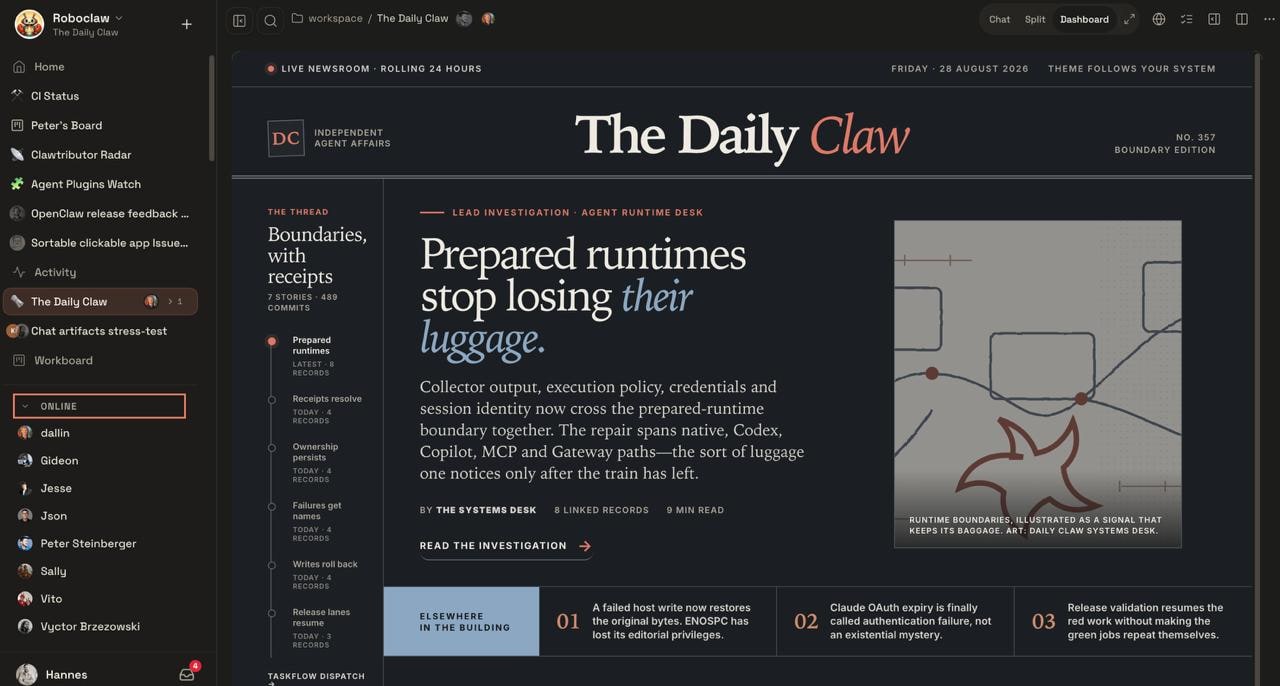
The first major change is the rebuilt web experience. OpenClaw’s own release documentation describes v2026.8.1 as bringing a rebuilt web experience alongside simpler onboarding, stronger memory and session continuity, and a large reliability pass.
That is particularly important for new users. OpenClaw has traditionally required more technical involvement than conventional AI assistants because users are effectively running an AI agent that connects models, tools, channels and local resources. The 2.0 release attempts to reduce that initial friction.
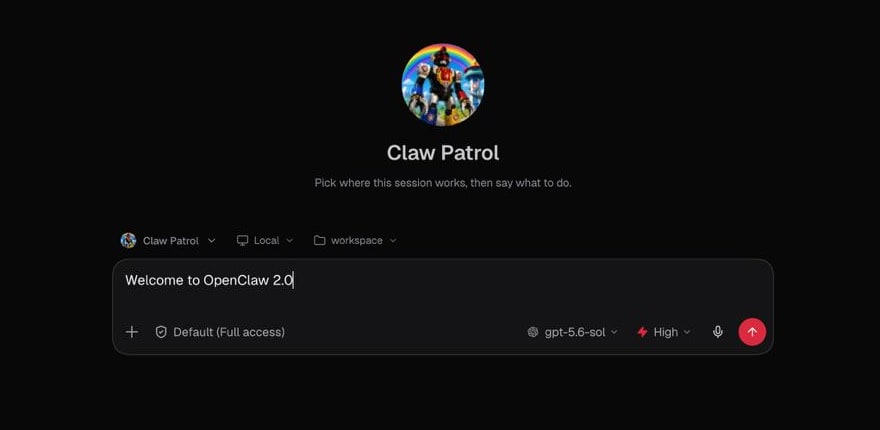
Session handling is another major focus. OpenClaw 2.0 is designed to make longer-running interactions more reliable, with stronger continuity between sessions. This matters because OpenClaw is intended to function as an ongoing personal assistant rather than simply a chatbot that answers one prompt at a time.
The release also builds on the substantial Control UI changes introduced with v2026.7.1, which added a more workspace-like approach to conversations, sessions and parallel work.
OpenClaw 2.0 vs earlier OpenClaw releases
| Area | Earlier OpenClaw | OpenClaw 2.0 |
|---|---|---|
| Web experience | Functional but evolving | Rebuilt web experience |
| Onboarding | More technical | Simplified |
| Sessions | Improving | Stronger continuity |
| Memory | Persistent capabilities | Stronger memory/session continuity |
| Models | Broad support | Expanded GPT-5.6 support |
| Browser control | Available | Puppeteer-compatible CDP relay |
| Data protection | Existing configuration/backup approaches | Verified SQLite backup and restore |
| Reliability | Frequent incremental fixes | Large reliability pass |
| Security | Ongoing hardening | Additional secret-handling protections |
GPT-5.6 and expanded model support
OpenClaw 2.0’s model ecosystem is also significantly more capable.
The 2026.8.1 beta series added support for GPT-5.6 Sol, Terra, Luna and Ultra reasoning models across OpenClaw and the Codex runtime.
The model/runtime system has also been redesigned so model and runtime selection can be handled more atomically. This is useful for users who switch between different AI models depending on the task rather than relying on a single provider.
OpenClaw’s broader model support is one of its fundamental advantages: the platform is designed to sit between the user and different AI models, rather than locking the entire experience to one model provider.
Browser automation gets a major upgrade
OpenClaw 2.0 also improves browser-based automation through Puppeteer-compatible CDP relay support for paired Chrome sessions.
In practical terms, this gives OpenClaw a stronger bridge into browser automation. Instead of treating web interaction as a completely separate workflow, paired Chrome sessions can become part of the agent’s toolset.
That opens the door to tasks involving websites, browser-based research and repetitive web workflows. However, browser access is also one of the areas where users should be particularly careful about permissions, credentials and prompt-injection risks.
SQLite backup finally makes long-running setups easier to protect
One of the less flashy but more important additions is verified SQLite backup and restore functionality.
The 2026.8.1 beta introduced commands for creating, listing, verifying and restoring OpenClaw SQLite snapshots, with restoration designed for a fresh target.
| Capability | OpenClaw 2.0 |
|---|---|
| SQLite backup creation | Yes |
| Backup listing | Yes |
| Backup verification | Yes |
| Restore | Yes |
| Fresh-target restoration | Yes |
| Purpose | Protect persistent OpenClaw data |
For users who have spent weeks or months building an OpenClaw setup, this is considerably more valuable than it may initially appear. A persistent AI assistant accumulates configuration, sessions, memory and integrations, so recovery becomes increasingly important as the installation grows.
Security is still something users cannot ignore
The OpenClaw 2.0 story should not be reduced to new features.
The project has faced significant security scrutiny throughout 2026, and OpenClaw’s ability to execute commands, interact with files, access browsers and connect external services means security has unusually high consequences compared with a conventional chatbot.
The 2026.8.1 beta series added security hardening around secret egress host binding, ensuring shared-store secrets are tied to specific HTTPS destination hosts and that unbound secret substitutions fail closed before plaintext egress.
More recently, OpenClaw development has continued to address serious agent-authority issues. On August 26, two P0 fixes addressed forged plugin-owner authority and terminal controls that could bypass session permissions.
That makes keeping OpenClaw updated especially important.
Who should upgrade?
If you already run OpenClaw, OpenClaw 2.0 makes the most sense for users who depend on persistent sessions, browser automation, multiple AI models or long-running agent workflows.
If your OpenClaw installation is relatively simple and stable, there is less urgency to upgrade solely for a headline feature. The release is broad rather than being a single transformative model upgrade.
New users have a stronger reason to start with the new version because onboarding and the web experience are two of the areas OpenClaw specifically targeted.
The important exception is users running highly customized or production-like installations. Before upgrading, make sure important configuration and data are backed up, particularly because OpenClaw’s architecture can involve plugins, channels, models and external integrations.
Frequently asked questions
Is OpenClaw 2.0 officially released?
Yes. OpenClaw’s official documentation identifies v2026.8.1 as “OpenClaw 2.0.”
What version is OpenClaw 2.0?
OpenClaw 2.0 corresponds to v2026.8.1. OpenClaw continues to use calendar-based version numbers rather than a conventional 2.0.0 numbering scheme.
What is new in OpenClaw 2.0?
The headline improvements include a rebuilt web experience, simpler onboarding, stronger memory and session continuity, and a major reliability overhaul. The release cycle also adds GPT-5.6 reasoning support, browser CDP relay capabilities and verified SQLite backup/restore tooling.
Does OpenClaw 2.0 support GPT-5.6?
Yes. The 2026.8.1 development cycle added GPT-5.6 Sol, Terra, Luna and Ultra reasoning support across OpenClaw and its Codex runtime.
Is OpenClaw 2.0 free?
OpenClaw itself is an open-source project, but using external AI models can involve separate API or subscription costs. The software and the underlying model usage should therefore be treated as separate costs.
Should existing OpenClaw users upgrade?
For most users who want the improved interface, stronger session continuity, newer model support and reliability improvements, upgrading is attractive. Users with complex installations should back up their data and review their integrations before making the switch.




Leave a Reply