


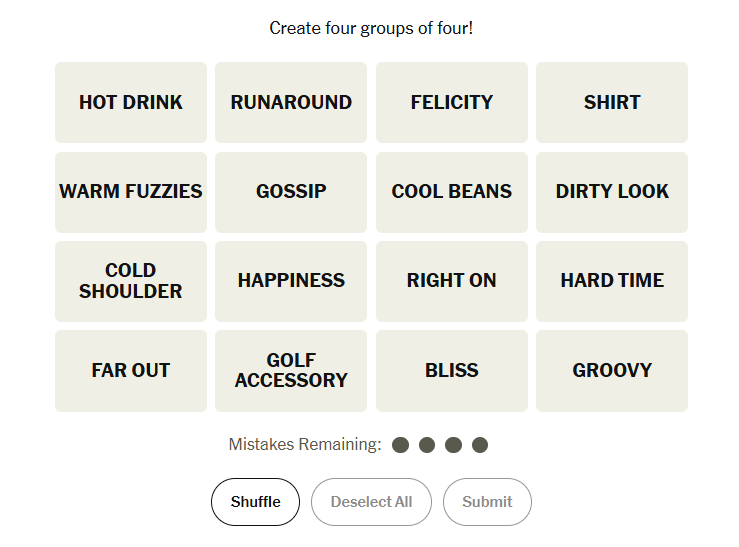
The New York Times Connections puzzle challenges players to sort 16 seemingly unrelated words into four connected groups. Each group shares a hidden link. Today’s grid blends physical actions, clever rearrangements, and nostalgic references, making it both playful and slightly deceptive. Below you’ll find gentle hints to guide your thinking, followed by the complete solutions once you’re ready to check your work.
NYT Connections Puzzle Overview: 03 July 2026
The puzzle for 3 July 2026 felt balanced at first glance, but several words could easily fit more than one theme. The easier groups revolved around familiar expressions and feelings, while the final category relied on pronunciation and multiple meanings. Solvers who spotted the wordplay early likely finished much faster than those chasing surface-level definitions.
NYT Connections Hints: 03 July 2026
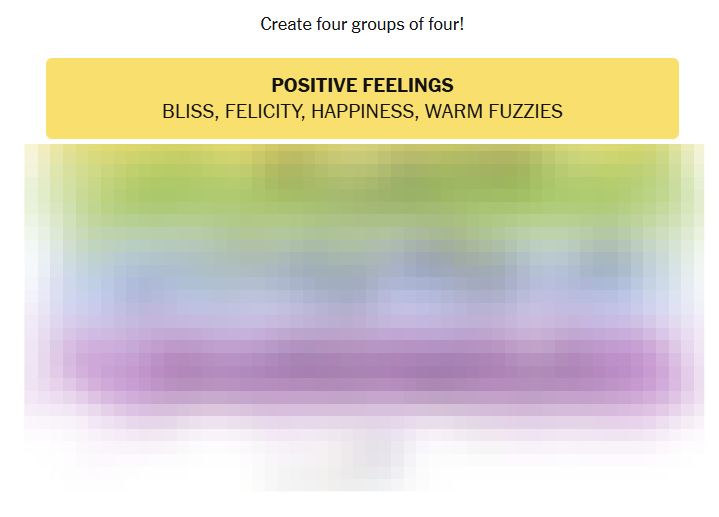
Category 1:
- These words describe pleasant emotional states.
- Think of feelings associated with joy and contentment.
- All four have a positive emotional tone.
- This was one of the more straightforward groups.
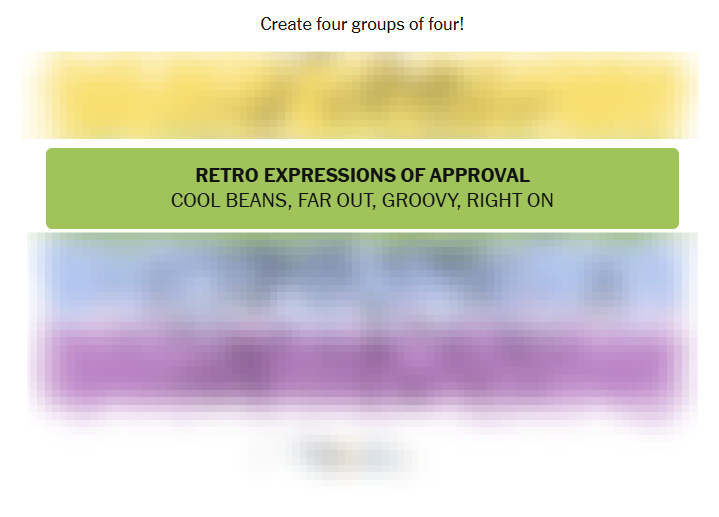
Category 2:
- Travel back to the 1960s and 1970s.
- These are expressions used to show approval.
- They might sound old-fashioned today.
- Each phrase means something is good or impressive.
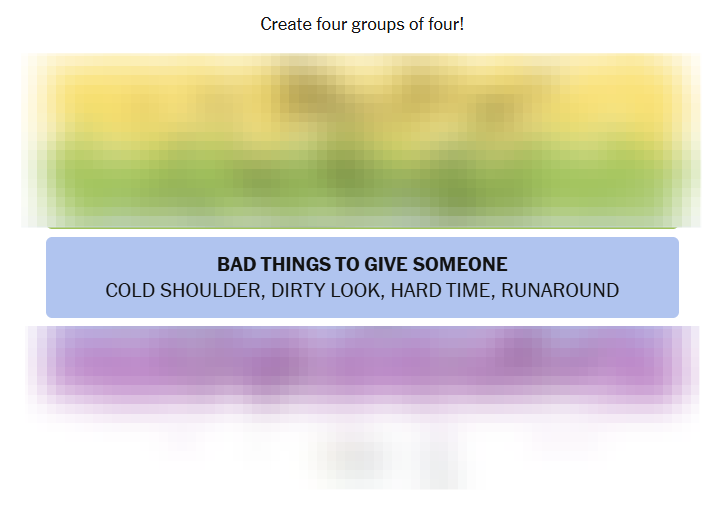
Category 3:
- None of these are literal objects.
- They describe negative treatment directed at someone.
- Think of common social interactions people dislike receiving.
- Several are well-known idiomatic expressions.
Category 4:
- This category depends on pronunciation.
- Focus on words that can be represented by the letter “T.”
- The connection is spoken rather than written.
- Multiple meanings point toward the same sound.
NYT Connections Answers: 03 July 2026
Here are the answers, grouped by category.
Category 1:
Category 2:
Category 3:
Category 4:
Conclusion & Quick Strategy Tip
The 03 July 2026 Connections puzzle balances straightforward action words with trickier conceptual links, making it satisfying once everything clicks. Quick strategy tip: lock in obvious verb groups early, then examine remaining words for structural patterns or shared cultural references.






Leave a Reply