
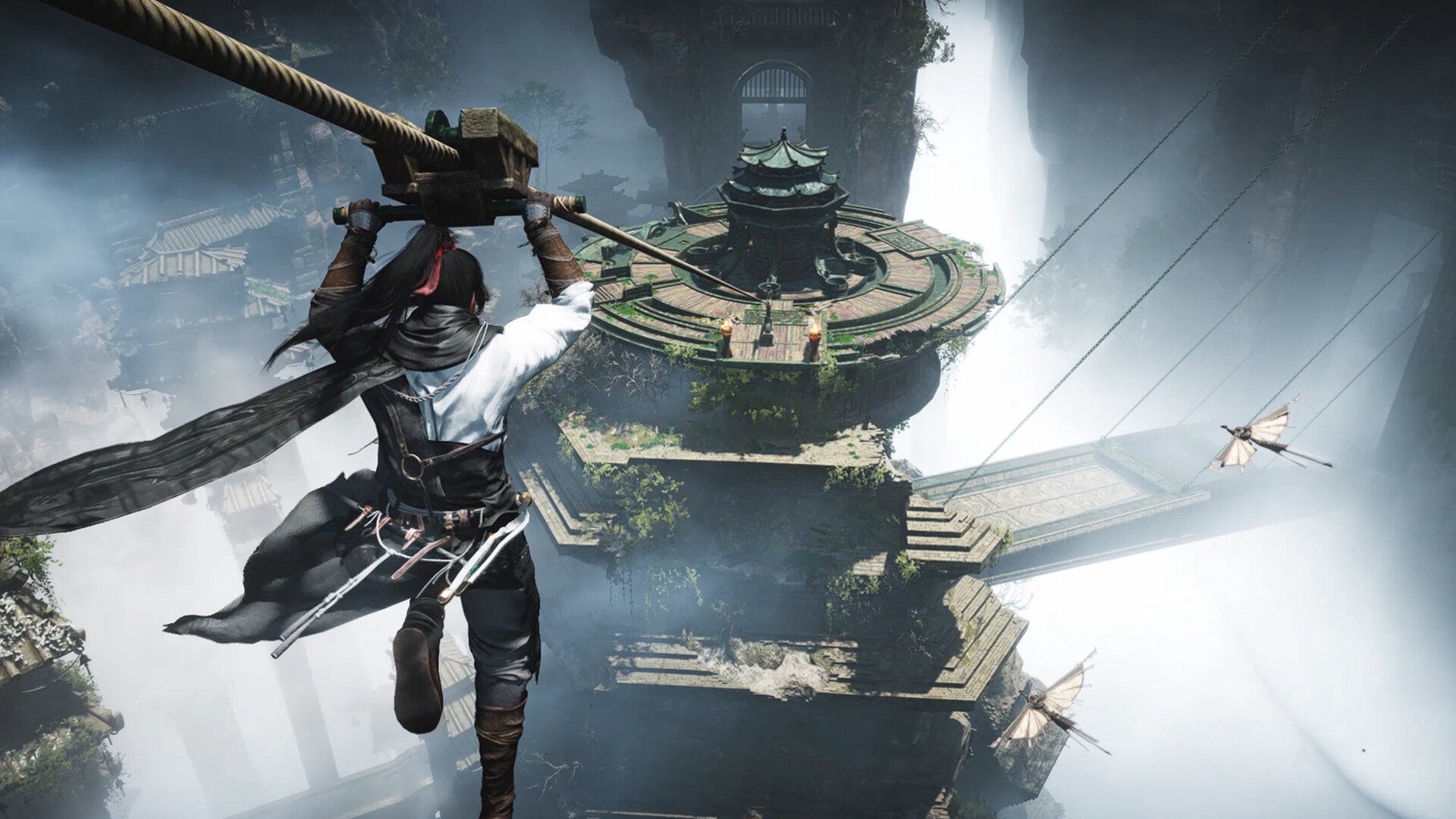
Mohist Hill is a new engineering-focused sect that arrived with Where Winds Meet 2.0’s Hidden Mountain update on July 23, 2026, built around Mohist philosophy, mechanisms, crafting, exploration puzzles, and a brewing conflict with the Qiongqi Artificers.
Where Winds Meet has spent its first year building outward — Qinghe’s river crossings, Kaifeng’s streets, the Hexi deserts, the Liangzhou peaks. Hidden Mountain builds upward, and it brings a sect that doesn’t fight the way the others do. Mohist Hill trades sword forms for gears, blueprints, and a thousand-year-old mechanical secret buried under the mountain.
- Release date and current status of Hidden Mountain
- The sect that builds instead of duels
- Where the sect sits in Hidden Mountain’s map and story
- Mohist Hill progression and the mechanical systems around it
- Mohist Hill against the Qiongqi Artificers
- Gauntlets, puppet masters, and clockwork bosses
- Scale, wildlife, and the marvels scattered across the region
- Details still to come at launch
- Frequently Asked Questions
| Detail | Status |
|---|---|
| Launch date | July 23, 2026 (UTC) |
| Update name | Hidden Mountain, Where Winds Meet 2.0 |
| Hidden Mountain | New multi-layered mountain region |
| Mohist Hill | New sect located within that region |
| Current live version | Version 2.0 (Hidden Mountain), live July 23, 2026 |
| Platforms | PC, PS5, Xbox Series X|S, mobile |
| Cost | Included with the game, no separate price announced |
Hidden Mountain went live on July 23, 2026 (UTC) across PC, PlayStation 5, Xbox Series X|S, and mobile, kicking off what the developers are calling the 2.0 era. Everything below is confirmed from the official reveal and launch — the current live build is Version 2.0 (Hidden Mountain), which went live July 23, 2026; the prior build was Version 1.8 (June 25), with a July 9 optimization patch.
The sect that builds instead of duels
Where every other sect in the Jianghu measures a disciple by their martial arts, Mohist Hill measures them by what they can build. It’s the knowledge sect — its members are truth-seekers who hold that there’s no higher truth than being of service to everyone equally, and helping yourself by helping others. The in-game description puts it as seeking paradise through the pursuit of profound truths: compass and square in hand, bring order to the mortal realm, place the greater good above all, provide aid to all equally.
That philosophy is genuine Mohist, and the sect wears it openly. Its stated principles are Utility, Universal Love, and Non-Aggression, and its sect rule of Universal Love reads: love universally, benefit mutually; those who benefit others will in turn be benefited. Mechanisms, to Mohist Hill, aren’t a way to flex power — they’re tools for solving real problems for everyone. Its motto is simply “connect the world through craft and techniques,” and the figure who leads them is revered as grand master, the one who measures the heavens. The sect’s lineage traces back to Mozi himself, long gone, his legacy carried by the craftsmen who stayed.
Crucially, this isn’t a cosmetic reskin of the sect interface. The developers have been explicit that Mohist Hill isn’t just a menu or a fast-travel node — it physically occupies Hidden Mountain, with disciples scattered from the workshops at the foothills to the clockwork towers deep inside Mohist City, researching, arguing, and living in a gear-driven land.

Mohist Hill hides deep within the mountain gorges, behind a roaring waterfall, with ancient siege engines and crossbows resting beneath its towering gates — machinery as deadly now as it was centuries ago. Survive the trials guarding the approach and you reach Mohist City itself, the heart of Mozi’s ingenuity, where in its golden age gears roared, waters sang, and scholars’ debates filled the air. Elsewhere in the region, Jade Stream Valley keeps its old water wheels and siphons churning across a landscape nobody has touched.
The region stacks vertically in a way the game hasn’t attempted before: underwater Mohist ruins with hidden chambers, subterranean labyrinths where history meets clockwork, the multi-level sprawl of Mohist City, cloudways strung between the mountains, and a sky city built on Mohist engineering. It reads as Eastern Steampunk — traditional wuxia architecture threaded through with moving machinery.
The main storyline runs straight through it. Following the clues left by Aunt Han, you head into the misty Mohist domains with familiar allies, chasing a millennium-old mechanical mystery along with the secrets of a reclusive sect and its skyward contraptions. There’s an undercurrent of warning in the local telling of it, too — talk of the Mohists’ ultimate secret, of some unimaginable treasure past the deadly mechanisms, and of old-timers who’d rather you didn’t wake those mechanisms at all.
Mohist Hill progression and the mechanical systems around it
| System | What it does |
|---|---|
| Divinecraft quests | Quest series that teaches how Mohist mechanisms operate and how to read their logic |
| Celestial Seize | Ability to retrieve items at range and manipulate surrounding objects, rearrange mechanisms, and open hidden paths |
| Creation submissions | Sect progression from apprentice to master artisan via research, mentorship, and submitted builds |
| Contraption crafting | Assemble mechanical devices and custom vehicles for puzzles and exploration |
| Aircraft | Clockwork construct used as transport between regions |
| Shuttle Train | Clockwork transit line connecting parts of the region |
| Environmental mechanisms | In-world gear puzzles that unlock paths and hidden areas |
Your time in Mohist Hill starts at the bottom. You join as an apprentice and climb toward true master artisan through three things: research, mentorship, and submitting your own creations for judgment. That’s a fundamentally different progression loop from grinding a martial-arts tree, and the sect’s bonuses are tied to building and mechanical crafting rather than raw combat output.
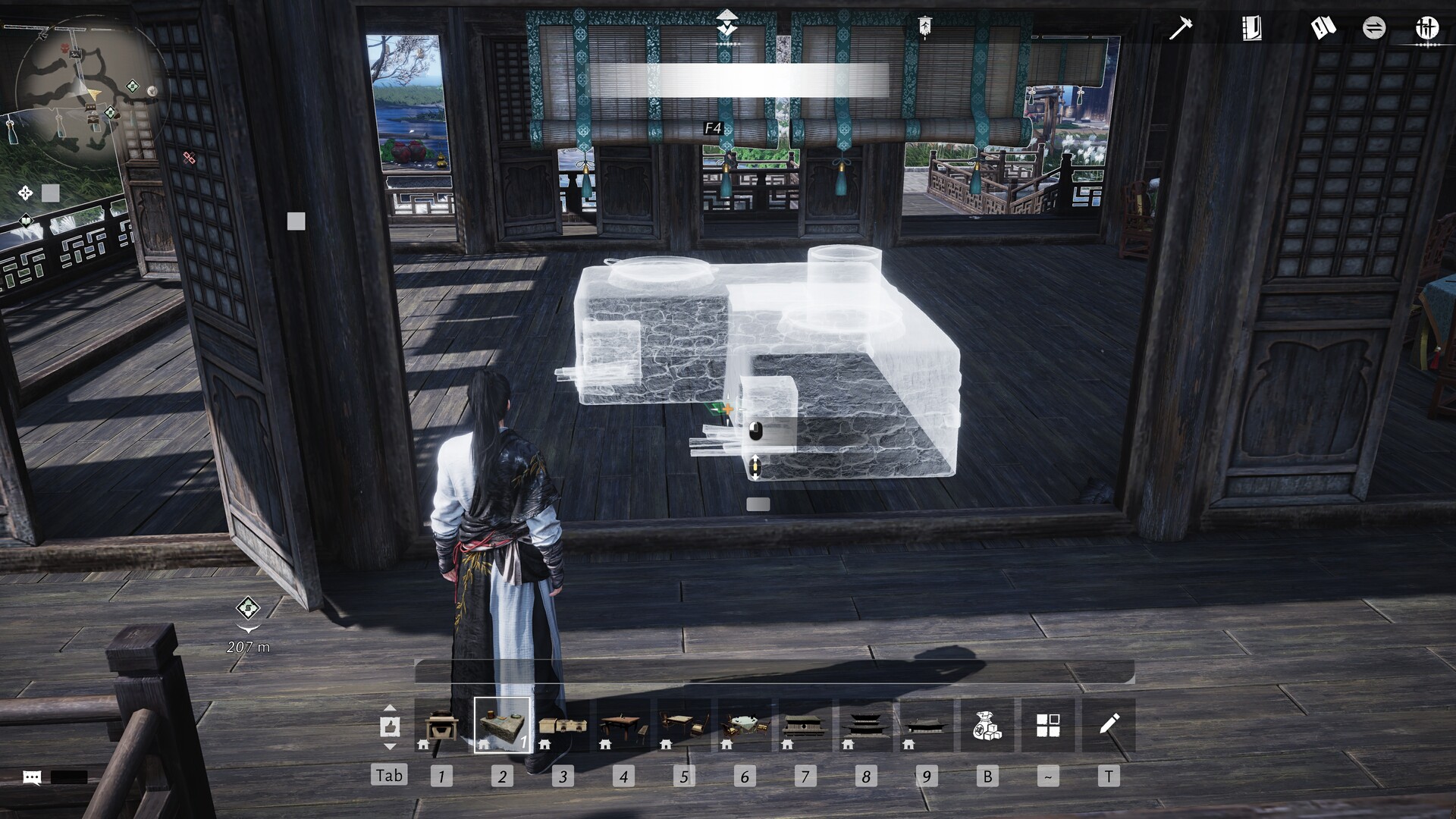
The systems that feed it are the same ones reshaping exploration across 2.0. The Divinecraft quest series teaches you how Mohist mechanisms actually work — how to read a structure’s design, follow its logic, and interact with the world through it. Mechanisms are blended into the environment rather than sitting in dedicated puzzle rooms, so progress often means watching a device run, deducing its function, and turning the right gear to open a path. On top of that sits a crafting system for assembling mechanical devices and custom vehicles, which doubles as both a traversal tool and a puzzle solution.
Celestial Seize deserves singling out, because it’s the ability that changes how you approach a room. It pulls distant items to you, but its real use is manipulating everything around you — shifting mechanisms into place, exposing routes, and untangling exploration challenges by rearrangement rather than force. Paired with Lightness Skill, climbing, gliding, and the mechanical vehicles, it’s how you cover elevation changes that would otherwise wall you off.
If you want a head start, bank spare Legendary Gear instead of dumping it before launch — 2.0 adds the Modulating Stone, obtained by salvaging surplus Legendary Gear, so idle equipment becomes upgrade material the moment the update lands.
Mohist Hill against the Qiongqi Artificers
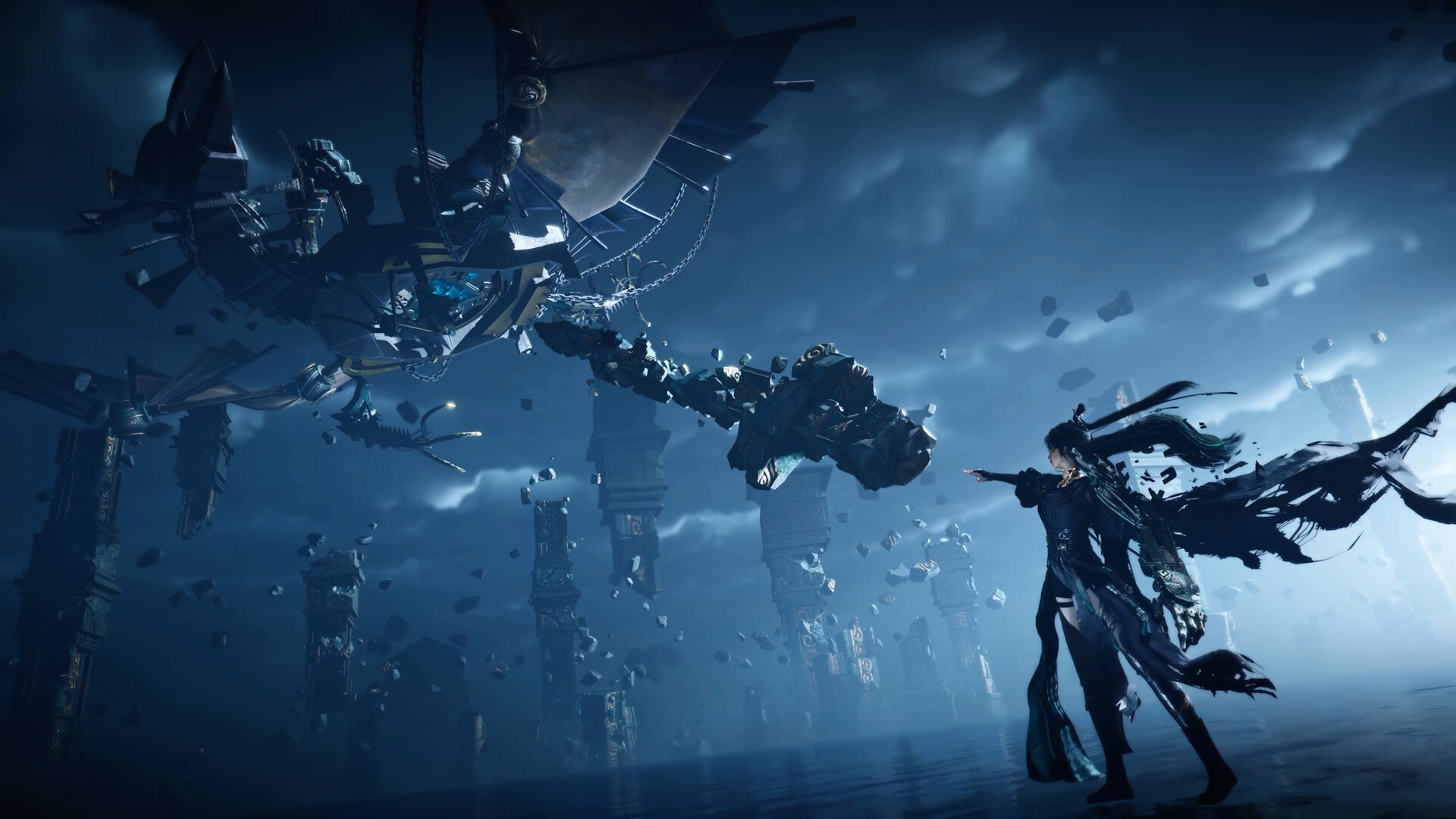
Mohist Hill has a rival that knows exactly as much about mechanisms as it does. The Qiongqi Artificers are equally skilled engineers who reached the opposite conclusion: they worship raw power, and they believe that only by dominating with mechanical might can anyone control the land’s destiny.
That’s the ideological spine of the whole update. One faction builds machines to benefit everyone equally; the other builds them to rule. The clash between them isn’t framed as a philosophical debate that plays out in cutscenes — it’s a fight over what Hidden Mountain becomes, and the developers have said the outcome rests in the player’s hands.
There’s a wrinkle to that tension worth noting, and the region’s own residents raise it: Mohists preach universal love and non-aggression, yet nobody has ever actually seen a haven free of conflict, and gates guarded by ancient crossbows sit awkwardly next to that creed. Whether the update leans into that contradiction or resolves it cleanly is one of the more interesting things to watch for on July 23.
Gauntlets, puppet masters, and clockwork bosses
| Addition | Known role |
|---|---|
| Gauntlets | New 2.0 weapon built on fast combos and burst damage |
| Bamboocut Kite | Martial Art style pairing Gauntlets with a Rope Dart for close pressure and repositioning |
| Changeless Heart – Zhang Wanshi | Careless-seeming foe whose deadly puppet formations carry the fight |
| Rosy-Faced Swordsworn | Mechanical twin-blade enemy under Zhang Wanshi, striking along hanging wires |
| Ci & Cuo | Mechanism-powered World Boss duo fighting in synchronization |
| Ironheart Centipede | World Boss with relentless multi-leg strikes and toxic mist |
| Bell Toller | Named foe slated for a future patch |
| Golden Colossus | Named foe slated for a future patch |
Version 2.0 brings Gauntlets to the Jianghu, the first genuinely new weapon class of the 2.0 era. They’re built for raw, hard-hitting close-quarters work — lightning-fast combos, heavy hit feedback, explosive burst damage — and they open a new Martial Art style called Bamboocut Kite, which pairs Gauntlets with a Rope Dart so you can slide between in-your-face pressure and tactical repositioning. Gauntlets are a 2.0 weapon rather than an announced Mohist Hill unlock, so how they slot into sect progression specifically is still open.
Combat elsewhere has been rewired around the mechanical theme. Brute force doesn’t get you far against clockwork enemies at higher difficulties — you’re expected to watch how a construct moves, work out its mechanical logic, and hit the weak point that logic exposes.
Balance work continues alongside all this. The developers have been gathering combat feedback through Training Terrace – Preliminary, live since July 9, and are tuning martial-arts balance from what players send back. There’s also a collaboration with martial arts choreographer Master Yuen Woo-ping on animation and action design, aimed at making the fighting read like real wuxia rather than game animation.
Scale, wildlife, and the marvels scattered across the region
Hidden Mountain is big in a direction the game hasn’t gone before. It packs 4 main areas and 14 sub-regions, with vertical exploration depth exceeding 2,000 meters — shadowed valleys at the bottom, a mechanical city suspended in the clouds at the top, underground caverns and sky-high clockwork towers in between. There are over 10 new bosses with distinct mechanics, 8 Jianghu Legacies hidden among the peaks, and dozens of side stories.
What makes it feel inhabited is the detail work. Water-powered washing machines pound fabric day and night, waterwheels irrigate fields, mill gears grind slowly with the current, and over 10,000 interactive NPCs run their own routines — you’ll walk past Mohist disciples buried in mechanical research and townsfolk gossiping in the street. The contraptions aren’t set dressing; they’re doing jobs.
Scattered across the region are five distinct mechanical marvels, each requiring its own method to uncover — the sound-tracking Jadesong Cicada and the water-gliding Wicker Ray among them. The wildlife got a rework too, and it has opinions. Annoy the wild monkeys and they’ll pelt you with stones, though off-duty they mostly ride wild boars around the mountain. The pelicans look goofy and are not: mind the beaks.
Details still to come at launch
The preview material covers what Mohist Hill is in real depth, but a few practical things haven’t been published yet. The exact steps to join the sect are among them — the secluded Mohist Hill has revealed no entry clue so far, and nobody yet knows how to get in. Any level gates, reputation thresholds, or currency costs attached to joining are likewise unannounced.
The same applies to the sect’s kit. Mohist Hill’s martial arts, weapons, skill tree layout, cooldowns, and damage values aren’t out, and boss mechanics and rewards for the mechanical encounters are described in broad strokes rather than fight-by-fight detail. All of that should surface quickly once the servers flip over on July 23.
Frequently Asked Questions
Can you play Mohist Hill right now?
Is Mohist Hill a sect or a place?
What time does Hidden Mountain go live?
How do you join Mohist Hill?
Do Gauntlets belong to Mohist Hill?
More questions⤵
Do you have to pay for Hidden Mountain?
Video help




Leave a Reply