

To get Cacti Pulp in Fisch, go to Drylands and harvest the red or pink-budded cactuses, then use the pulp as bait from your equipment/bait inventory.
Cacti Pulp is a Drylands-only bait, and the fastest way to stock up is to run the biome and harvest the special cactuses by hand — no shop, no cost. The trick is knowing which cactuses actually drop it and how to grab the pulp without chewing through your health. Here’s the quick farming loop, the identification tell, the bait’s stats, and the fish it’s built for.
The item name behind Cactus Bait

You’ll see this bait called Cacti Pulp Bait or just Cactus Bait in chat and guides, but the actual in-game item name is Cacti Pulp — that’s what shows up in your Equipment Bag once you harvest some. It’s a bait, not a crafting-only material, so the same red pulp you pull from Drylands cactuses is what you equip before casting.
How to farm Cacti Pulp bait fast in Fisch
The whole loop is a Drylands run where you harvest the red-topped cactuses and back off before they hurt you.
STEP 1/6
Head to Drylands

Cross the sand bridge at the back of the main area to reach the Drylands biome, the only place cactus materials spawn.
STEP 2/6
Scan the sand for cactuses
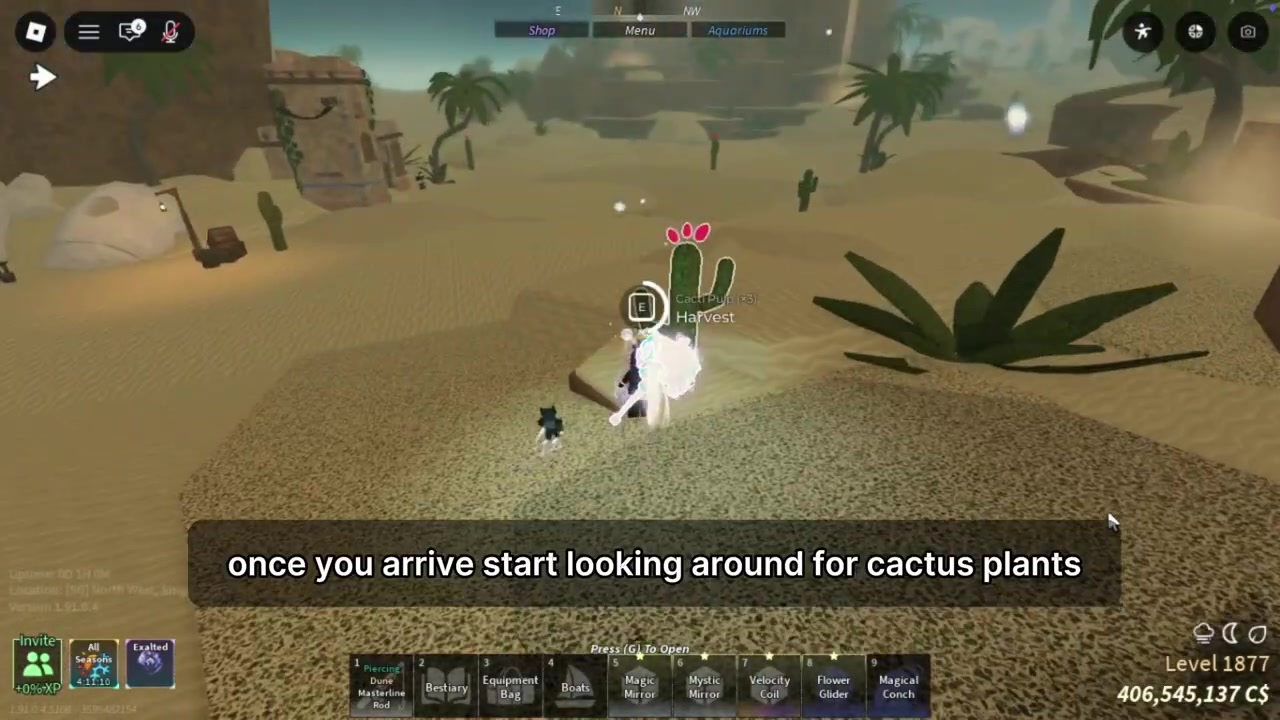
Sweep the open sand and check the cactus plants scattered around — most of them are just scenery.
STEP 3/6
Spot the red-tinted tops

KEY!Only cactuses with a glowing red or pink-budded top hold pulp; walk past the plain green ones.
STEP 4/6
Walk up and harvest it

Approach a marked cactus and use the on-screen interact prompt to harvest, dropping the pulp straight into your bag.
STEP 5/6
Back away immediately

The cactus chips your health if you linger, so grab the pulp and step out fast.
STEP 6/6
Loop the biome and repeat
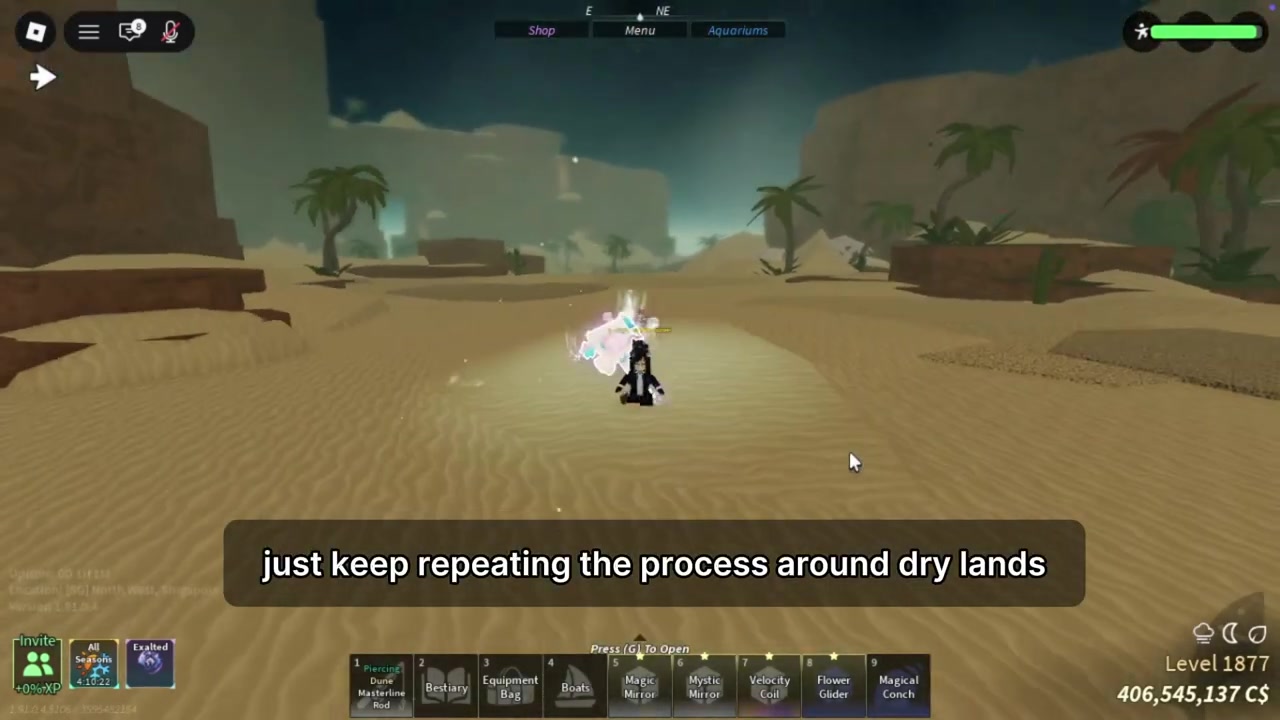
Keep running the Drylands route, harvesting every red-topped cactus until you’ve stockpiled enough.
Video help
Which cactuses actually drop pulp
This is the part people get wrong: the plain cactuses that fill out the Drylands scenery give you nothing when you interact with them. The ones that matter have a visible red or pink-tinted top — a cluster of buds or a glowing patch sitting above the green body. If a cactus doesn’t have that colored crown, skip it and keep moving. Once your eye is trained on the tell, you’ll spot the harvestable ones from a distance and stop wasting time on the decorative ones.
Farming Drylands cactuses safely

The efficient way to farm is to treat Drylands as a loop rather than a single stop. Move from one marked cactus to the next, harvest, and immediately step away — the cactus damages you if you stand next to it too long, so there’s no reason to hang around once the pulp is in your bag. Get in, grab it, get out, repeat.
Harvested cactuses do come back over time, but there’s no fixed respawn timer worth counting on, so don’t camp a single spot waiting for one to regrow. Just keep circling the biome; by the time you’ve looped back around, some will be ready again. Because harvesting costs 0 C$, the only real limit on how much you bank is how many cactuses you run past.
Keep moving — harvest each red-topped cactus and step away instantly so damage never adds up; a rolling loop banks more pulp than parking on one plant.
Cacti Pulp stats and Drylands fish
| Stat | Value |
|---|---|
| Preferred Luck | 95% |
| Universal Luck | 110% |
| Resilience | -5% |
| Lure Speed | 60% |
| Fish | Location |
|---|---|
| Cactus-Feeder Barb | Drylands |
| Duneseat Crustacean | Drylands |
Cacti Pulp is a Legendary bait, and its numbers are tuned for Drylands fishing rather than general use. The 110% Universal Luck helps broadly while the 95% Preferred Luck leans into its favored catches, and the slight -5% Resilience is the trade-off for that pull.
The two Drylands fish it’s clearly built for are the Cactus-Feeder Barb and the Duneseat Crustacean — both show up in Clear weather during Summer, with the Duneseat Crustacean being the heavier, higher-value pull of the pair. Players also run Cacti Pulp when chasing Sunder-Whelp Jaw, Terrosunder, and Photic Terrosunder, so it’s worth keeping a stack on hand for wider Drylands goals.
Mistakes that waste your Drylands runs
The most common time-sink is hunting for Cacti Pulp in the wrong place. Standard Bait Crates (around 120 C$ for up to five bait pieces) are fine for general bait but won’t reliably hand you this one — it comes from the Drylands cactuses, full stop. Interacting with plain, budless cactuses is the other big waste, since they do nothing.
Past that, remember to actually equip Cacti Pulp from your Equipment Bag before you cast, especially before a boss attempt — a stack sitting in your bag does nothing for your catch rate. And don’t assume every Drylands fish or boss that supposedly wants Cacti Pulp is a sure thing; the two it’s built around are the Cactus-Feeder Barb and Duneseat Crustacean, so test the rest yourself instead of over-committing bait to them.
Where to head after Cacti Pulp

With a stack of pulp banked, the natural next move is pushing your Drylands bestiary — start with the two fish it favors, the Cactus-Feeder Barb and Duneseat Crustacean, then work toward the tougher Terrosunder and Photic Terrosunder catches. Bait alone won’t carry those encounters, so it pairs best with Drylands gear like the Marrow Rod, Dune Goggles, and Dune Cloak. That loadout is also what the harder desert boss content leans on, so building it out sets up the rest of your Drylands progression.
Frequently Asked Questions
Can you get Cacti Pulp from normal bait crates?
No. Standard Bait Crates cost around 120 C$ for up to five bait pieces and are good for general bait, but they don’t reliably supply Cacti Pulp. It’s obtained by harvesting the special cactuses in Drylands.
Which cactuses give Cacti Pulp?
Only the ones with a red or pink-budded top. Plain green cactuses are decorative and do nothing when you interact with them, so look for the colored crown before walking up.
Does harvesting cactuses damage you?
Yes — a cactus chips your health if you stand next to it too long. Move in, harvest, and step away quickly so the damage never stacks up.
How much Cacti Pulp do you get per harvest?
Each cactus usually gives you about 2 to 3 Cacti Pulp at once, and it costs 0 C$, so a full Drylands loop banks a stack quickly.
What fish use Cacti Pulp bait?
It’s built for the Drylands fish, led by the Cactus-Feeder Barb and Duneseat Crustacean. Players also use it while chasing the Sunder-Whelp Jaw, Terrosunder, and Photic Terrosunder.





Leave a Reply