
A perfect Evomon is built by choosing a main monster and role first, then matching its talent, nature, trait, evolution, moves, equipment, and team coverage instead of only leveling it up.
Two players can use the same Evomon and get very different results because the build systems stack. Leveling gives the base power, but the perfect build comes from making each upgrade point in the same direction: the role, the stats, the passive effect, the move scaling, and the team around it.
That means you should not spend rare resources just because an Evomon is new, shiny, or your starter. Build one long-term carry first, then make the rest of the team solve matchups and utility gaps around it.
- Perfect Evomon build stack
- Choose your main Evomon and role first
- Perfect Evomon build checklist
- Talent, nature, and move scaling
- Traits are the passive build layer
- Evolution and stronger moves
- Equipment after player level 40
- Daily progression for your carry
- Team coverage beats raw damage
- Resource mistakes that slow builds
- Frequently Asked Questions
Perfect Evomon build stack
| Build layer | Target |
|---|---|
| Core Evomon | Pick a high-impact long-term carry, not a temporary catch. |
| Role | Decide physical damage, special damage, tank, support, or status pressure. |
| Talent | Prioritize boosted stats that match the role; rank comes after fit. |
| Nature | Use the +10% stat on the build’s main strength and accept a harmless -10%. |
| Trait | Reroll for a passive that actually serves the job. |
| Evolution | Push the main Evomon to final evolution for stats and stronger moves. |
| Move scaling | Match Attack or Special Attack to the moves you actually use. |
| Equipment | After player level 40, refine and enhance gear for targeted stats. |
| Team coverage | Cover weaknesses with types, resistances, utility, and status. |
KEY!This stack is the difference between a leveled Evomon and a finished build. Each layer should support the same job, because scattered bonuses make even a rare monster feel weaker than it should.
Choose your main Evomon and role first

The first real build decision is not a potion, stone, or piece of gear. It is choosing the Evomon that deserves those resources. Pick a high-impact monster you expect to keep as your main carry, then build every system around that role.
Decide whether that Evomon is a physical damage dealer, special damage dealer, tank, support, or status-pressure pick. A monster built for damage needs a very different talent, nature, trait, and gear plan than one meant to survive, heal, counter, or spread effects.
Do not overinvest just because a monster was your starter. At Mentor Ben, the starter pool includes Bubble, Blazpup, and Leafbun, and the best pick is not universal: Bubble has a strong early Water path through Verdant Valley, Petal Pond, Lava Crag, and Amber Acres, while Blazpup brings early coverage and later Burn value. If Fire coverage is your concern later, Sparkit or Lavite can cover that need after you reach Lava Crag.
Pick one long-term carry before spending Evolution Stones, trait reroll potions, or high-tier capture balls; every perfect-build decision becomes easier once the role is locked.
Perfect Evomon build checklist
Use this order when you are turning one main Evomon into a long-term carry.
STEP 1/7
Check talent

Keep or improve a talent whose three boosted stats fit the Evomon’s role.
STEP 2/7
Set nature

Choose a nature that gives +10% to a useful stat and -10% to a stat the build can afford to lose.
STEP 3/7
Reroll trait

After the Level 30 breakpoint, spend trait reroll potions on passives that match the monster’s job.
STEP 4/7
Evolve the carry
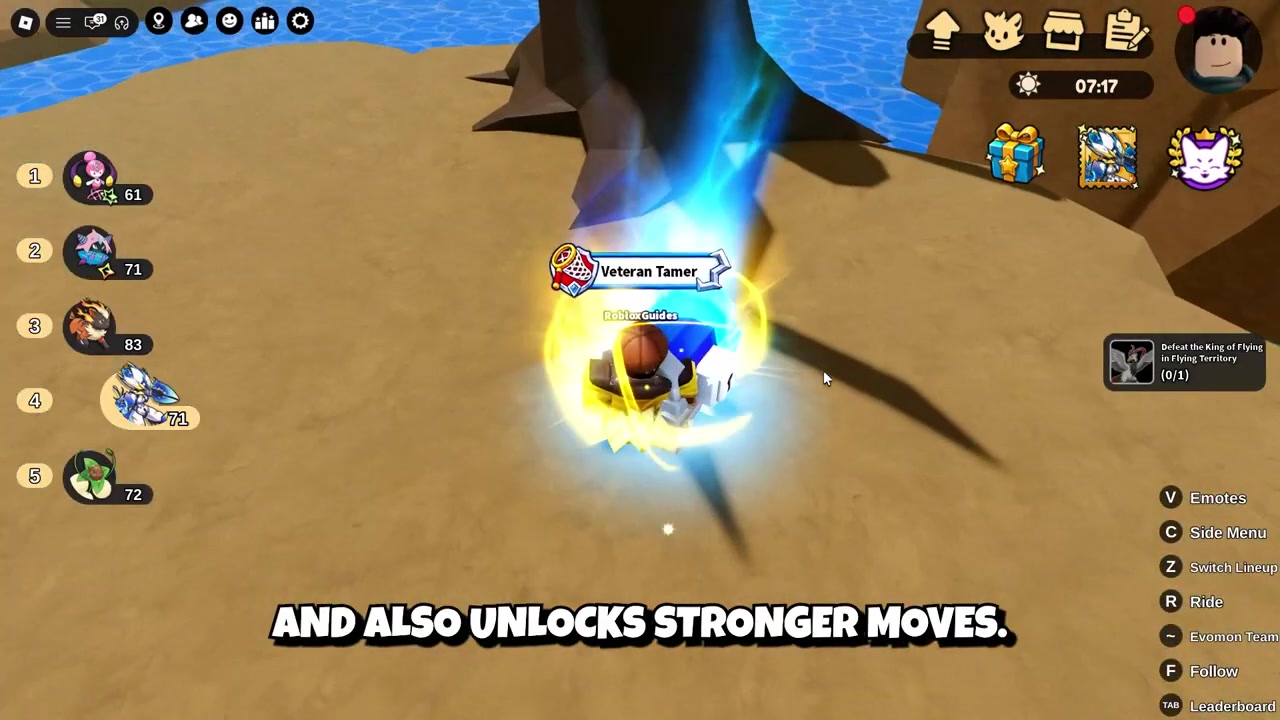
Save Evolution Stones and element stones for the Evomon you plan to keep through final evolution.
STEP 5/7
Build gear
Once equipment challenges open at player level 40, refine and enhance gear with useful stats.
STEP 6/7
Align move stats
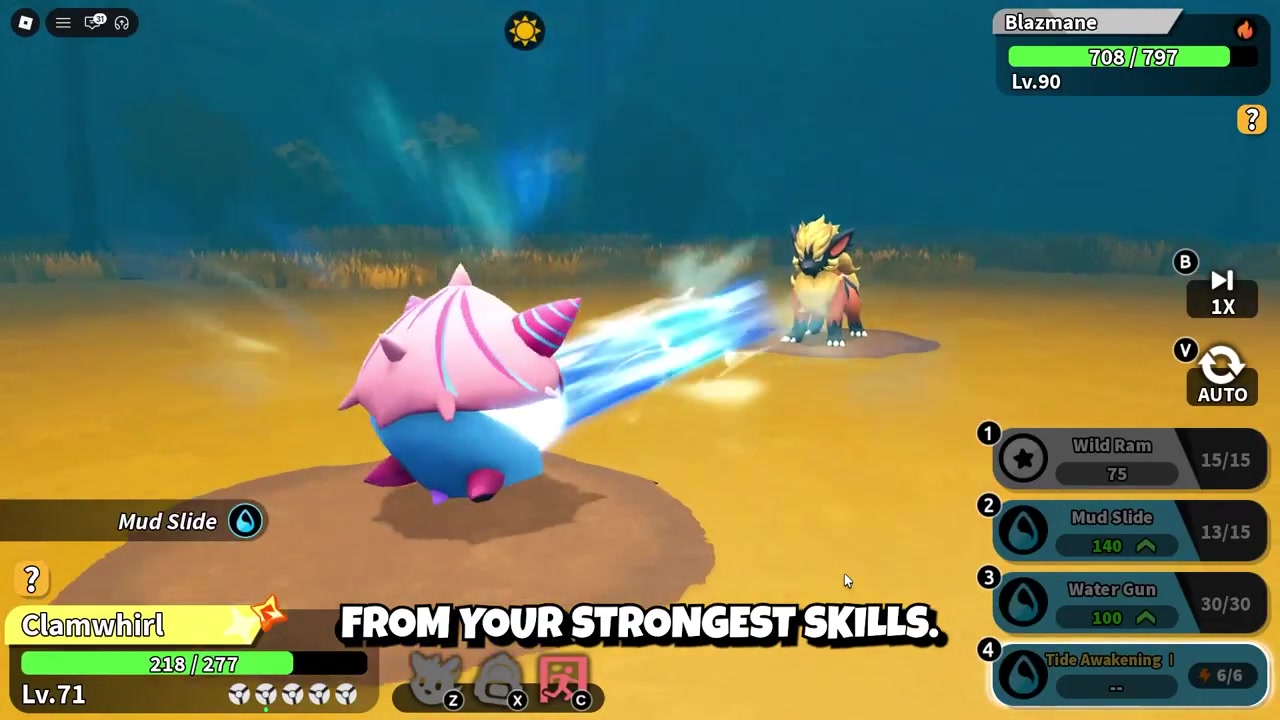
Check whether your best moves scale from Attack or Special Attack before committing boosts.
STEP 7/7
Check team coverage

Fill team slots around weaknesses, resistances, utility, and status instead of stacking only damage.
Video help
Talent, nature, and move scaling
Every caught Evomon has a random talent that boosts three different stats. The rank controls how large those boosts are, with SSS giving the biggest stat increases, but rank is only part of the decision. An SSS talent that boosts the wrong stats can be less useful than a lower-rank talent that improves the stats your build actually uses.
Start with the role. A physical attacker wants talent value in Attack, and often Speed if it needs to move first. A special attacker wants Special Attack instead. Tanks and supports can value survivability, healing, or battle-effect support more than raw offense.
A Talent Vector Potion can improve the talent rank later, but the boosted stats stay the same. That is why the three stats matter so much: you can raise the quality of a good stat spread, but you should not build your perfect Evomon around a spread that fights its role.
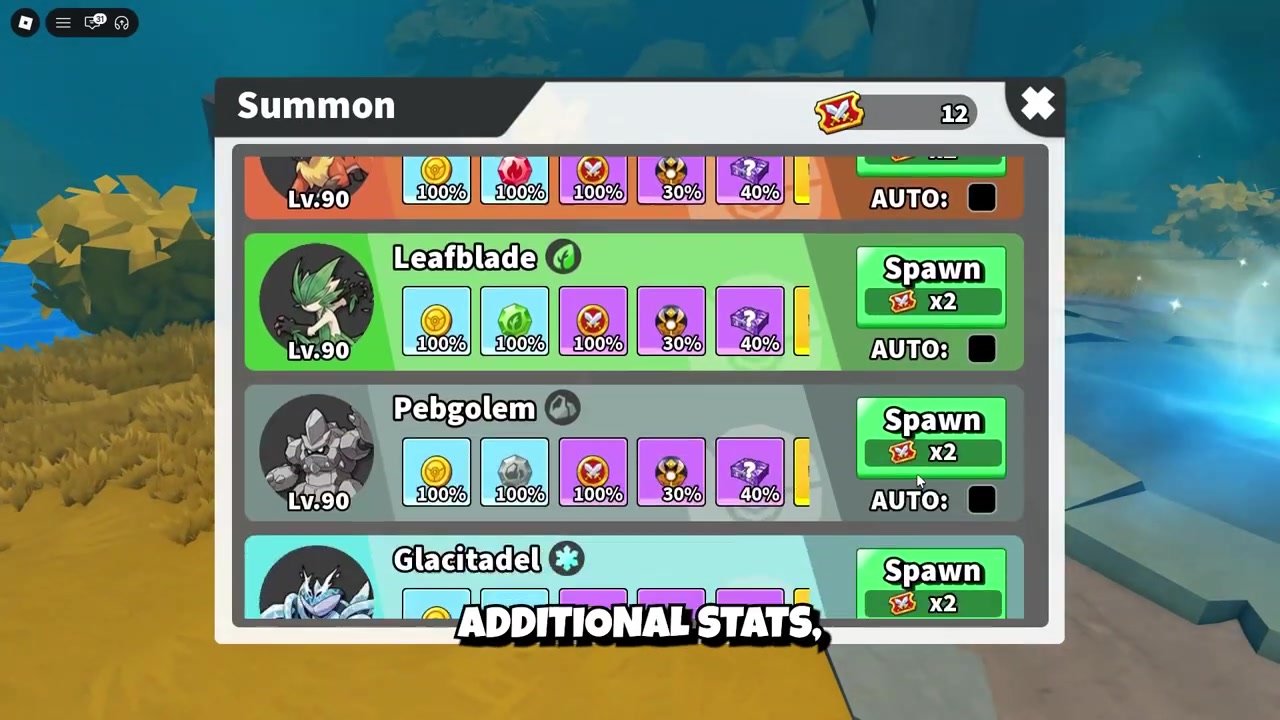
Nature is the second stat filter. Every nature raises one stat by 10% and lowers one stat by 10%, so the best nature boosts the stat your moves and role use most while dropping something the build can spare. Before rerolling, check the attacks themselves: some moves scale from Attack, while others scale from Special Attack. If your biggest skill uses Special Attack, stacking Attack through talent, nature, and gear wastes the build.
Traits are the passive build layer

Traits are permanent passive effects that stay active in battles. They can improve damage, add healing, increase survivability, or create battle effects, so they are one of the main places where two Evomon of the same species start feeling different.
Plan trait work around the Level 30 breakpoint. Level 30 is also where other growth systems such as Ultimate Ability and Ascension can become part of your progression path, so treat it as the first serious optimization point for your main monster.
Because traits can be rerolled, do not accept the first passive just because it appears. A damage dealer wants a trait that pushes damage or uptime; a tank wants survivability; a support wants healing, utility, or battle effects. A defensive trait such as Vital Guard belongs on a tankier build, while your main attacker should chase a passive that helps it win fights faster.
Evolution and stronger moves
Evolution is one of the biggest upgrades for a finished Evomon because it raises stats and unlocks stronger moves. If your main Evomon has not reached its final evolution yet, that should sit above side projects and short-term captures.
To evolve, you need the required level plus Evolution Stones and element stones. Evolution Stones come from the Exchange Shop, Exchange Merchant and Summon Rune rewards, and island bosses. Element stones come from NPC trainers and boss battles.
Save those materials for the carry you already chose. Spending Evolution Stones on a monster you are about to replace can delay the real build more than a few missing levels would.
Late-game skill growth also matters. Around Level 90, the Skill System and Summon Ruins 2 push builds further, while Traveling Merchants can provide rare gear and materials for the Evomon you plan to keep.
Equipment after player level 40
Gear becomes a major build layer once you reach player level 40 and unlock equipment challenges. Equipment adds more stats on top of the monster’s own talent, nature, trait, and evolution, so it should follow the same role decision instead of becoming a pile of random bonuses.
Collecting gear is only the start. Refining improves the quality of the stat bonuses, while enhancing increases those bonuses further. Used together, they let you squeeze more value out of the same Evomon without changing the creature itself.
Do not rush expensive gear decisions before the build has a role. A physical attacker wants gear that supports its damage plan, a special attacker wants Special Attack value, and a tank or support wants the stats that keep its job online longer.
Daily progression for your carry
A perfect build is also a resource plan. Do daily quests, EXP Challenges, world bosses, collection rewards, and the equipment dungeon so your main Evomon gets the XP, gear, and evolution materials it needs without wasting days of progression.
Redeem gift codes through the settings menu early when they are available. Codes can give premium items and XP boosters, and those rewards are worth more when they go into the Evomon you are actively building.
When grinding, avoid splitting XP across a full bench of monsters you do not plan to use. Keep the chosen Evomon involved in battles, and use a stronger teammate only as temporary support until the carry can win fights on its own.
EXP Challenge run limits can change with updates or server rules, so treat the daily routine as using your available attempts instead of building around one permanent number. The important part is consistency: daily systems feed the materials that perfect builds run out of first.
Team coverage beats raw damage
Even a perfect individual Evomon needs a team. Type matchups still matter, and a monster that covers your team’s weakness often adds more value than another high-damage attacker fighting for the same role.
Use coverage with intent. Water is strong into Fire, Rock, and Ground, but struggles into Grass and Electric. Fire handles Grass, Bug, Ice, and Steel, while fearing Water, Rock, and Ground. Electric is useful into Water, Steel, and Flying, but weak into Rock and Ground.
Coverage is not just an element chart. Resistances, utility, counters, and status effects can outperform another damage slot. End-game cores can pair names like Chitaladin, Wisphex, and Astraknight, or use Arcapex with Wisphex and Mirefish. Speed and Bleed setups can involve Arcapex, Pummash, and Volcrest.
For farming and grinding, names like Terragon, Lavarock, Frostseer, Wisphex, and Volcrest are worth watching as you progress through the Dex. Some Evomon names appear with variant spellings, including Tarragon/Terragon, Blazpup/Blazpu, and Leafbun/Leafbu, so match your build notes to the spelling shown in your in-game Dex.
With 207 creatures spread from Verdant Valley to Thunder Cliffs, the perfect team will change as you catch replacements. Build the main Evomon carefully, then let the rest of the lineup answer the fights that your carry should not handle alone.
Resource mistakes that slow builds
| Mistake | Better move |
|---|---|
| Splitting XP across too many Evomon | Funnel progress into one carry or a small core team. |
| Using high-tier capture balls on weak early catches | Save better balls for targets that can stay in your roster. |
| Spending Evolution Stones on short-term monsters | Evolve the Evomon you already chose as your long-term carry. |
| Skipping daily quests, EXP Challenges, world bosses, or equipment dungeon | Use daily systems to stock XP, gear, and evolution materials. |
| Rerolling traits without a role | Decide the job first, then reroll for damage, healing, survivability, utility, or status value. |
| Boosting Attack when the best moves use Special Attack | Read move scaling before committing talent, nature, and gear boosts. |
Most bad builds fail because the resources go to the wrong place, not because the Evomon was unusable. A perfect build asks you to spend slowly on permanent systems and quickly on the one monster that will carry the account.
Be especially careful with high-tier capture balls, Evolution Stones, and reroll items. Those resources feel small early, but they are exactly what you need when the long-term Evomon finally has the right talent spread, role, and move plan.
Two smaller traps are still worth avoiding: buying the battle pass before you understand your resource needs, and hatching a shiny egg without activating the prismatic ball first when that system is part of your plan. Both spend value before the build has a clear direction.
Frequently Asked Questions
Is an SSS talent always better?
No. SSS gives the biggest stat increases, but the boosted stats still need to fit the Evomon’s role. A lower-rank talent that boosts Attack, Speed, or Special Attack for the right monster can beat a higher-rank talent supporting the wrong stats.
What level unlocks traits in Evomon?
Start planning traits at Level 30. Traits are permanent passive effects that can be rerolled, so use reroll potions on your main Evomon until the passive fits its job.
How do you evolve an Evomon?
Reach the required level, then use Evolution Stones and element stones. Evolution Stones come from the Exchange Shop, Exchange Merchant and Summon Rune rewards, and island bosses, while element stones come from NPC trainers and boss battles.
Should I build one main Evomon or a full team?
Build one main Evomon first, then support it with a focused team. Funneling XP and materials into a carry gives faster power, while the rest of the team should add coverage, resistances, utility, and status effects.
Which starter should I pick for the best build?
There is no universal best starter for every perfect build. Bubble is strong for early Water coverage through areas like Verdant Valley, Petal Pond, Lava Crag, and Amber Acres, while Blazpup has useful early coverage and Burn value later. Pick based on the role and coverage you want, not only the starter label.
More questions⤵
What matters more, Attack or Special Attack?
Whichever stat your best moves use. Some moves scale from Attack and others from Special Attack, so read the move scaling before you choose nature, talent priorities, traits, and equipment.




Leave a Reply