
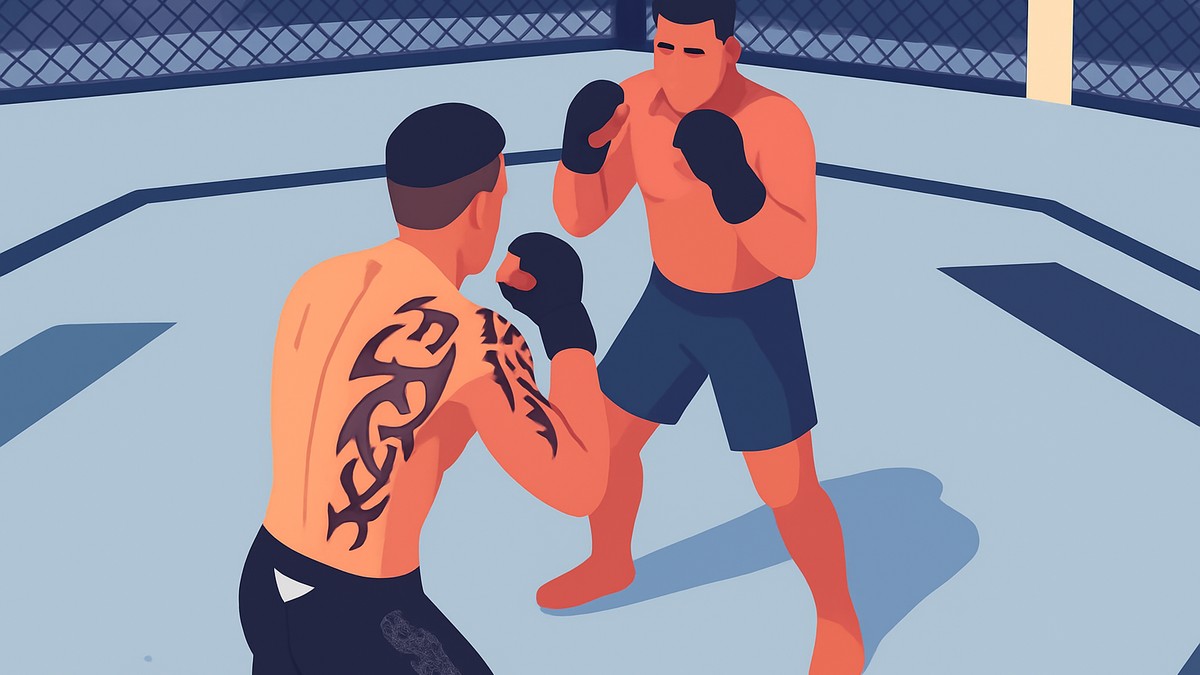
Flow State in EA UFC 6 is a fighter-specific momentum system where repeated perk-based actions fill a meter, then Down on the D-pad activates one temporary boosted state tied to that fighter’s designated Flow State perk.
Flow State is the mechanic behind those brief moments where a fighter suddenly looks like he has superpowers. It can genuinely swing a round, but it only pays off if you understand what feeds it and what it does. Every fighter draws from a shared pool of 30 perks, and this guide covers all of them — the passive effect, the exact action that fills your meter, and the payoff you get when you cash it in.
What Flow State does in EA UFC 6
Flow State is a three-layer momentum system. Every fighter carries up to five perks drawn from the pool of 30, and each perk works on three levels. The base effect is always on and quietly shapes what that fighter is good at. The Flow Boost is a specific in-fight action — a task tied to that perk — and every time you pull it off, your Flow Meter ticks up a little more. Once the meter is full, you press Down on the D-pad to activate Flow State, a short, high-impact stat boost.
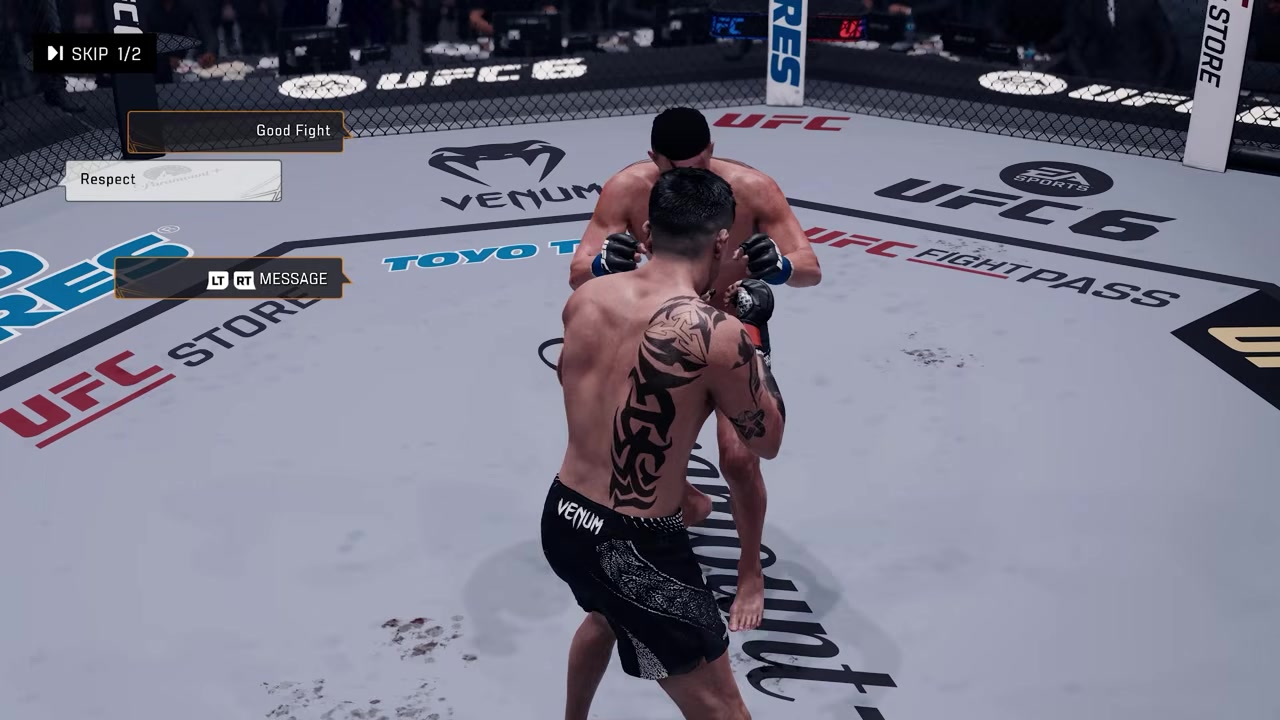
KEY!Here’s the part players miss most: a fighter has five perks, but only one designated perk is wired to Flow State activation. The other perks still give you their passive base effects for free, but the activated payoff comes from that single designated perk. So when you pick a fighter, the first thing to check is which of their perks is the Flow State one — that’s the action you should be building your whole rhythm around.
All 30 Flow State perks, triggers, and effects
| Perk | Base effect | Flow Boost trigger | Flow State effect |
|---|---|---|---|
| Escapist | Stronger submission defense from top | Deny any submission entry | Faster transitions from all top guard positions and as the submission defender |
| Quicksand | Easier denials from bottom | Perform any sweep | Faster grappling from bottom or advanced top positions |
| Springloaded | Faster get-ups | Get up right after denying a transition | Better get-ups, muscle-modified transitions, and the ability to cause health events |
| Anvil | Easier denials from top | Land two quick hits during postured ground and pound | Longer, stronger ground and pound at lower stamina cost |
| Electric Eel | Better takedown defense and clinch escapes | Deny a clinch entry or reverse a takedown | Better takedown defense, stronger stand-up and clinch strikes |
| Shackles | Better clinch control, strikes, and takedowns from dominant clinch | Clinch right after evading a strike | Better clinch control, striking, and bails from takedowns to clinch |
| Last Stand | Stronger submission defense from bottom | Escape any submission (not desperate escapes) | More ground stamina recovery, regenerates the submission meter, less damage to it |
| Kraken | Better takedowns from stand-up | Take down shortly after opponent misses a strike | Stronger takedowns, slows opponent stamina recovery while you’re on top |
| Checkmate | Stronger submission offense | Deep submissions, submission transitions, or chains | Faster submission attacks, more meter drain, harsher deep-submission penalties (around 12 seconds) |
| Perk | Base effect | Flow Boost trigger | Flow State effect |
|---|---|---|---|
| Groundskeeper | Ground-game actions cost less stamina | Two successful transitions quickly (not instant ones) | Even lower stamina cost for ground actions and ground and pound |
| Grizzly | Clinch and takedown actions cost less stamina | Either fighter enters a takedown scramble | Cheaper takedowns and clinch, pricier opponent escapes and scrambles |
| Titan | Stun resistance while ahead on health | Hit opponent during or just after a health event | More damage after being hit or when either fighter is in a health event |
| Unbreakable | Stun resistance while behind on health | Mitigate damage with sways or lunges in the stand-up | Take less damage |
| Revenant | Recover more health between rounds | Hit while your own health is low (not the tight ground game) | Faster health recovery |
| Phoenix | Faster recovery from stuns | Survive a stun without being knocked down | More stand-up health and stamina recovery, much shorter stuns |
| Hot-Blooded | Stand-up strikes cost less stamina in rounds 1-2 | Land the fourth strike of a combo | Stand-up strikes cost less stamina |
| Perpetual | Stand-up strikes cost less stamina in rounds 3-5 | Hit while holding a significant stamina advantage | More stand-up stamina recovery (around 16 seconds) |
| Perk | Base effect | Flow Boost trigger | Flow State effect |
|---|---|---|---|
| Reaper | Round kicks are stronger and more accurate | Land a long-range round kick on a retreating opponent | Round kicks deal more damage and cause health events more easily |
| Lancer | Frontal kicks (front, side, axe) are stronger and more accurate | Land a frontal kick as the opponent strikes | Frontal kicks deal more damage and cause health events more easily |
| Spectre | Less damage while swaying backward or sideways | Evade two attacks with sways in a short time | Cheaper evasive actions and more damage shortly after a successful evade |
| Bonesaw | Elbows and knees are stronger in the stand-up | Land two stand-up elbows or knees quickly | More damage plus cut and swelling damage from elbows and knees |
| Stinger | Straight punches are stronger and more accurate | Land a long-range straight as the opponent strikes | Straights deal more damage and cause health events more easily |
| Point Down | Punches thrown from sways hit harder | Sway-evade a strike right after throwing a punch | Better advancing footwork power and stamina; the opponent can taunt back to share some of it |
| Tank | Stronger block when standing or advancing | Hit the opponent’s head quickly after a successful block | All stand-up strikes hit harder shortly after a block, even off counters |
| Bulwark | Better blocking while retreating or circling | Evade a strike while the block meter is low | Instantly refills the block meter, less block, body, and leg damage |
| Featherstep | Better footwork when retreating | Hit quickly after a lunge evade | Strikes deal more damage from long range |
| Like Water | Less damage while evading with head movement | Land coming out of head movement after an evade | More damage from sways, even off counters |
| Spindrift | Spinning kicks are stronger and more accurate | Land a spinning kick when the opponent has low stamina | Spinning kicks deal more damage and cause health events more easily |
| Tiger | Curved punches (hooks, uppercuts) are stronger and more accurate | Land a curved punch on an opponent vulnerable from an evasive action | Curved punches deal more damage and cause health events more easily |
| Hunter | Better footwork advancing or moving sideways | Hit the opponent while their back is against the fence | Better advancing footwork, more damage against a fenced opponent |
The full set is split across three categories — grappling, health, and striking. Read each row as a plan: the base effect tells you the fighter’s natural lean, the Flow Boost tells you what to repeat, and the Flow State column tells you what you’re saving that meter for.
Grappling perks
Health perks
Striking perks
Building a game plan around your Flow State perk
KEY!The table is a reference, not a to-do list — you don’t need to chase every trigger in it. The one that matters is your fighter’s designated Flow State perk, because that’s the only one you can actually activate. Everything else on the fighter is passive value you already have. So look up that single perk, learn its Flow Boost, and build your rhythm around repeating that exact action until the meter fills.
That also means the fastest way to slow yourself down is to fight off-style. Random elbows, coin-flip takedowns, or throwing whatever comes to mind burns stamina without adding to the meter if those actions don’t match your Flow Boost. A Stinger fighter fills up by landing long straights as the opponent steps in — not by spinning; a Checkmate fighter fills up by threatening deep submissions — not by trading on the feet.
Timing the payoff matters just as much. Flow State is a short window, so dumping it the moment the meter fills is usually a waste. Hold it until it changes the exchange in front of you — the round kick you’re about to land, the submission you’ve locked, the moment your opponent is hurt and you want the finish.
On a spinning-kick fighter, activate Flow State mid spin kick — the animation hides the activation and the boosted kick lands for far more damage before your opponent can react.
Fighters and their designated Flow State perks
| Fighter | Flow State perk |
|---|---|
| Alex Pereira | Tiger |
| Max Holloway | Point Down |
| Conor McGregor | Stinger |
| Tom Aspinall | Stinger |
| Islam Makhachev | Checkmate |
EA’s own fighter examples make the “play to your perk” idea concrete. These aren’t the only fighters who carry these perks, but they show how a designated Flow State maps onto a real-world style — a striker’s signature weapon, a grappler’s finishing threat.
One naming quirk worth knowing: EA’s example table lists Sean Strickland’s fifth perk as “Tankl,” but the actual perk is Tank — the block-and-counter perk in the striking list above — so that stray letter is just a typo.
Common Flow State mistakes and edge cases
The number-one complaint is a meter that fills slowly, and it almost always comes down to the same thing: you’re not hitting your designated perk’s specific Flow Boost. Open the pause menu, read the Flow Boost line for your Flow State perk, and check whether the actions you’re throwing actually match it. If they don’t, you can be busy all round and barely move the meter.
The second trap is treating Flow State like an instant-win ultimate. It isn’t. It’s a temporary stat boost tied to one perk’s strength — it sharpens what your fighter already does well, it doesn’t hand you a knockout button. Enter it with a plan for the few seconds it’s live and it’s excellent; expect it to win the fight on its own and you’ll waste it.
Last, keep the two halves of a perk separate in your head. A perk’s passive base effect is always on regardless of your meter, while the Flow Boost trigger is a different action entirely that exists only to charge activation. Anvil’s easier top-position denials help you every second of the fight; its Flow Boost — two quick postured ground-and-pound hits — is the separate task that fills the meter. Confusing the two is why some players think a perk “isn’t doing anything” when the passive has been working the whole time.
Frequently Asked Questions
How do you activate Flow State in EA UFC 6?
Fill the Flow Meter by repeatedly performing your designated perk’s Flow Boost action, then press Down on the D-pad once the meter is full to trigger the boost.
Does every perk become a Flow State?
No. A fighter carries up to five perks, but only one designated perk can be activated as Flow State. The other perks still give their passive base effects, they just can’t be triggered.
How many Flow State perks are in EA UFC 6?
There are 30 in the shared pool, split across grappling, health, and striking, with every fighter drawing five of them.
Why is my Flow Meter not filling quickly?
Because your actions aren’t matching your designated perk’s Flow Boost. Spamming high-output moves that don’t fit the trigger — random takedowns, off-style strikes — burns stamina without building momentum. Check the Flow Boost line in the pause menu and fight toward that specific action.
How long does Flow State last?
It’s a short window. The exact duration isn’t consistently listed, though a few perks have noted timers — Checkmate runs around 12 seconds, and Quicksand and Perpetual around 16 — so treat it as a brief burst and spend it on a moment that matters rather than activating on reflex.
Video help


Leave a Reply