
To deny a transition in UFC 6, hold R2/RT on the ground, wait until the opponent starts moving, then push the right stick in the same direction as their transition.
The ground game decides most close fights in EA Sports UFC 6, and the single skill that turns it around is transition denial. Learn to block your opponent’s position changes and you stop them advancing, bleed their stamina, and hand yourself the reversals and submissions that follow. Everything below builds from that one input.
- The exact denial input and when to use it
- How to deny a transition on the ground in EA UFC 6
- Reading which direction to deny
- What a successful denial actually does
- Practice settings that make denials easier
- Ground-game habits to build after denial clicks
- Mistakes that make a denial whiff
- Staying alive when you’re stuck on the ground
- Frequently Asked Questions
The exact denial input and when to use it
Denial runs on two things: the back-right trigger and the right stick. On the ground, hold R2 on PlayStation or RT on Xbox, then push the right stick in one of four directions to block the transition your opponent is going for.
KEY!
The timing split is what most players miss. You can hold the trigger early — keep R2/RT pressed the whole time you’re on the mat and nothing is wasted. The right-stick direction is the reactive half: it only registers if you enter it after the opponent’s transition animation begins. Push a direction in advance and the denial simply won’t fire.
How to deny a transition on the ground in EA UFC 6
This is the core denial loop — hold the trigger, read the move, and push the stick the same way once it starts.
STEP 1/5
Hold the right trigger on the ground
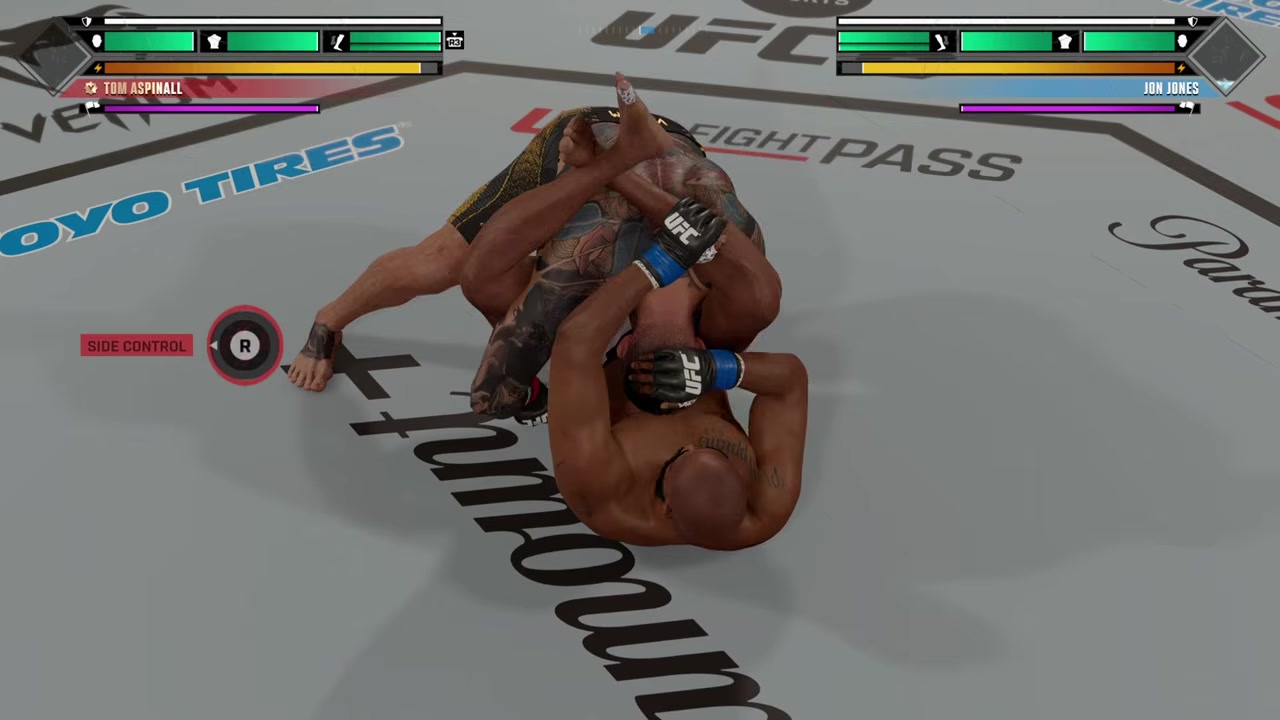
Press and keep R2/RT held the moment you hit the mat — there’s no penalty for holding it early.
STEP 2/5
Read the position you’re stuck in
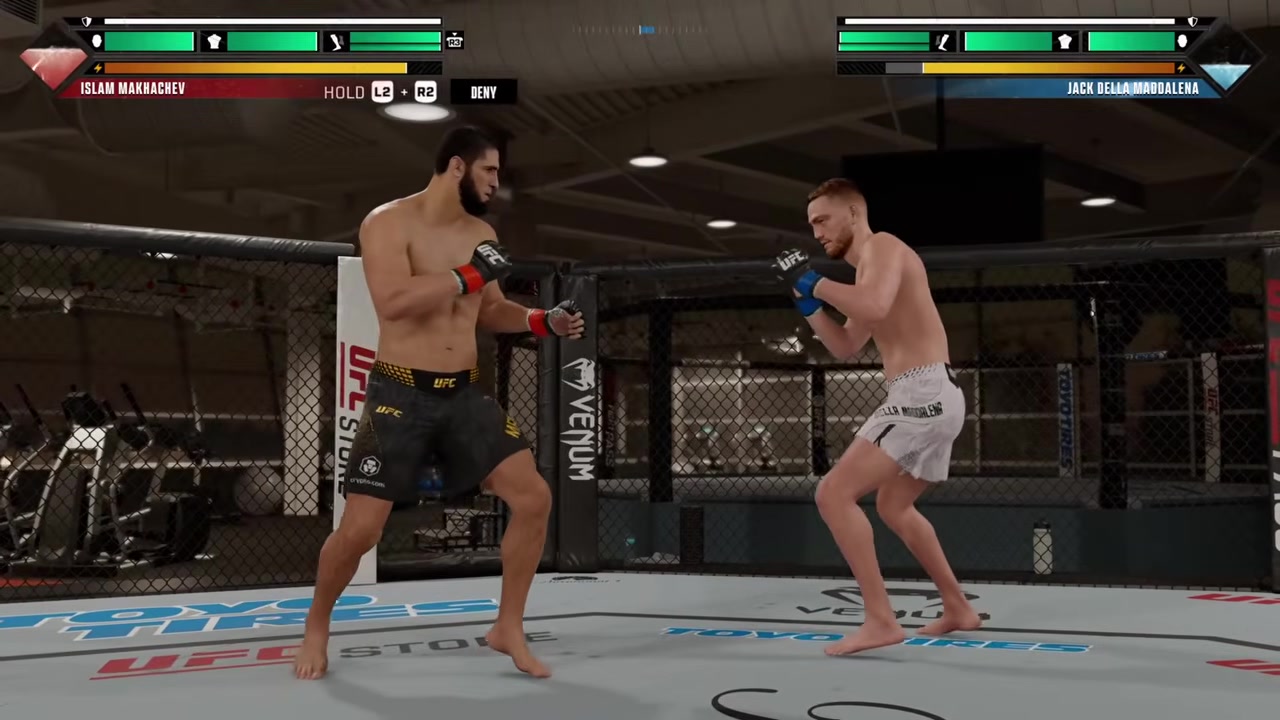
When the opponent takes you down into half mount, they can only pass to advance, so watch for the move rather than swinging.
STEP 3/5
Deny a pass to the left
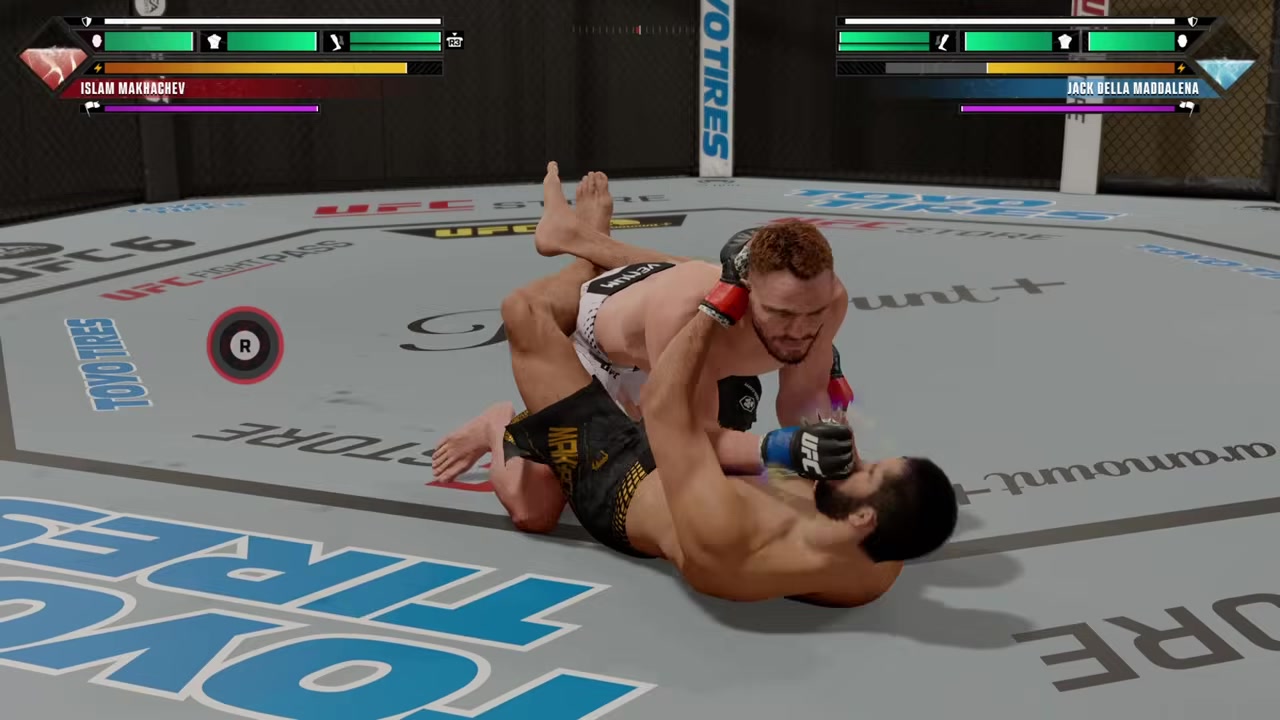
As they try to step into full mount, keep the trigger held and push the right stick left to block it.
STEP 4/5
Deny the next attempt to the right
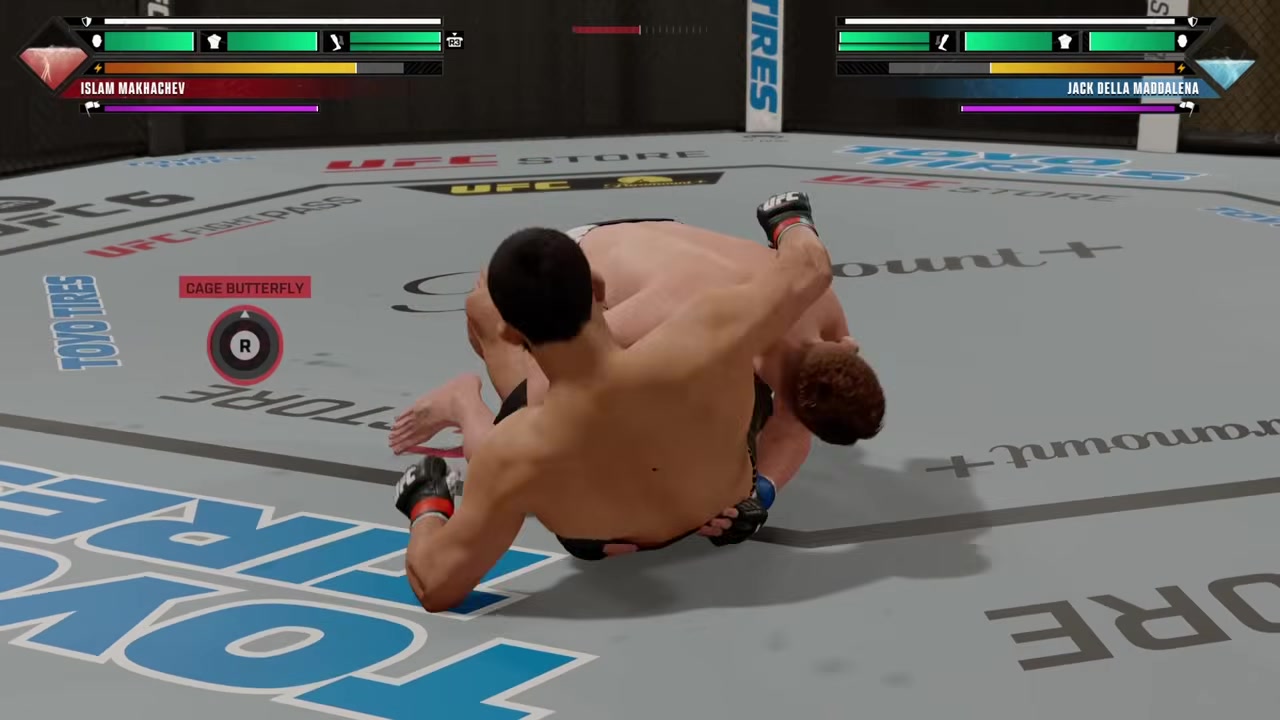
On their following transition, hold the trigger again and push the right stick right for a second denial.
STEP 5/5
React after they start moving
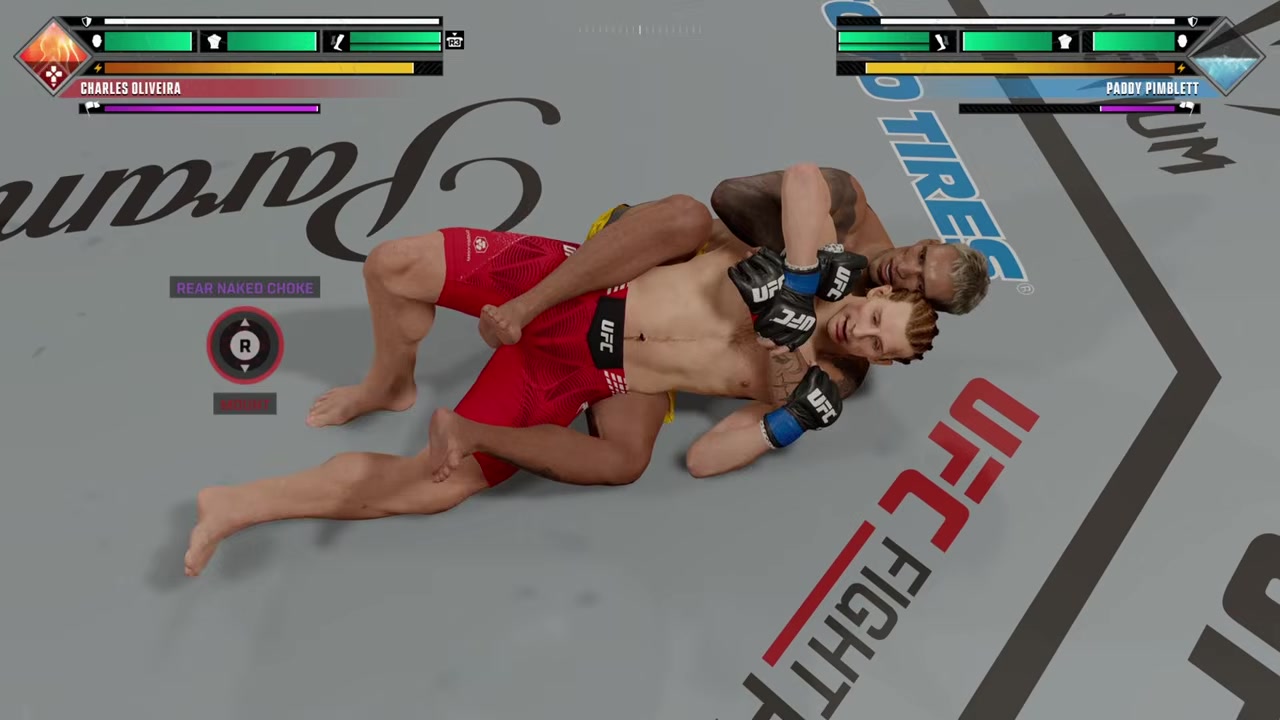
Enter the right-stick direction once the transition animation has begun — held in advance, it does nothing.
Hold R2/RT constantly, but only push the right stick after the opponent actually starts moving — the trigger can be early, the direction cannot.
Video help
Reading which direction to deny
| Situation | Denial read |
|---|---|
| Half mount | Opponent passes left or right — hold the right stick left or right, never up or down. |
| After a guard pass | They go to side control or mount — again just a left-or-right read. |
| Opponent leans or drops a shoulder | Push the right stick that way — the body tells you before the grapple prompt appears. |
Guessing between four directions is a losing game, so the aim is to narrow it down before you ever touch the stick. Two things do that: the position you’re in and your opponent’s body. Every ground position only has a limited set of places it can go, so learning those chains cuts the guesswork dramatically.
From half mount, the opponent is only going left or right to pass your guard, which already turns a blind 25% guess into a 50% read. Once they pass, the next branch is side control one way or mount the other — still a two-way choice. On top of that, players telegraph: a dropped shoulder or a body lean shows the direction before the grapple indicator even lights up, so the more you watch, the earlier you start blocking.
What a successful denial actually does
Stopping the position change is only the surface benefit. Each time you deny a transition, your opponent’s stamina meter drops — and it drops harder here than from most other exchanges. That’s the real reason denial is the backbone of the ground game.
The knock-on effects stack up fast. A tired opponent transitions slower, which makes their moves easier to deny and even to reverse outright. Low stamina also makes them far more vulnerable to submissions, and the grapple advantage bar swings your way most sharply right after a clean denial — the ideal moment to launch your own transition.
Some community balance ideas float around, like disabling denials below roughly 15–20% stamina or capping denials per position. Those are player suggestions for how the system could change, not part of how UFC 6 plays now, so don’t build your habits around them.
Practice settings that make denials easier
| Setting | Use |
|---|---|
| Legacy Grapple Controls | Full manual control over transitions, denials and submissions; Hybrid or Assist presets can make denial inputs feel inconsistent. |
| Time Dilation | Slows time when the opponent transitions, giving a much bigger reaction window — on by default, but switched off in every multiplayer fight. |
Before you take this online, two settings and one habit make the timing far more forgiving. Set your grapple controls to Legacy for full manual access to transitions and denials, and lean on Time Dilation in the gym to train your reactions.
Because Time Dilation is gone online, the gym is where you build the timing you’ll actually rely on. Practicing there also teaches you the position chains firsthand, so you learn which handful of directions matter in each spot instead of discovering it mid-match. Going into a ranked fight without that groundwork is the fastest way to get controlled on the mat.
Ground-game habits to build after denial clicks
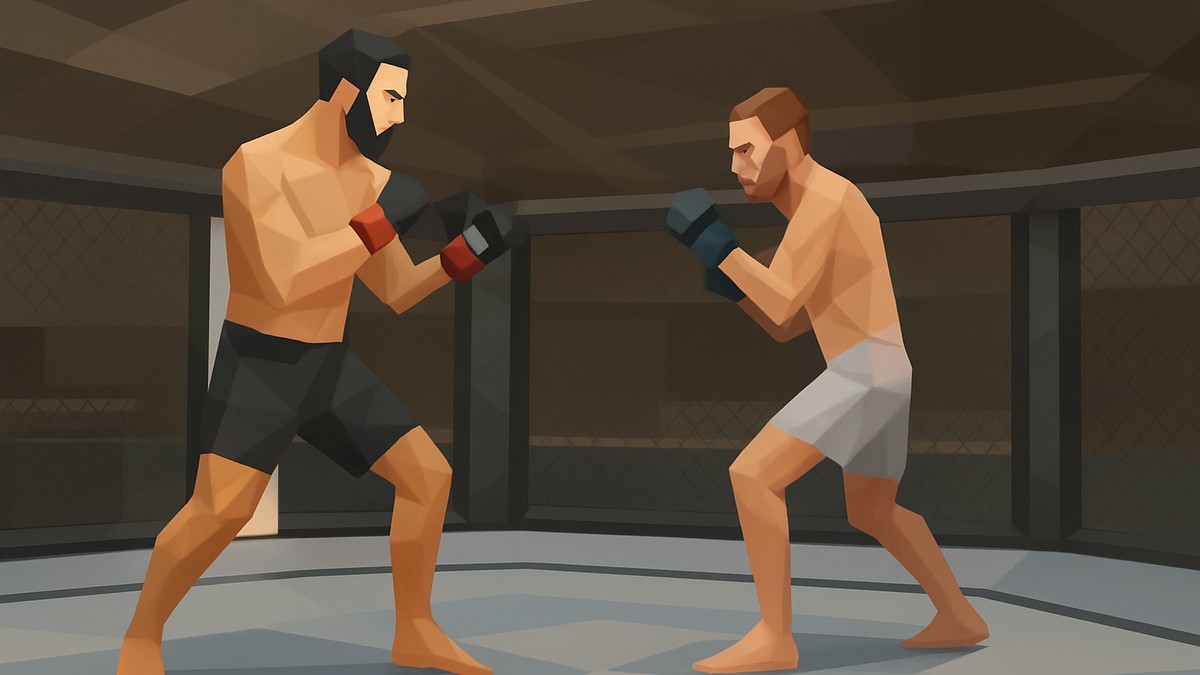
Once the input is second nature, the winning approach is to play the ground defensively first. Hold the trigger and let the opponent move on you — deny a few of their transitions before you ever attempt your own. Going for a position change while both fighters are fresh is a toss-up, but once you’ve drained their stamina with denials, your transitions land far more often.
Feed the grapple advantage bar with body strikes using LT and a face button — body shots drain stamina where head strikes mostly deal damage. Don’t spam them, though; patience and denials do more than a flurry. You can also cancel your own transition by holding R2/RT mid-animation, which baits an opponent into committing a denial the wrong way. And since reversals scale with a fighter’s BJJ rating, grapplers like Islam, Khabib, Oliveira, Paddy, Aljamain Sterling and Chito Vera — even heavyweights like Aspinall and Jones — make those reversals much easier to hit.
Mistakes that make a denial whiff
| Mistake | Fix |
|---|---|
| Pre-holding the right stick | Push the direction only after the transition animation starts. |
| Guessing instead of watching | Read the body lean and shoulder drop to pick the direction. |
| Using Hybrid or Assist controls | Switch to Legacy for consistent denial inputs. |
| Holding the trigger to strike | Release R2/RT to throw ground strikes — you can’t do both at once. |
Most failed denials come down to one of a few habits, and each has a direct control fix.
Staying alive when you’re stuck on the ground
When denial isn’t enough and you end up mounted in ground and pound, the first move is to shell up by holding R2/RT to cover your head and let the opponent burn stamina swinging. From there, timed right-stick sways can reverse the position — flick with good timing to dodge a punch, and each evade shaves a little of their stamina too.
To get off the mat, press up on the right stick — the get-up is always up, never any other direction. Rather than mashing it the instant you hit the ground, build your grapple advantage first by denying their transitions and chaining a couple of your own; a destabilized opponent is far less able to stop you standing.
Frequently Asked Questions
What buttons deny transitions in UFC 6?
Hold R2 (PlayStation) or RT (Xbox) on the ground, then push the right stick in the direction your opponent is transitioning. Both inputs together produce the denial.
Should you flick or hold the right stick to deny?
Push the right stick firmly the moment the transition starts and hold that direction through the animation. A quick flick works if your timing is exact, but holding the direction gives you a wider window to catch it.
Can you hold R2/RT before the opponent moves?
Yes. The trigger can be held constantly the whole time you’re on the ground, which gives you a head start. Only the right-stick direction has to come after the opponent begins their transition.
Why did my transition denial not work?
Usually because the right stick was pushed too early, before the transition animation began, so the input didn’t register. Guessing the wrong direction or using Hybrid/Assist controls instead of Legacy also makes denials feel unreliable.
Does denying transitions drain stamina?
Yes — every denial takes a chunk out of the opponent’s stamina meter, and it’s one of the biggest stamina drains in the ground game. Lower stamina then slows their transitions and opens up your reversals and submissions.
More questions⤵
How do you get better at denying transitions before playing online?
Practice in the gym with Time Dilation on, which slows transitions so you can train the read and the timing. It’s off in multiplayer, so use gym reps to learn the position chains and directions before you take it into a ranked fight.


Leave a Reply