
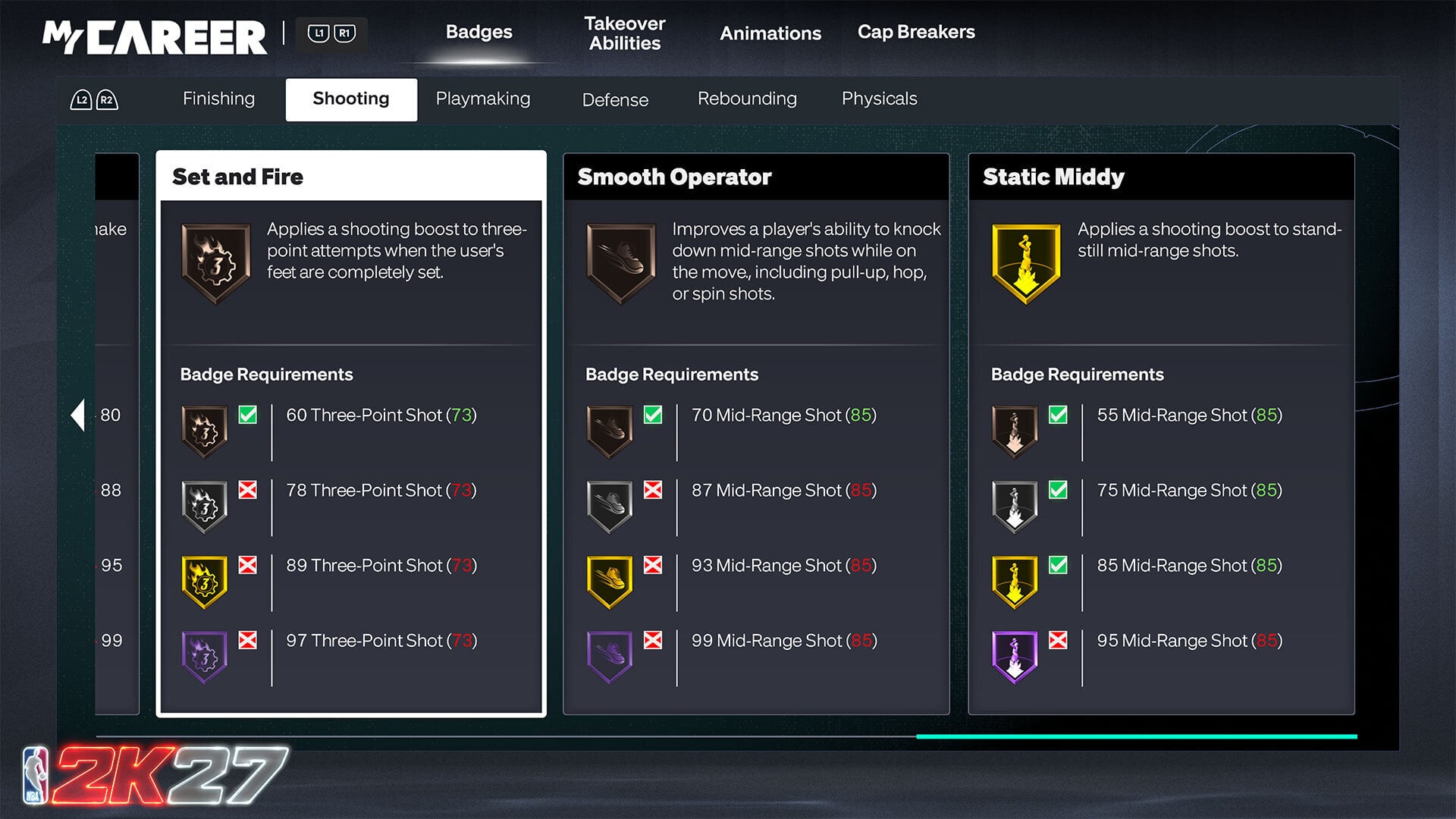
Choose the specialization that matches the actions your build performs most often, because each save can commit to only one of the six tracks permanently, with 10 quests leading to Cap Breakers, cosmetics, and a permanent +2 Badge Synergy reward at Level 10.
Build Specialization turns the way your MyPLAYER already contributes into a focused progression path. The menu offers six disciplines, so your selection should fit the possessions you regularly play instead of forcing you to change the build’s role for an entire quest line.
- Confirm your specialization only when you are certain
- Compare the six Build Specialization tracks
- How the 10 specialization quests and rewards work
- When to choose the Shooting specialization
- Who should take the Finishing specialization
- Playmaking specialization for creators and facilitators
- Defense specialization for dedicated stoppers
- Rebounding specialization for glass-focused roles
- Physicals specialization and the right build identity
- Make the final specialization choice without wasting the save
Confirm your specialization only when you are certain
The confirmation cannot be reversed on that save. Start in the Build Specialization menu, choose a track, and review the selection carefully before proceeding. Once you accept the permanent-choice warning, that save cannot commit to another specialization.
Your specialization determines which discipline-specific quest line you receive; it does not limit general attribute progression to that discipline. A Shooting specialist can still improve non-shooting attributes, for example. You are choosing a progression track, not converting the build into a single-category character.
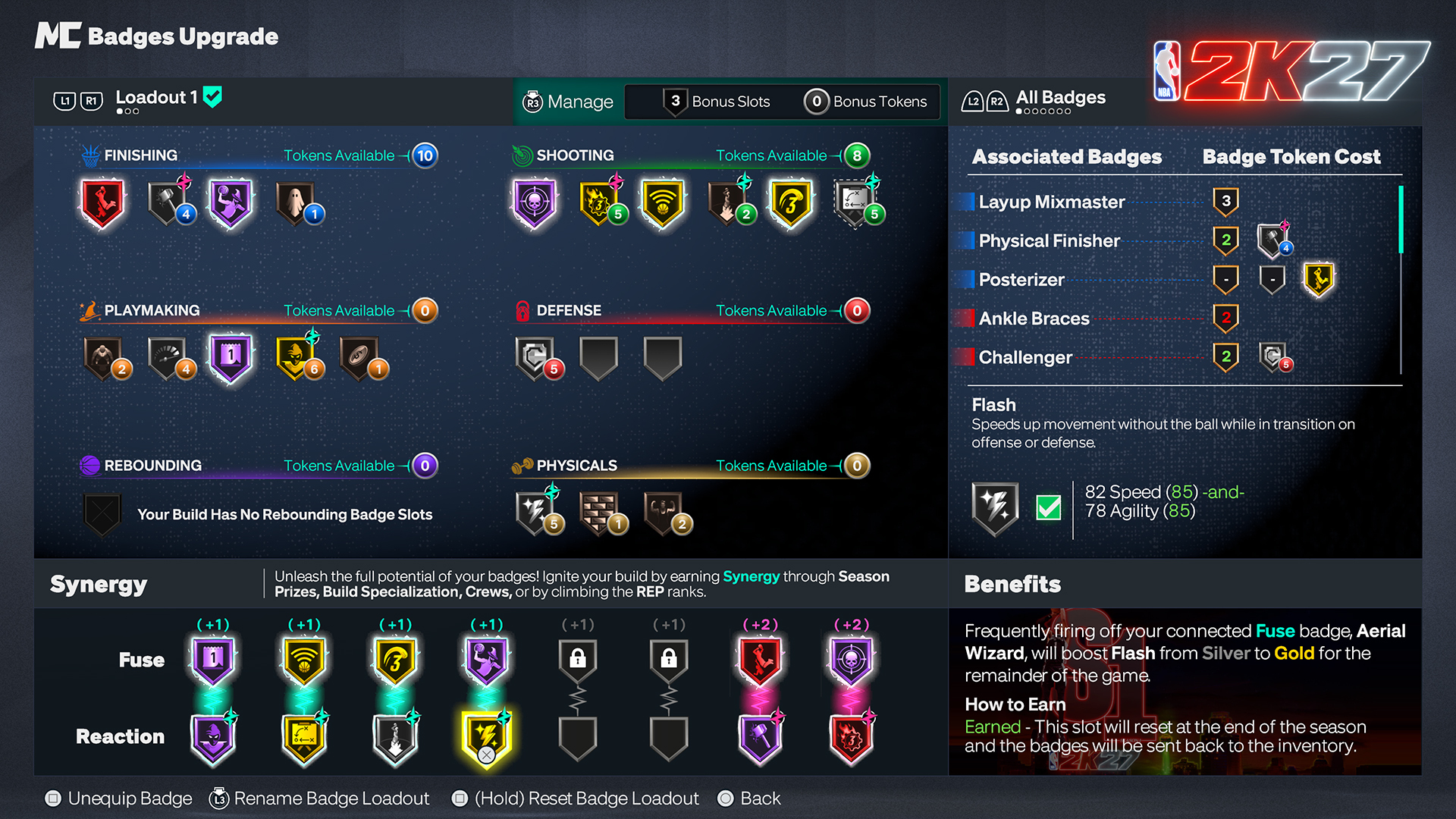
Compare the six Build Specialization tracks
| Track | Focus and fit |
|---|---|
| Shooting | Repeated jump-shot play; suited to dependable perimeter and mid-range scorers. |
| Finishing | Attacking the basket and scoring inside; suited to slashers, cutters, and interior threats. |
| Playmaking | Creating scoring chances and assists; suited to primary facilitators and pass-first handlers. |
| Defense | Consistent defensive impact; suited to perimeter stoppers and interior anchors. |
| Rebounding | Controlling missed shots; suited to builds that regularly work the glass. |
| Physicals | A physical-profile-focused path for builds whose identity fits this discipline more than the other five. |
Use the table as a role check rather than a ranking. No track is automatically right for every MyPLAYER: the useful question is which discipline describes what your build already does during ordinary games.
How the 10 specialization quests and rewards work
Every track contains 10 quests built around discipline-specific objectives. Completing the active objective advances that specialization toward Level 10, so a Shooting build and a Rebounding build follow different workloads even though both use the same overall progression structure.
The reward pool includes Cap Breakers and cosmetics. At Level 10, the track awards a permanent +2 Badge Synergy reward. Individual Cap Breakers and cosmetics should be treated according to their placement in your selected quest line rather than assigned to a particular quest in advance.
Do not base the permanent choice on circulating objective counts or claims that one mode is universally fastest. Use the objective displayed in your game, then complete it in a mode where you can perform the requested action consistently without compromising the rest of your play.
When to choose the Shooting specialization
Shooting fits builds whose normal offense repeatedly produces jump shots. It is the natural candidate for reliable spot-up threats and shot creators who spend a meaningful share of their possessions looking for clean shooting opportunities. It is a poor fit when jump shots are only an occasional fallback behind drives, passing, or interior scoring.
For shooting-oriented practice, use a comfortable mode where you can create separation, settle the build’s feet, and repeat quality attempts. A screen can help open space, but the goal is sustainable repetition—not rushed shots that abandon the way you expect to use the build in real games.
Who should take the Finishing specialization
Finishing suits MyPLAYER builds that regularly attack the basket and convert opportunities inside. Slashers, cutting scorers, rolling bigs, and other paint-focused threats are more likely to make progress through their existing offensive role than builds that primarily operate from the perimeter.
Separate layup-focused practice from dunk-focused practice so each possession rehearses the intended type of finish. Since every dunk attempt uses the manually timed Dunk Meter, clean approach angles and controlled timing are more useful than forcing crowded attempts merely to increase volume.
Playmaking specialization for creators and facilitators
Playmaking is designed for builds that consistently create scoring chances for teammates. Primary ball handlers, pass-first guards, and point forwards are strong fits when assists and organized offense are already central to how they contribute.
The pick-and-roll provides a practical way to rehearse this style: draw defensive attention, read the help, and deliver the pass when a teammate gains an advantage. Choose a mode and lineup where you can make sound passing decisions repeatedly rather than forcing risky assists solely to chase progress.
Defense specialization for dedicated stoppers
Defense belongs on builds whose dependable value comes from disrupting the opposing offense. It can suit perimeter defenders who contain ball handlers as well as interior builds responsible for rotations, contests, and protecting the basket.
Choose this track when defensive involvement remains high even during games in which your build receives few scoring opportunities. If the build’s defensive role changes dramatically from matchup to matchup, compare that inconsistency with a discipline you perform on nearly every possession.
Rebounding specialization for glass-focused roles
Rebounding fits builds that regularly pursue and secure missed shots as part of their assigned role. Bigs and forwards are obvious candidates, but the deciding factor is the build’s actual involvement on the glass rather than its listed position.
This track makes the most sense when rebounding occurs naturally throughout your games. A player who must repeatedly abandon normal positioning to chase boards will usually face more friction than one already expected to box out, pursue misses, and end possessions.
Physicals specialization and the right build identity
Physicals is the sixth track and deserves a deliberate comparison because its name covers a broader build identity than the five action-oriented disciplines. Consider it when the build’s defining contribution aligns more clearly with its physical profile than with shooting, finishing, playmaking, defense, or rebounding.
Read every detail the Build Specialization menu provides before committing. Choose Physicals because the displayed direction matches this specific MyPLAYER, not because you have guessed at objectives based on another progression system.
Make the final specialization choice without wasting the save
Review how the build behaves across ordinary games. Identify the actions it performs repeatedly, the role teammates expect it to fill, and the discipline that remains active even in difficult matchups. A rare highlight should not outweigh the routine possessions that will make up most of the quest progression.
If two tracks appear suitable, compare their likely friction. Favor the discipline whose objectives can advance while you play your intended role, use the build’s strongest tools, and cooperate with teammates. A path that requires constant detours from that role can turn otherwise normal progression into a separate grind.
Choose for repeatable play, not occasional highlights. The most manageable specialization is the one your build advances while playing its normal role.
Before accepting the warning, pause on the confirmation screen and check the track name and the save you are using. The commitment applies immediately to that save, so correcting a mistaken selection later is not part of the system.
A different save can make its own single specialization choice. Use that separation intentionally: keep one build committed to the discipline it performs naturally, while another save can choose a different track suited to its own role. Each save still receives only one permanent specialization.


Leave a Reply