
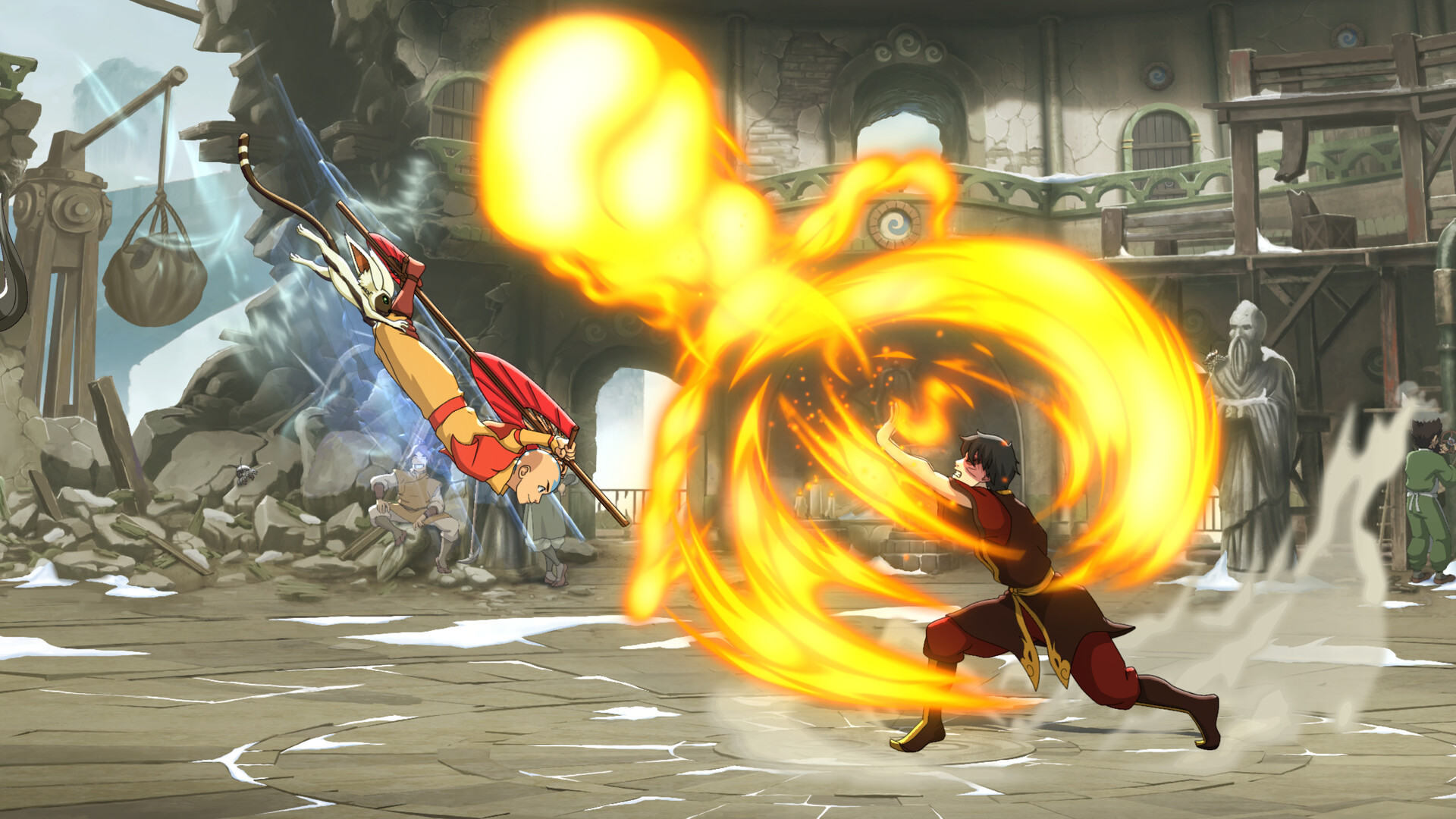
To improve fast in Avatar Legends: The Fighting Game, prioritize a dash-friendly control layout, strong roll defense, air throws, Flow movement, meter discipline, three dependable combos, variation matchup practice, and training-mode problem solving.
Avatar Legends: The Fighting Game rewards players who can move on command, defend without panic, and spend Flow deliberately. The fastest improvement comes from replacing vague match frustration with rehearsed answers: a roll direction when you are knocked down, an air throw when someone jumps, a stable combo after a hit, and a labbed solution when a matchup feels rough.
- Ten practice priorities
- Map dash before muscle memory sets in
- Roll out of pressure on wake-up
- Anti-air jumps with air throws
- Run strike, throw, and shimmy offense
- Keep your first combo list small
- Move with Flow without emptying it
- Stay Balanced to keep defensive options
- Respect air tech instead of mashing
- Add a second variation after fundamentals
- Lab unfair-looking moves before blaming them
- Launch context for these mechanics
- Frequently Asked Questions
Ten practice priorities
| Tip | What to practice |
|---|---|
| Dash-friendly controls | Put A, B, C, Flow, and Dash where each has a natural finger. |
| Recovery rolls | Forward roll corner escapes, back roll mid-screen spacing, and direction mixups. |
| Air throws | Meet airborne opponents and throw them before their jump-in lands. |
| Strike/throw/shimmy offense | Rotate attacks, throws, and movement baits instead of repeating one layer. |
| Three starter combos | Meterless BnB, one EX/two-chakra route, and air-throw follow-up. |
| Flow movement | Use Flow stops and dash pressure without chaining meter-draining cancels. |
| Balanced meter discipline | Stop spending Flow before Unbalanced shuts down movement and defense. |
| Air-tech patience | Wait or delay buttons so fake resets whiff. |
| Variation coverage | Add a second variation once your main gameplan is stable. |
| Training-mode answers | Recreate problem moves and test ducking, reversals, rolls, and spacing. |
Use this as your practice queue. Each item fixes a common way new players lose rounds: bad inputs, panic defense, missed anti-airs, wasted Flow, or matchup problems they never turned into drills.
Map dash before muscle memory sets in
Avatar Legends uses a compact four-button core: A, B, and C for attacks, plus Flow. Because the base layout is small, the biggest control upgrade is not special hardware; it is adding a fifth dedicated Dash button.
Dashing happens constantly, and a dash macro keeps movement clean when you are under pressure. It also lets you chain ground movement faster than double-tapping every time, which matters once you start mixing dash stops, rolls, jumps, and Flow movement.

If you play on pad, avoid crowding every action onto the four face buttons. Use shoulder buttons or triggers so a finger can rest on Flow and Dash. Stick and leverless players can keep attacks in a normal row, then place Flow and Dash close enough to hit without shifting grip.
Bind Dash to a dedicated button first; it makes movement practice cleaner before bad dash inputs become muscle memory.
Roll out of pressure on wake-up
Wake-up defense starts with recovery rolls. In the corner, forward roll is the escape to learn first because it can move you out of the corner and forces the attacker to chase instead of looping pressure at the same range.
Mid-screen, back roll creates space. If the opponent starts chasing your back roll, mix in forward roll so they run to the wrong spot. The goal is not to roll every time; it is to stop giving the same timing and direction every knockdown.
When corner position is genuinely bad, use Flow Escape: hold Flow plus a direction to spend two Flow bars and break away. It is expensive, and draining yourself toward Unbalanced can hurt later, so save it for pressure sequences where a normal roll still leaves you trapped.
Anti-air jumps with air throws
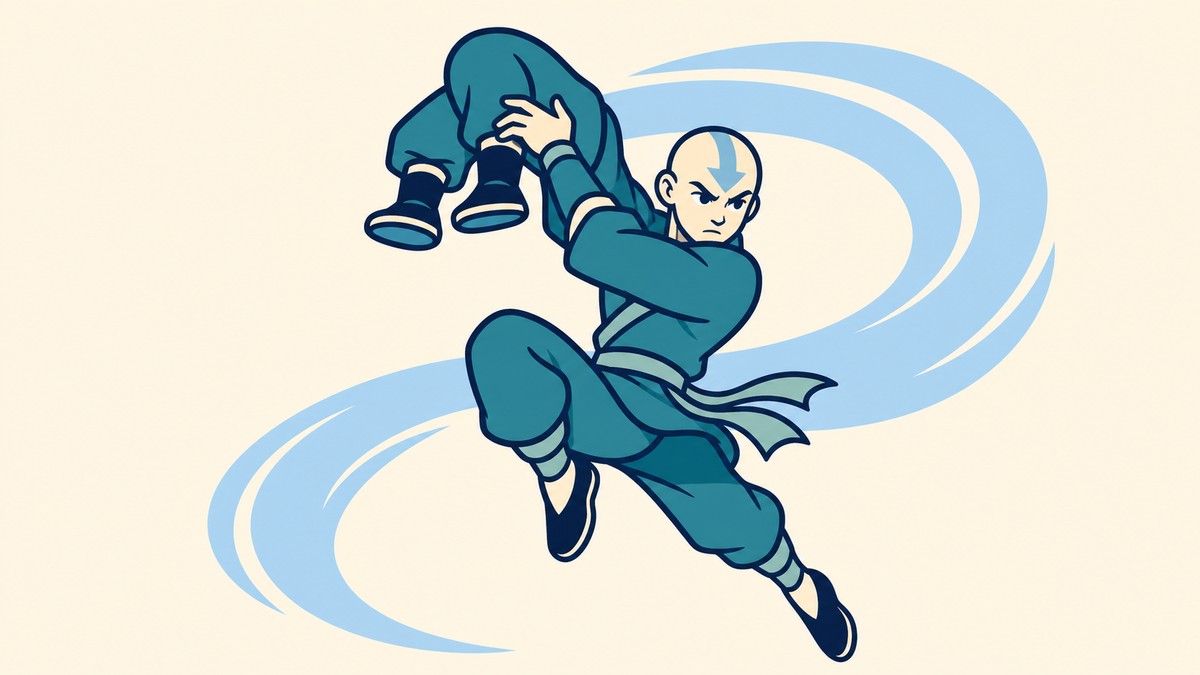
Newer players should make air throws their default anti-air habit. Grounded anti-airs in Avatar Legends ask for earlier timing and can be baited; an air throw lets you react after you see the jump.
The important number is 3 frames. Air throws come out fast enough to beat many late jump-in attempts, and they are often convertible into damage instead of only resetting the situation. Close to an airborne opponent, use A plus Flow in the air.
Do not swing early just because someone left the ground. Hold your defensive position, watch the jump arc, then meet them late. Air throws can be escaped, but the window is tight enough that learning the attempt matters more at first.
Run strike, throw, and shimmy offense
Offense in Avatar Legends revolves around strike, throw, and shimmy. Strikes catch players trying to jump or press out, throws beat people who sit in block or lean on Flow too much, and shimmies make throw-tech attempts miss.
Shimmies are often movement-based. Toph can use jump C as a crossing attack that also beats a whiffed throw; Azula can use air dash to make a throw tech miss and then threaten high/low. Treat those as examples, not a script you force every turn.
On defense, rotate answers instead of choosing one forever: jump, jab during throw protection, Flow reversal, plain Flow, or a roll after knockdown. If the opponent starts reading one answer, change the layer before they earn a full combo for it.
Keep your first combo list small
Do not try to memorize a full combo sheet immediately. Start with three routes, because those cover the hits you are most likely to get in real matches.
Your first route is a meterless bread-and-butter after a common grounded hit. Your second spends one EX move or two chakra for better damage or corner carry. Your third is an air-throw follow-up, because anti-air throws become much scarier when you can cash them out.
Optimized routes can wait until these land in matches. Training-mode consistency is not the same as match consistency; the first real goal is finishing easy routes when the opening surprises you.
Move with Flow without emptying it
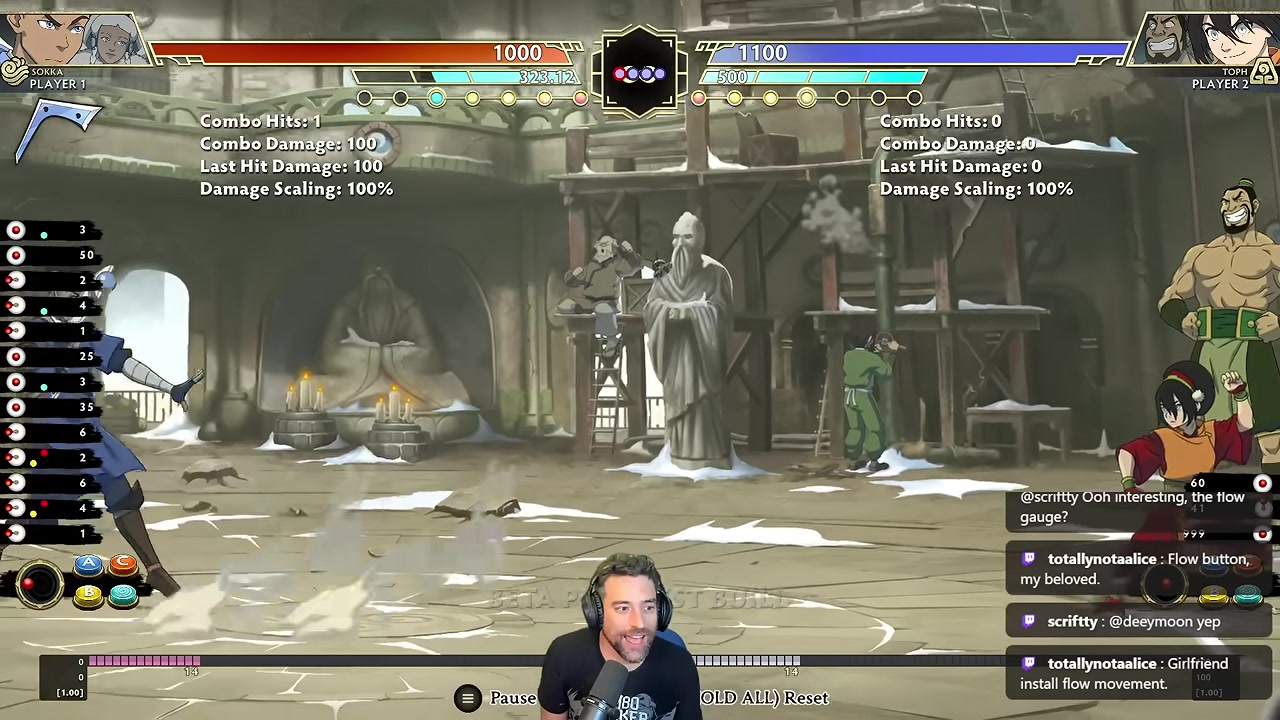
Flow is the movement button that makes Avatar Legends feel fast, but it should not become a drain-anytime habit. Practice non-canceled Flow movement: quick Flow dashes, Flow stops, and forward movement that gives you speed without repeatedly spending the gauge.
Flow stops are valuable because they let you cover space, stop short, and threaten a button, throw, overhead, low, or jump. You are not only moving faster; you are changing when the opponent has to guess.
Dash pressure gets much better when Dash and Flow are both easy to reach. Canceling a dash into a jump also increases jump speed, so movement drills should include dash-jump entries as well as grounded stops.
Repeated Flow cancels can empty the gauge quickly. Use them deliberately for a specific mixup or escape, then go back to movement that preserves Flow for defense.
Stay Balanced to keep defensive options
| State | What changes |
|---|---|
| Balanced | Flow movement and defensive Flow options are available; knockdown defense still has normal roll choices. |
| Unbalanced | Flow movement and defensive Flow options are gone; throws and hard knockdowns become much scarier. |
Unbalanced is what happens when you overspend the Flow gauge, and it changes the whole defensive picture. You lose Flow dash, Flow reversal, defensive Flow, air dash access, and safer escape movement.
The danger is not only losing speed. Throws punish harder while you are Unbalanced, and hard knockdowns can take away the roll-out safety that normally helps you survive corner pressure.
That is why Flow Escape and cancels need a budget. Spend Flow when it changes position, saves you from corner pressure, or creates a real hit; stop spending when you are only moving because the movement feels good.
Respect air tech instead of mashing
When you air tech out of a dropped or ended combo, resist the urge to mash immediately. The opponent may be trying a reset that only works if your button creates a counter hit.
Waiting, drifting, or delaying your button can make their reset swing into empty space. Once the attack whiffs, punish the recovery instead of giving them the counter-hit they wanted.
That does not mean never press after air tech. It means your first response should be recognition: if the reset is fake, let it fail; if they are truly continuing pressure, choose a delayed challenge or movement option.
Add a second variation after fundamentals
Start with one variation long enough to build stable defense, movement, and combo routes. Swapping too early can hide the real problem: you may be losing to wake-up choices or missed confirms, not the variation.
After those foundations are steady, add a second variation of your main. Azula is the clean example: Fire Lord can be preferable into Aang, while Focused can be preferable into Toph.
Variation counterpicking is lighter than learning a new character because normals, gameplan habits, and some combo ideas carry over. The new work is matchup mapping: write down which variation handles which problem move, range, or defensive pattern better.
Lab unfair-looking moves before blaming them
Every move that feels unfair should become a training-mode problem. Recreate the move, set the spacing where it beats you, and test answers instead of replaying the loss in your head.
Start with simple checks: can you duck it, Flow reversal a late hit, roll the knockdown, stand outside its best range, or force it to whiff? If one answer works only at a specific distance, that is still useful; now you have a range to play for.
KEY!Avatar Legends is knowledge-heavy because variations and movement options change interactions quickly. Improvement stacks when each frustrating matchup turns into one saved answer you can use in the next set.
Launch context for these mechanics
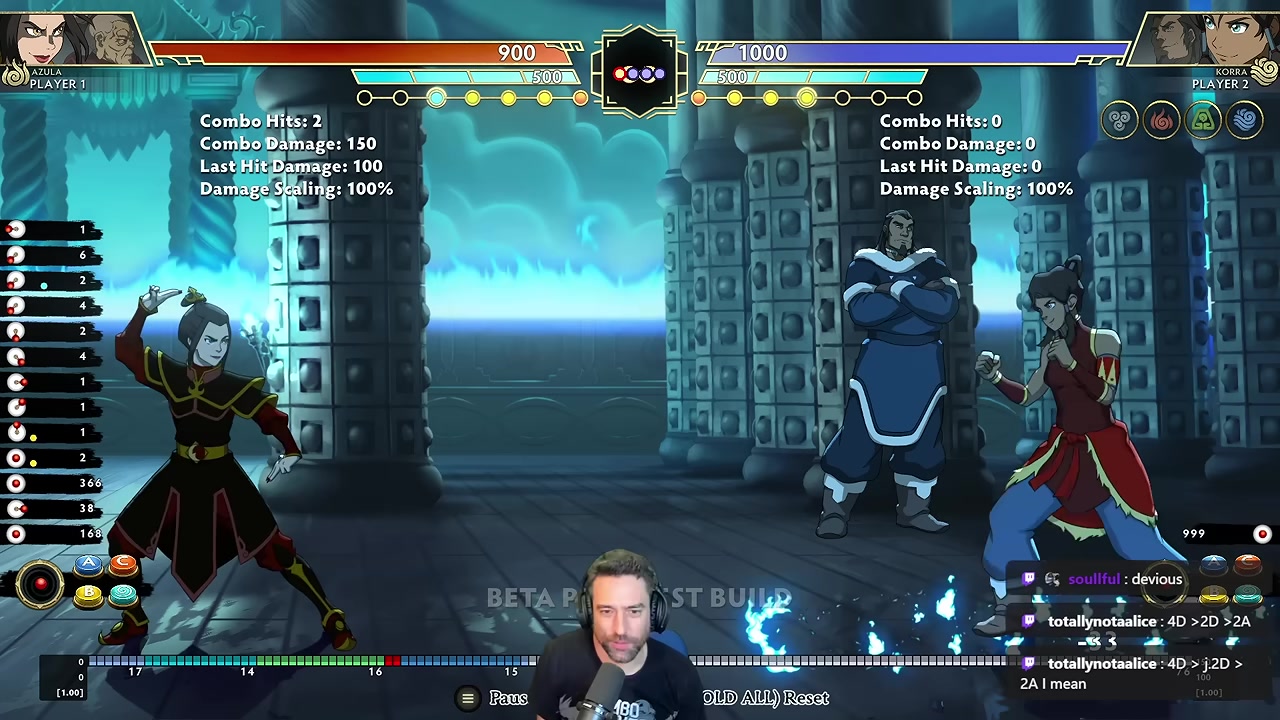
Early build footage carried a BETA PLAYTEST BUILD watermark, while Avatar Legends: The Fighting Game launched on July 23, 2026. Most of the advice here is built around fundamentals that should survive small changes: controls, rolls, air throws, Flow discipline, and matchup labbing.
If a beta-era interaction behaves differently in your launch build, follow the current in-game behavior. This matters most for exact punish windows, combo routes, and any Unbalanced interaction that goes beyond the defensive losses listed here.
Frequently Asked Questions
Do you need a fight stick or leverless controller to improve at Avatar Legends: The Fighting Game?
No. Pad, stick, and leverless all work; the real test is whether A, B, C, Flow, and Dash are reachable without shifting your hand during pressure.
What should beginners practice first?
Practice wake-up rolling first. It gives immediate defensive value with less execution demand than combo grinding, and it teaches you to change defensive choices instead of freezing after knockdown.
Why are air throws so important in Avatar Legends?
They solve the jump-in problem without needing a character-specific grounded anti-air route. That makes them one of the quickest defensive habits to add across the roster.
How many combos should a beginner learn first?
Learn three at first: one grounded confirm, one route that spends resources, and one route after an air throw. Add harder routes only after those work against moving opponents.
Is Flow Escape always worth spending meter on?
No. Use it when the position swing matters more than saving gauge, especially under corner pressure. If a normal roll gives you similar spacing, keep Flow for later defense.
More questions⤵
Should you learn multiple character variations right away?
No. Use one variation until your core gameplan is stable, then learn a second variation to cover matchup gaps. Variation carryover makes that easier than switching to a completely new character.
Video help



Leave a Reply