


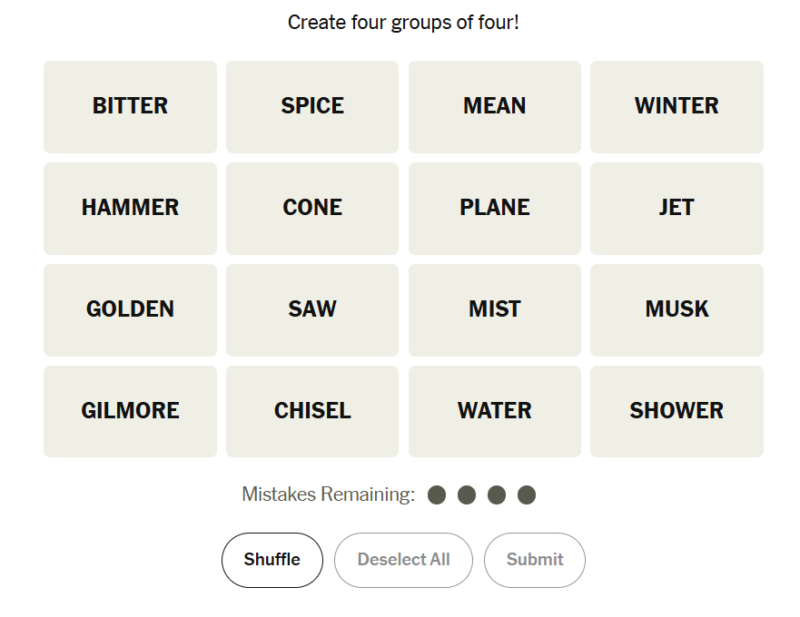
The New York Times Connections puzzle challenges players to sort 16 seemingly unrelated words into four connected groups. Each group shares a hidden link. Today’s grid blends physical actions, clever rearrangements, and nostalgic references, making it both playful and slightly deceptive. Below you’ll find gentle hints to guide your thinking, followed by the complete solutions once you’re ready to check your work.
NYT Connections Puzzle Overview: 22 August 2026
Today’s Connections grid has a balanced mix of straightforward and potentially misleading associations. Some words point toward practical uses, while others become clearer when paired with an implied phrase. The puzzle rewards careful grouping and a willingness to reconsider words that initially seem to fit multiple categories.
NYT Connections Hints: 22 August 2026
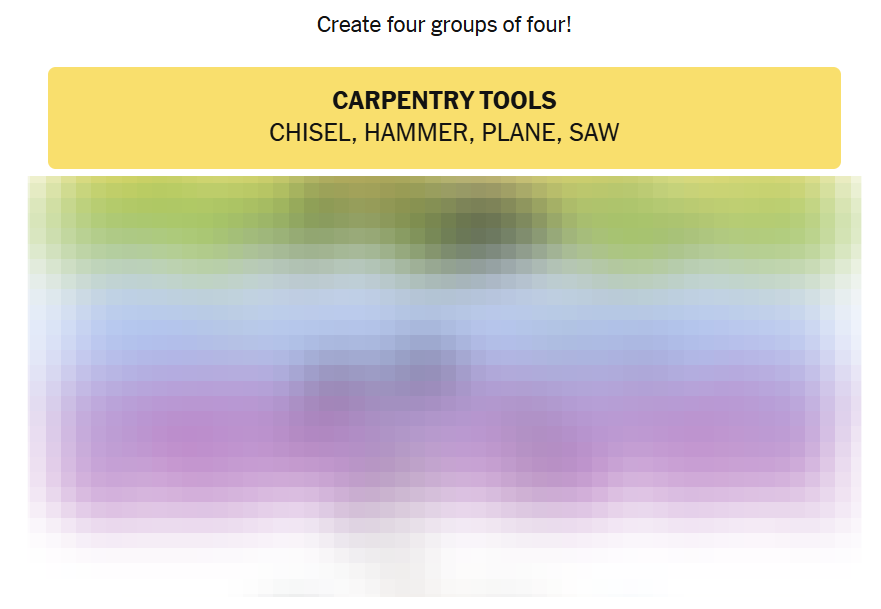
Category 1:
- These are commonly found in a traditional workshop.
- They are useful when working with wood.
- Several can be used to shape or alter wooden pieces.
- Think of basic equipment a carpenter might reach for.
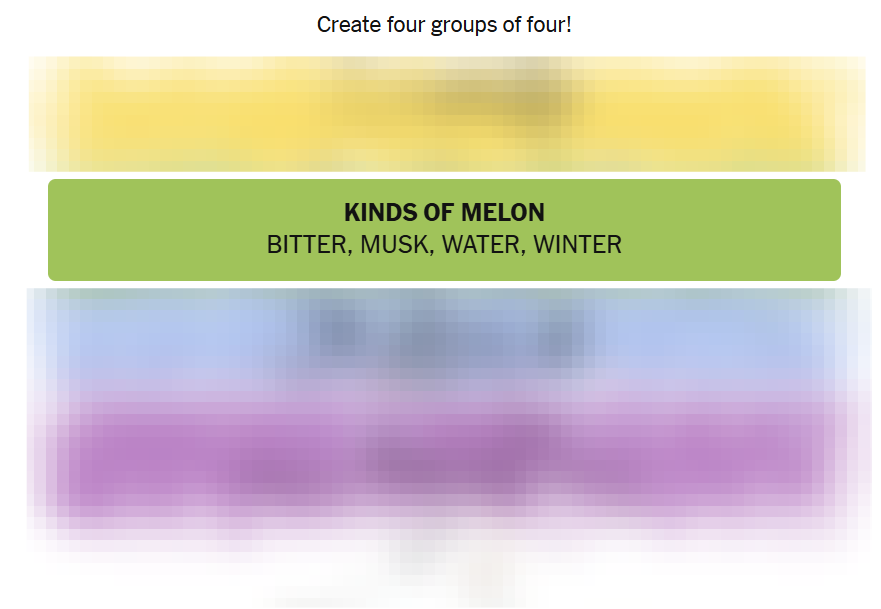
Category 2:
- These are all varieties of the same type of fruit.
- Some are more commonly associated with savory dishes.
- One variety has a name connected to fragrance.
- Think beyond the most familiar sweet summer varieties.
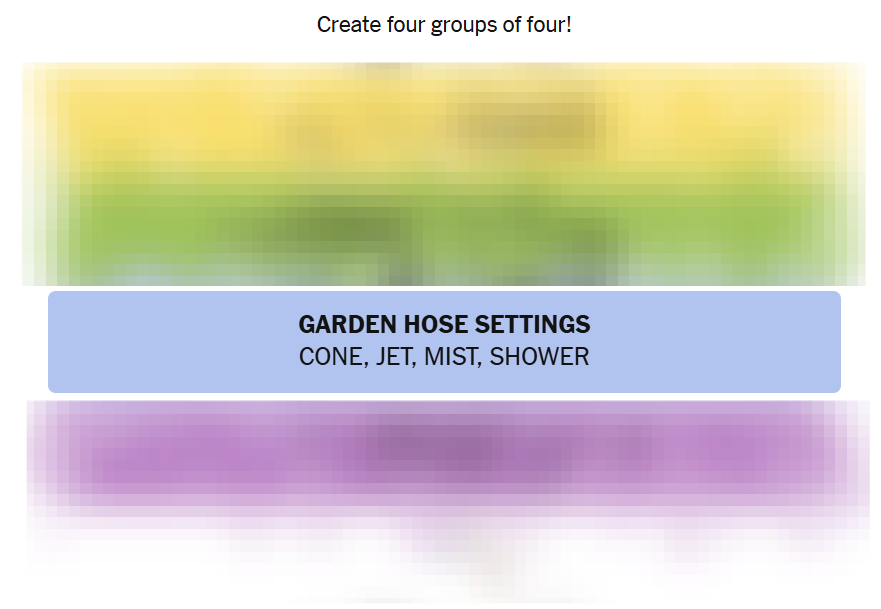
Category 3:
- These describe different outputs from a common outdoor tool.
- They control how liquid leaves the nozzle.
- Some produce a concentrated stream, while others spread the water out.
- Think about the adjustable patterns used for watering plants.
Category 4:
- Each word can be paired with the same word to form a familiar name or phrase.
- The connection comes from entertainment and popular culture.
- Think of well-known “Girls” references.
- The four resulting phrases span television, music, and film-related culture.
NYT Connections Answers: 22 August 2026
Here are the answers, grouped by category.
Category 1:
Category 2:
Category 3:
Category 4:
Conclusion & Quick Strategy Tip
The 22 August 2026 Connections puzzle balances straightforward action words with trickier conceptual links, making it satisfying once everything clicks. Quick strategy tip: lock in obvious verb groups early, then examine remaining words for structural patterns or shared cultural references.






Leave a Reply