


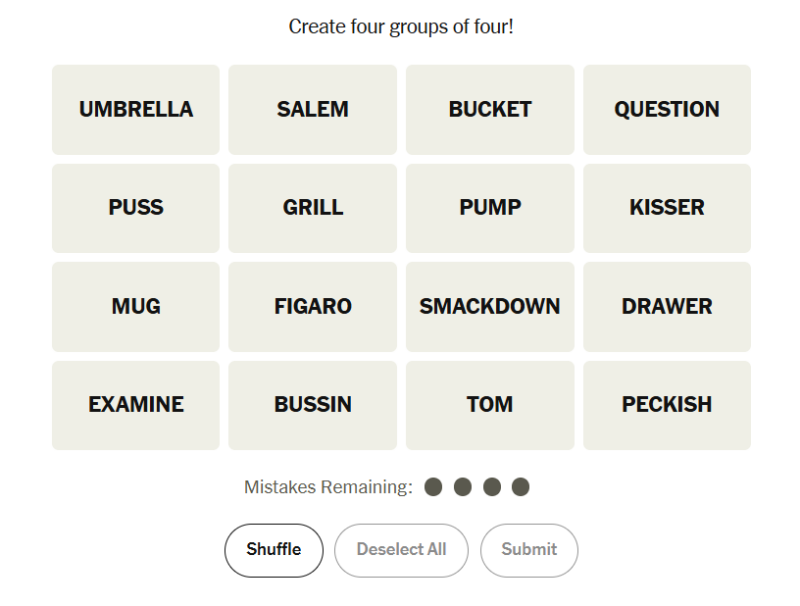
The New York Times Connections puzzle challenges players to sort 16 seemingly unrelated words into four connected groups. Each group shares a hidden link. Today’s grid blends physical actions, clever rearrangements, and nostalgic references, making it both playful and slightly deceptive. Below you’ll find gentle hints to guide your thinking, followed by the complete solutions once you’re ready to check your work.
NYT Connections Puzzle Overview: 13 July 2026
Today’s puzzle balanced straightforward associations with a more playful category that relied on noticing a shared starting sound. Some groups were easy to spot early, while others required looking beyond the most obvious meanings. The result was a satisfying puzzle that rewarded careful observation and pattern recognition.
NYT Connections Hints: 13 July 2026
Category 1:
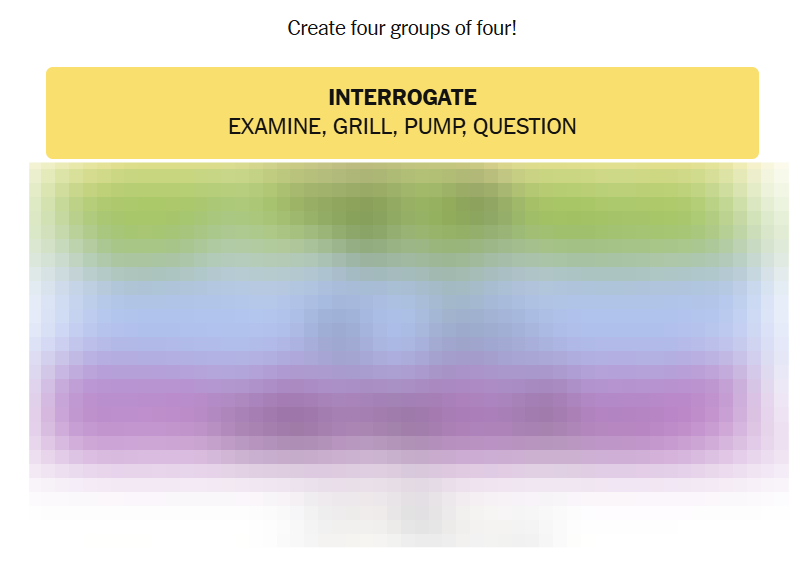
- Think of questioning someone closely.
- Often used during investigations.
- Several words can mean to probe for information.
- This category revolves around intense inquiry.
Category 2:
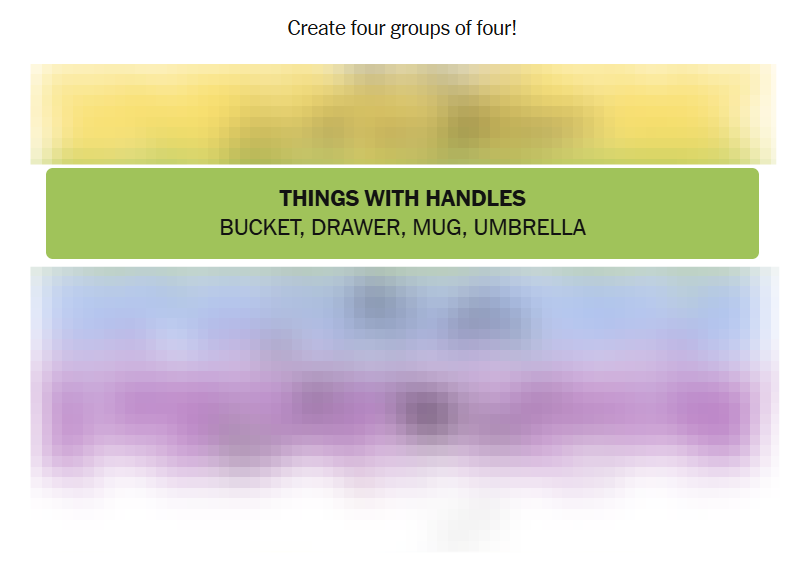
- Everyday objects found around homes.
- Each item is easier to carry because of a specific feature.
- The shared trait is physical rather than thematic.
- Look for objects designed to be held comfortably.
Category 3:
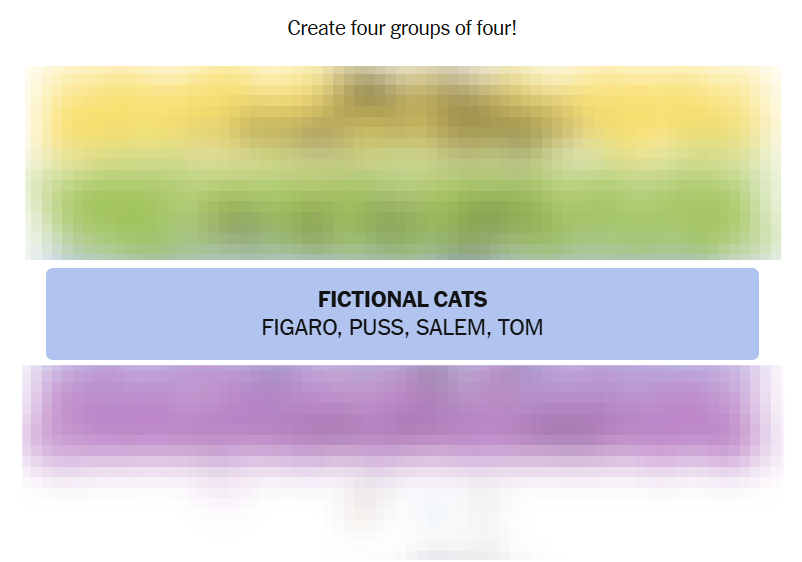
- Famous felines from stories and entertainment.
- These names may be familiar from cartoons and television.
- Every answer belongs to a cat character.
- Pop culture knowledge helps here.
Category 4:
- A wordplay category.
- Focus on the beginning of each word.
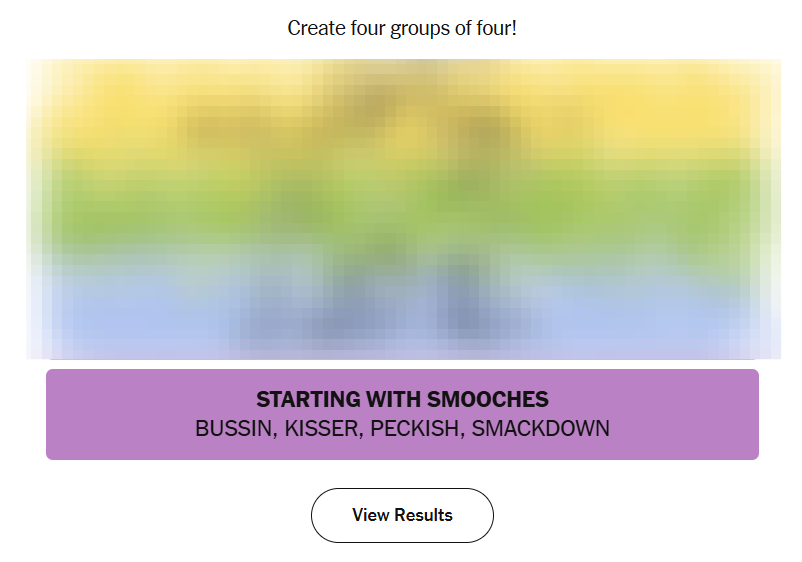
- All entries start with a synonym for a kiss.
- The shared prefix is more important than the full meaning.
NYT Connections Answers: 13 July 2026
Here are the answers, grouped by category.
Category 1:
Category 2:
Category 3:
Category 4:
Conclusion & Quick Strategy Tip
The 13 July 2026 Connections puzzle balances straightforward action words with trickier conceptual links, making it satisfying once everything clicks. Quick strategy tip: lock in obvious verb groups early, then examine remaining words for structural patterns or shared cultural references.






Leave a Reply