


What to know
- Bases only produce oxygen when they have active power.
- Solar Panels, Bio Reactors, and Thermal Plants are the earliest reliable power options.
- Flooded or damaged compartments can disable oxygen generation.
- Expanding larger bases increases total power demand significantly.
Building your first underwater habitat in Subnautica 2 feels like a major progression milestone, but many players quickly encounter a frustrating problem: there is no oxygen inside the base. Unlike the lifepod, player-built habitats require stable power and intact infrastructure before breathable air becomes available.
If you keep suffocating after entering your base, the issue is usually tied to power generation, hull integrity, or incomplete construction. Here is everything you need to know about getting oxygen working properly in your base.
Quick overview of base oxygen mechanics
| Feature | Requirement | Why It Matters |
|---|---|---|
| Base Oxygen | Active Power Source | Oxygen systems only function when powered |
| Solar Panel | Sunlight Exposure | Best early-game power option |
| Bio Reactor | Organic Fuel | Reliable in deeper areas |
| Thermal Plant | Heat Source Nearby | Strong late-game energy source |
| Hull Integrity | Positive Structural Value | Prevents flooding and oxygen loss |
| Completed Compartments | Fully Built Structures | Unfinished modules do not function |
Why your base has no oxygen
In Subnautica 2, oxygen inside habitats is directly connected to your base’s power grid. If your habitat has zero power generation, every room becomes an empty shell without breathable air.
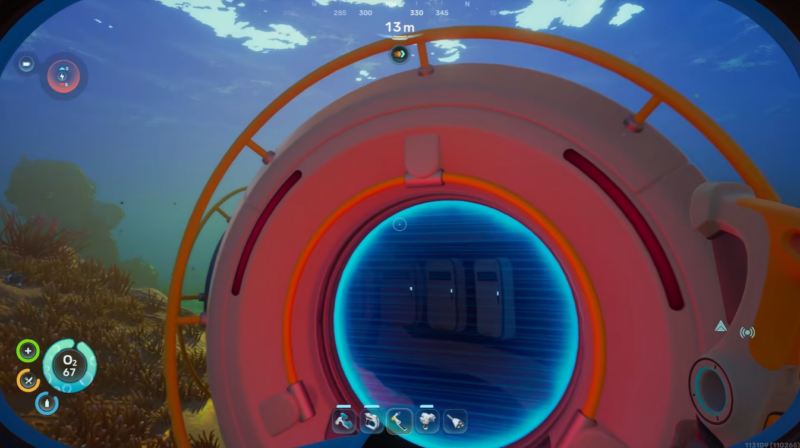
You may notice lights flickering, fabricators shutting down, or oxygen disappearing entirely. This happens because the habitat systems automatically disable when stored energy reaches zero.
Another common issue is incomplete construction. Even if you place a compartment blueprint, it will not provide oxygen until fully built with the Habitat Builder.
Flooding can also disable breathable air. If your hull integrity drops too low, cracks form in the base walls and water floods compartments, removing oxygen until repairs are completed.
How to get oxygen in your base
Build a power source immediately
The fastest solution is adding a power generator to the habitat.
Early-game players usually rely on Solar Panels because they are simple and inexpensive. Place them near the surface where sunlight is strongest.

| Early Power Source | Best Usage | Limitation |
|---|---|---|
| Solar Panel | Shallow bases | Weak at deeper depths |
| Bio Reactor | Mid-depth habitats | Requires fuel |
| Thermal Plant | Deep volcanic zones | Needs heat vents |
Once connected, your habitat should begin generating oxygen automatically within seconds.
Fully complete every room module
A partially constructed room will not support oxygen production.
Open your Habitat Builder and make sure every corridor, hatch, multipurpose room, and foundation is fully completed using the required materials.

You can identify unfinished structures through their transparent framework appearance.
Repair hull breaches and flooding
If your base flooded after expansion, you likely exceeded structural limits.
Use the Repair Tool on every visible crack inside the habitat. Once all breaches are sealed, the water drains automatically and oxygen returns.

Common causes of hull damage
| Cause | Result |
|---|---|
| Too many compartments | Reduced hull integrity |
| Large glass structures | Weakens stability |
| Lack of reinforcements | Increased flooding risk |
| Aggressive fauna attacks | External damage |
Adding reinforcements and foundations improves overall durability significantly.
How to maintain constant oxygen in larger bases
As your habitat grows, power consumption rises dramatically. Fabricators, battery chargers, scanners, grow beds, and docking modules all draw energy continuously.
A small Solar Panel setup that works early on may completely fail later. The safest approach is combining several energy sources together.
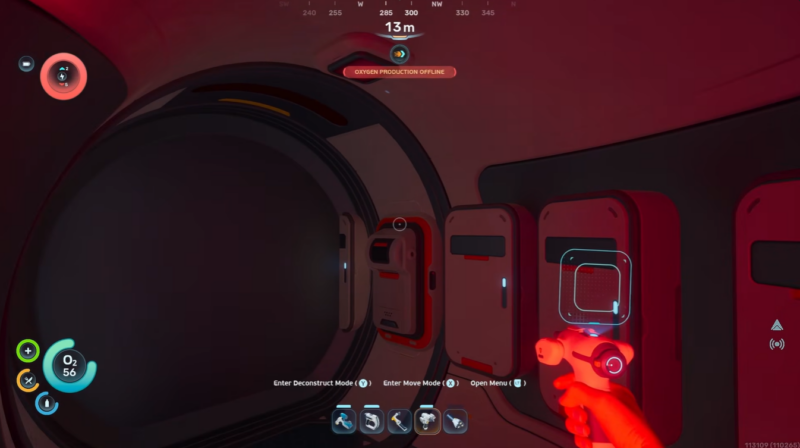
For example:
| Base Size | Recommended Setup |
|---|---|
| Small Starter Base | 2–3 Solar Panels |
| Medium Research Base | Solar + Bio Reactor |
| Large Deep-Sea Base | Thermal Plant + Reactor Backup |
This prevents sudden oxygen shutdowns during nighttime or heavy energy usage.
Getting oxygen inside your base in Subnautica 2 is mainly about maintaining steady power and strong structural integrity. Once your generators are active and the habitat is fully repaired, oxygen production becomes automatic.
Most early problems come from relying on too few power sources or expanding the habitat too quickly. Building slowly, reinforcing key sections, and upgrading your energy systems will keep your underwater base safe and breathable throughout the game.





Leave a Reply