
Grounded 2’s Into the Abyss update opens Skunk Pond with underwater exploration, diving progression, underwater base building, the Toe Biter Buggy, new and returning pond creatures, new building pieces, gear changes, fast travel, and broader combat and mutation updates.
Into the Abyss turns Skunk Pond into the center of the update instead of a side pocket of water. The big shift is that exploration now runs across land, the pond surface, and deeper underwater routes, with new gear and buggy upgrades pushing you farther into Brookhollow Park.
- Biggest Into the Abyss additions
- Skunk Pond and the new exploration loop
- Diving suits and oxygen progression
- Toe Biter Buggy and buggy upgrades
- Pond creatures and park threats
- Building pieces and production stations
- Weapons, armor, mutations, and combat changes
- Fast travel, O.R.C. raids, and collectibles
- What Grounded players should relearn
- Frequently Asked Questions
Biggest Into the Abyss additions
| Addition | What changed |
|---|---|
| Skunk Pond | New above-water and underwater area with deeper exploration paths. |
| Diving progression | New diving gear extends oxygen and opens deeper pond sections. |
| Underwater base building | Players can build submerged outposts instead of treating water as a pass-through zone. |
| Toe Biter Buggy | Amphibious buggy for land and water traversal. |
| Buffin’ Barrel | Buggy upgrade station powered by Moldy Milk Molar progression. |
| Pond creatures | Toe Biter, Pond Jockey, Koi Fish, Diving Bell Spider, Water Fleas, and more reshape water combat. |
| Building pieces | Marine Wall, Mushroom Wall, Bur Floor, trap doors, roofs, scaffolds, fences, and pond-ready foundations. |
| Combat changes | Daggers, stronger staffs, bow perfect blocking, dodging, mounted combat, and underwater ranged combat. |
| Fast travel | Pneumatic Transit System nodes unlock with Raw Science at research stations. |
The update is broad, but it is not just a pile of new objects. Most additions feed back into movement, survival depth, combat choices, or base building around the pond.
Skunk Pond and the new exploration loop
Skunk Pond is the headline area, and it changes Brookhollow Park by adding meaningful space both above and below the surface. The new pond content is built around repeated expeditions: scout from land, push into the water, upgrade your diving setup, then return for deeper routes and better rewards.
The map additions include Skunk Pond, Bridge, Pergola, and Gnarly Bark. The wider pond expansion also points players toward areas such as the Mountains, the Bayou, and the pond depths, where the update’s new resources, threats, and building opportunities matter most.
Early player estimates describe the overall Brookhollow Park map as roughly three times the size of Grounded 1’s yard, while the pond expansion itself is also described as a major increase to nearby explorable space. Either way, the practical result is simple: Grounded 2 now asks returning players to treat the park as a much larger, more layered survival map.
Diving suits and oxygen progression
The new Diving Suit progression is the gate for serious pond exploration. Discovering Optical Disks unlocks new diving suit recipes, and upgraded equipment lets you stay underwater longer while reaching deeper sections of the pond.
That matters because Into the Abyss treats water as its own progression lane. Early dives are for scouting, resource gathering, and learning threats; later dives become longer pushes into routes that are not practical with basic oxygen management.
The important rule is to upgrade before forcing deeper pond objectives. If you keep dying from oxygen loss, the answer is usually not a better route but better diving gear.
Toe Biter Buggy and buggy upgrades
| Buggy | Main use |
|---|---|
| Ant Buggy | Early utility buggy and Red Soldier Ant passive access. |
| Spider Buggy | Traversal and combat utility after the ant tier. |
| Ladybug Buggy | Later buggy option with broader survival support. |
| Toe Biter Buggy | Amphibious land-and-water travel for Skunk Pond. |
Buggies now carry more of Grounded 2’s utility than returning players may expect. They are placed through the Hatchery and tied to dedicated nests, with the Ant, Spider, Ladybug, and Toe Biter forming the main unlock-style progression shown so far.
Key The new star is the Toe Biter Buggy, because it is not locked to the pond. It can travel across land and water, making it useful for moving between Skunk Pond routes, nearby park areas, and resource runs that cross both terrain types.
The Buffin’ Barrel is the buggy upgrade station. Moldy Milk Molars are used for buggy upgrades, including stats such as health, stamina, and inventory capacity, so they now sit alongside regular Milk Molars and Mega Milk Molars as a progression target worth checking on the map.
Upgrade the buggy you actually use before pushing deeper into Skunk Pond, because the Toe Biter’s value comes from staying useful across both water travel and land fights.
Pond creatures and park threats
| Creature | Type |
|---|---|
| Toe Biter | New pond threat and buggy |
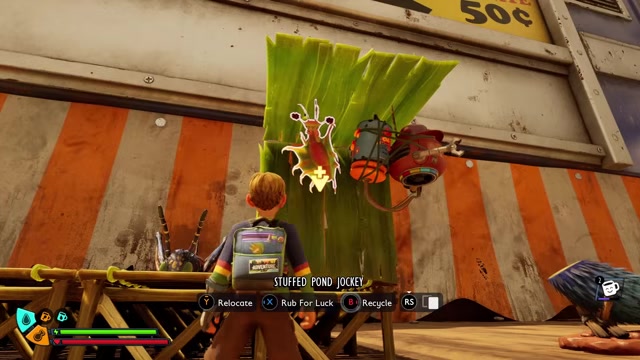
| Pond Jockey | New pond threat |
| Diving Bell Spider | Returning pond threat |
| Koi Fish | Returning pond threat |
| Water Fleas | Returning pond creature |
| Green Shield Bug | Returning land threat |
| Wooly Aphid | New park creature |
| Pincher Earwig | New park creature |
| Rust Beetle | New park creature |
| Cricket | New park creature |
| Potato Beetle | New park creature |
| Striped Bark Scorpion | New scorpion variant |
| CNK robots | New surrounding-area danger |
| Wolf Spider | Visual overhaul |
| Firefly | Visual overhaul |
Into the Abyss adds new pond enemies, brings back familiar water threats, and expands the land roster around Brookhollow Park. The water is no longer just an oxygen timer; it now has its own combat rhythm, with threats that force you to prepare before each longer dive.
The pond roster is the most important change for moment-to-moment play because underwater combat now has more to react to. Toe Biters, Pond Jockeys, returning Diving Bell Spiders, Koi Fish, and Water Fleas make gear choice and oxygen planning part of the fight.
On land, the update folds in creatures such as the Green Shield Bug, Wooly Aphid, earwigs, Rust Beetle, Cricket, Potato Beetle, and a Striped Bark Scorpion. The Wolf Spider and Firefly also look noticeably different, so old visual reads are not always enough when you return to the park.
The major new boss tied to Into the Abyss is Sherma.
Building pieces and production stations
| Item | Use |
|---|---|
| Marine Wall | Building wall for the new pond-era material set. |
| Mushroom Wall | Flooring option added with the update. |
| Bur Floor | Flooring option for sturdier base layouts. |
| Grass Quarter Hatch | Small hatch piece for compact openings. |
| Bur Hatch | Hatch option in the bur building set. |
| Bur Trap Door | Trap piece that triggers when bugs walk over it. |
| Kiln | Production station for processed materials. |
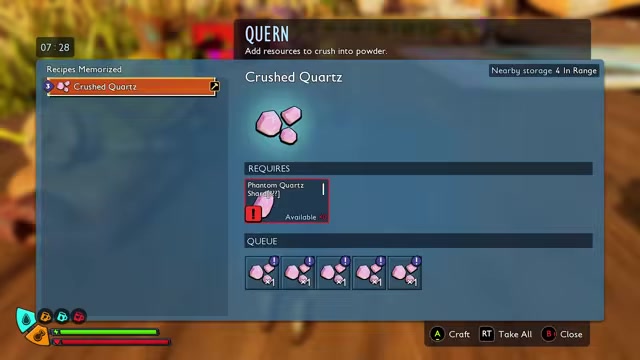
| Quern | Grinding station for material processing. |
| Ponic Patch | Advanced growing patch for higher-tier plant materials. |
| Tarantula Chest | Boss-themed storage chest with Large Storage Chest capacity. |
| Thatch Awning | Roof overhang for thatch builds. |
| Thatch Roof | Roofing option for thatch structures. |
| Pinecone Roof | Returned roofing option for Grounded 2 builds. |
| Scale Roof | Roofing option added to the build set. |
| Pumpkin Stairs | Pumpkin-themed stair piece. |
| Horsetail Scaffold | Green scaffold piece with a bamboo-like look. |
| Buoyant Foundation | Floating foundation for pond builds. |
| Buoyant Foundation Ramp | Ramp piece for floating foundation layouts. |
| Pinecone Fence | Decorative fence with pinecone detailing. |
| Pumpkin Pillar | Support pillar for pumpkin-themed builds. |
Base building gets a big material pass in Into the Abyss, especially for players who want pond-adjacent or underwater builds. The standout addition is the Marine Wall, but the update also adds floors, roof options, trap pieces, production stations, and decorative supports that make Grounded 2’s build palette feel much wider.
The Tarantula Chest is more of a flex piece than a storage upgrade, since it matches the Large Storage Chest capacity while changing the look. The more functional pieces are the trap doors, the pond-ready buoyant foundations, and the production stations that support newer material chains.
Weapons, armor, mutations, and combat changes
Combat has changed enough that Grounded 1 habits can get you punished. Bugs have different timings, some enemies block attacks, and power attacks are used to break through blocking behavior instead of simply spamming light swings.
Weapon variety is broader now. Daggers are a new weapon type, some two-handed weapons support stealth damage, staffs are stronger than before, and bows can now perfect block. For the pond specifically, the Harpoon Launcher gives ranged underwater combat a real role.
Armor also needs a fresh read. Set effects have been reworked across Grounded 2, and armor no longer behaves exactly like it did in Grounded 1. Red Ant Armor, for example, no longer pacifies red ants by itself; that passive effect now comes from riding a Red Soldier Ant buggy.
The mutation system is split between active mutations and passive mutations. Active picks still need manual selection, while passive combat mutations stay on regardless of your current weapon or gear, which makes switching builds less fiddly. Combat also now includes dodging, mounted fighting, and buggy perfect blocking, so your defensive toolkit is wider than before.
Fast travel, O.R.C. raids, and collectibles
The Pneumatic Transit System gives Grounded 2 a faster way to cross its larger map. You unlock fast-travel nodes at research stations by spending Raw Science, then use the network to cut down long repeat trips across Brookhollow Park.
Eight fast-travel sites have been mentioned in early play, including a pond node, but the full practical route is better mapped as you discover stations yourself. The important habit is to check research stations as you travel instead of waiting until the map feels too large.
O.R.C. bugs are also worth farming. They drop useful resources, contribute toward gold card collection, and those gold cards can help unlock additional mutations. The O.R.C. Beacon lets you summon O.R.C. raids on command, giving players a more direct way to chase those fights.
What Grounded players should relearn
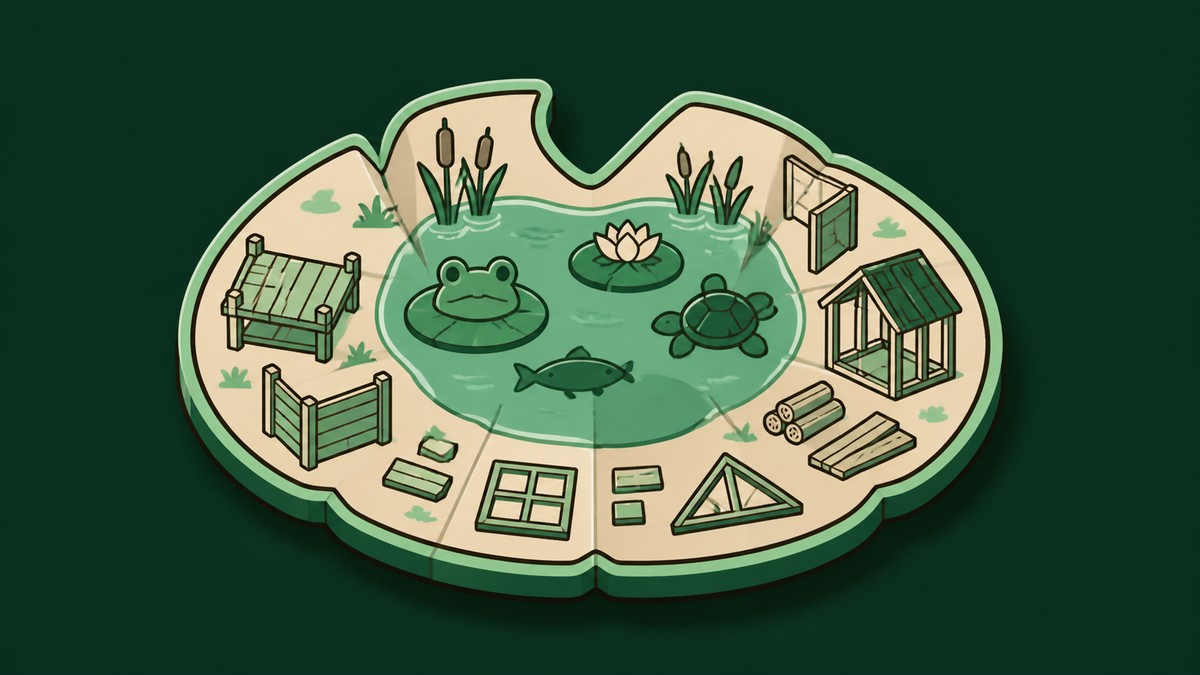
Returning players should treat Into the Abyss as more than a pond update. Armor passives, mutations, buggy utility, and combat timing have all moved far enough that old muscle memory can be unreliable.
The biggest mental shift is that buggies are not just mounts. They affect traversal, combat, passive effects, and environmental utility, including interactions with obstacles such as roots and spider bridges.
The second shift is scale. Brookhollow Park is much larger than Grounded 1’s yard, and fast travel, buggy upgrades, and diving progression are part of keeping that size manageable rather than optional side systems.
Related Grounded 2 guides
Frequently Asked Questions
Is Into the Abyss the biggest Grounded 2 update so far?
Yes. Into the Abyss is presented as Grounded 2’s largest content update so far, with Skunk Pond, underwater exploration, diving progression, underwater base building, new creatures, the Toe Biter Buggy, and fast travel changes arriving together.
Do PlayStation 5 players get Into the Abyss content at launch?
Yes. Grounded 2 comes to PlayStation 5 during the Early Access period alongside the Into the Abyss content, so new PS5 players begin with the update’s pond systems in place.
Is the Toe Biter only useful underwater?
No. The Toe Biter Buggy is amphibious, so its main advantage is crossing between land and water without becoming a pond-only mount.
Video help


Leave a Reply