

For a first Funnel Runners escape, treat the 20-minute run as timed team triage: assign roles early, loot only the useful parts nearby first, start van repairs before the final minutes, and leave as soon as the van is drivable.
Funnel Runners drops your team into a city that is already being erased. The van sitting in the middle of it doesn’t run, the parts that fix it are scattered through buildings that are about to fall down, and the whole thing is finished in roughly 20 minutes whether you’re in the van or not. Getting out on a first attempt is almost never about being good at looting — it’s about spending those minutes in the right order.
- What happens during a 20-minute run
- Your 20-minute escape checklist at a glance
- Team roles to assign before you leave the van
- Opening minutes: sweep the closest buildings first
- Mid-run: push out without over-looting
- Final minutes: consolidate, repair, and drive out
- Beginner mistakes that cost runs
- Numbers the launch build will settle
- Frequently Asked Questions
What happens during a 20-minute run
Every run has the same shape. You and up to seven friends deploy as an APEX Storm Monitoring Services field team into a doomed city, scavenge the vehicle parts the van needs, get it running, and drive out ahead of an EF5 tornado that is coming whether you’re ready or not.
The complication is that the city doesn’t wait politely. Storms spawn dynamically and grow stronger as the clock runs, and the map is destroyed progressively rather than all at once — blocks come apart while you’re still in them, and anything sitting inside a destroyed zone is simply gone. Gusts, flying debris, fire, and electrical faults fill in everything between you and the next doorway.
It’s a first-person co-op survival game from Supernova Studios LLC, arriving in Early Access on PC through Steam this July at around $14.99. That’s the loop. The rest is triage.
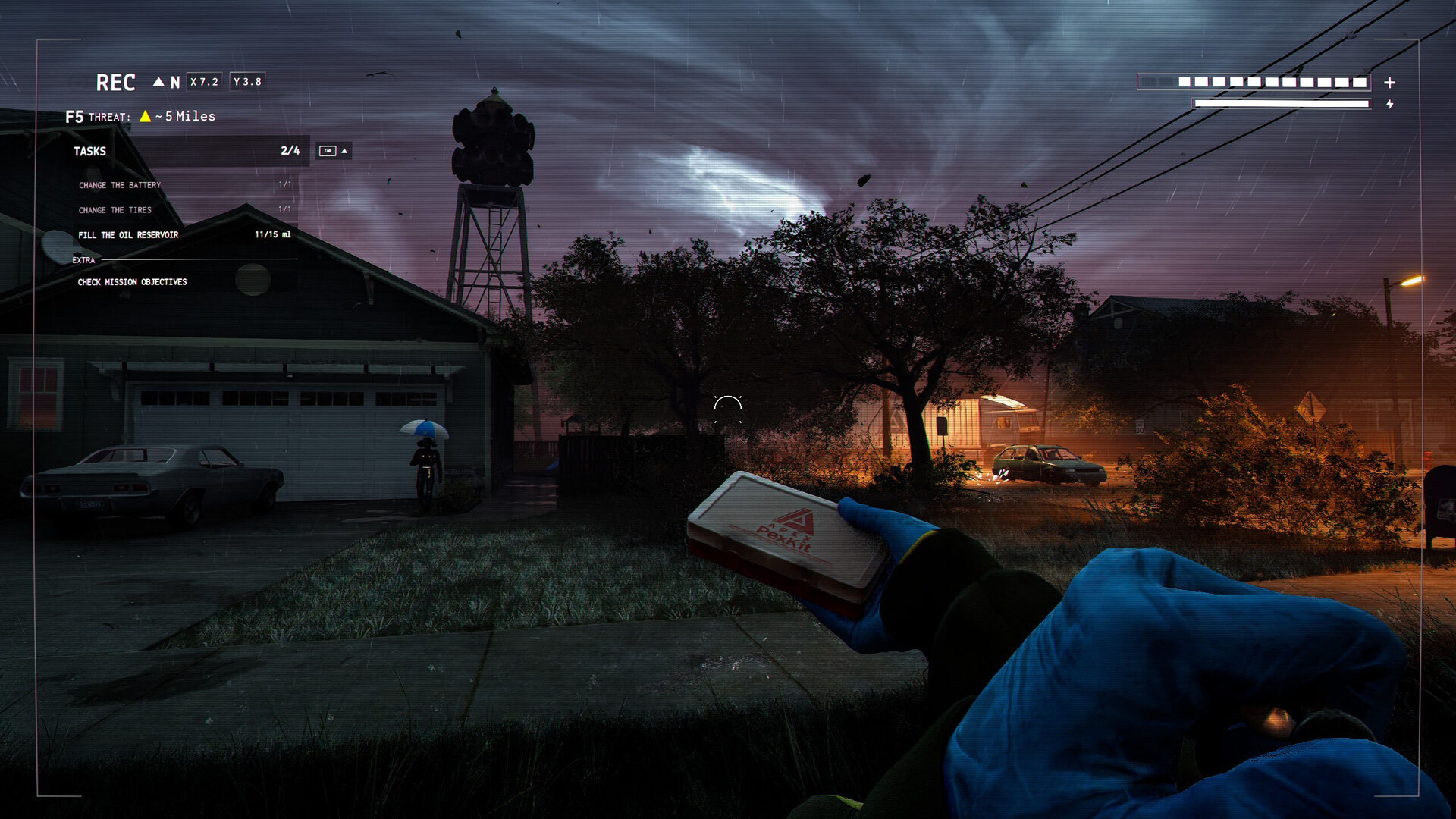
Your 20-minute escape checklist at a glance
| Time | Priority | Action |
|---|---|---|
| 0–1 min | Roles and bearings | Hand out jobs at the van and find the storm’s approach before anyone runs. |
| 1–5 min | Closest buildings | Clear the intact structures ringing the van for vehicle parts, fuel, and tools. |
| 5–12 min | Mid-range streets | Push outward only where the destruction path hasn’t reached, and keep parts flowing back. |
| 12–18 min | Consolidate | Everyone returns, repairs finish, fuel goes in, distant objectives get dropped. |
| Final 2–3 min | Board and drive | Get in the moment the van moves and take the cleanest road away from the funnel. |
KEY!Those bands are the default rhythm, not a law. A run where the funnel tracks straight at your drop point compresses all of it, and a scout calling a collapsing street overrules the clock every time. What the timeline is really doing is stopping the most common failure: a team that plays a looting game for fifteen minutes and then tries to play an escape game in five.
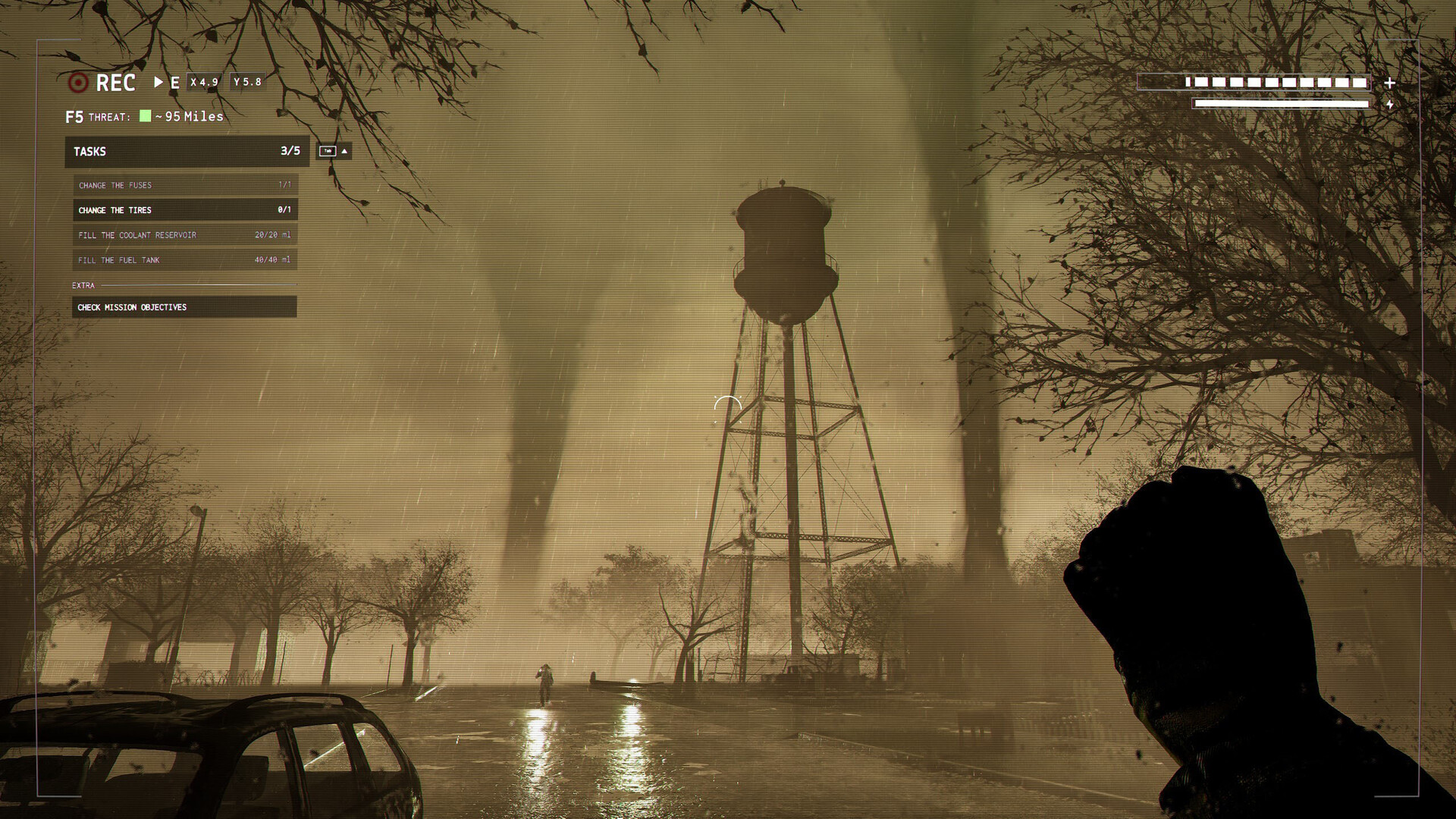
Team roles to assign before you leave the van
| Role | Job |
|---|---|
| Van tech | Holds the van, sorts incoming parts, and turns them into repairs instead of a pile. |
| Scout | Tracks the storm’s movement and calls which streets are about to stop existing. |
| Fuel and tool runner | Sweeps for fuel and tools and ferries them back rather than carrying them around. |
| Looter | Works the buildings the runners skipped and shouts out what’s in them. |
Do this out loud in the first minute, while everyone is still standing in the same place. These aren’t in-game classes — nobody picks a loadout, and the jobs are just an agreement about who is responsible for what, so that four people don’t all sprint to the same warehouse and leave the van alone for the entire run.
Scale the list, not the schedule. A crew of three collapses it — the player nearest the van holds it and watches the sky, and the other two work as one pair. A full squad should spend its extra bodies on a second looting pair rather than a second scout, because one person calling the storm is enough and two people calling it contradict each other at the worst moment.
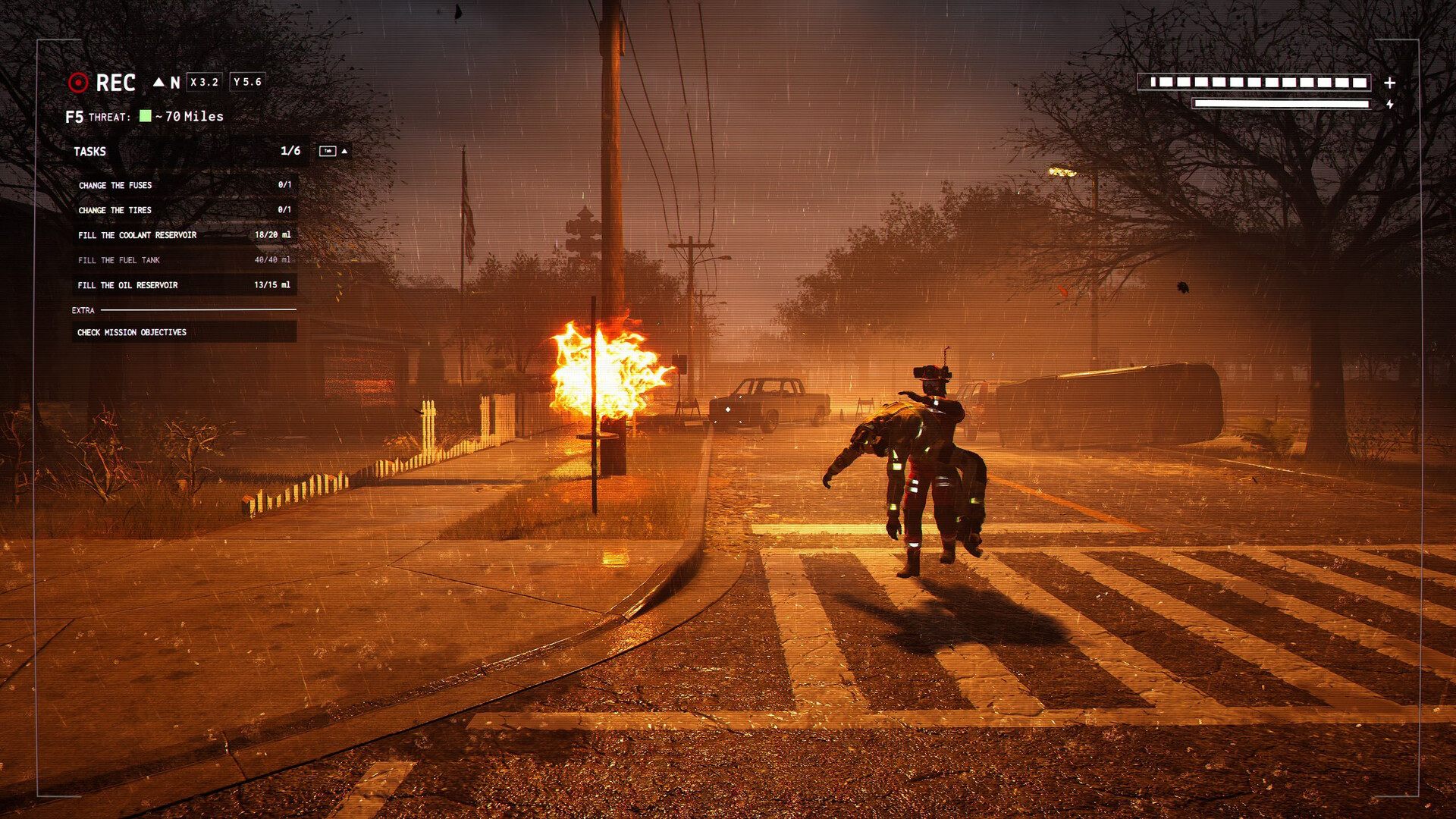
Opening minutes: sweep the closest buildings first
The first sweep decides the rest of the run, and it’s won by being boring — close buildings, useful items, nobody out of shouting range.
STEP 1/4
Read the storm before anyone moves
The direction the funnel is tracking from decides which half of the city you never touch.
STEP 2/4
Pair off and take the nearest intact structures
Two players clear a building faster than four players spread across four addresses, and neither of them goes missing in the debris.
STEP 3/4
Pull vehicle parts, fuel, and tools ahead of anything else
Those three categories are the entire escape, and the second pass you’re planning to make for everything else usually never happens.
STEP 4/4
Keep the van in sight until the storm’s path is obvious
Distance is cheap to spend and expensive to get back once streets start closing.
Pick your exit direction before you loot, not after. The storm’s approach tells you which half of the map is going to be rubble, and that half is worth nothing no matter what’s inside it.
Mid-run: push out without over-looting
The middle stretch is where good runs quietly die, because expanding feels productive right up until the route home is gone.
STEP 1/4
Expand into mid-range streets outside the destruction path
Blocks the storm hasn’t reached are the only ones that will still be standing when you walk back through them.
STEP 2/4
Write off damaged zones completely
Once a zone is coming down, the items in it are unrecoverable and the route through it is a coin flip — cross it off and take the next street instead.
STEP 3/4
Ferry parts back as you find them
A part in someone’s hands halfway across the city is worth nothing; a part at the van is progress.
STEP 4/4
Start repairs on the first usable piece
Waiting until the set looks complete hands the tornado the exact minutes you needed at the end.
Final minutes: consolidate, repair, and drive out
The last stretch is a recall, not a run — everything from here is about turning what you already have into a moving vehicle.
STEP 1/5
Call the recall once the run is into its last third
Whoever is furthest out leaves first, because they’re the one who won’t make it back late.
STEP 2/5
Drop distant objectives instead of finishing them
A building you’re two rooms into is a loss; a team member cut off behind a collapse is the whole run.
STEP 3/5
Finish repairs and load fuel with the crew on site
Everyone at the van means the last parts go straight in rather than waiting for a courier.
STEP 4/5
Board the moment the van is drivable
Drivable beats optimized, every time. The van does not need to be pretty, it needs to move.
STEP 5/5
<
p class=”vg-step-title” id=”take-the-clearest-road-out-not-the-richest-one” style=”margin:16px 0 6px”>Take the clearest road out, not the richest one
The route with loot on it is the route you’ll stop on, and stopping is how teams lose a van that was already fixed.
Video help
Beginner mistakes that cost runs
| Mistake | Fix |
|---|---|
| Leaving the van untouched until the end | Treat the van as a work-in-progress from the first minute, not a finish line you arrive at. |
| Splitting across the map without coordination | Loot in pairs, and keep every pair within earshot of another one — debris and fire hide people fast. |
| Chasing rare loot into a collapsing block | Take the ordinary part that’s standing over the good one that’s about to be buried. |
| Ignoring where the destruction is heading | Let the scout’s calls pick the sweep direction, and re-aim the whole team when they change. |
| Squeezing in one more building | Plan for the run to end around the 18-minute mark, so the final minutes are spare instead of frantic. |
Nearly every failed escape traces back to the same misjudgment: the team believed it had more time than it did, and the city agreed right up until it didn’t. Storms escalate, buildings fall, and the map you scouted at minute two is not the map you walk back through at minute sixteen. Each of these has a fix you can apply on the very next attempt.
Numbers the launch build will settle
A few things only sharpen once players are inside the live build. The exact repair threshold — which parts, how many, and how much fuel makes the van drivable — isn’t something to build a plan around yet, and neither are optimized routes, since city layouts and storm tracks change from run to run. Those land with patch notes and in-game tooltips.
None of that changes the shape of a first escape. Hand out jobs, loot close, repair early, and leave when it drives.
Frequently Asked Questions
Can you play Funnel Runners solo or with a small group?
It’s built as co-op — the whole premise is an APEX field team of you and up to seven friends dropped into one city together. A duo or trio faces the same 20 minutes and the same broken van, so the thing you shrink is the map you’re willing to touch, not the checklist. Tighten the sweep radius to the ring of buildings around the van and accept that a few blocks go unlooted.
What should beginners loot first?
The city holds vehicle parts, fuel, tools, and data. The first three are what turn the engine over, so they get picked up on sight. Data and general supplies are pickups of opportunity — grab them if they’re on the shelf you’re already standing at, and walk past them if they aren’t.
When should the team stop looting and head back?
The clock is only half of the trigger. The other half is your route: the moment the streets between you and the van start taking damage, the recall has already happened whether anyone called it or not. If the scout says the funnel has turned toward your side of the city, leave on that sentence rather than the schedule.
Should someone stay with the van the whole run?
Yes. The van is the only object in the city that has to change state before anyone gets out, and an unattended van is 20 minutes of zero progress no matter how much loot piles up beside it. Whoever holds it should also stage fuel and tools within arm’s reach, so the final minutes are assembly rather than searching. In a small group, rotate the job — whoever is closest when a part arrives takes it.
Do we know exactly how many parts and how much fuel the van needs?
Not yet, and it’s worth not building a run around a number someone quotes you. The practical version is simple: carry more fuel than feels necessary and start the repair early. A van that leaves with spare parts still in the back has cost you nothing.





Leave a Reply