Meta is turning to Google’s Gemini and OpenAI models to temporarily power its Meta AI, bridging performance gaps until its in-house Llama 5 becomes competitive across WhatsApp, Instagram, and Facebook.
What to know
- Stopgap solution — Meta plans to borrow AI models from Google and OpenAI as an interim boost while it develops its own advanced model, Llama 5.
- Meta Superintelligence Labs leading the charge — The company’s AI division is spearheading talks to integrate Gemini and OpenAI models across products like WhatsApp, Instagram, and Facebook.
- Multi-pronged strategy — Meta is simultaneously building its own models, forming partnerships, and open-sourcing tech to stay competitive.
- Talent and infrastructure push — Heavy investment—like the $14.3B stake in Scale AI and recruitment of top AI leaders—underpins its broader AI ambitions.
Meta’s Superintelligence Labs is in active discussions to incorporate Google’s Gemini model, particularly to enhance Meta AI, the company’s chatbot, by providing more conversational and context-aware responses to user queries, according to a report by The Information. Likewise, Meta has explored leveraging OpenAI’s models to power AI functionalities across its social media ecosystem—WhatsApp, Instagram, Facebook—alongside its core Meta AI app.
The Information further revealed that these external integrations are designed as short-term solutions. Meta plans to rely on these models only until its in-house models—notably Llama 5—can compete at the same level.

Why Meta thinks it needs Google Gemini and OpenAI GPT
- Competitors like Gemini and OpenAI’s GPT are ahead in conversational fluency and reasoning capabilities, putting pressure on Meta’s current offerings.
- Integrating high-performing models immediately enhances user experience and helps maintain relevance.
Internally, Meta has already integrated Anthropic models into staff tools, such as its internal coding assistant—demonstrating its willingness to mix in third-party AI as part of internal workflows.
Meta describes its approach as “all-of-the‑above”: building proprietary models, partnering externally, and open-sourcing tech all at once.
Backing this strategy is a massive push in infrastructure and talent—most notably, Meta’s $14.3 billion investment in Scale AI, where Scale’s CEO, Alexandr Wang, now leads part of Meta’s Superintelligence efforts.The plan in short
| Purpose | Explanation |
|---|---|
| Quickly improve AI features | Borrowing from Google and OpenAI lets Meta offer advanced AI now. |
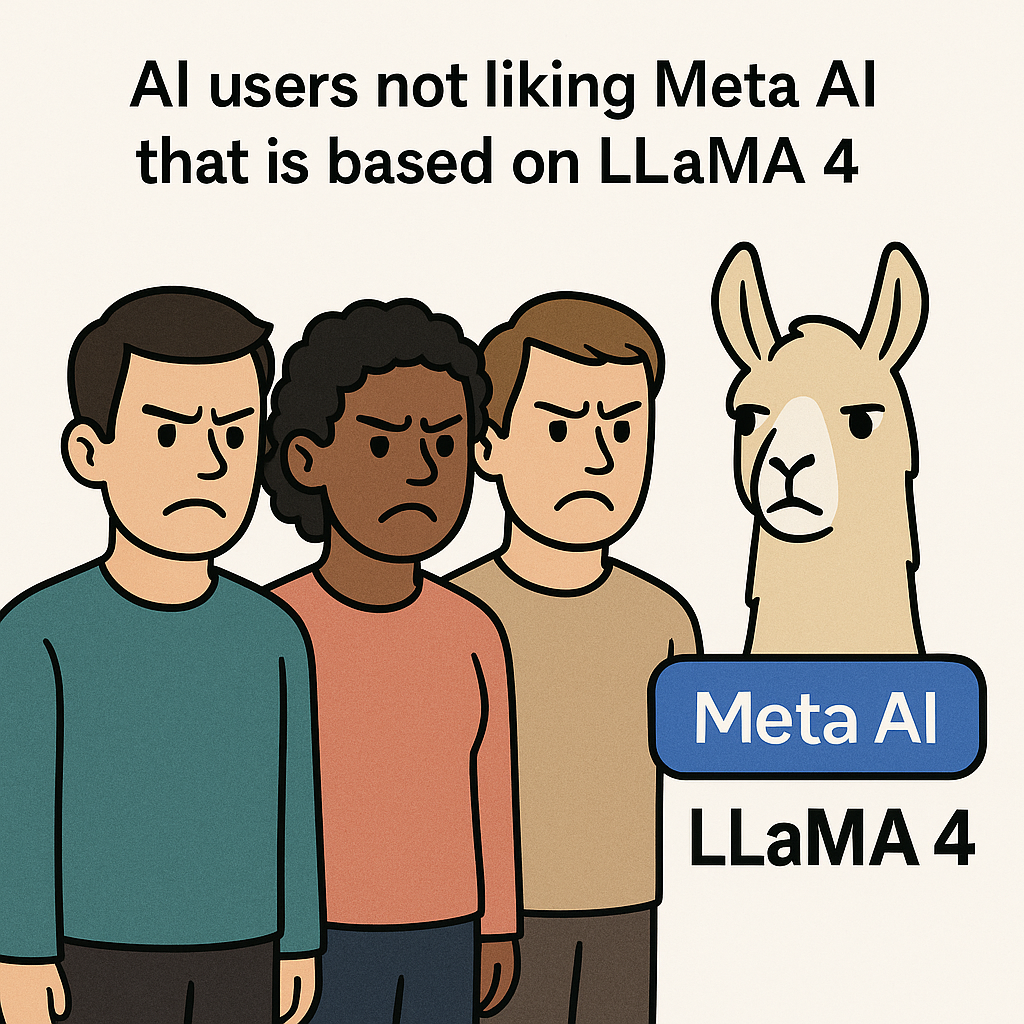
| Bridge performance gap | Llama models (e.g. Llama 4) still lag behind competitors in benchmarks. |
| Keep pace during development | External models fill the gap while Llama 5 and others mature. |
| Strengthen internal capabilities | Partnerships support learning and push innovation within Meta. |
| Strategic flexibility | External, internal, and open-source approaches diversify Meta’s AI strategy. |
| Support massive AI ambition | Huge investment and new leadership (e.g., from Scale AI) illustrate commitment. |
So, how this can help Meta (and you!)
- For users, this means potentially better AI-generated responses, smarter chat features, and smoother interaction across Meta platforms—sooner rather than later.
- For the AI landscape, it signals that even major players see mutual benefit in sharing AI capabilities, blurring competitive lines when stakes are high.
- For Meta, it’s a pragmatic balance: accelerate improvement now while preparing for long-term autonomy with advanced models like Llama 5.