- What to know
- Leaked builds signal internal development
- Registry and API strings expose redesigns
- UI prototypes prioritize tablets and fluidity
- AI demands drive NPU hardware clues
- Timeline slips reflect strategy
- Pricing and upgrade paths stay murky
- Preparing amid the uncertainty
- Clues point to AI evolution, not revolution
What to know
-
No official announcement from Microsoft as of early 2026; focus stays on Windows 11 AI updates like Copilot+ while prepping foundational changes.
-
Key clues emerge from leaked builds (e.g., 25386, 259xx series), Canary Channel experiments, and registry strings signaling UI shifts and NPU reliance.
-
Expected late 2026 or 2027 launch to sync with advanced NPUs (40+ TOPS), modular “Core PC” architecture, and stricter hardware like 16GB RAM minimum.
-
UI prototypes show floating taskbars and top-centered icons, tested in previews to enhance tablets without ditching mouse support.
Microsoft hasn’t named Windows 12 yet, but scattered digital breadcrumbs—from accidental keynote slips to buried code—paint a picture of an AI-centric overhaul brewing beneath Windows 11’s surface. These clues suggest a shift toward hardware that thinks as fast as you do, with interfaces that adapt on the fly.
Leaked builds signal internal development
Early insiders spotted build numbers like 10.0.25386 (timestamped February 2023) and gaps in the 25300-25900 range, hinting at parallel tracks for Windows 11 and its successor. More recent Gallium and Germanium branches in Canary Channel previews introduced kernel tweaks, new APIs, and platform modernizations—changes Microsoft labels as experimental but ripe for a major release. These aren’t consumer betas. They’re testing grounds for removing legacy bloat like the registry, emulated only for old apps in sandboxed environments.
Registry and API strings expose redesigns
Hunters of hidden strings found code prepping to hide or relocate the system tray clock and date, aligning with a leaked Ignite 2022 screenshot of a floating taskbar.
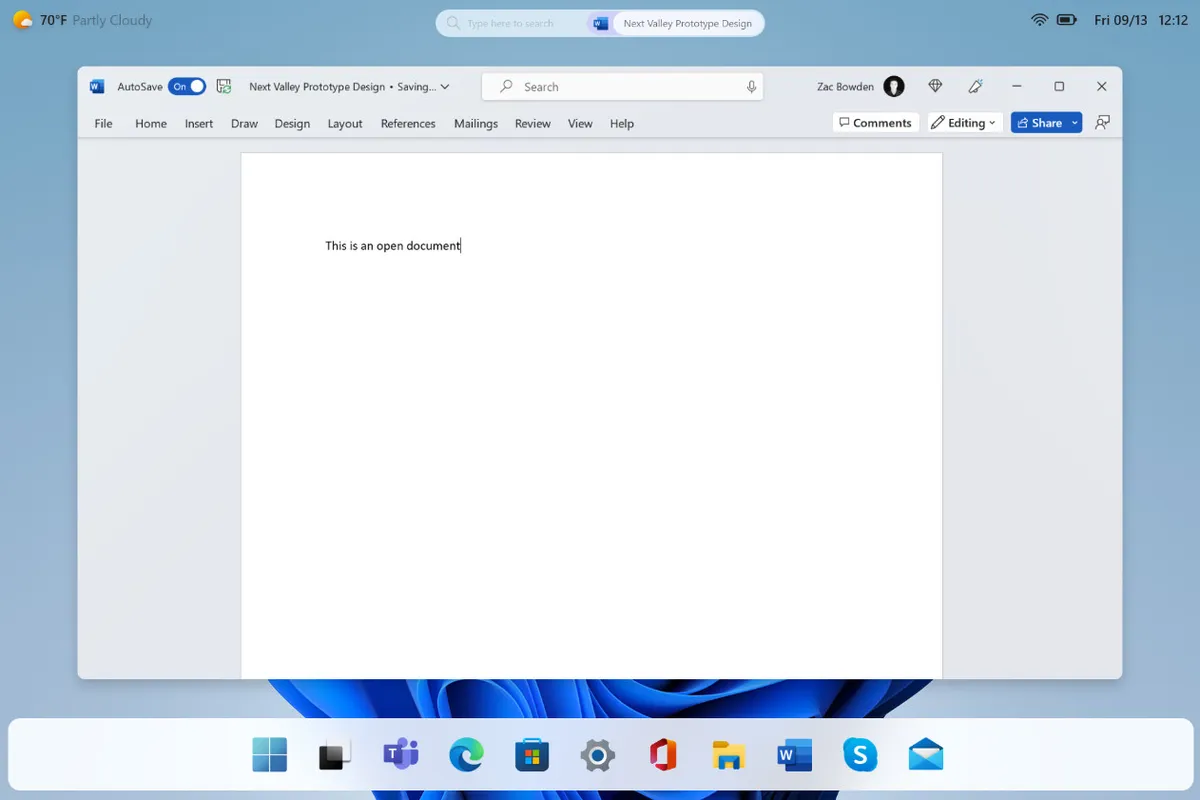
Windows API shifts toward modular “Core PC” structures promise faster updates and better security, ditching decades of registry mess for AI-optimized plumbing. Such tweaks appear in preview builds, like options to toggle tray elements, paving the way for a centered, macOS-inspired dock with top-right icons for weather and search.
UI prototypes prioritize tablets and fluidity
That Ignite glimpse showed a bare-bottom dock for apps, fluid animations, and a wide-screen login—explored under ex-Windows lead Panos Panay for hybrid mouse-touch use. Recent previews echo this with redesigned volume mixers and tabbed Task Manager, while strings hint at gesture-heavy tablets getting priority. No full redesign is locked in, but these experiments recur, suggesting Microsoft iterates toward a less static desktop.
AI demands drive NPU hardware clues
Leaks mandate NPUs at 40-45+ TOPS for features like predictive AI (think smarter-than-Clippy assistants) and gaming boosts, locking out pre-2024 rigs without them. Copilot+ precedents in Windows 11 set the stage, with Windows 12 rumored to weave local ML deeper—analyzing your screen history (post-Recall fixes) or auto-editing media. Partner docs from Intel and Qualcomm fuel this, tying OS leaps to silicon like Core Ultra 200 or Ryzen 9000.
| Rumored Hardware Minimums | Windows 11 (Current) | Windows 12 Leaks |
|---|---|---|
| Processor | 1GHz+ 64-bit, 2+ cores | Intel 8th Gen+/Ryzen 2000+, NPU 40+ TOPS |
| RAM | 4GB | 8-16GB |
| Storage | 64GB | 64-128GB SSD only (no HDD) |
| Graphics | DirectX 12 | DirectX 12+ w/ AI accel |
| Security | TPM 2.0, Secure Boot | Same + NPU enforcement |
Initial 2024-2025 hype from Intel fizzled as Microsoft dubbed 2025 a “Windows 11 refresh” year at CES, pushing AI to existing builds like 24H2/25H2. Now, credible chatter points to late 2026/2027, syncing with NPU maturity and Windows 10’s end-of-life to avoid user fragmentation. No PR leaks despite inquiries, but engineering roadmaps prioritize “AI-first” plumbing over a rushed rebrand.
Pricing and upgrade paths stay murky
Expect free upgrades for eligible Windows 11 PCs, but NPU walls could force hardware buys—mirroring Copilot+ exclusivity. Pro editions might tier AI access, with modular Core PC enabling lighter installs for budget devices. Enterprise signals emphasize security gains from registry cull and faster patches.
This all builds on Windows 11’s 34% market share lag versus 10’s 63%, so Microsoft treads carefully—no big bang without hardware readiness.
Preparing amid the uncertainty
Check your NPU via tools like CPU-Z; if under 40 TOPS, plan upgrades for full AI perks. Stick to Insiders for previews, and watch Build 2026 for codenames like “Next Valley” or “Hudson Valley.” These clues evolve fast—your next update might drop the first real hints.
Clues point to AI evolution, not revolution
Windows 12’s trail of leaks reveals a deliberate pivot: AI hardware as the gatekeeper, modular guts for speed, and a fluid UI for tomorrow’s devices. While timelines stretch, the foundation solidifies in plain sight through builds and strings. Stay tuned—Microsoft’s silence speaks volumes, but the code doesn’t lie.