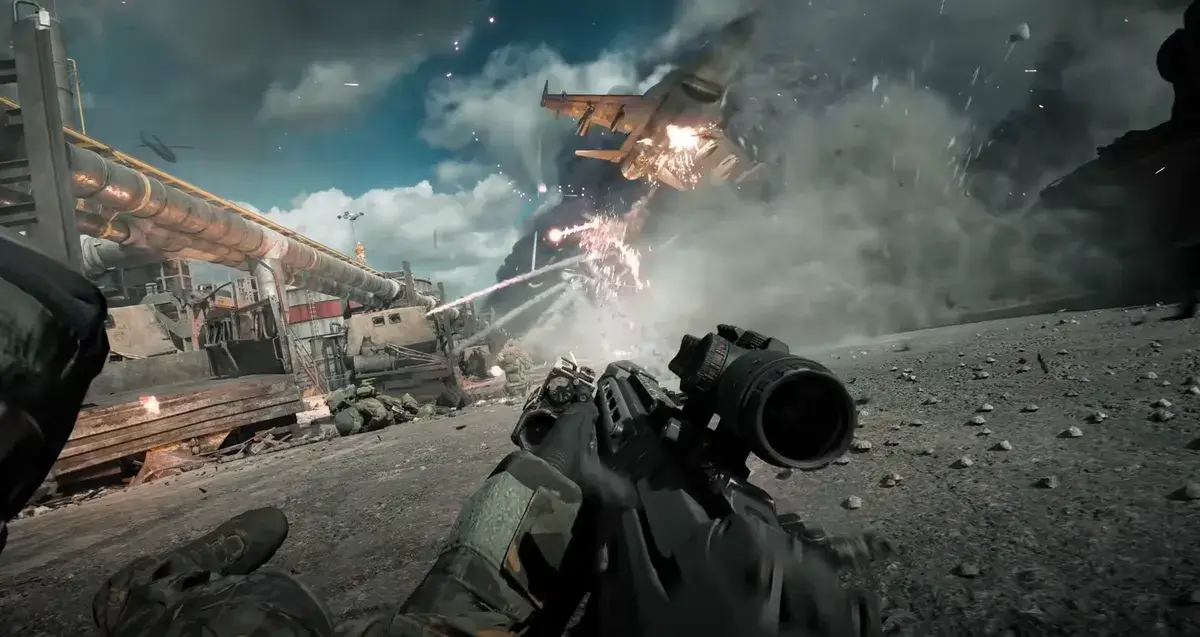
Smooth gameplay in Battlefield 6 hinges on matching system specs, updating drivers, optimizing settings, and ensuring a stable network connection.
Battlefield 6 delivers massive maps and intense firefights, but even high-end PCs can experience lag without proper configuration. You’ll need to address hardware, software, and network factors to restore smooth performance.
- Matching your PC to Battlefield 6’s demands
- Why outdated drivers and system settings throttle performance
- How to update drivers and optimize Windows settings
- How to unlock full CPU thread utilization
- How to eliminate network lag with a wired connection
- How to reduce background app and overlay interference
Matching your PC to Battlefield 6’s demands
Electronic Arts recommends the following PC specifications to run Battlefield 6 smoothly:
| Requirement | Minimum | Recommended |
|---|---|---|
| Operating system | Windows 10 | Windows 11 |
| CPU | Intel Core i5-8400 AMD Ryzen 5 2600 |
Intel Core i7-10700 AMD Ryzen 7 3700X |
| Memory | 16 GB | 16 GB |
| GPU | NVIDIA RTX 2060 AMD RX 5600 XT |
NVIDIA RTX 3060 Ti AMD RX 6700 XT |
| Storage | HDD 55 GiB | SSD 80 GiB |
Failing to meet the minimum can result in low FPS, texture pop-in, and severe stutters.
Why outdated drivers and system settings throttle performance
Many lag and stutter issues arise from software configurations rather than raw hardware power. Key culprits include:
- Outdated GPU drivers: New releases from NVIDIA, AMD, and Intel introduce game-specific optimizations.
- Windows power mode: Default “Balanced” or “Power saver” modes restrict CPU/GPU clock speeds.
- In-game graphics presets: Ultra-high texture and ray tracing settings can overwhelm mid-range hardware.
How to update drivers and optimize Windows settings
Step 1
Open your GPU manufacturer’s updater (NVIDIA GeForce Experience, AMD Adrenalin, or Intel Arc Control) and install the latest graphics drivers.
Step 2
Press Windows+I → System → Power & battery → Power mode. Select Best performance and reboot.
Step 3
In Battlefield 6’s video settings, reduce texture quality to Medium, shadows to Low, disable Ray Tracing, and set Frame Rate Limit to match your monitor’s Hz.
These steps typically boost FPS by 15–30% and eliminate stutters during intense battles.
How to unlock full CPU thread utilization
The Frostbite engine may under-utilize multi-core CPUs, causing CPU bottlenecks on large maps. To force full thread usage:
- Navigate to your Battlefield 6 installation folder (e.g., SteamsteamappscommonBattlefield 6).
- Create a file named
user.cfg. - Add the following, replacing X with total cores and Y with logical processors:
Thread.ProcessorCount X
Thread.MaxProcessorCount X
Thread.MinFreeProcessorCount 0
Thread.JobThreadPriority 0
GstRender.Thread.MaxProcessorCount Y
- Save, then launch the game.
Note: You can find your core and thread count using Task Manager (Ctrl+Shift+Esc is the shortcut). Go to the Performance tab and it should say Cores for cores (X) and Logical processors for threads (Y)

This tweak often stabilizes CPU usage, reducing frame dips on high-population maps.
How to eliminate network lag with a wired connection
Wireless networks introduce interference, packet loss, and jitter, which feel like in-game lag. To switch:
- Purchase a Cat 5e or Cat 6 Ethernet cable.
- Connect one end to your router’s LAN port, the other to your PC’s Ethernet jack.
- Disable Wi-Fi in Windows if desired.
- Run an in-game ping test; stable readings under 50 ms indicate a solid connection.
This change can cut latency by 10–30 ms and eradicate rubber-banding.
How to reduce background app and overlay interference
Overlay services (Discord, Xbox Game Bar) and background apps can consume CPU and GPU cycles:
- In Task Manager, end non-essential processes (web browsers, torrent clients).
- Disable overlays: Press Windows+G → Settings → turn off Xbox Game Bar.
- Close streaming or capture software before launching Battlefield 6.
Eliminating these tasks frees up resources, smoothing gameplay during firefights.
Integrating hardware upgrades, software updates, and network best practices ensures Battlefield 6 runs smoothly. Matching recommended specs, updating drivers, unlocking CPU threads, and using a wired connection collectively resolve most lag and stutter issues. Apply these steps to enjoy uninterrupted, competitive gameplay.