
What to know
- Ginseng Meat Stew is currently the strongest DPS consumable in the game.
- It outperforms popular options like Yakob’s Legacy and Kunst Tube in real combat.
- Farming it revolves around Ginseng cultivation and Filt hunting.
- A proper farm setup lets you produce it passively with low maintenance.
In Arknights Endfield, consumables play a much larger role than many players initially expect. While items like Yakob’s Legacy and Kunst Tube are often recommended, deeper testing shows that Ginseng Meat Stew provides the highest practical damage boost, especially for sustained DPS builds. Understanding why it’s stronger—and how to farm it efficiently—can significantly improve both boss fights and high-difficulty encounters.
Why Ginseng Meat Stew outperforms other DPS consumables
At first glance, percentage-based buffs look superior. Yakob’s Legacy increases attack by 27%, while Kunst Tube boosts damage by 25%. These numbers seem impressive, but they scale poorly in early and midgame setups where base attack values are still modest.
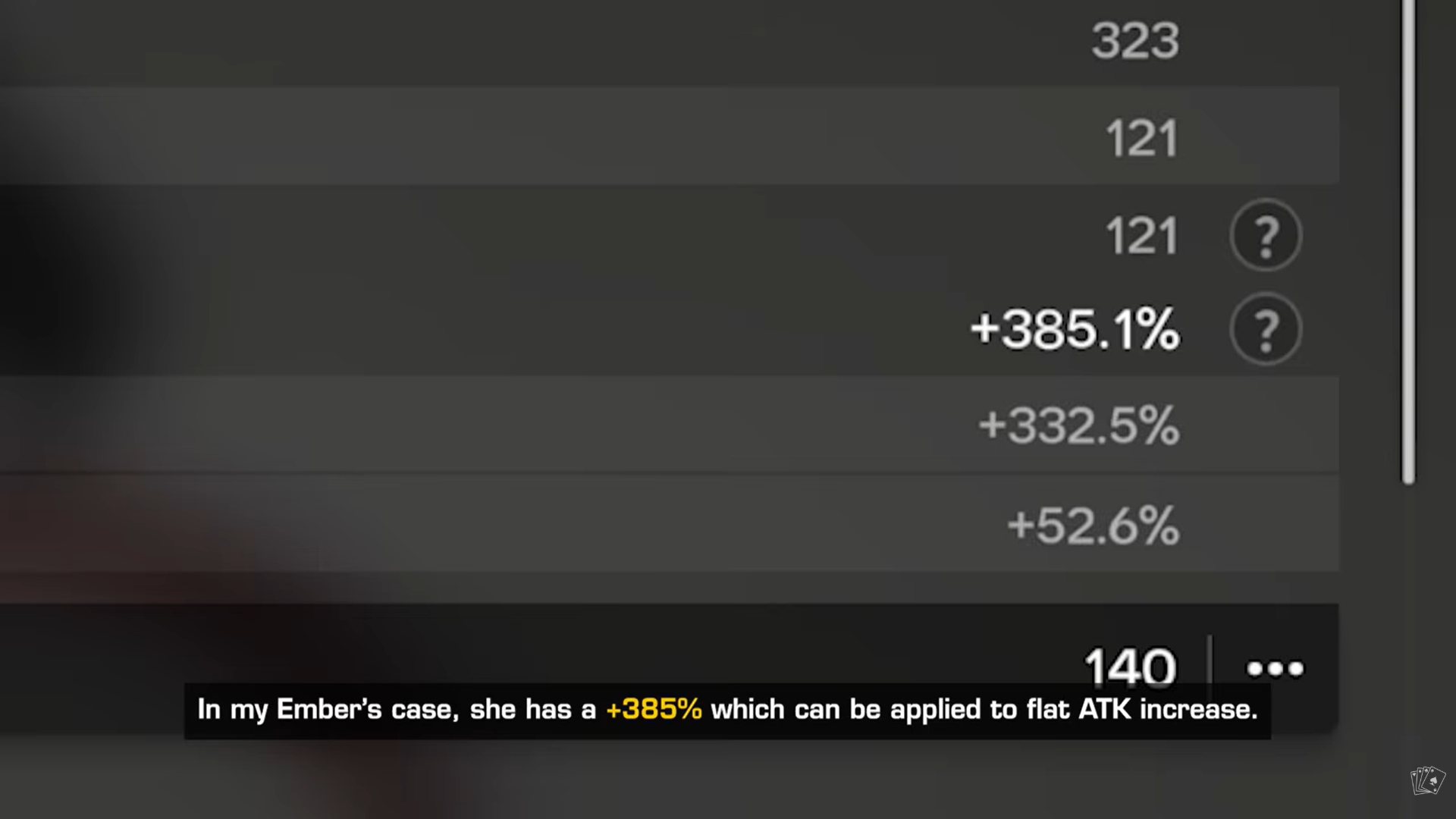
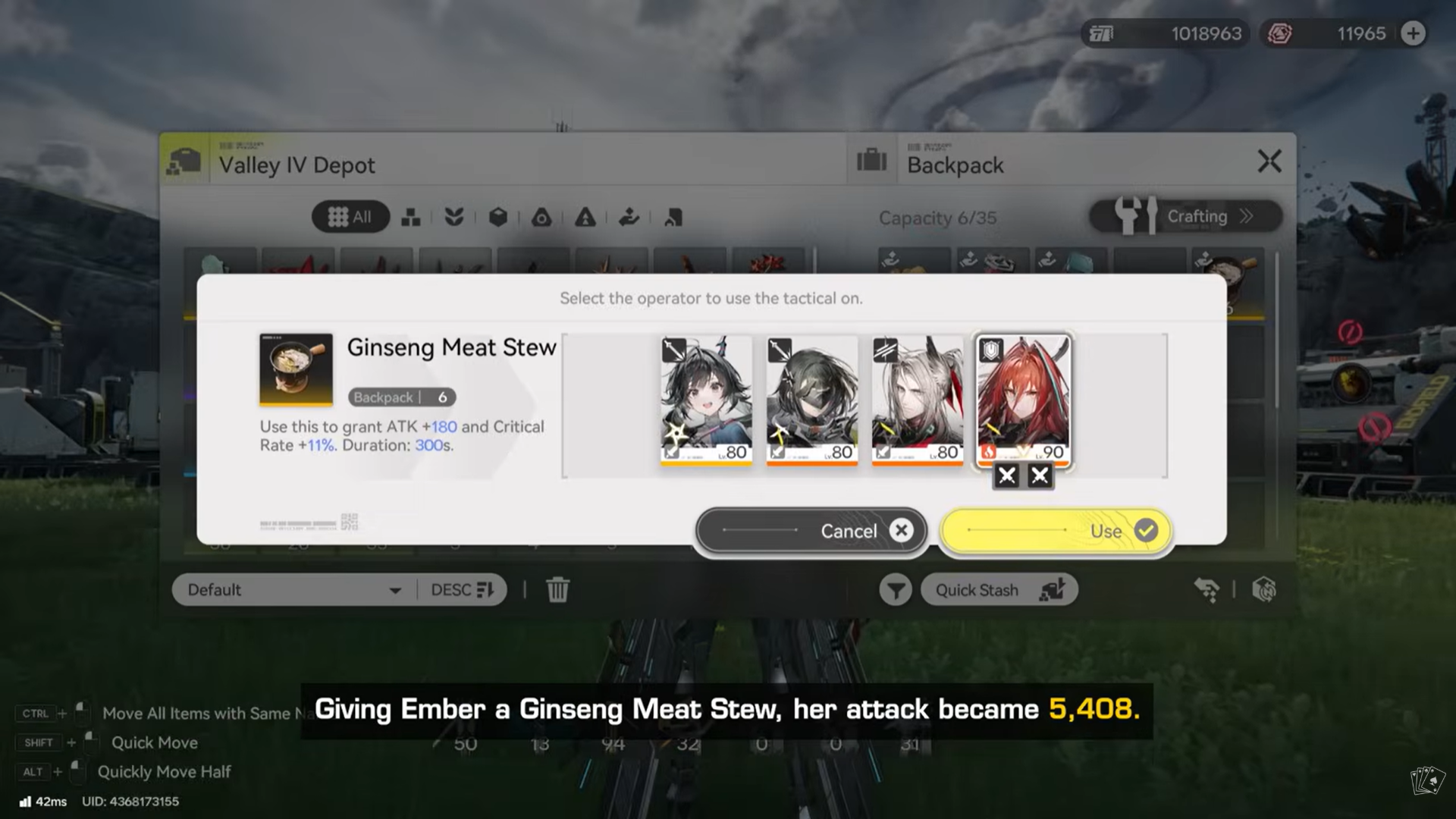
Ginseng Meat Stew works differently. Instead of relying only on scaling, it provides a massive flat 180 attack bonus alongside an 11% critical chance increase. This combination makes it far more impactful in real combat scenarios, especially for characters who attack frequently or rely on crit synergy. The flat attack ensures immediate value, while crit chance multiplies damage potential over longer fights.
Consumable comparison at a glance
| Consumable | Primary bonus | Secondary bonus | Real DPS impact |
|---|---|---|---|
| Yakob’s Legacy | 27% attack | None | Situational |
| Kunst Tube | 25% damage | None | Consistent but capped |
| Ginseng Meat Stew | 180 flat attack | 11% crit chance | Highest overall DPS |
Farming Ginseng efficiently
The backbone of Ginseng Meat Stew production is, unsurprisingly, Ginseng itself. The most reliable way to secure a steady supply is through farming rather than relying on world spawns alone.
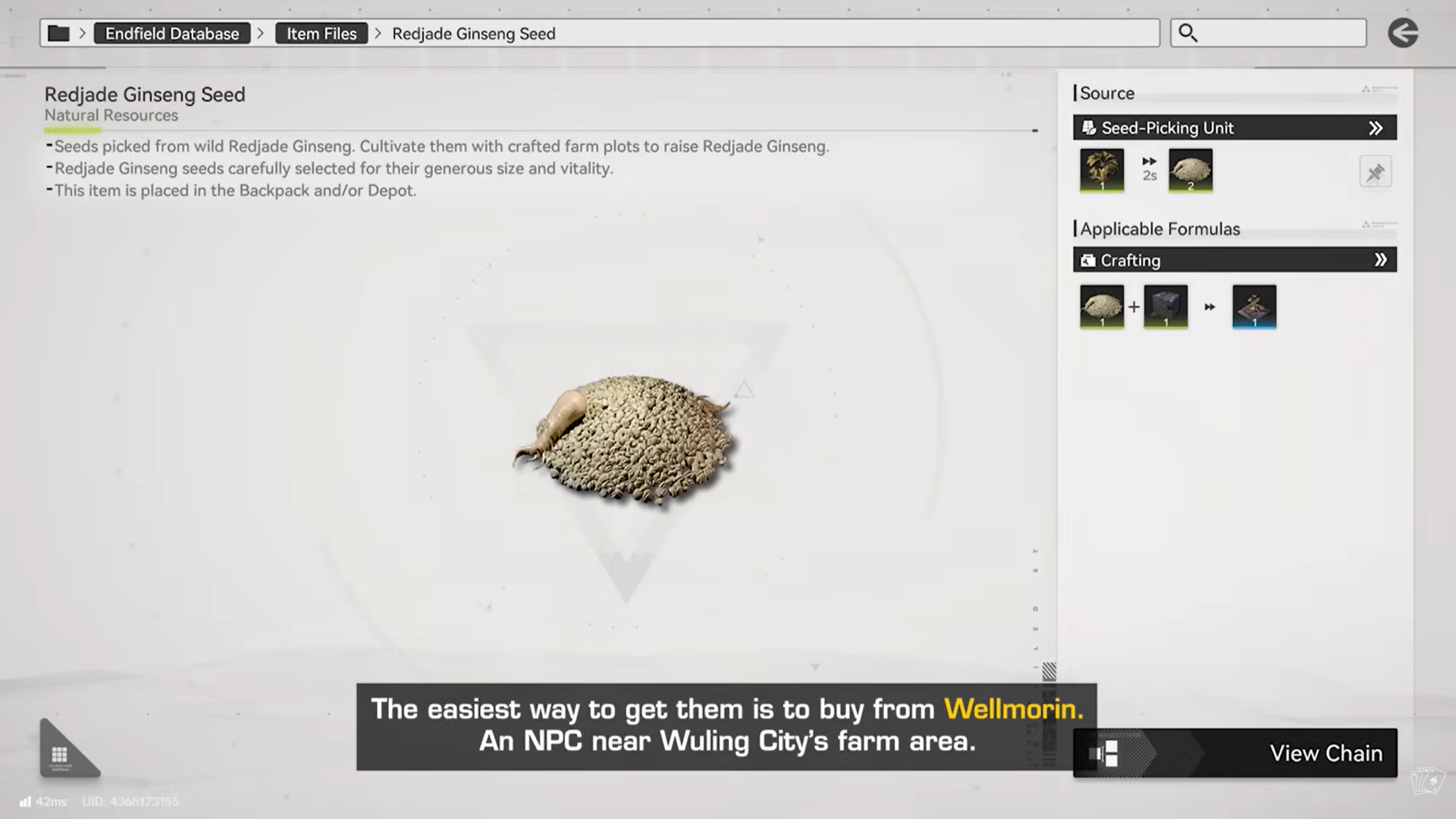
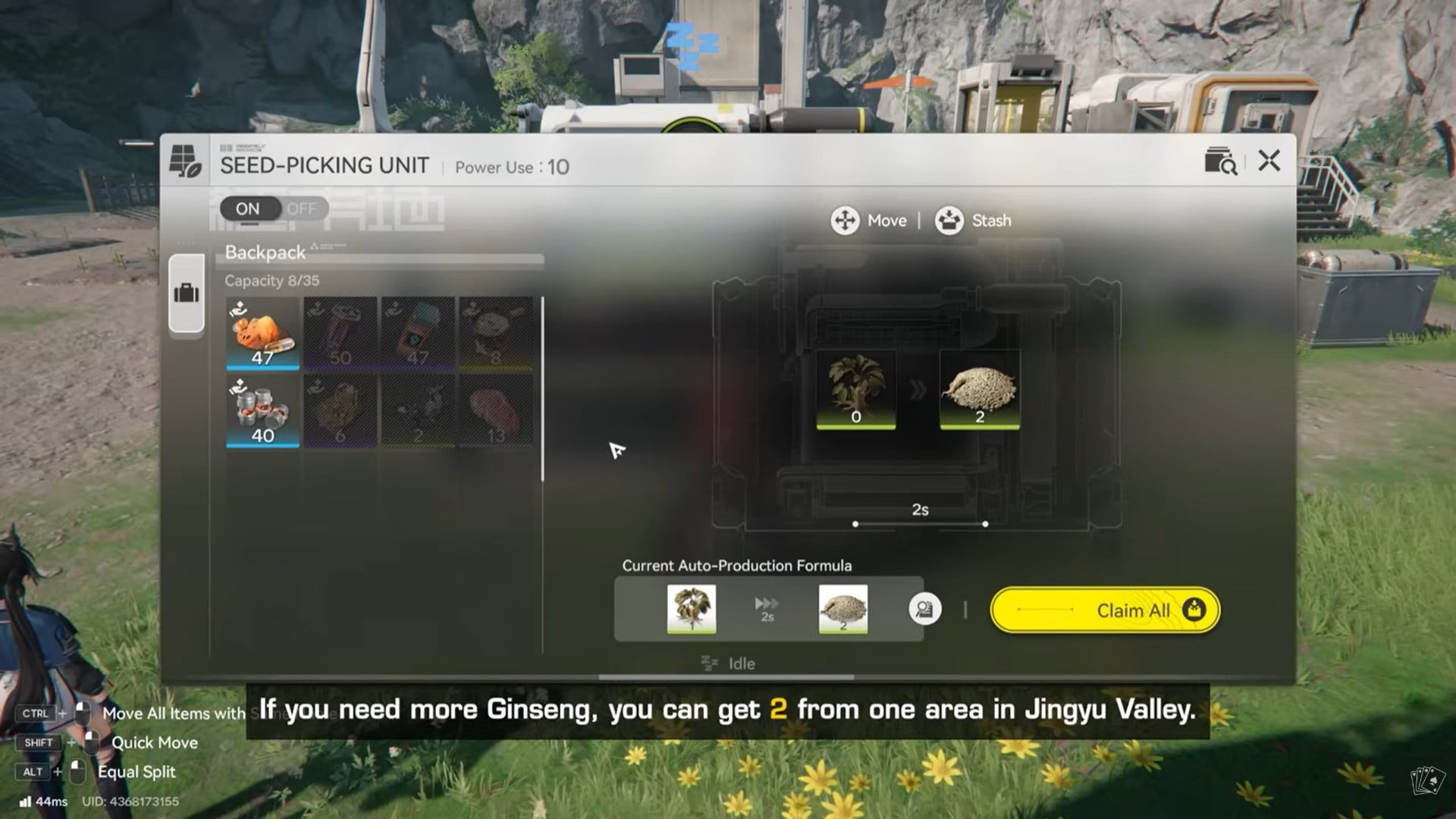
You can obtain Ginseng Seeds directly from Wellmorin, an NPC located near Wuling City’s farm area. This is the fastest and most predictable option. Alternatively, if you already have Ginseng, seed-picking units can be used to extract seeds from harvested plants, allowing you to scale production without repeated NPC visits.
For players just starting out, there are also two guaranteed Ginseng nodes in Jingu Valley. By teleporting to the point below Treasure Grotto and heading beneath the ancient tree, you can collect enough to bootstrap your farm.
Setting up Red Jade Ginseng plots
Once you have seeds, the next step is building infrastructure. From your backpack’s crafting menu, switch to the planting tab and craft Red Jade Ginseng Plots. These require carbon, which is easily sourced from your Zeronite production line.
Crafting around 20 plots is recommended. This number strikes a balance between output and manageability, ensuring steady harvests without overwhelming your farm space.

When placing plots in your farm area, spacing matters more than aesthetics. Poor placement can cause AI teammates to get stuck, slowing down automation and creating unnecessary friction during visits.
Watering and automation
Ginseng requires watering every 4 hours, which can quickly become tedious if handled manually. This is where sprinklers become essential. With sprinklers installed, watering is automated, letting you check in on your farm roughly every 12 hours instead of constantly micromanaging it.
You can dedicate all 20 plots to Ginseng or mix crops depending on your broader crafting goals. However, if your focus is DPS optimization, a full Ginseng setup maximizes efficiency.
Farming Filt for the stew
The second ingredient for Ginseng Meat Stew is Filt, which cannot be farmed passively. Filt drops from wild beasts and is most efficiently obtained in the Power Plateau.

Starting from the teleport point near the trunkway, you can follow a reliable hunting route populated by multiple beast spawns. This area offers a good balance between enemy density and travel time, making it ideal for repeated farming runs. Bringing high-mobility characters speeds up the process and reduces downtime between encounters.

Ingredient sources overview
| Ingredient | Source | Farming type |
|---|---|---|
| Ginseng | Farm plots, Jingu Valley | Passive |
| Ginseng Seeds | Wellmorin NPC, seed-picking units | Semi-passive |
| Filt | Wild beasts in Power Plateau | Active |
Why this farm setup is worth it
Ginseng Meat Stew isn’t just strong—it’s efficient, scalable, and future-proof for most DPS builds in Endfield. By combining a well-planned Ginseng farm with targeted Filt hunting, you gain consistent access to the game’s best damage consumable. If maximizing combat performance matters to you, this is one system worth investing in early.
Once established, this system turns one of the strongest DPS consumables into a renewable resource. Instead of saving Ginseng Meat Stew for emergencies, you can use it freely in difficult content, boss fights, and exploration-heavy sessions. The upfront setup cost is quickly offset by long-term damage gains and smoother combat flow.