NYT Strands is the daily word-search-style puzzle from the New York Times that challenges you to uncover theme-linked words hidden across a letter grid. On January 15, 2026, today’s theme, “The ears have it!”, focused on anatomy-related terms. Solvers had to track down several ear-related words hidden in the grid, all connected by a unifying spangram that tied the concept together neatly.
15 January 2026 NYT Strands Theme: “The ears have it!”
Today’s theme was a literal one, centering on the structure of the human ear. The puzzle mixed commonly known parts with slightly more technical terms, making it feel educational without being overwhelming. The spangram wasn’t especially long, but it cleverly reinforced the idea of listening and hearing, giving the grid a satisfying “aha” moment once discovered.
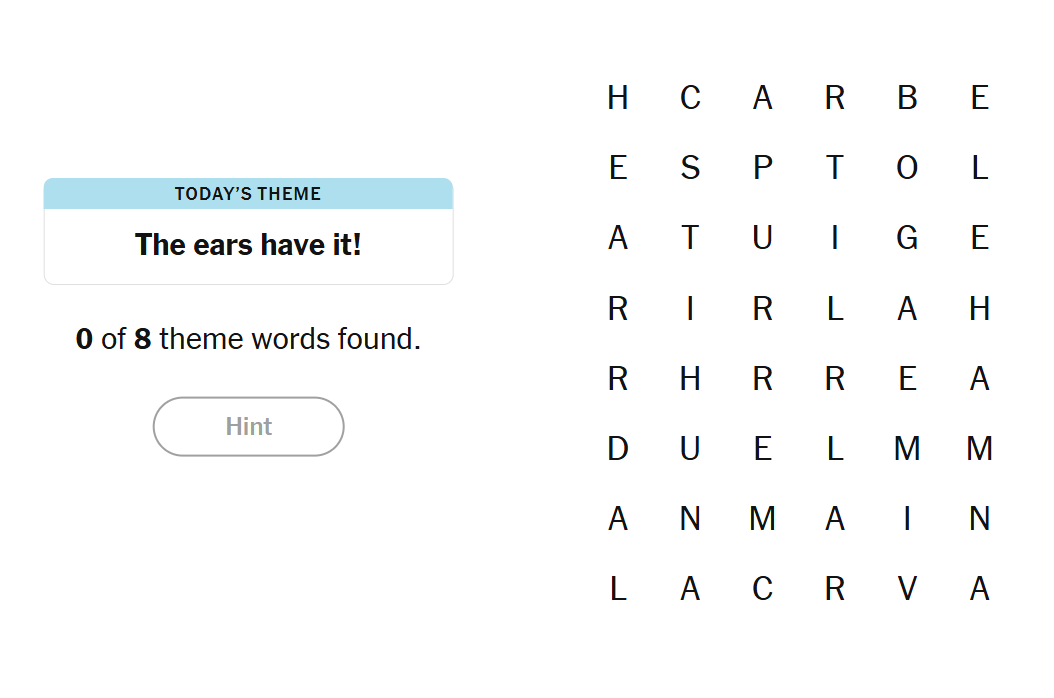
15 January 2026 NYT Strands: Hints
- Think about parts of the human ear, both inner and outer.
- Some answers relate to hearing mechanics, not just visible features.
- Look for short, familiar anatomy words early to open up the grid.
- A few words are named after objects (tools or shapes).
- The spangram ties everything together around the idea of hearing and agreement.
15 January 2026 NYT Strands: Answers
- Lobe (the soft outer part of the ear)
- Cartilage (the firm tissue shaping the ear)
- Drum (short for eardrum)
- Anvil (one of the middle-ear bones)
- Canal (the passage leading inward)
- Hammer (another middle-ear bone)
- Stirrup (the smallest bone in the ear)
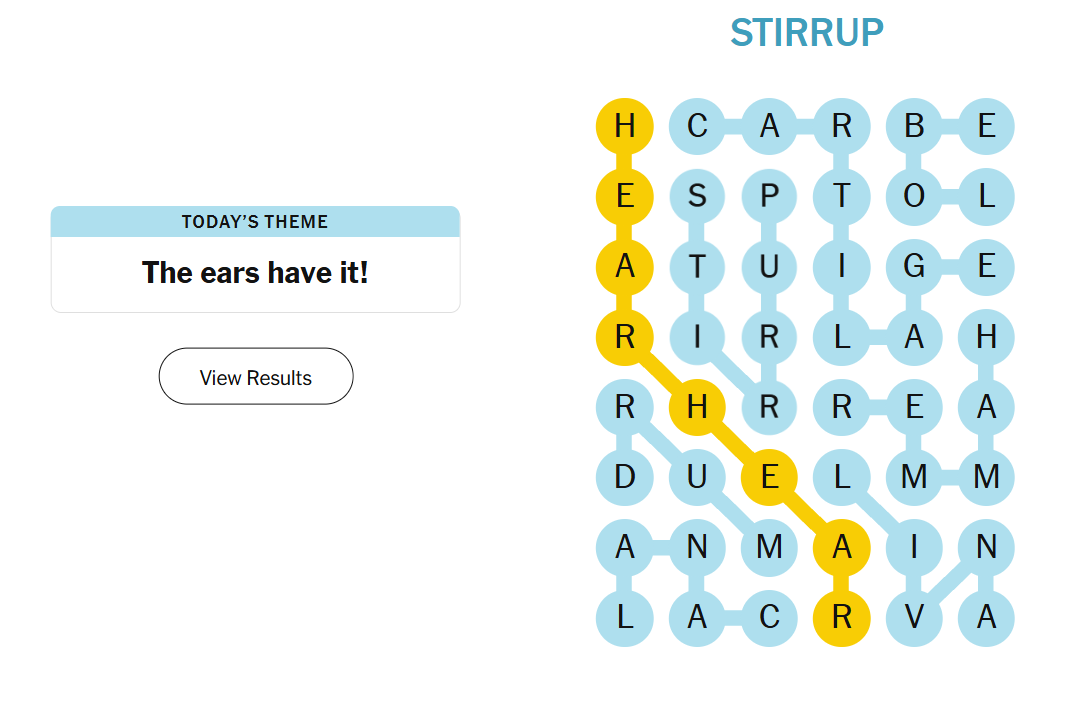
Spangram
HEAR HEAR
This spangram plays on a familiar phrase of agreement while directly referencing hearing, neatly linking all the ear-related anatomy terms hidden throughout today’s puzzle grid.
How Strands works
Strands is a daily word search puzzle with a twist:
- You’re given a theme.
- The grid is packed with hidden words tied to that theme.
- Words can run in any direction, including diagonals.
- Once you find all the theme words, you’re done!
Each puzzle usually has around 6–8 theme words.
How to get and use hints
Hints are built right into Strands, and they’re super useful if you’re stuck:
- To earn a hint, find any non-theme word of at least four letters in the grid.
- Each valid extra word gives you one hint.
- When you use a hint, one of the theme words will be revealed automatically, helping you move forward.
Pro tip: Don’t just burn hints — use them strategically when the grid feels impossible. Sometimes a single revealed word unlocks the entire board.
Tips to become a NYT Strands pro
- Start with obvious words. Look for clear connections to the theme first.
- Scan diagonals early. Strands loves to hide words at an angle.
- Build around found words. Once one word is cleared, the leftover letters often point to the next.
- Use hints wisely. Earn them steadily by spotting extra words, then save them for when you’re truly stuck.
- Think about synonyms. The theme clue isn’t always literal — broaden your thinking.
Final words
The 15 January 2026 Strands puzzle felt comfortably moderate, with a relatable theme and smart word choices. Once the spangram clicked, everything else fell into place nicely. How many answers did you spot before needing hints?
Come back tomorrow for a fresh grid and theme — and tell us in the comments which word stumped you the most today!