The New York Times Spelling Bee for January 15, 2026 offers a mix that feels both familiar and sneaky. As always, every word must be at least four letters long and include the center letter. Today’s hive leans heavily on common English patterns, but repeated letters and subtle variations make it easy to overlook solid finds unless you slow down and experiment.
About today’s puzzle
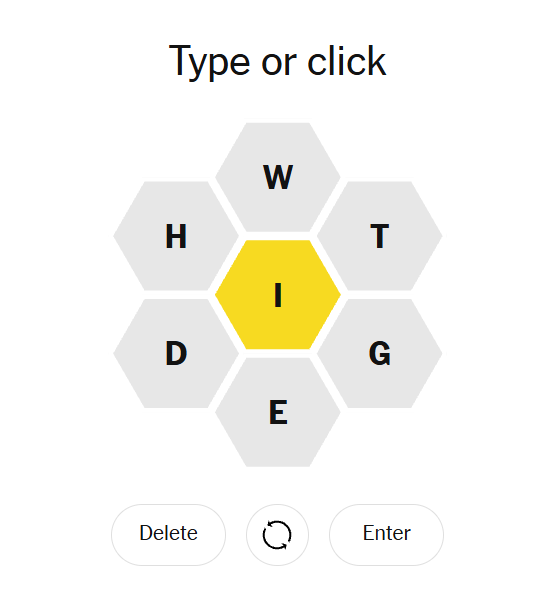
With D as the center letter, today’s hive feels fairly open once you lock onto the core sounds. The mix includes strong consonants like T, W, and H, balanced by vowels I and E. While not overly restrictive, the puzzle rewards players who reuse letters and explore different verb tenses and word forms.
NYT Spelling Bee Words and Answers: January 15, 2026
Here’s a best-effort list of words that fit today’s rules. Keep in mind: some are rare or unusual, so the official NYT list may vary.
- DIED
- DIET
- DIETED
- DIGIT
- EDDIED
- EDIT
- EDITED
- EIGHT
- EIGHTH
- EIGHTIETH
- TITHED
- TWIG
- TWIT
- WEDGIE
- WEIGH
- WEIGHED
- WEIGHT
- WHIT
- WHITE
- WIDE
- WIDGET
- WIDTH
- WIGGED
- WIGHT
- WITH
Pangram of the day
The pangram today is weighted. It works beautifully with this letter set. It includes every available letter while still feeling like a natural, everyday word. The mix of consonants and vowels makes it satisfying to uncover, especially if you reach it after finding simpler words like “weight” or “weighed.” It’s a great example of how small extensions can unlock big points.
Quick tactics for any puzzle
- Start with the center letter.
Since every word must include it, try building short “roots” with that letter first, then expand. - Play with prefixes and suffixes.
Look for common starters (like re-, pre-, tri-) and endings (like -er, -ry, -ing). These patterns often unlock multiple words. - Anagram your discoveries.
Once you’ve found a word, shuffle its letters around — you’ll often uncover two or three more. - Use repeated letters.
Remember, the same letter can appear more than once. Doubling letters opens up words you might otherwise overlook. - Hunt for pangrams.
Try to use all seven letters at least once. Pangrams aren’t always easy, but when you find one, it feels like striking gold.
Habits to sharpen your skills
- Begin with easy 4-letter words to get your brain moving.
- Rotate vowels and consonants through different combinations to see what “clicks.”
- Step away and return later — fresh eyes will catch words you missed.
Optional tools if you want extra help
- Pen and paper. Writing the letters down or sketching patterns can reveal hidden words.
- Word-finding apps. Great for study or practice, but use sparingly if you want to keep the challenge.
- Personal word journal. Track words you miss often — over time, you’ll train yourself to recognize them quickly.
Wrap up
January 15’s puzzle is a reminder that patience pays off. Even a friendly-looking hive can hide surprising depth. How many words did you find today, and did you spot the pangram early—or only after a long hunt?