If you’ve ever played the New York Times Spelling Bee, you know how satisfying it feels to find that one word hiding in plain sight. Today’s puzzle is especially engaging because it features a mix of straightforward patterns and some delightfully tricky combinations. In this post, you’ll see the full word list you can make, learn some strategies to help you solve puzzles faster, and get a chance to share any words you spotted that aren’t listed here.
About today’s puzzle
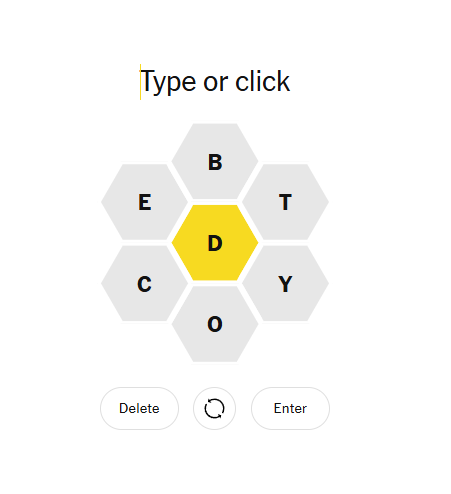
With D as the center letter, today’s hive uses B, C, E, O, T, and Y around it. The mix feels well-balanced, with enough consonants to create varied structures and enough patterns to encourage experimentation. The puzzle feels particularly rewarding once you crack the common word families around -ED endings, BODY, and DOTE groupings. These core patterns unlock multiple solutions and lead you toward that elusive pangram.
NYT Spelling Bee Words and Answers: January 26 2026
Here’s a best-effort list of words that fit today’s rules. Keep in mind: some are rare or unusual, so the official NYT list may vary.
4 Letter Words
-
Bode
-
Body
-
Cede
-
Code
-
Coed
-
Debt
-
Deco
-
Dodo
-
Dote
-
Dyed
-
Eddy
-
Eyed
-
Teed
-
Toed
5 Letter Words
-
Boded
-
Booed
-
Ceded
-
Coded
-
Cooed
-
Decoy
-
Deedy
-
Doted
-
Dotty
-
Ebbed
-
Teddy
-
Toddy
-
Toted
-
Toyed
6 Letter Words
-
Bedded
-
Bobbed
-
Booted
-
Decoct
-
Decode
-
Detect
-
Deeded
-
Dotted
-
Obeyed
-
Tooted
7 Letter Words
-
Decoded
-
Decoyed
8 Letter Words
-
Decocted
-
Detected
Pangram of the day
Today’s standout pangram is BOYCOTTED, which neatly pulls together all seven letters in a natural, everyday word. It’s the kind of word that once you spot it, you wonder why it didn’t come to mind immediately. The elegance lies in how familiar the word is—boycott is a common term, and the past tense form simply adds the -ED ending, yet it remains hidden in plain sight.
Quick tactics for any puzzle
- Start with the center letter.
Since every word must include it, try building short “roots” with that letter first, then expand. - Play with prefixes and suffixes.
Look for common starters (like re-, pre-, tri-) and endings (like -er, -ry, -ing). These patterns often unlock multiple words. - Anagram your discoveries.
Once you’ve found a word, shuffle its letters around — you’ll often uncover two or three more. - Use repeated letters.
Remember, the same letter can appear more than once. Doubling letters opens up words you might otherwise overlook. - Hunt for pangrams.
Try to use all seven letters at least once. Pangrams aren’t always easy, but when you find one, it feels like striking gold.
Habits to sharpen your skills
- Begin with easy 4-letter words to get your brain moving.
- Rotate vowels and consonants through different combinations to see what “clicks.”
- Step away and return later — fresh eyes will catch words you missed.
Optional tools if you want extra help
- Pen and paper. Writing the letters down or sketching patterns can reveal hidden words.
- Word-finding apps. Great for study or practice, but use sparingly if you want to keep the challenge.
- Personal word journal. Track words you miss often — over time, you’ll train yourself to recognize them quickly.
Wrap-up
Today’s word hive highlights why the NYT Spelling Bee remains such a popular daily word game. Exploring letter combinations, spotting patterns, and building longer words all contribute to a rewarding experience that keeps players coming back each day. The presence of that elusive -ED ending pattern makes this puzzle particularly satisfying for players who grasp the strategy early.