The New York Times Connections puzzle challenges players to sort 16 seemingly unrelated words into four connected groups. Each group shares a hidden link. Today’s grid blends physical actions, clever rearrangements, and nostalgic references, making it both playful and slightly deceptive. Below you’ll find gentle hints to guide your thinking, followed by the complete solutions once you’re ready to check your work.
NYT Connections Puzzle Overview: 25 March 2026
Today’s puzzle felt balanced between direct associations and clever misdirection. A couple of categories stood out immediately, especially the more literal ones, while one group required spotting a linguistic trick. Many solvers likely found themselves second-guessing overlaps before everything clicked into place.
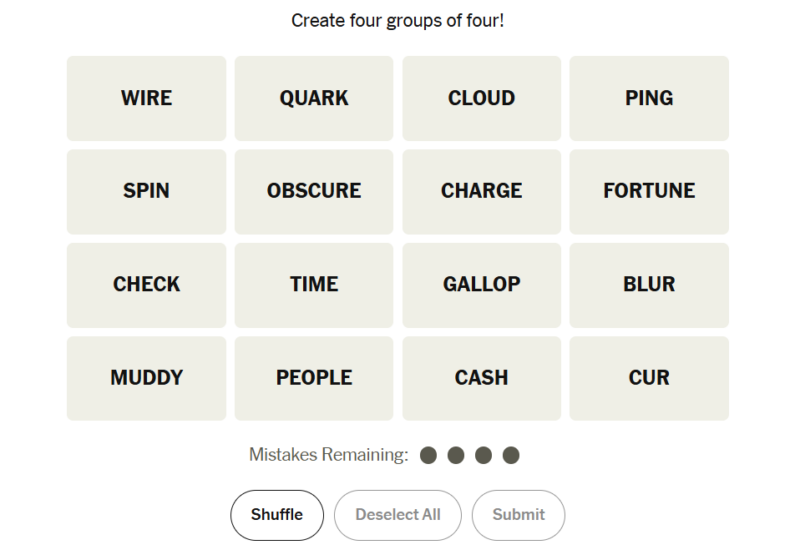
NYT Connections Hints: 25 March 2026
Category 1:
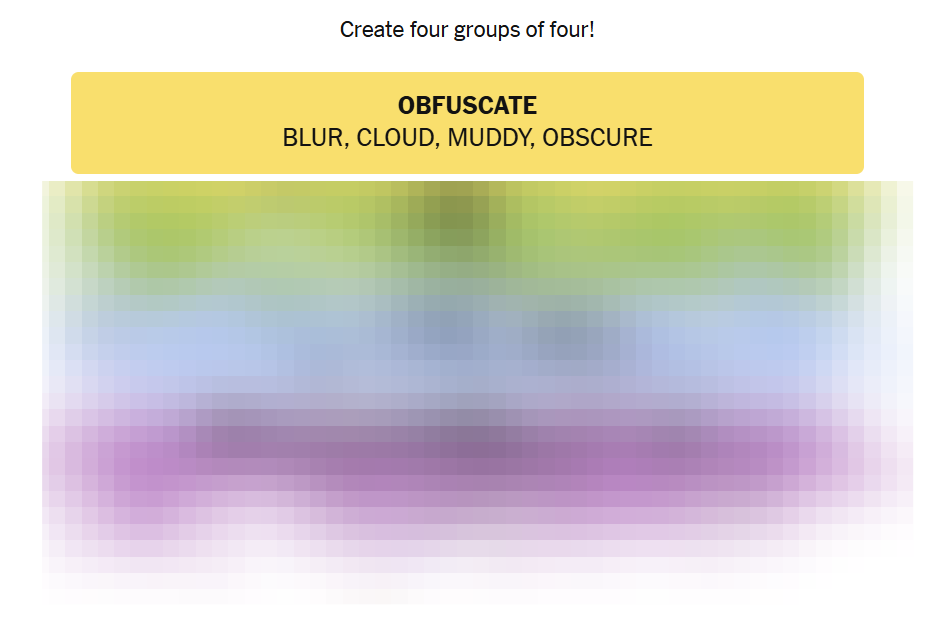
- Think about making something harder to understand
- Often used when information is unclear
- Can relate to vision or clarity
- All words suggest distortion or confusion
Category 2:
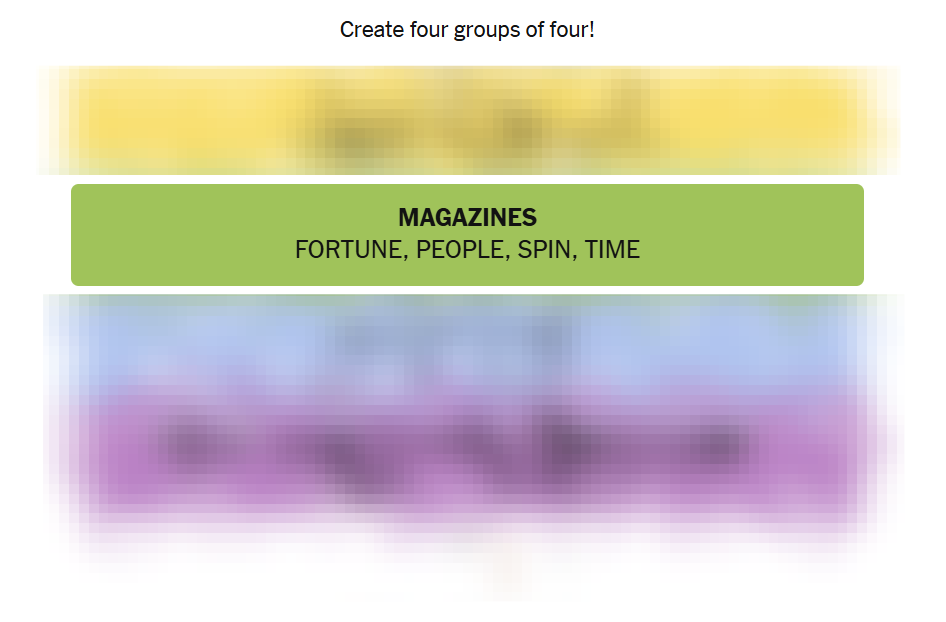
- These are all well-known publications
- You might see them at a newsstand
- Some focus on current events or lifestyle
- Short, recognizable names
Category 3:
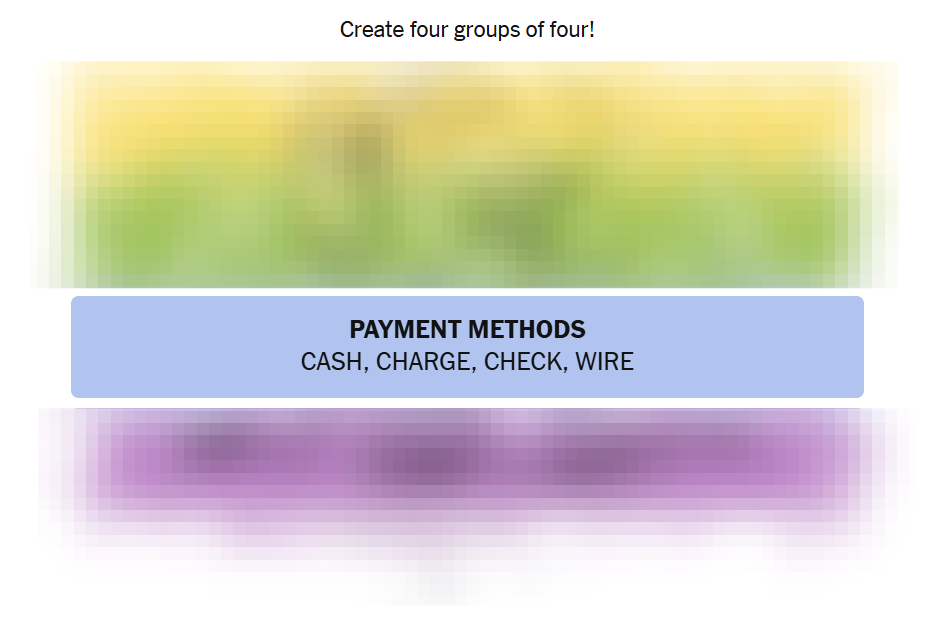
- Ways to complete a financial transaction
- Common in both personal and business settings
- Some are physical, others digital
- Think banking or payments
Category 4:
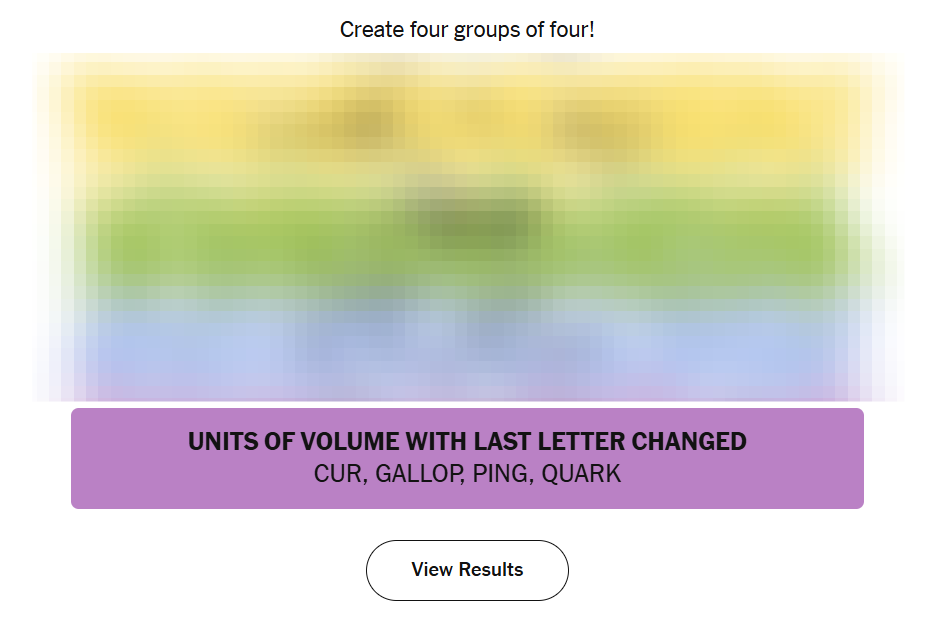
- These words look slightly “off”
- Each is derived from a more familiar term
- Focus on measurement or quantity
- A small letter change makes the difference
NYT Connections Answers: 25 March 2026
Here are the answers, grouped by category.
Category 1:
Category 2:
Category 3:
Category 4:
Conclusion & Quick Strategy Tip
The 25 March 2026 Connections puzzle balances straightforward action words with trickier conceptual links, making it satisfying once everything clicks. Quick strategy tip: lock in obvious verb groups early, then examine remaining words for structural patterns or shared cultural references.