The New York Times Connections puzzle challenges players to sort 16 seemingly unrelated words into four connected groups. Each group shares a hidden link. Today’s grid blends physical actions, clever rearrangements, and nostalgic references, making it both playful and slightly deceptive. Below you’ll find gentle hints to guide your thinking, followed by the complete solutions once you’re ready to check your work.
NYT Connections Puzzle Overview: 20 February 2026
Today’s grid leaned into familiar phrases and well-known associations. Some categories were straightforward once spotted, while others required thinking about pop culture or common expressions. A couple of words cleverly fit multiple ideas, making careful grouping essential. Overall, it was a balanced challenge that rewarded broad knowledge and flexible thinking.
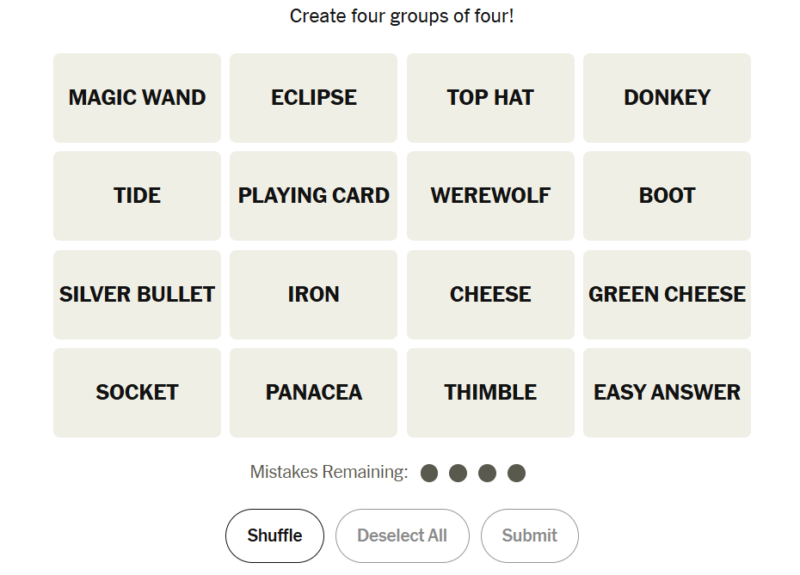
NYT Connections Hints: 20 February 2026
Category 1:
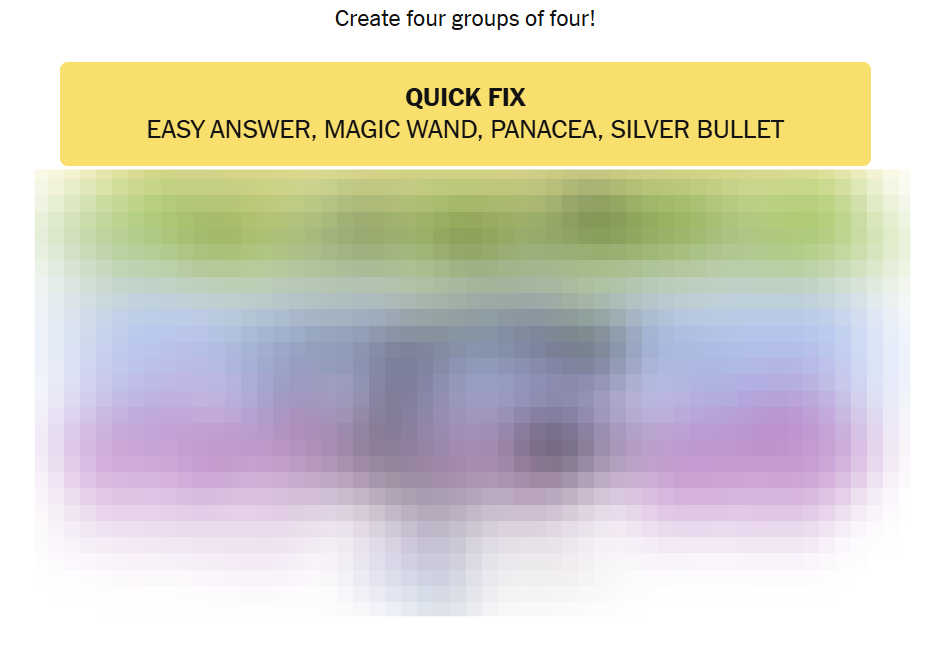
- Think of phrases that promise an instant solution.
- Often used when describing an unrealistic cure-all.
- Common in fantasy or metaphorical speech.
- Implies something that solves everything at once.
Category 2:
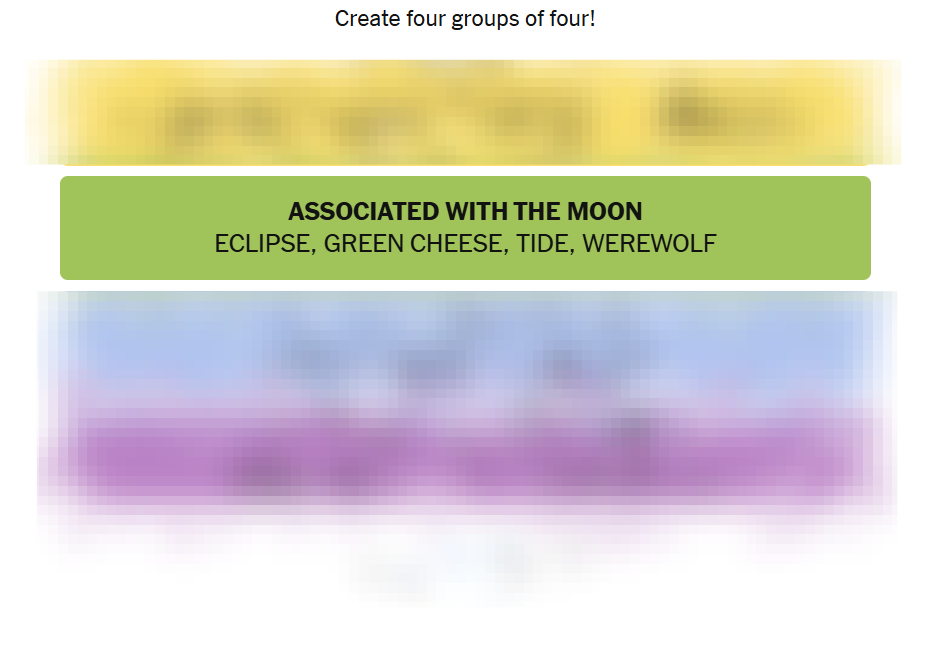
- All items have a strong connection to a celestial body.
- Think nighttime imagery and folklore.
- One relates to a natural phenomenon.
- Another comes from myth or legend.
Category 3:
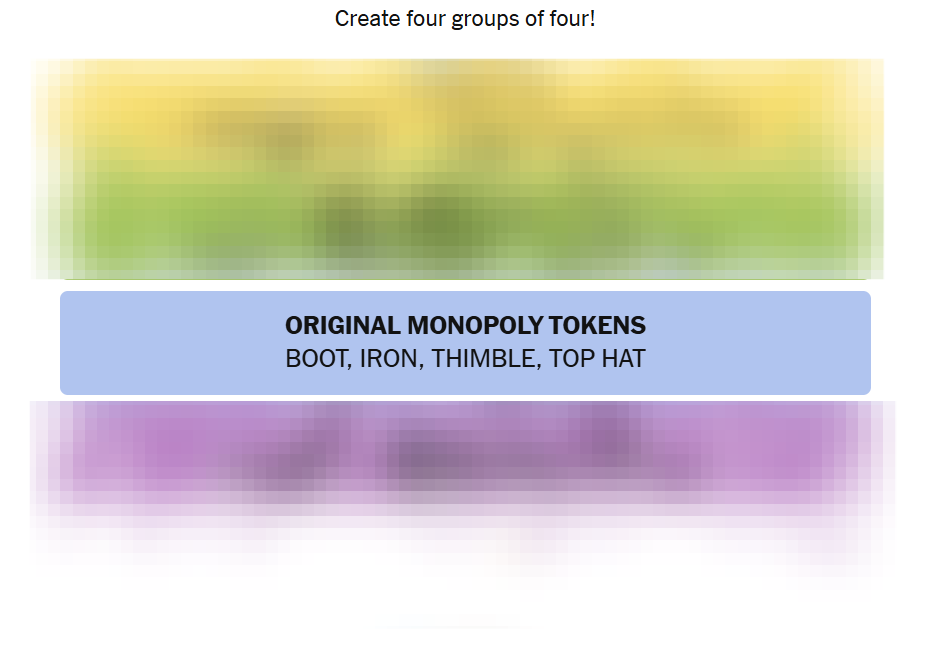
- These are physical game pieces.
- Associated with a classic board game.
- Originally included in early editions.
- Small metal tokens players move around the board.
Category 4:
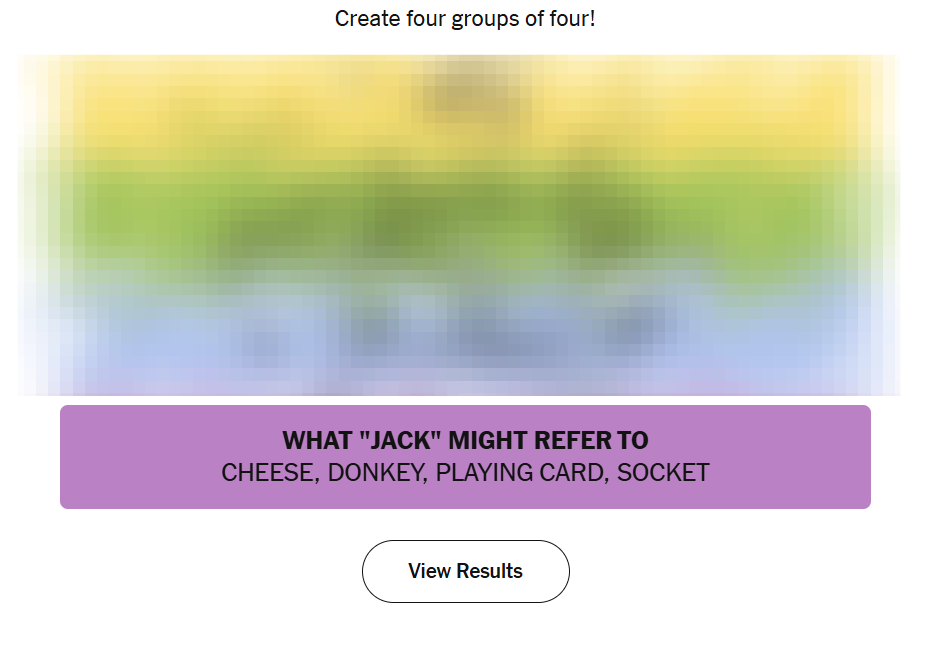
- Each phrase commonly follows the same short name.
- Think of compound terms in everyday language.
- One is found in a toolbox.
- Another appears in a deck of cards.
NYT Connections Answers: 20 February 2026
Here are the answers, grouped by category.
Category 1:
Category 2:
Category 3:
Category 4:
Conclusion & Quick Strategy Tip
The 20 February 2026 Connections puzzle balances straightforward action words with trickier conceptual links, making it satisfying once everything clicks. Quick strategy tip: lock in obvious verb groups early, then examine remaining words for structural patterns or shared cultural references.