What to know
- Monstie Tendencies determine how your Monsties behave when acting automatically in battle.
- The system is divided into Stamina Tendencies and Skill Tendencies, shaping decision-making during fights.
- Monsties earn extra Kinship when they perform actions that match their natural tendencies.
- Understanding tendencies helps you build stronger teams capable of handling difficult monsters like Espinas or Namielle.
Many players focus on genes, stats, and elemental advantages in Monster Hunter Stories 3, but Monstie Tendencies quietly influence how your companions behave in nearly every battle. These tendencies act as behavioral traits that guide the AI when your Monstie performs actions without direct commands.
Because battles frequently involve automatic actions from your Monsties, these tendencies become extremely important. A Monstie with the right tendency naturally supports your strategy, while the wrong one may waste stamina or use inefficient skills. Understanding how the system works allows you to build teams that function smoothly even when you are not controlling every move.
| Feature | Details |
|---|---|
| Mechanic | AI behavior system |
| Game | Monster Hunter Stories 3 |
| Purpose | Determines Monstie combat behavior |
| Core Categories | Stamina Tendencies and Skill Tendencies |
| Combat Impact | Affects attack patterns, skill usage, and stamina management |
| Bonus Effect | Generates extra Kinship when actions align with tendencies |
| Strategic Value | Improves team synergy and combat efficiency |
How stamina tendencies influence combat pacing
Stamina is one of the most important resources in Monster Hunter Stories 3 because powerful abilities consume it quickly. Stamina tendencies determine how aggressively or conservatively your Monstie spends this resource during combat.
This directly affects how frequently your Monstie uses powerful skills and how long it can sustain its actions during extended fights.
| Stamina Tendency | Behavior | Strength | Possible Drawback |
|---|---|---|---|
| Proactive | Frequently uses stamina-consuming skills | High burst damage | Can run out of stamina quickly |
| Average | Balanced stamina usage | Reliable performance | Less specialization |
| Cautious | Conserves stamina carefully | Great endurance in long fights | Slower offensive pressure |
A proactive Monstie tends to spend stamina quickly, often unleashing powerful abilities whenever possible. This creates strong early pressure during battles, especially when you want to overwhelm enemies quickly.
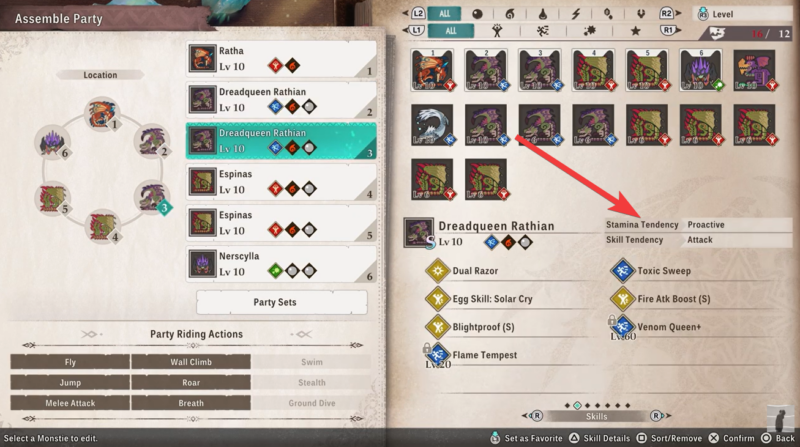
An average tendency produces balanced behavior. These Monsties mix normal attacks with skill usage, creating a steady combat rhythm.
Cautious Monsties prioritize stamina conservation. Instead of constantly using expensive abilities, they often rely on cheaper actions or survival-focused skills that help them remain active throughout longer encounters.
How skill tendencies determine your Monstie’s combat role
Skill tendencies focus on the types of abilities your Monstie prefers to use. While stamina tendencies determine how often stamina is spent, skill tendencies determine what type of skill your Monstie is most likely to choose.
| Skill Tendency | Focus | Typical Actions | Ideal Role |
|---|---|---|---|
| Attack | Direct damage | Offensive abilities | Primary damage dealer |
| Support | Buffs and utility | Stat boosts and team assistance | Team enhancer |
| Hindrance | Enemy disruption | Debuffs and status effects | Tactical controller |
Attack-focused Monsties prioritize offensive abilities designed to deal large amounts of damage. These Monsties are best suited for aggressive strategies where the goal is to break monster parts or end fights quickly.
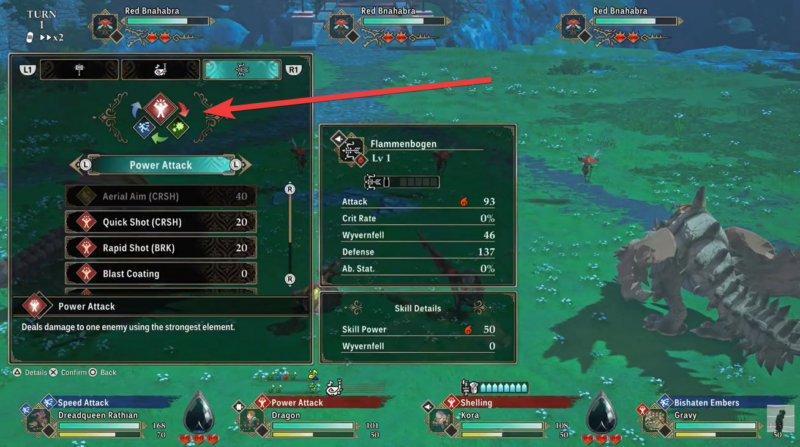
Support tendencies encourage the Monstie to use buffs or team-oriented abilities. These skills may increase stats, restore stamina, or improve survivability.
Hindrance tendencies focus on weakening enemies. These Monsties often apply debuffs or negative status effects that reduce enemy effectiveness.
Understanding how tendencies generate extra Kinship
Kinship is one of the most powerful mechanics in Monster Hunter Stories 3 because it fuels powerful abilities and special attacks. Monstie Tendencies directly influence how quickly Kinship can build during battle.
When a Monstie performs an action that matches its natural tendency without receiving a command from the player, it generates additional Kinship.
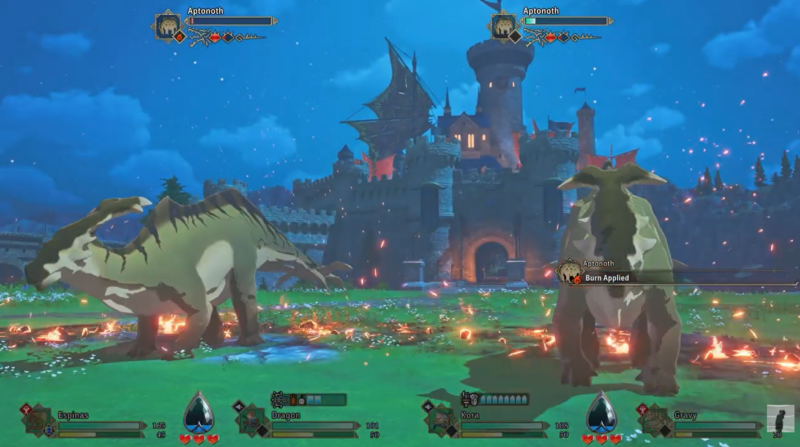
This means that allowing your Monstie to behave naturally can sometimes be more beneficial than forcing constant commands.
| Scenario | Kinship Result |
|---|---|
| Monstie acts against its tendency | Normal Kinship gain |
| Monstie follows its tendency naturally | Bonus Kinship gained |
| Player forces command frequently | Less natural Kinship generation |
Over time, this extra Kinship accumulation allows you to activate powerful Kinship attacks more frequently, significantly increasing your overall combat effectiveness.
Observing AI behavior differences in battle
Monstie tendencies become most noticeable when you observe how your companions react in specific situations. Two identical Monsties with different tendencies can behave very differently during the same fight.
For example, a cautious Monstie tends to prioritize survival-oriented actions. Instead of spending stamina immediately on powerful attacks, it may choose skills that preserve stamina or provide defensive benefits.
| Situation | Proactive Monstie | Cautious Monstie |
|---|---|---|
| High stamina available | Uses powerful skill immediately | May save stamina for later |
| Low stamina | May still attempt skill usage | Switches to low-cost actions |
| Dangerous enemy attack | Often continues offense | Prioritizes survival |
Because of these differences, your Monstie’s tendencies essentially define its battle personality.
How combining tendencies creates stronger teams
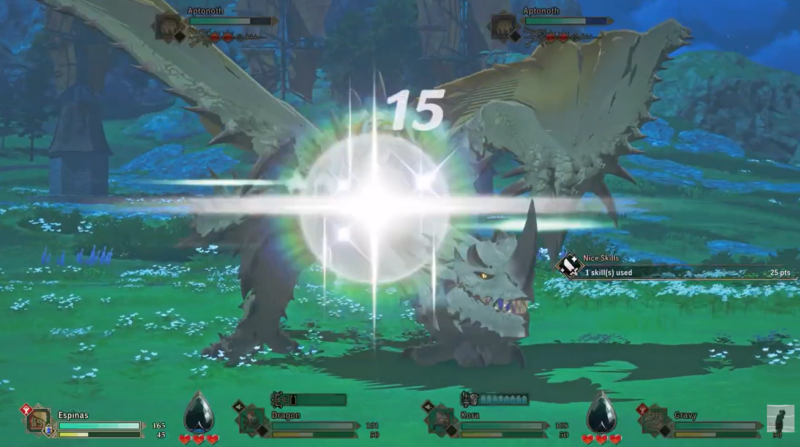
Team building becomes far more strategic when you consider tendencies. Instead of choosing Monsties purely for stats or elements, you can design teams where each member fulfills a specific behavioral role.
| Team Role | Suggested Tendency Combination | Strategic Benefit |
|---|---|---|
| Main Damage Dealer | Proactive + Attack | High burst damage |
| Team Support | Average + Support | Balanced team assistance |
| Tactical Controller | Cautious + Hindrance | Enemy disruption and endurance |
For example, pairing a proactive attacker with a cautious support Monstie creates a natural balance. The aggressive Monstie maintains offensive pressure while the supportive Monstie helps stabilize the team.
Similarly, a hindrance-focused Monstie can weaken dangerous enemies, making them easier for your primary damage dealer to defeat.
When tendencies complement each other, your team operates efficiently even during automatic battle actions.