- What to know
- Arknights Endfield Splitter details
- What the Splitter actually does in AIC
- How to unlock the Splitter through AIC research
- How the Splitter fits into real production chains
- How to use the Splitter in a working factory
- Supplying Amethyst Fibers to multiple units
- Understanding throughput and balance
- Combining Splitters with other logistics tools
- Using splitter for automated systems
What to know
- The Splitter is a logistics structure unlocked through AIC research
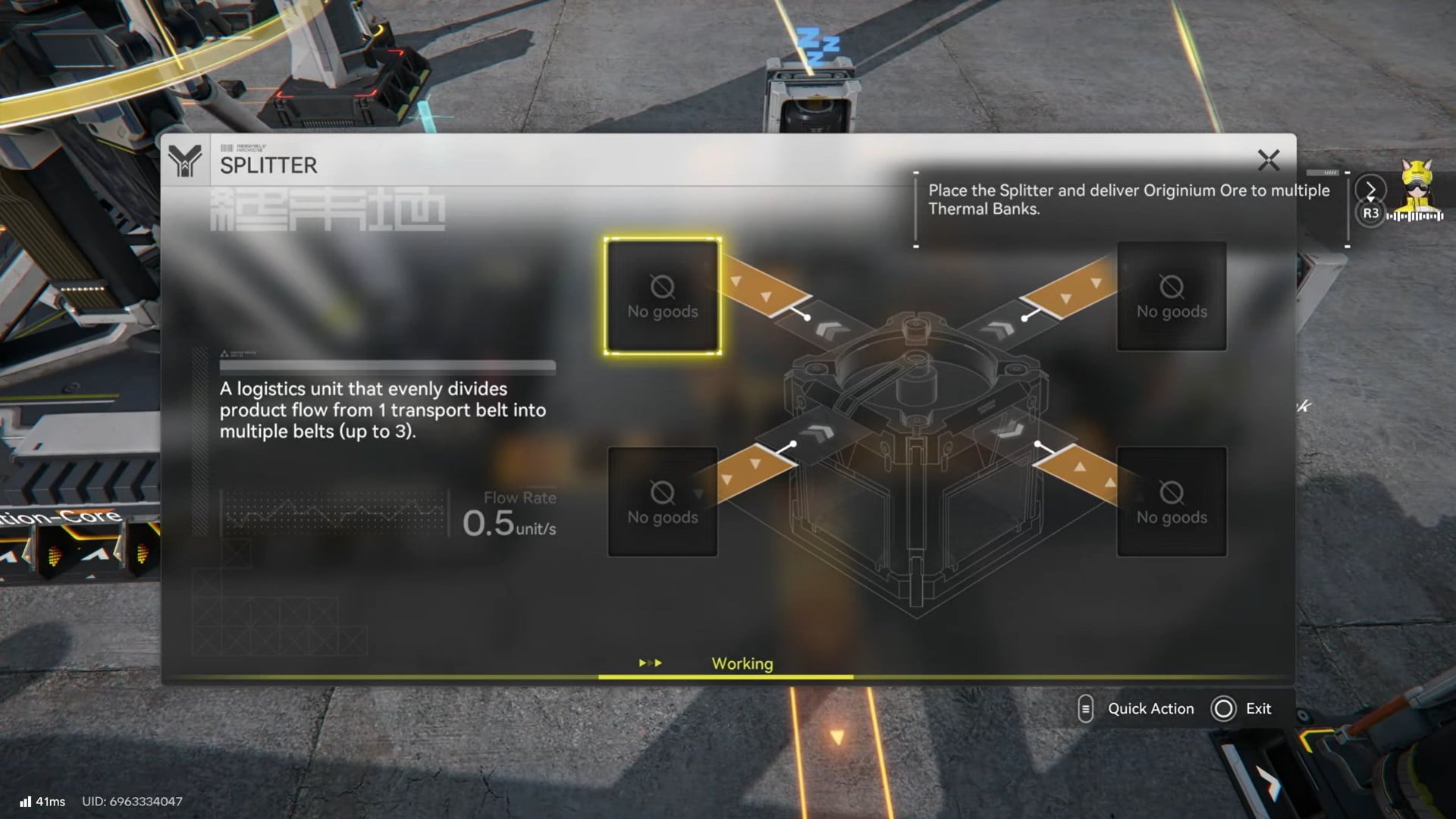
- It divides one conveyor belt into multiple output paths
- It does not increase production, only redistributes flow
- Proper Splitter placement is essential for scalable factories
The Splitter is one of the most important logistics tools in Arknights Endfield, especially once your Automated Industry Complex starts expanding beyond simple, linear production lines. While it looks like a small utility structure, the Splitter fundamentally changes how materials move through your factory by allowing one production source to support multiple downstream machines.
Without Splitters, factories tend to grow inefficiently. You duplicate refining units, consume unnecessary power, and run out of space faster than expected. With Splitters, you instead design smarter layouts that scale horizontally, feeding several machines from a single source while keeping belts clean and organized.
Arknights Endfield Splitter details
| Aspect | Details |
|---|---|
| System | AIC logistics |
| Function | Divides one belt into multiple outputs |
| Unlock method | AIC research (logistics branch) |
| Typical outputs | Two or three belts |
| Best use | Multi-machine input distribution |
| Limitation | Does not boost production speed |
What the Splitter actually does in AIC
At its core, the Splitter takes items moving along a single transport belt and distributes them across multiple outgoing belts. Each output carries a share of the original flow. This is crucial when a refined material needs to be consumed by more than one processing unit.
In early-game factories, you often connect one machine directly to another. This works when production chains are short and demand is low. As soon as you start crafting intermediate materials like Amethyst Fibers, Carbon Plates, or advanced components, demand multiplies quickly. Several machines may need the same input, and feeding them individually becomes inefficient.
The Splitter solves this by acting as a controlled junction. Instead of forcing you to build duplicate refining units, it allows one upstream producer to support multiple downstream consumers, provided the production rate can keep up.
How to unlock the Splitter through AIC research
The Splitter is not available by default. It must be unlocked through progression in the Automated Industry Complex research tree. Specifically, it sits within the logistics-focused branch that enhances belt systems and material routing.
As you progress through AIC objectives and expand your industrial footprint, the research option for belt splitting becomes available. Once completed, the Splitter becomes a placeable structure in your factory build menu, alongside belts, power pylons, and other logistics tools.
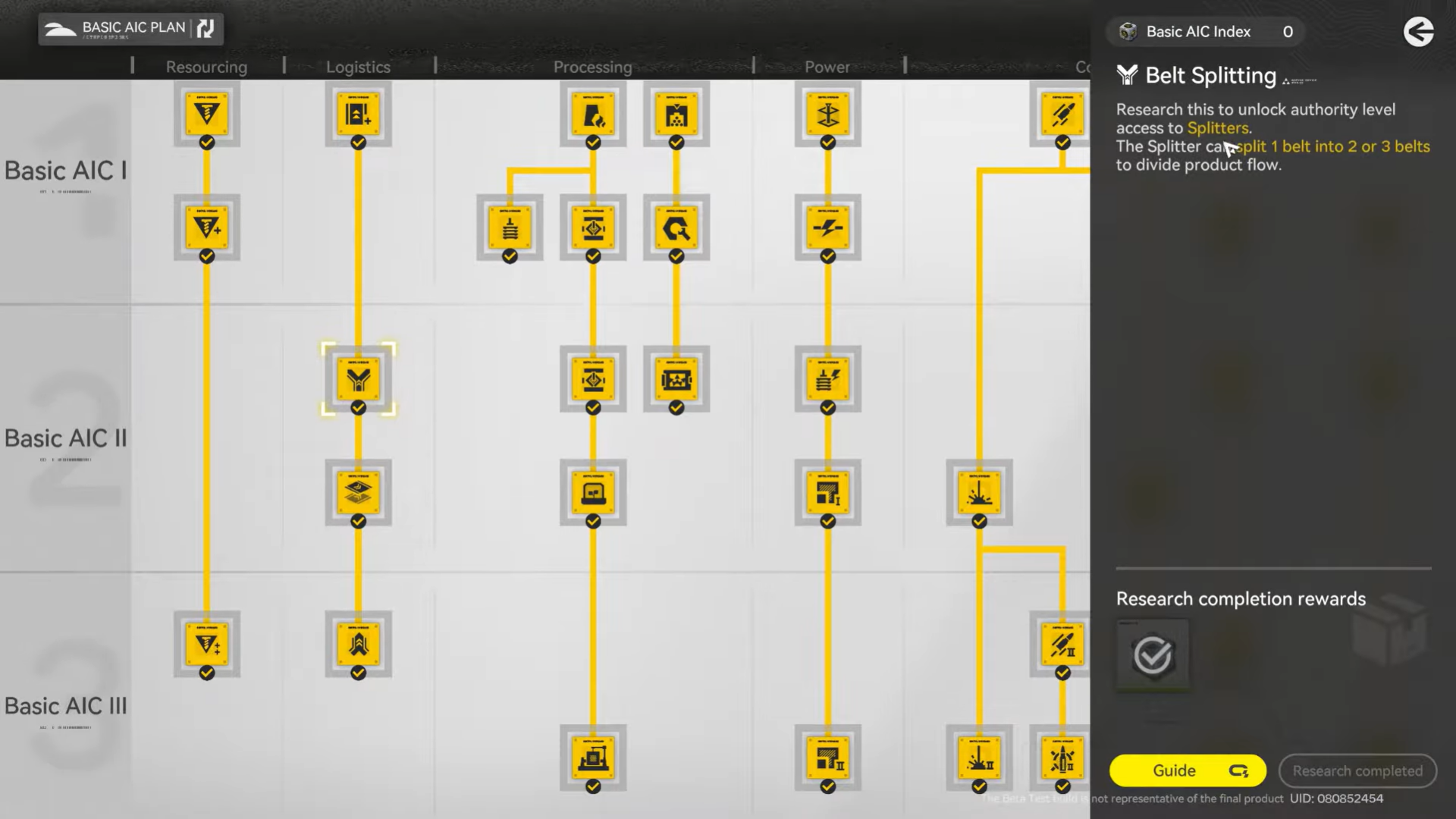
If you cannot place a Splitter yet, it almost always means the relevant AIC research node has not been completed.
How the Splitter fits into real production chains
The Splitter becomes most valuable when dealing with refined intermediates. Consider Amethyst Ore as a common example. Ore is refined into Amethyst Fibers, and those fibers are then required by multiple machines for different recipes.
Without a Splitter, you would need to either alternate belt connections manually or build multiple refining units producing the same material. Both approaches waste space and power.
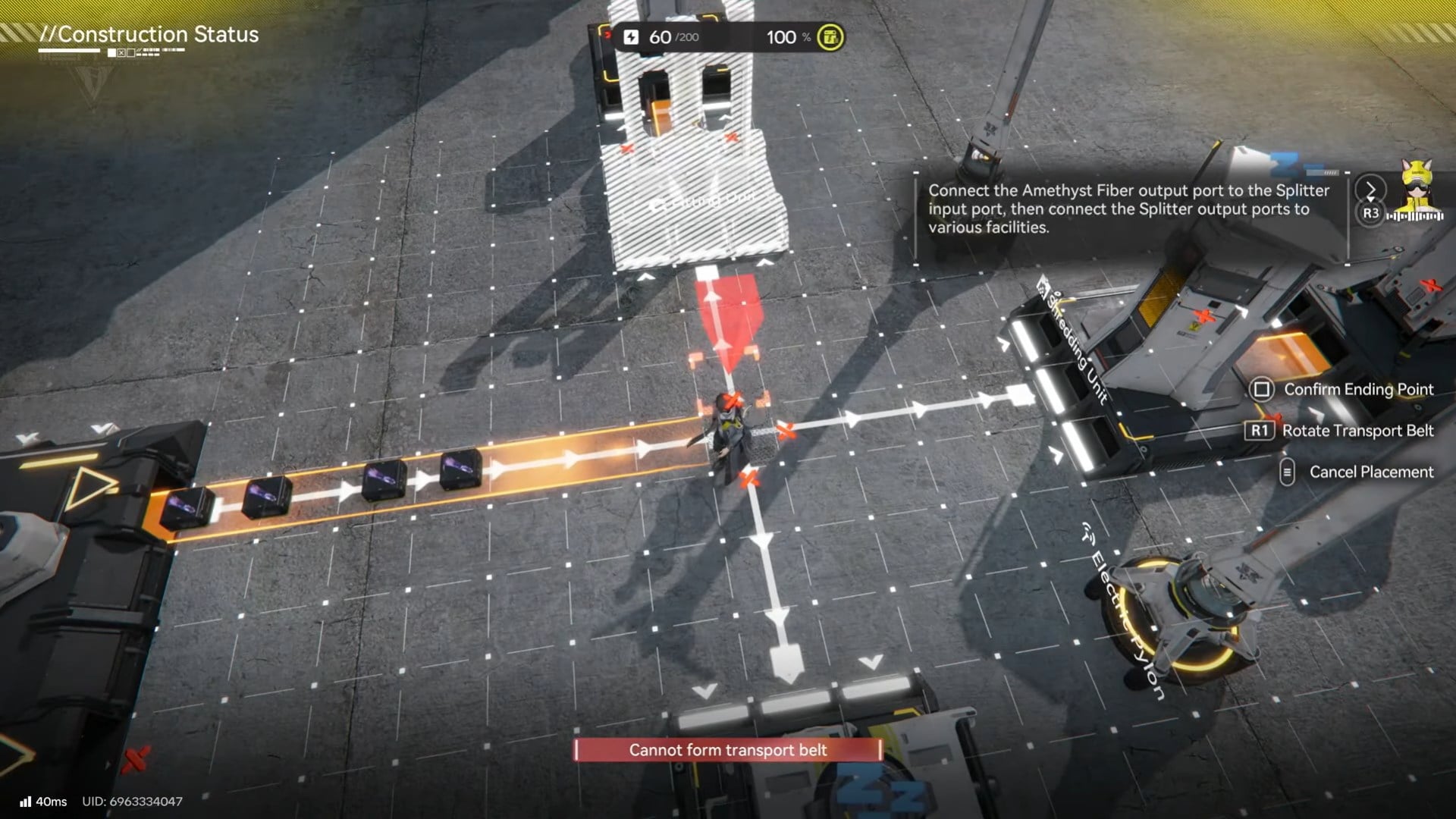
With a Splitter, the refining unit outputs onto a single belt, which then branches cleanly into two or three directions, each feeding a different machine. The factory continues running continuously, and every connected unit receives materials as long as supply is sufficient.
How to use the Splitter in a working factory
Step 1: Establish a stable upstream producer
Your upstream machine, such as a Refining Unit, must be powered and producing consistently. If production pauses upstream, the Splitter has nothing to distribute.
Step 2: Lay a main transport belt
Run a transport belt from the output port of the producing machine toward the area where materials need to branch.
Step 3: Place the Splitter on the belt
Insert the Splitter directly onto the belt at the point where you want the flow to divide. The belt will automatically convert into a branching junction.
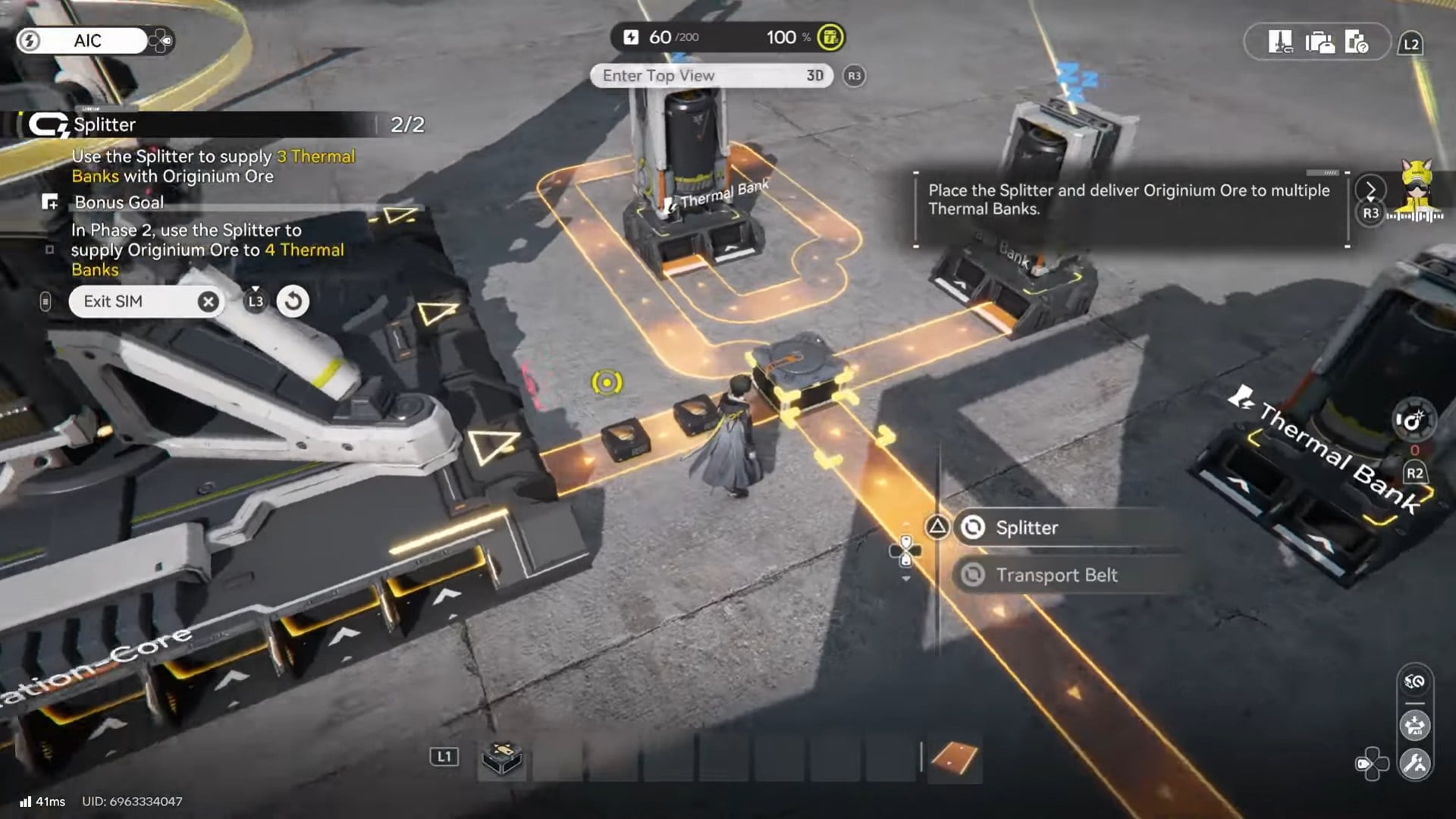
Step 4: Connect output belts to machines
Attach transport belts from each Splitter output to the input ports of downstream facilities such as Shredding Units, Fitting Units, or Moulding Units.
Step 5: Power and test the system
Ensure all downstream machines are powered and observe the flow. Materials should divide naturally and keep multiple machines active.
Supplying Amethyst Fibers to multiple units
One of the earliest objectives that introduces the Splitter asks you to supply Amethyst Fibers to a Shredding Unit. This is intentionally designed to teach belt branching logic.
You refine Amethyst Ore into fibers, route the output belt into a Splitter, then connect one branch to the Shredding Unit and another to a secondary consumer. Once powered, the objective completes automatically as materials begin flowing through both paths.
This same logic applies to more complex production chains later in the game, where three or more machines may depend on the same intermediate resource.
Understanding throughput and balance
A critical concept to understand is that Splitters do not create materials. They only divide what already exists. If one refining unit produces ten items per minute and you split it between two machines that each require eight items per minute, both machines will experience shortages.
Effective Splitter use requires awareness of production rates. Either increase upstream production or limit how many machines you feed from a single source. Watching machines idle due to lack of input is a clear sign that your factory has outgrown its current supply.
Combining Splitters with other logistics tools
Splitters shine brightest when used alongside converging tools and clean belt layouts. You can split materials early, process them separately, and later merge outputs back together for packaging or final assembly.
This layered approach allows compact, modular factory designs where each section performs a clear role. It also makes troubleshooting easier, since bottlenecks are easier to isolate when flows are clearly divided.
Using splitter for automated systems
As factory complexity increases, space and power become premium resources. Building duplicate machines for every new recipe quickly becomes unsustainable. The Splitter enables smarter scaling by letting one machine serve multiple purposes.
By the mid to late game, efficient factories rely heavily on Splitters to stay compact, flexible, and energy-efficient. Mastering their placement early pays off long-term, especially when tackling high-tier production chains.
The Splitter may seem like a small utility, but it represents a major shift in how Arknights: Endfield expects you to think about automation. Instead of brute-force expansion, the game rewards thoughtful logistics and balanced flow.
Once you understand how to use Splitters effectively, your AIC layouts become cleaner, more scalable, and far easier to manage—turning logistics from a limitation into a strength.
Thanks for taking the time to go through this how to use Splitters guide for Arknights Endfield. If it helped you understand things better, do share your thoughts, impressions, or doubts in the comments section. We keep a close watch and try to respond promptly to ensure you always get the support you need.