What to know
- Finger tape restores worn fingers and improves grip reliability
- You can tape fingers from the quick items menu or at a bivouac
- Taping uses a short, deliberate input-based mini-action
- Tape is a limited resource found while climbing the mountain
In Cairn, every system is designed to reinforce the idea that climbing is slow, physical, and punishing if you ignore preparation. Finger taping is one of the clearest examples of this philosophy. It is not a passive stat boost or an automatic repair. Instead, it is a hands-on maintenance action that directly affects how safely and confidently you can continue your ascent.
Quick overview of finger taping in Cairn
| Aspect | Details |
|---|---|
| What it affects | Grip endurance and finger protection |
| Where to use it | Quick items menu or bivouac box |
| How it works | Hold input and rotate stick to apply tape |
| Resource type | Limited, found while exploring |
| When it matters most | Before long or technical climbs |
Finger tapes in Cairn explained
As you climb, your character’s fingers gradually take wear. This wear represents reduced protection and endurance rather than instant damage. When fingers are worn, your grip becomes less reliable, holds drain stamina faster, and difficult sections become riskier than they need to be. Finger tape restores that protection, effectively resetting the finger’s condition and allowing you to hold on longer without slipping.
The game never forces you to tape immediately, but the consequences of ignoring it become obvious over time. Long traversals, repeated falls, or aggressive climbing routes accelerate finger wear, turning tape into a quiet but critical survival resource.
Where and when you can tape fingers
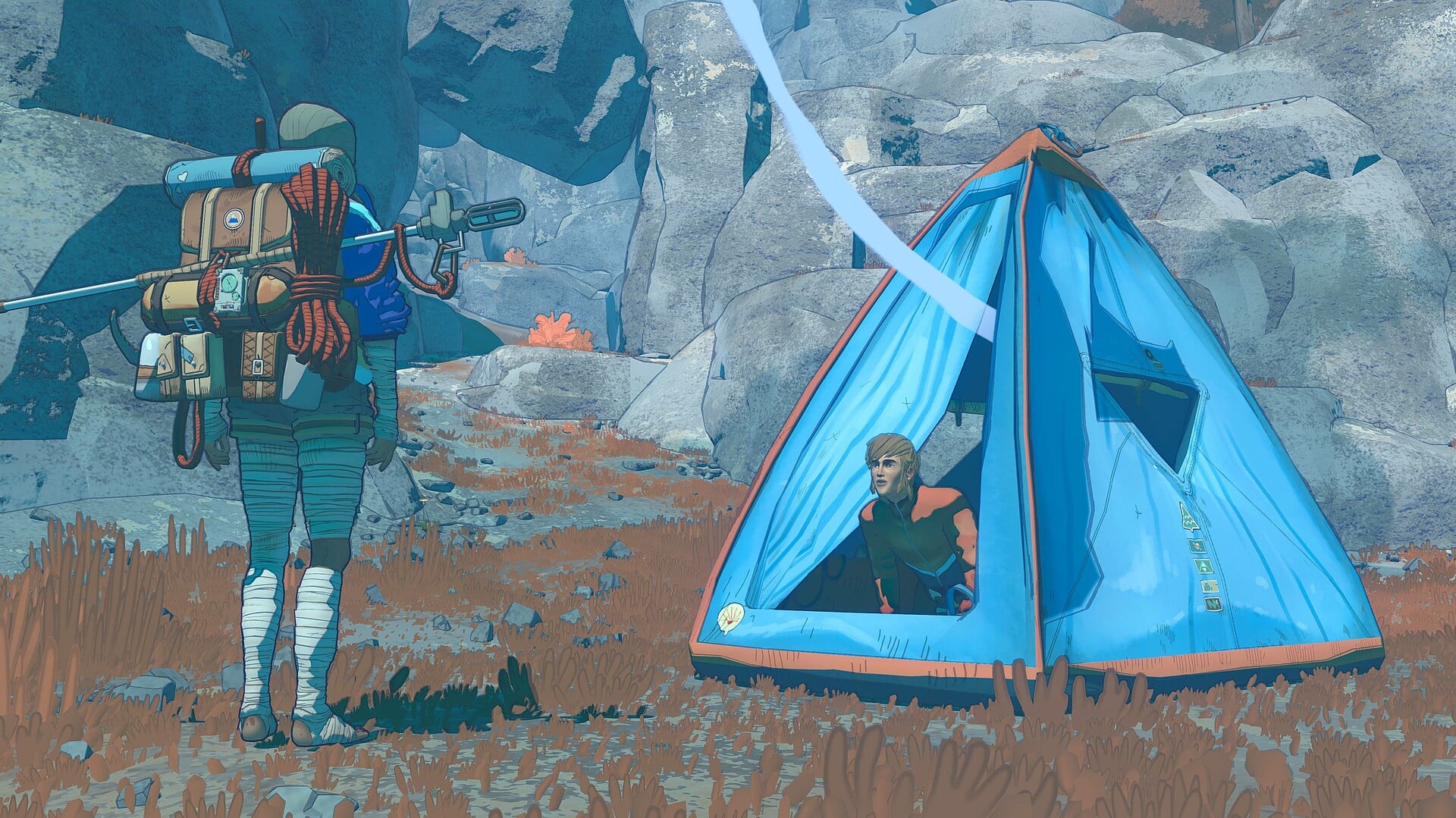
You are not restricted to a single location type for taping, but timing matters. You can access the finger taping option either through the L2 quick items menu or by interacting with the bivouac box when you set up camp. The bivouac is the most reliable place to manage your hands because it gives you a moment of safety and visibility before committing to the next section of the climb.
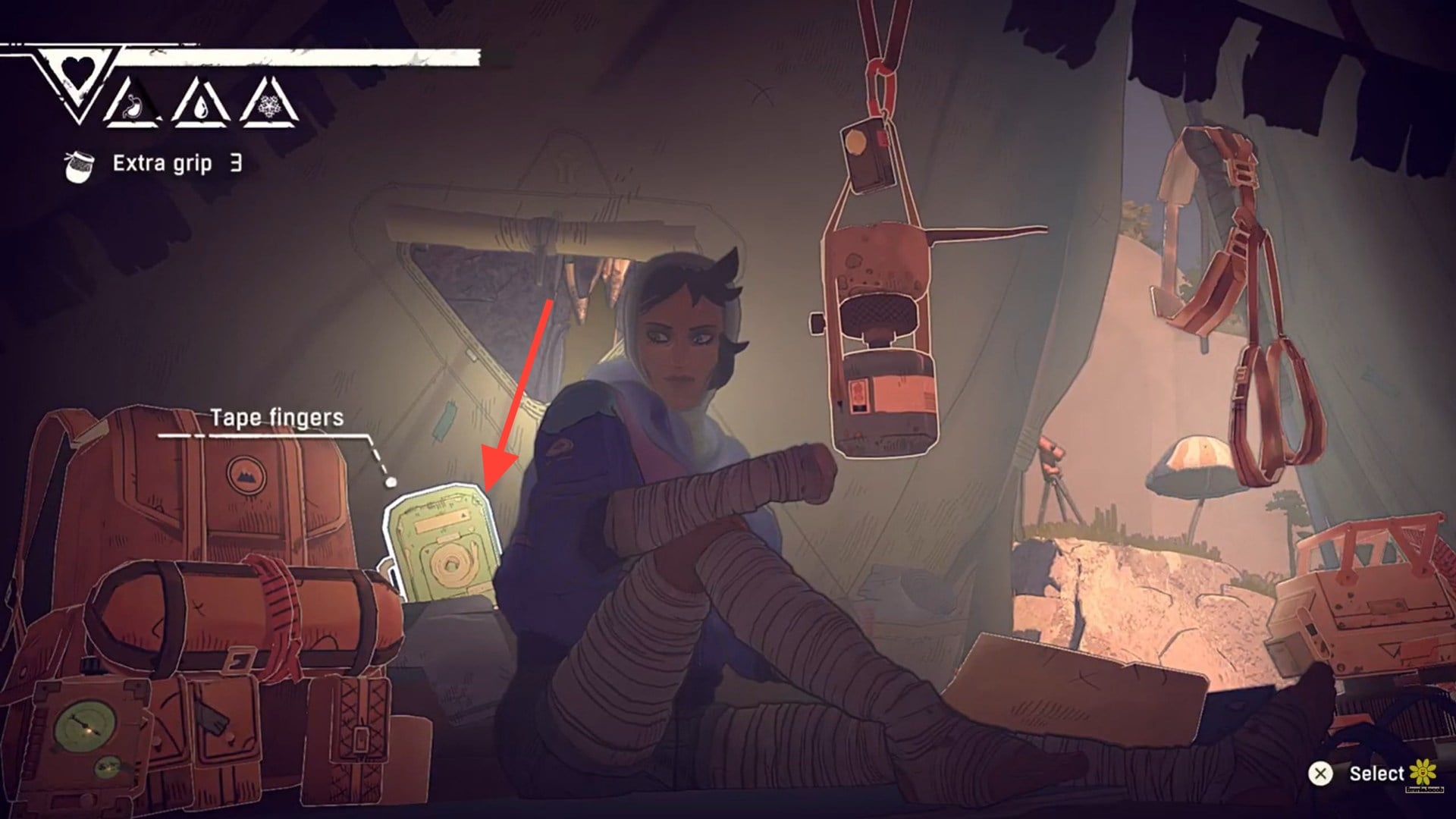
Taping cannot be done mid-movement while clinging to a wall. This limitation reinforces planning. You are expected to assess your condition, stop, and prepare before pushing upward rather than reacting at the last second.
How the taping process works in practice
Once you choose to tape your fingers, the game shifts into a brief interactive action rather than a simple button press. You hold the confirm button and rotate the left stick in a smooth circular motion to wrap the tape. The motion is slow by design, matching the game’s deliberate pacing and physical tone.

This interaction matters because it reinforces that maintenance costs time and attention. You are never meant to rush preparation in Cairn, and finger taping reflects that mindset clearly.
Tape as a limited climbing resource
Finger tape is not unlimited. It is found scattered along the mountain, often near traversal routes or rest areas, and how much you need depends entirely on how you climb. Careful, efficient routes consume less tape, while aggressive or experimental climbs wear fingers faster.
You also cannot re-tape a finger that still has intact tape. The tape must wear down naturally before it can be replaced, which prevents waste and encourages you to think about timing rather than reflexively reapplying protection.
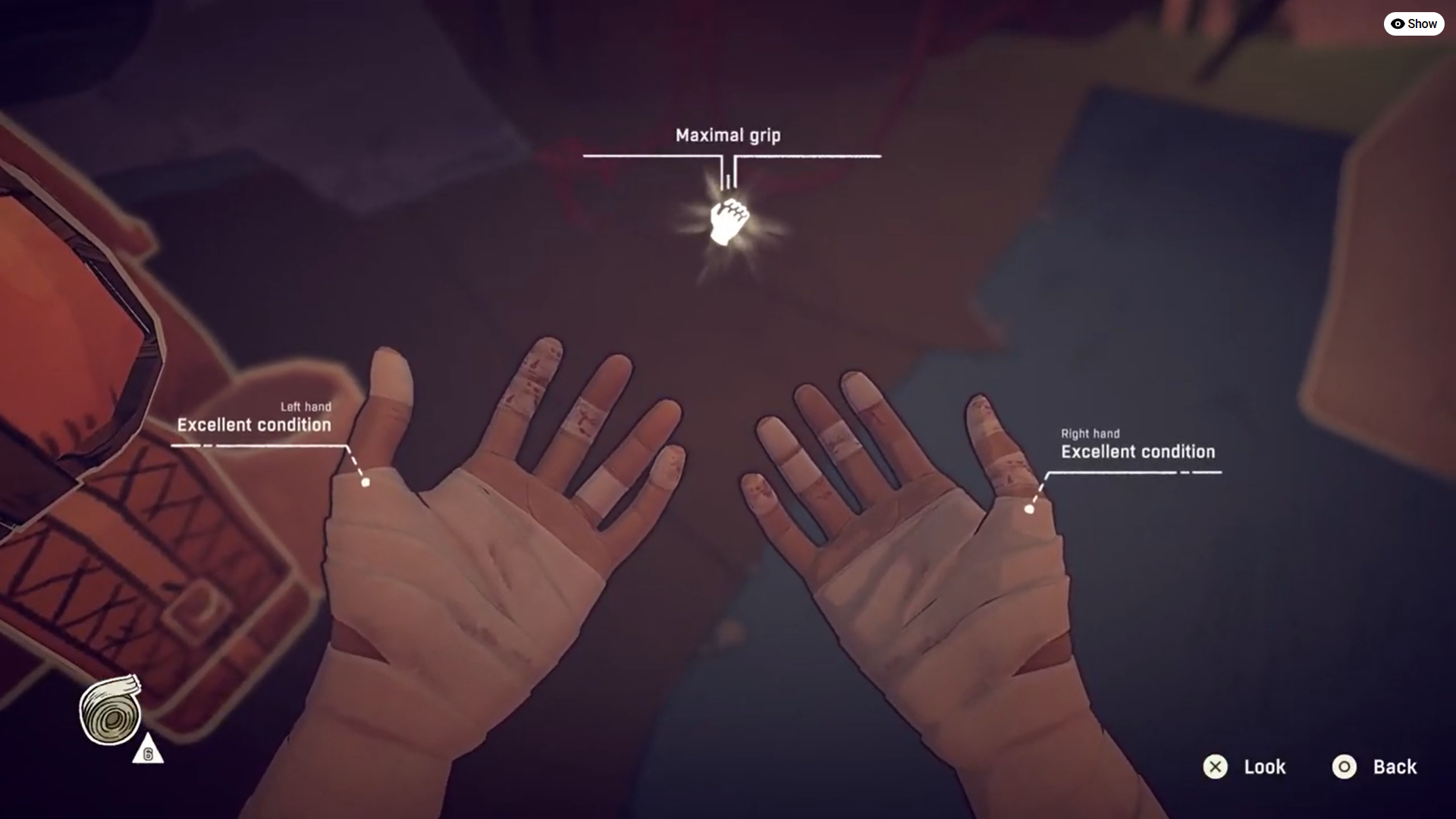
Why finger taping is best to prevent injuries
Early sections of the climb may not punish worn fingers heavily, which makes it easy to underestimate the system. As routes grow steeper and handholds become less forgiving, grip endurance turns into a defining factor. Well-taped fingers allow you to pause, recover stamina, and commit to precise movements without panic.
In longer climbs between bivouacs, finger tape can be the difference between reaching the next safe point and slipping just short of it.
Keeping your hands ready for the climb
Taping fingers in Cairn is not flashy, but it is one of the most important maintenance actions in the game. By paying attention to finger wear, carrying tape when you can, and taking the time to prepare at bivouacs, you give yourself far more control over difficult ascents. Like most systems in Cairn, it quietly rewards patience and awareness rather than speed.