What to know
- Pumpkin pie is one of the best food items in Hytale for sustained gameplay
- A single modular farm can produce pumpkins, spices, dough, and eggs
- Access to water and proper lighting is critical for efficiency
- Chicken coops are essential for maintaining a steady egg supply
Pumpkin pie stands out in Hytale because it provides reliable health regeneration and useful buffs on a cooldown, making it ideal for exploration, combat, and long mining sessions. Unlike simpler foods, pumpkin pie requires multiple ingredients, which is why a properly designed farm matters. This setup focuses on sustainability rather than speed, ensuring you always have pumpkins, sunflower spices, flour, and eggs ready to cook.
The design described here is modular, meaning you can expand it later without rebuilding everything. Once running, it becomes a backbone food system that supports nearly all mid-to-late game activities.
Materials required for the Pumpkin Pie farm module
This farm is built around a single 20×7 plot and a central chicken structure. The materials are straightforward and mostly early-game friendly, but the value comes from how they interact together rather than their rarity.
| Item | Quantity | Purpose |
|---|---|---|
| Buckets of water | 14 | Crop hydration |
| Wool | 14 | Chicken coop structure |
| Torches | 14 | Crop lighting |
| Sunflower seeds | 150 | Spices |
| Pumpkin seeds | 150 | Pumpkin base |
| Chicken coops | 4 | Egg production |
| Hide roof sloped | 10 | Chicken ramps |
| Hoe | 1 | Soil preparation |
Choosing the right location
Location plays a major role in how convenient this farm feels over time. The ideal spot is somewhere with immediate access to an infinite water source, such as near an ocean or a forgotten temple gateway by the shore. Having water nearby saves time when placing multiple water blocks and avoids the need for long transport routes.
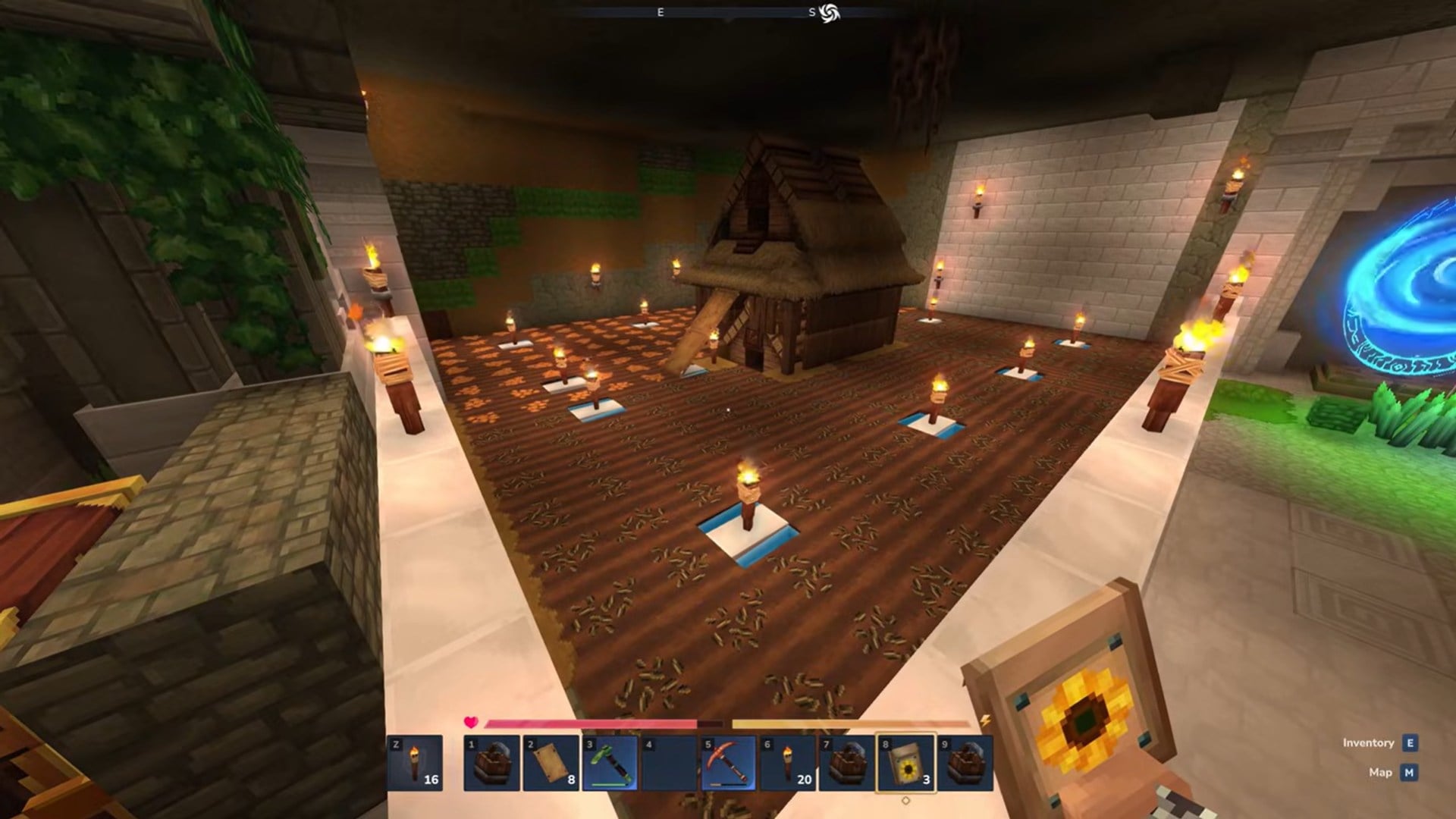
Flat terrain helps, but it is not mandatory. As long as you can carve out a 20×7 rectangle, the farm will function correctly. Surrounding the area with a two-block-high wall is important, as it prevents chickens from wandering out once the coops are active.
Setting up the farm area and layout
Once the location is chosen, the farm floor should be converted entirely to dirt. This ensures all crops can be tilled and hydrated evenly. The 20×7 area allows enough room for pumpkins and sunflowers to grow without overcrowding while still staying compact.
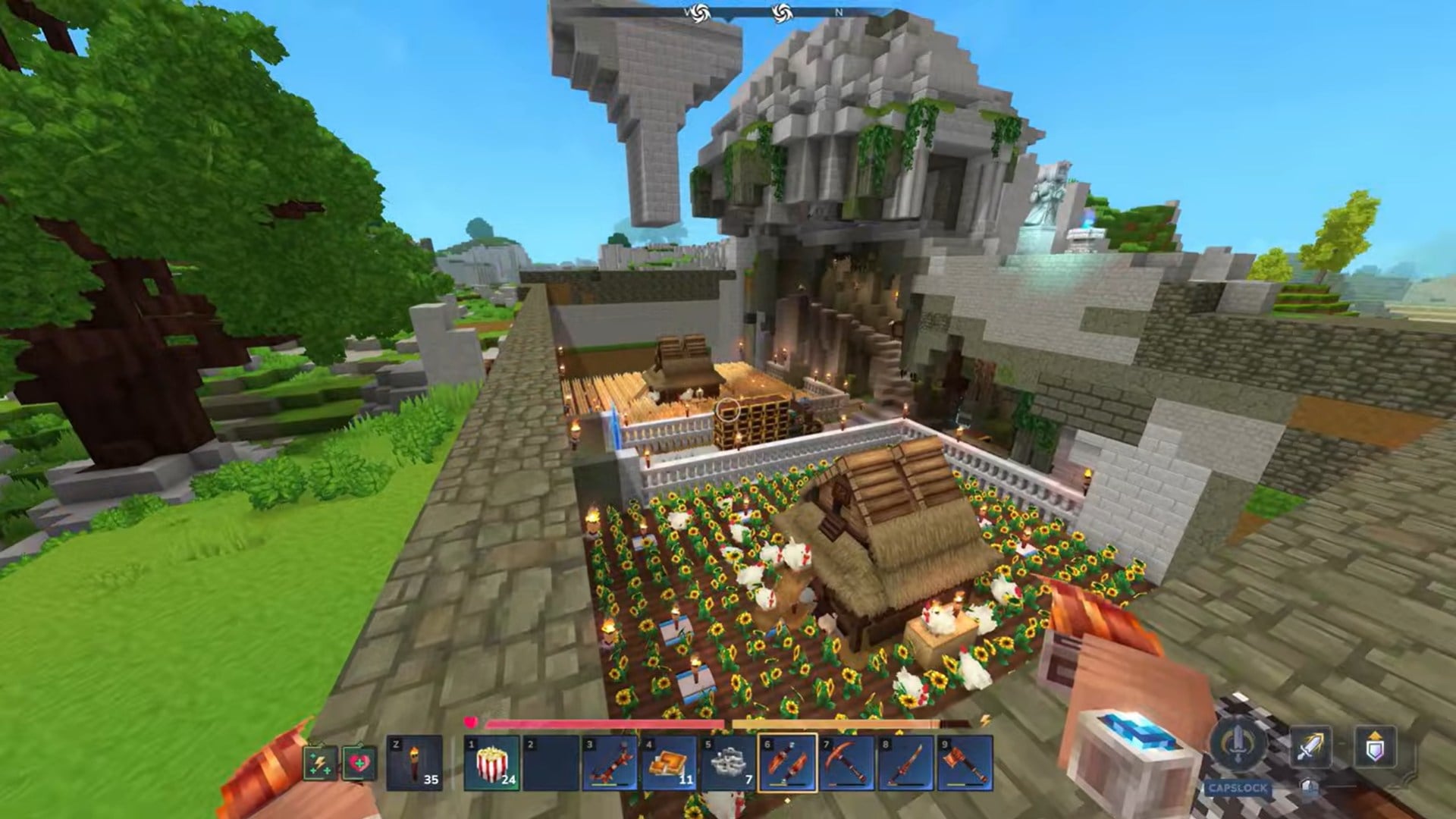
Water sources are placed in a consistent pattern throughout the plot so every tile remains hydrated. Torches are then installed at equal spacing to guarantee full light coverage, which prevents slow growth or failed crops during nighttime or in shaded areas.
Workstations, storage, and efficiency
Efficiency comes from organization. Near the farm, set up multiple chests dedicated to specific resources. One chest should hold water buckets and seeds, another for harvested pumpkins and sunflowers, and another for eggs and dough ingredients. Additional storage for firewood or logs is useful for cooking.
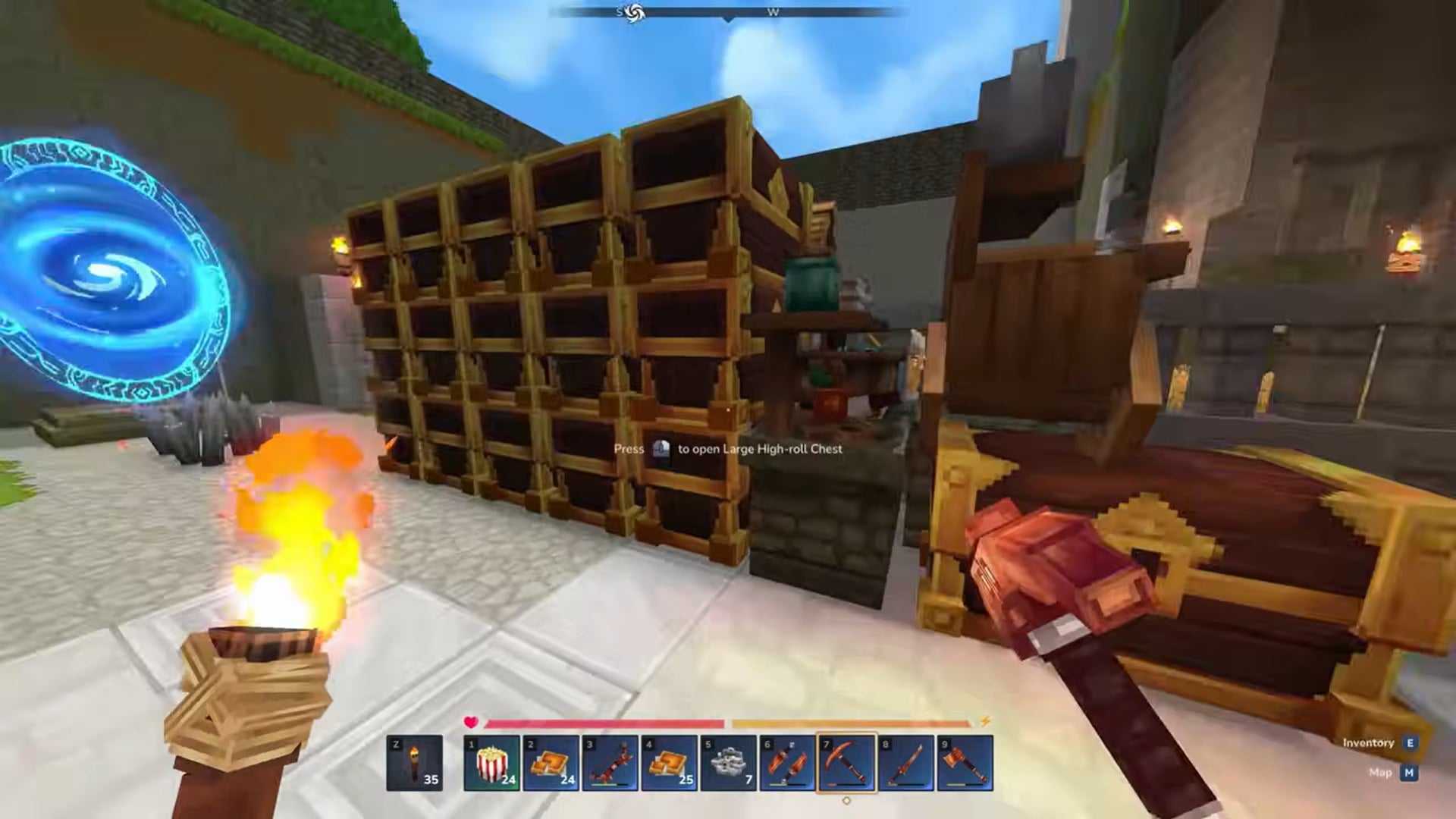
Placing a Chef’s Stove and a farmer’s workbench directly beside these chests minimizes walking time. This setup allows you to harvest, process, and cook pumpkin pies in one continuous loop without unnecessary movement.
Chicken coop structure and egg production
Eggs are the limiting factor in pumpkin pie production, which is why the chicken coop design is central to the farm. The recommended structure uses four chicken coops arranged in a compact tower, with two coops stacked vertically on each side. Sloped hide roofs act as ramps, allowing chickens to walk up into the upper coops naturally.
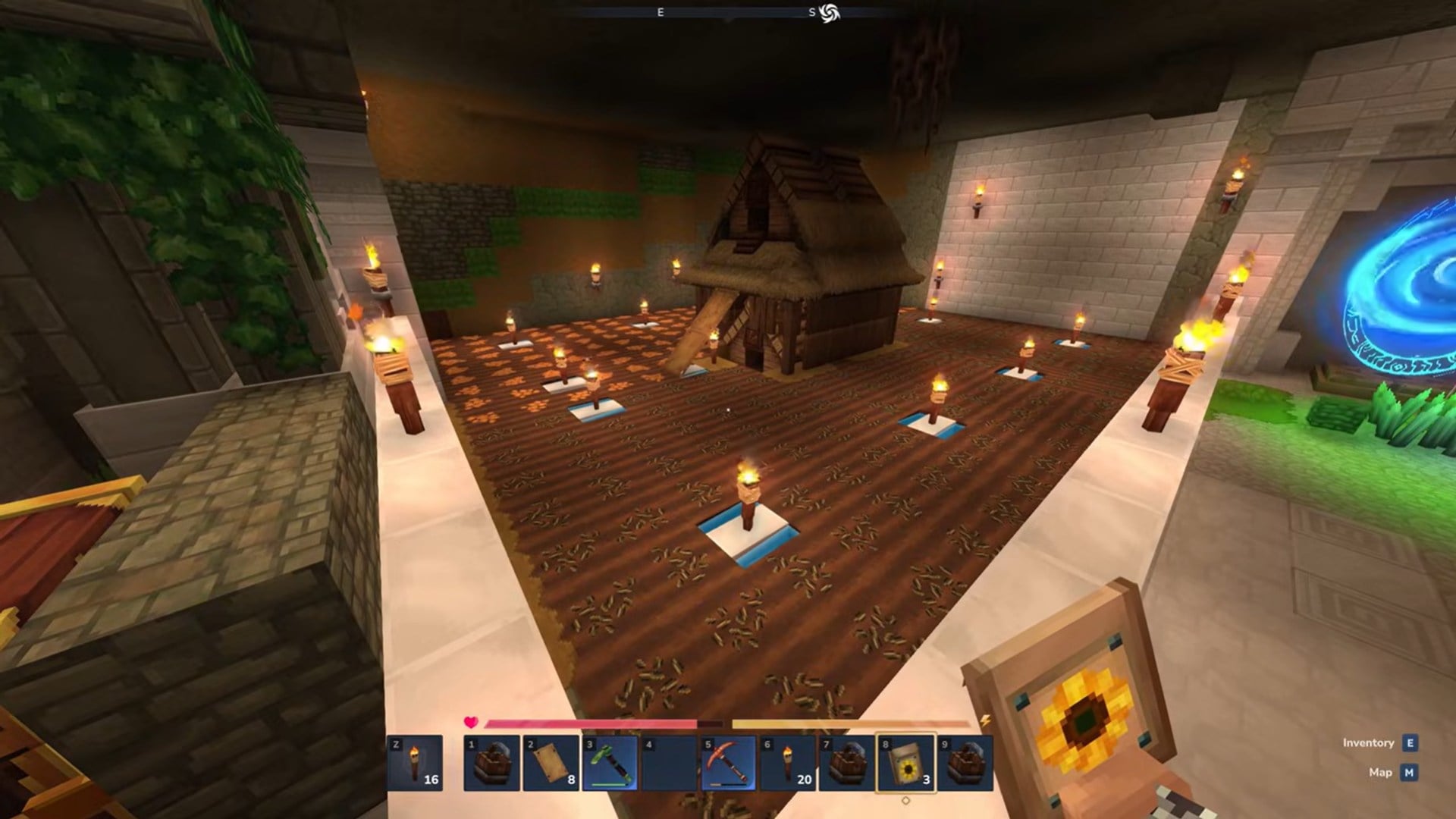
Each coop should hold around six chickens, resulting in roughly twenty-four chickens per full structure. This balance maximizes egg output while minimizing escape issues. Decorative elements can be added, but functionality matters more than appearance here.
Planting strategy and crop balance
After tilling the soil, plant pumpkins and sunflowers in roughly equal proportions. Pumpkins form the main body of the pie, while sunflowers are processed into spices. It is worth noting that sunflower seeds do not return essence when harvested, meaning you may need to repurchase them periodically using essence.
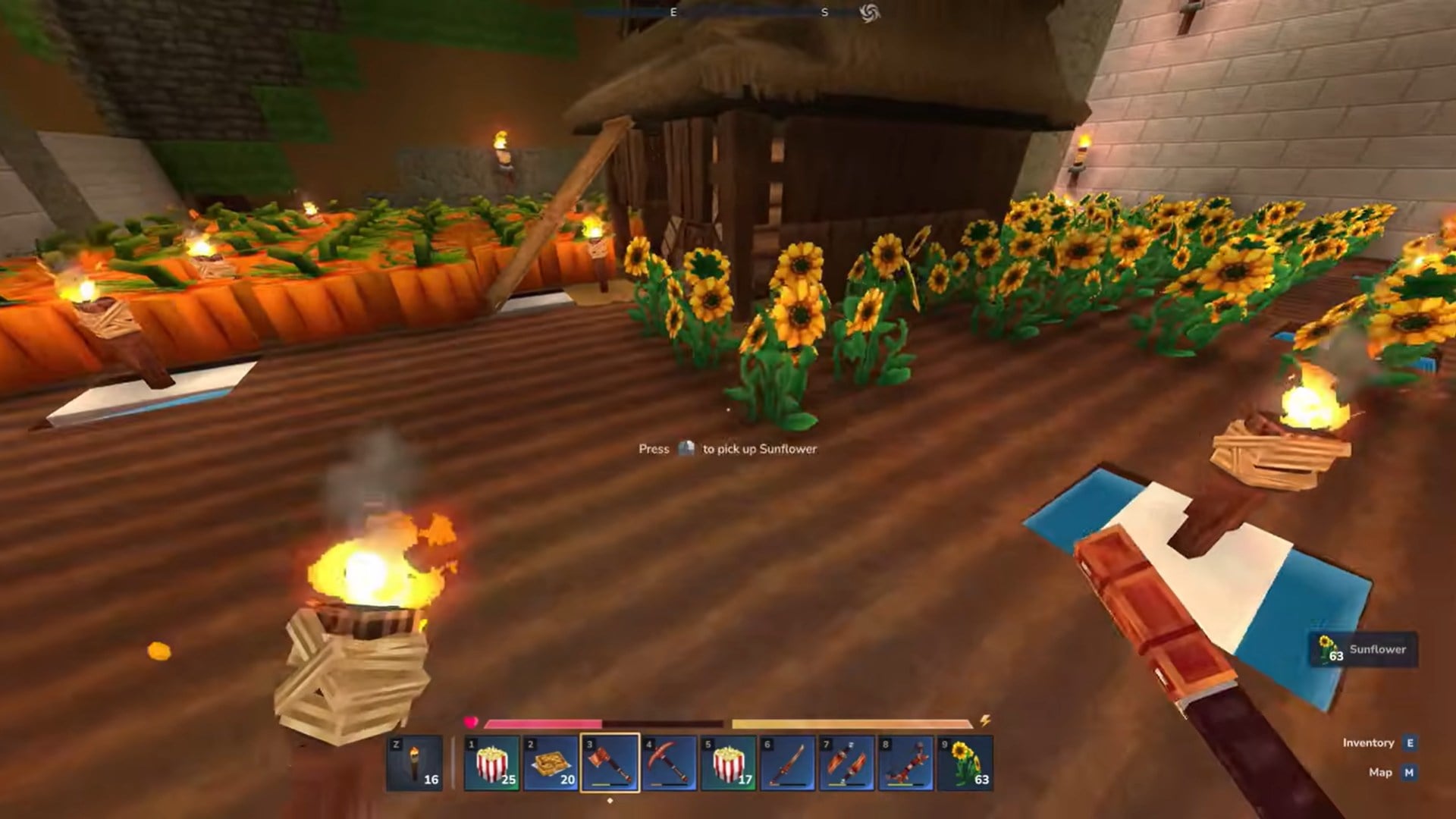
Because pumpkin pie also requires flour, it is strongly recommended to build a second, smaller module nearby dedicated to wheat farming. This keeps flour production steady and prevents bottlenecks once pie crafting ramps up.
Maintaining continuous production
The farm works best when treated as a cycle. Harvest crops as soon as they mature, collect eggs regularly, and immediately replant seeds to keep growth timers rolling. Chickens should be checked occasionally to ensure none escape or glitch onto roofs.
If chickens start spawning on top of the coop structure, removing the roof temporarily usually fixes the issue and can even refund some building materials.
Using pumpkin pie efficiently
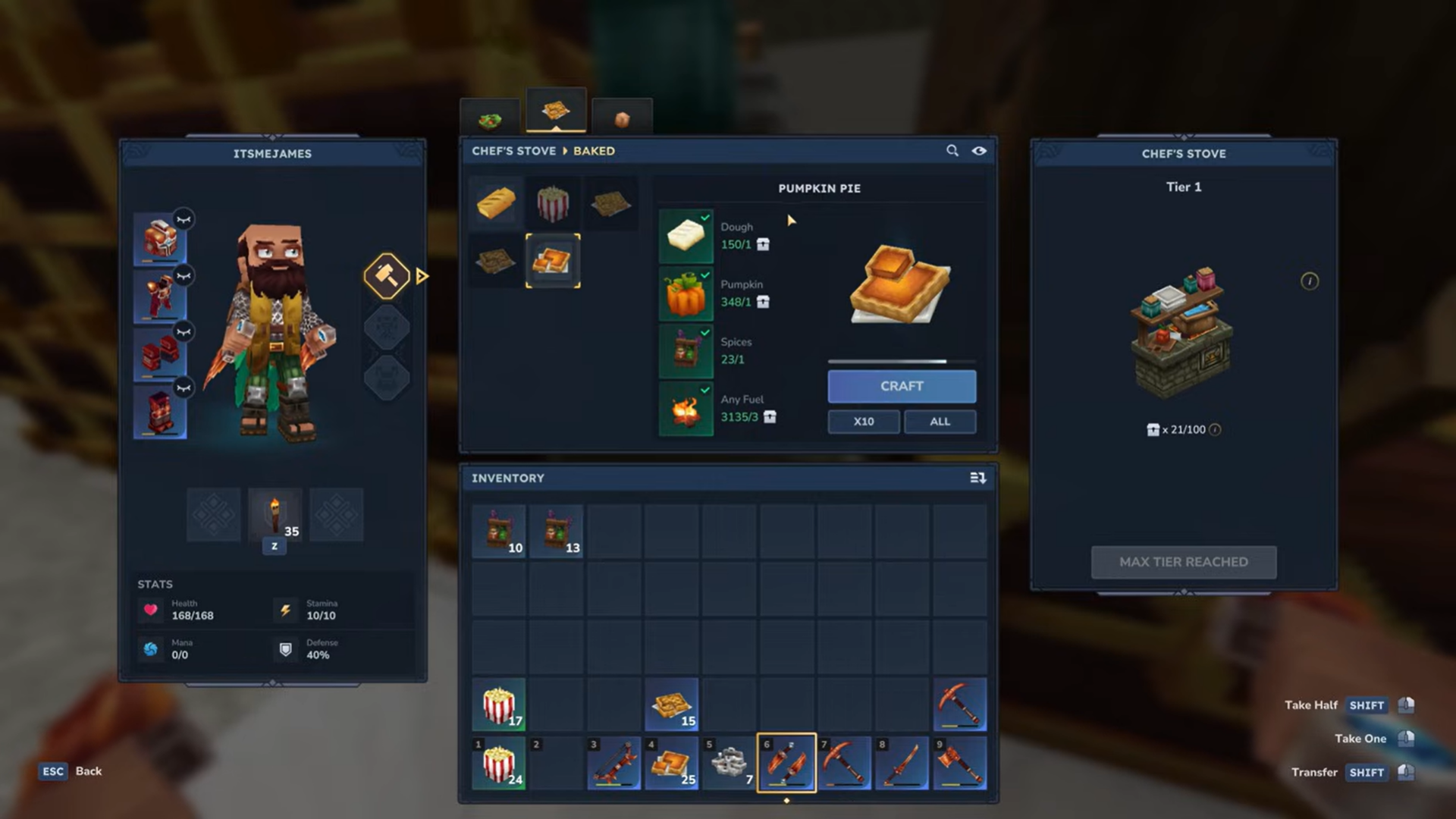
Pumpkin pie provides strong regeneration and buffs, but it has a cooldown of several minutes. To avoid wasting food potential, many players pair pumpkin pie with popcorn. The pie is used for major regeneration and buffs, while popcorn fills the gaps between cooldowns. This combination keeps hunger and health stable without burning through high-value food too quickly.
Why pumpkin pie farms are worth building
A pumpkin pie farm is not just about food; it is about independence. Once established, you no longer rely on random drops or temporary meals. You gain a reliable, renewable source of one of Hytale’s best foods, freeing you to focus on exploration, combat, and building instead of survival management.
For players planning long-term worlds or multiplayer servers, this farm quickly becomes one of the most valuable infrastructure projects you can build.