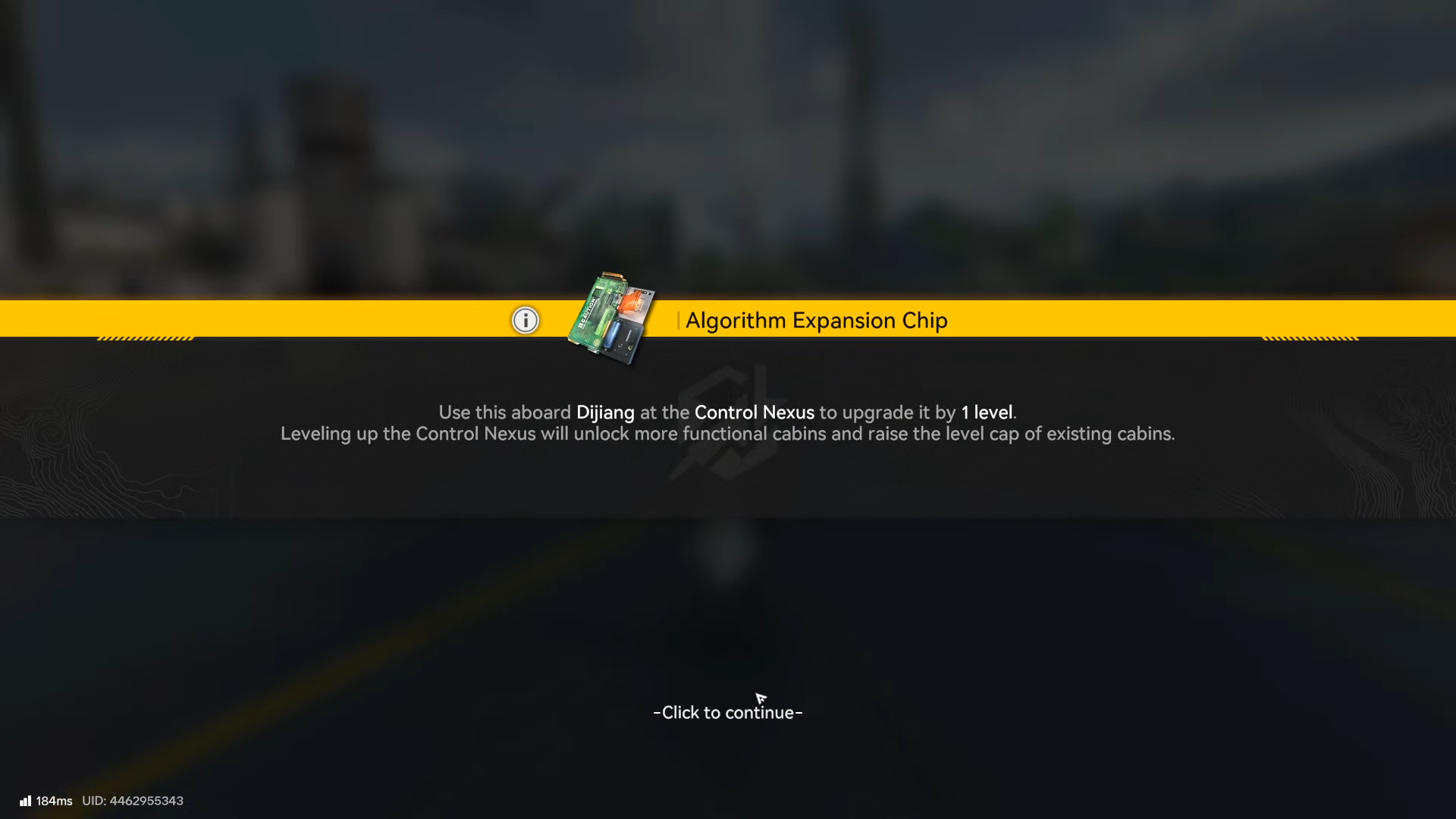
What to know
- Algorithm Expansion Chip comes from Main Missions (main story progression), not from routine farming or repeatable material nodes.
- It’s required for every Control Nexus upgrade, alongside Aerospace Materials and T-Creds.
- Control Nexus upgrades unlock and raise caps for key ship systems like the Growth Chamber, manufacturing cabins, and assignment limits.
- If the chip is missing, the fix is almost always continuing the current Main Mission chain tied to ship expansion and region objectives.
In Arknights: Endfield, once the early game opens up and ship progression becomes the real “account progression,” Algorithm Expansion Chips become the main hard-gate for expanding Dijiang systems. Because the chip is tied to the main story reward track, the most efficient approach is to treat it as a milestone item: complete whatever the Main Mission tracker demands, then claim the reward and immediately apply it to the next Control Nexus upgrade if the goal is to unlock more features quickly.
Reference table for quick lookup
| Topic | Quick reference |
|---|---|
| What the chip is | A mission item used at the Control Nexus aboard OMV Dijiang to unlock the next expansion phase. |
| How it’s obtained | Earned as a Main Mission reward (main story progression). |
| Common use | Required material for Control Nexus level upgrades (typically 1 chip per upgrade). |
| Why it matters | Unlocks/expands Growth Chamber access, increases assignment limits, and raises cabin level caps depending on Nexus level. |
Where the Algorithm Expansion Chip comes from in practice
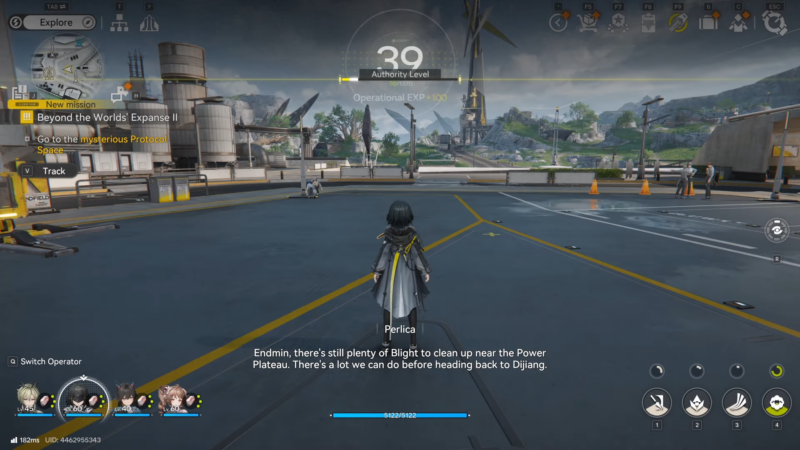
Algorithm Expansion Chips are not handled like standard crafting materials. That means there usually isn’t a consistent “farm route” or repeatable enemy that reliably drops them. Instead, the game uses chips as a pacing mechanism for ship expansion: the chip appears in the rewards of specific story milestones.
This is also why location-focused guidance can feel confusing. A video or waypoint that appears to show a “location” is often really showing the area where the current Main Mission objective must be completed (for example, a region step that must be cleared), rather than a chest that can be looted repeatedly for chips.
How to get the Algorithm Expansion Chip
Step 1: Confirm the active Main Mission chain
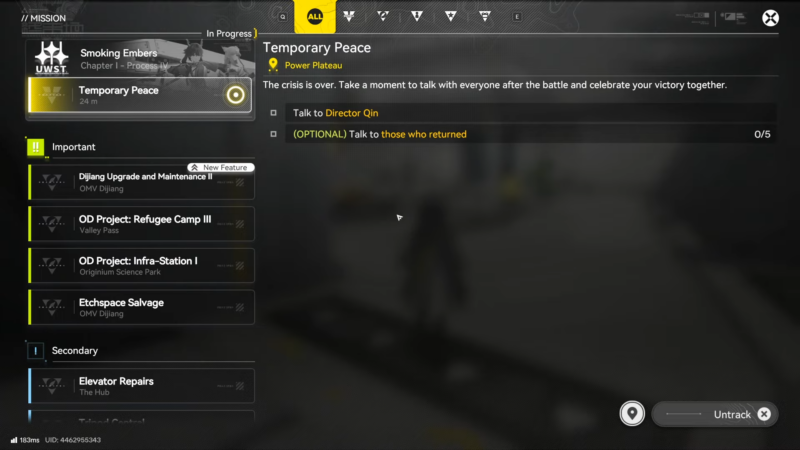
Open the mission tracker and confirm the current objective is under Main Missions (not Side Missions, Contracts, or optional activities). If the goal is a chip, story progression is the correct track.
Step 2: Follow the mission markers until the reward step completes

Complete the listed objectives exactly as written—many chip rewards are tied to “finish the sequence” steps (e.g., reach a point in the chain, resolve a scripted encounter, or complete a required interaction back on the ship).
Step 3: Clear common progression blockers

If the chain won’t advance, check for typical blockers:
- A required Control Nexus level that must be reached first (meaning a previous upgrade step is pending).
- A required facility function that must be built or activated.
- A region objective that must be completed before the next story step appears.
- A required return-to-ship turn-in (some missions complete only after reporting back).
Step 4: Treat the chip as a Nexus-only currency while pushing progression

If the objective is unlocking more systems, don’t hold chips for “later.” In most progression paths, the best use is immediately upgrading the Control Nexus, because that unlocks additional systems and caps that accelerate everything else.
How to use the Algorithm Expansion Chip (Control Nexus upgrade flow)
Algorithm Expansion Chips are consumed when upgrading the Control Nexus. You’ll also need Aerospace Materials (tiers depend on the next level) and T-Creds. Upgrading the Nexus is one of the most impactful uses of limited resources early on because it expands what the ship can do—more room to grow characters, more production flexibility, and higher operational limits.
A practical tip: before initiating an upgrade, ensure the required Aerospace Materials are already prepared so the chip doesn’t sit idle. If T-Creds are short, prioritize activities that provide stable currency flow before returning to upgrade.
Exact requirements can vary by version/build and progression stage, but the general pattern stays consistent:
- Each Nexus upgrade typically consumes 1 Algorithm Expansion Chip.
- Aerospace Materials requirements increase each level, and higher tiers start appearing as the Nexus rises.
- T-Cred costs scale upward significantly, so planning ahead avoids a stall.
Rewards table
| Order | Reward | Count |
|---|---|---|
| 1 | Gold/orange cube-like item (orange rarity frame) | 1 |
| 2 | T-Creds (currency card; “1.8K” shown) | 1.8K |
| 3 | Blue ticket/card item | 5 |
| 4 | Blue crystal/resource | 3 |
| 5 | Green/gray mechanical module/part | 4 |
| 6 | Green/orange chip/board item | 1 |
| Reward/Unlock | What it enables | Why it matters |
|---|---|---|
| Algorithm Expansion Chip | Enables Control Nexus upgrades (core ship expansion step). | Acts as the main progression gate for ship systems. |
| Growth Chamber access and upgrades | Opens and improves growth-related ship features. | Increases long-term power growth and progression efficiency. |
| Higher assignment limits | More concurrent tasks/operations. | Speeds up routine progression and resource flow. |
| Expanded cabin caps/options | Higher level ceilings and more flexibility in ship functions. | Improves production, management, and overall ship efficiency. |

Keeping Algorithm Expansion Chips from becoming a bottleneck
Algorithm Expansion Chips are best understood as “story milestone keys” for Control Nexus upgrades. When an upgrade demands a chip, the reliable solution is to continue the Main Mission chain until the reward is granted, then apply it to the Nexus to unlock the next set of ship progression benefits.