- What to know
- Arknights Endfield Deep Management Post elevator puzzle
- Location of Elevator Puzzle in Arknights Endfield
- Understanding how the elevator grid works
- Why overlapping pieces are mandatory
- How to fix the elevator in Deep Management Post
- Common mistakes and how to avoid them
- Why this puzzle exists in Arknights Endfield
- What happens after fixing the elevator
- Tips to solve it faster on repeat playthroughs
What to know
- The elevator repair is a logic puzzle, not a combat challenge
- Row and column numbers define exact green tile requirements
- Overlapping shapes is allowed and essential
- Only the final grid state matters, not how many pieces you use
After completing the Deep Management Post Rescue sequence, progression in Arknights: Endfield briefly comes to a halt when the facility’s elevator fails. Instead of a fight or resource check, the game presents a logic puzzle built around grid completion. If you understand the rules, the puzzle is quick. If you don’t, it can feel unintuitive—especially because overlapping pieces is not only permitted but required.
This guide walks you through the elevator puzzle in detail, explains the logic behind it, and shows you how to solve it consistently without guesswork.
Arknights Endfield Deep Management Post elevator puzzle
| Aspect | Details |
|---|---|
| Puzzle type | Grid-based logic puzzle |
| Objective | Match row and column green tile counts |
| Key mechanic | Overlapping puzzle pieces |
| Failure condition | Any row or column exceeds or falls short |
| Retry limit | Unlimited |
| Required items | None |
Location of Elevator Puzzle in Arknights Endfield
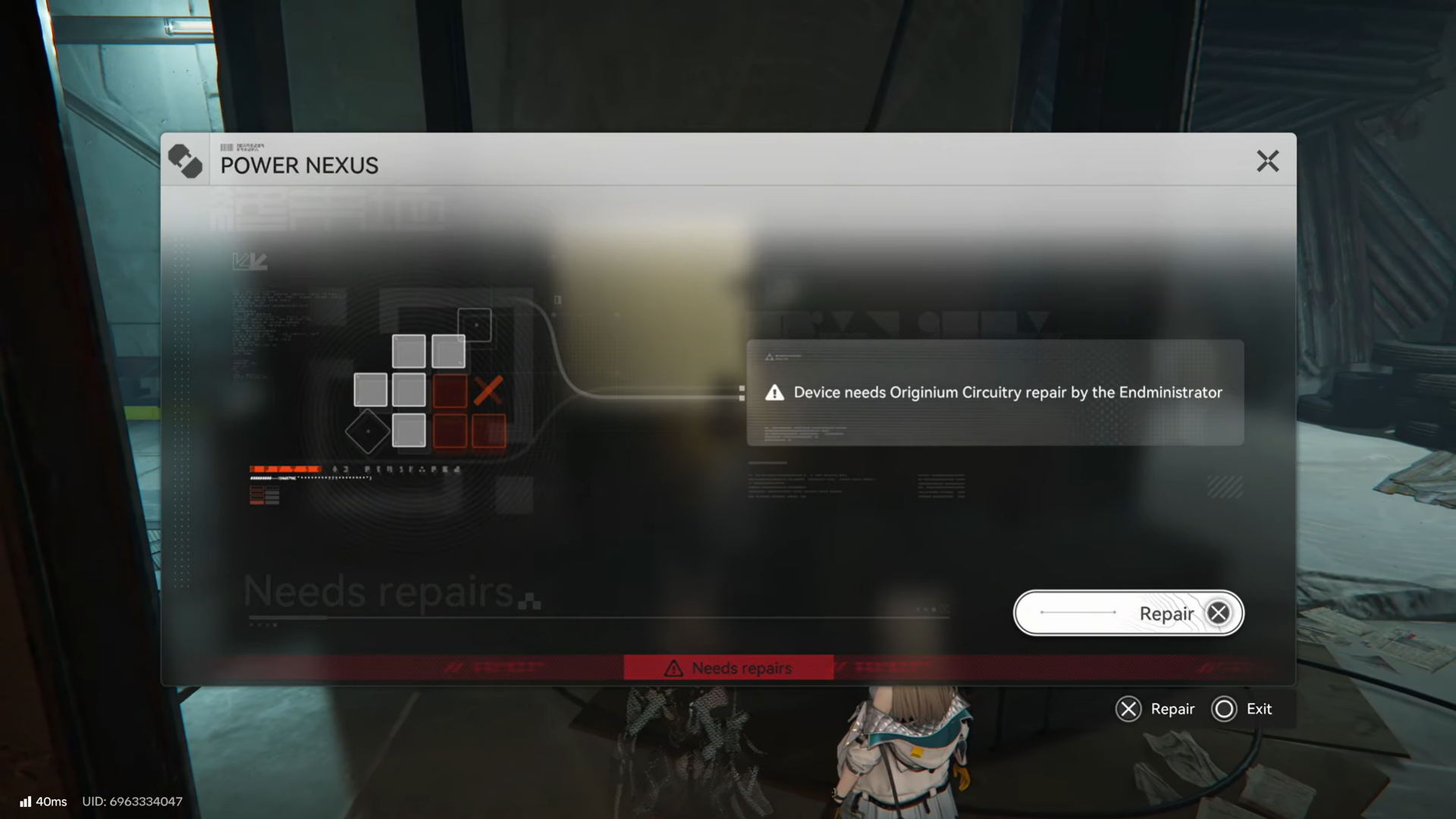
The elevator puzzle becomes available immediately after completing the Deep Management Post Rescue objective. Once the rescue concludes, interacting with the disabled elevator opens the puzzle interface. There are no enemies, timers, or penalties—this is a pure logic checkpoint designed to test pattern recognition rather than combat readiness.
Understanding how the elevator grid works
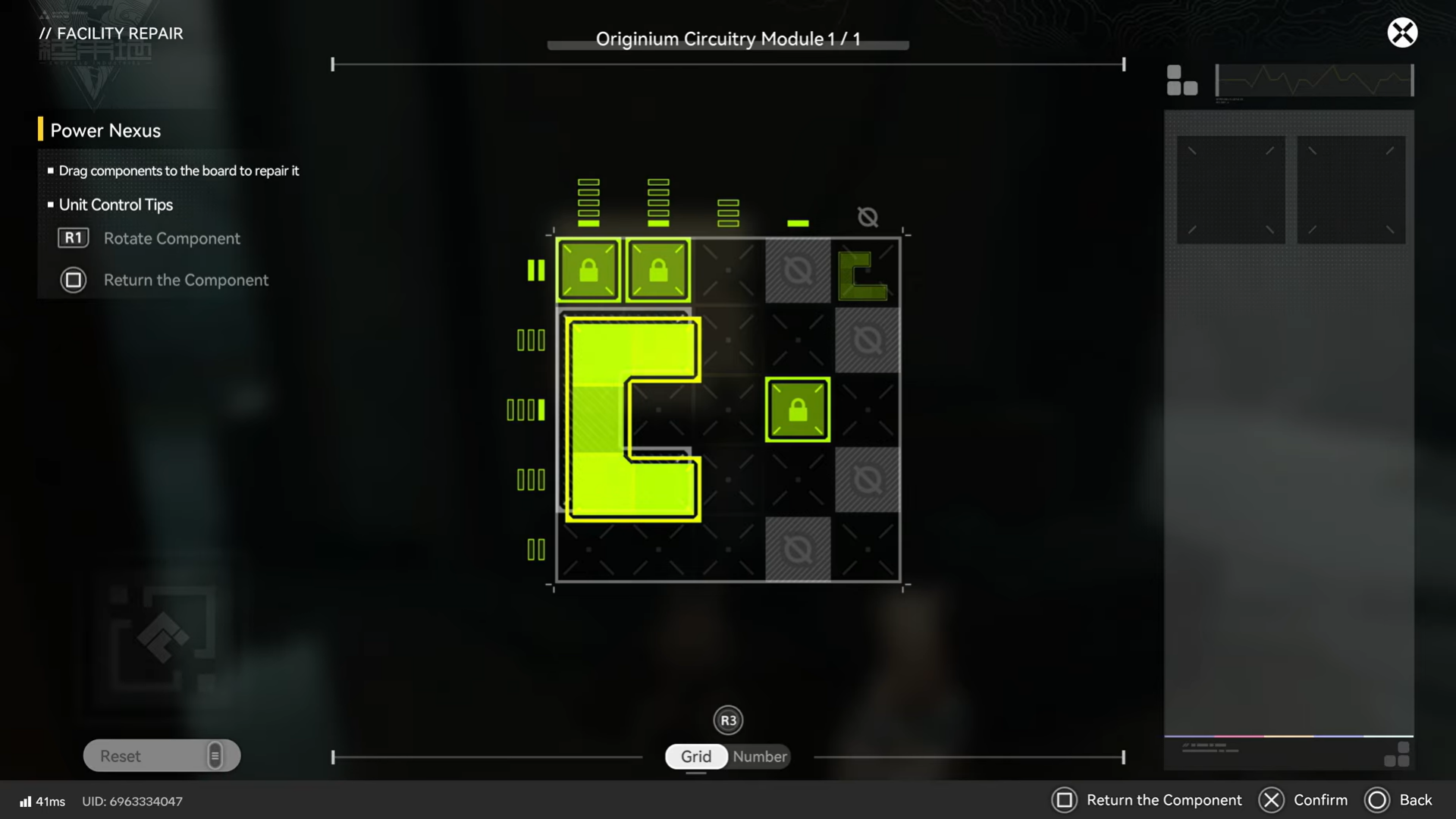
At first glance, the puzzle looks similar to a block-placement mini-game, but its logic is closer to number-grid puzzles.
The grid
You’re given a rectangular grid made up of empty squares. Your goal is to turn specific squares green by placing predefined shapes.
Row and column numbers
- Numbers at the top of the grid represent how many green tiles must appear in each column
- Numbers on the left represent how many green tiles must appear in each row
These numbers are absolute requirements, not minimums or maximums. A row labeled “5” must end with exactly five green squares.
Puzzle pieces
You’re given several shapes made of connected squares. These can be:
- Rotated freely
- Placed anywhere on the grid
- Overlapped with other shapes
Overlapping does not double-count tiles. A square is either green or not.
The win condition
The puzzle completes automatically once every row and every column matches its required green tile count exactly.
Why overlapping pieces are mandatory
Many players get stuck because they assume overlapping is optional or inefficient. In reality, the puzzle is designed so that at least one overlap is required.
Overlapping allows you to:
- Increase tile density in one row without increasing a column count
- Satisfy high-number rows while respecting low-number columns
- Fine-tune totals when you’re “one tile off”
Think of overlaps as a way to cancel out excess coverage, not waste it.
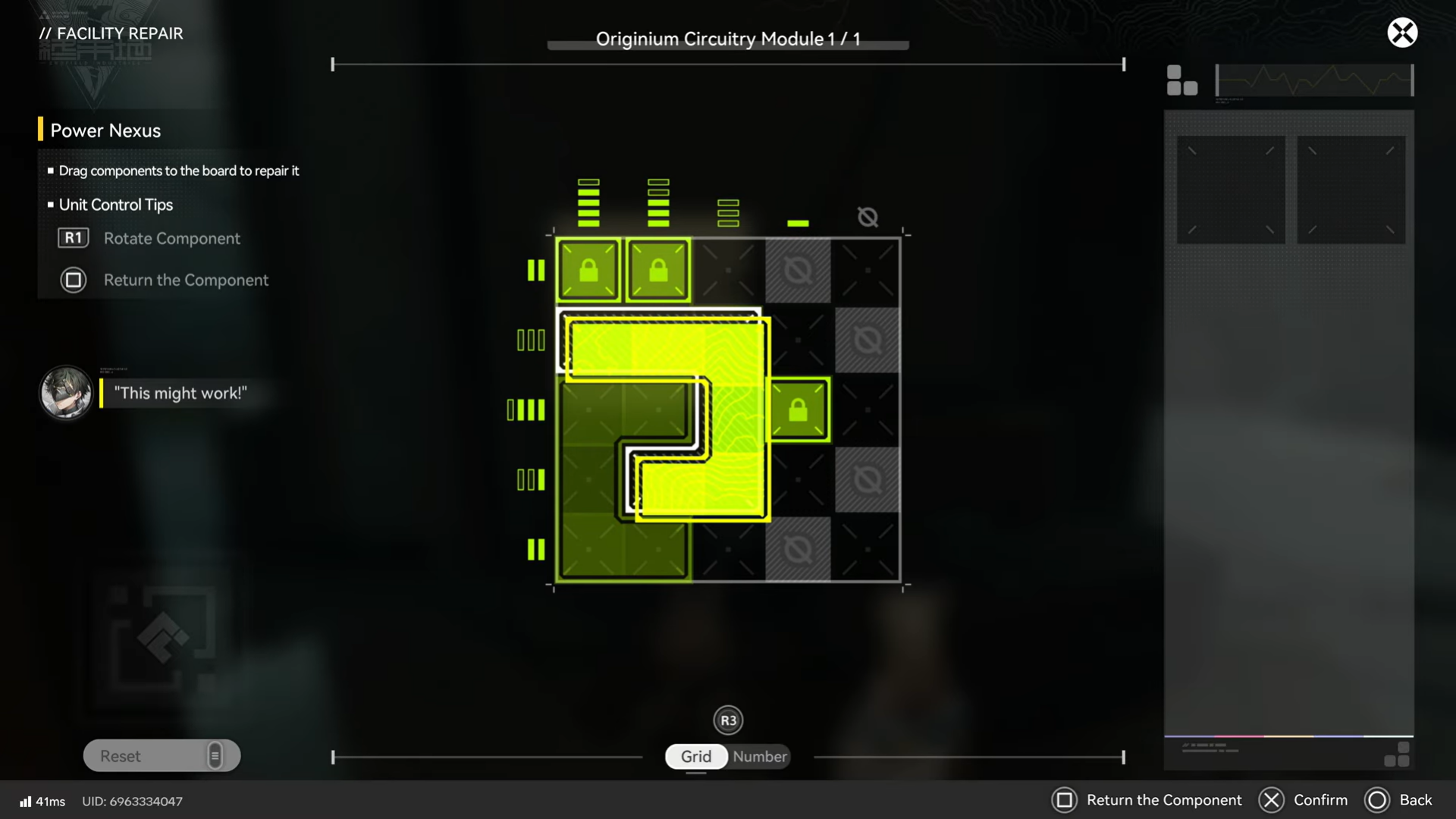
How to fix the elevator in Deep Management Post
Step 1: Scan the grid before placing anything
Start by reading all row and column numbers. Identify:
- Rows with very low numbers (they restrict placement the most)
- Columns with very high numbers (they need dense coverage)
This mental map helps avoid early mistakes.
Step 2: Anchor the largest shapes first
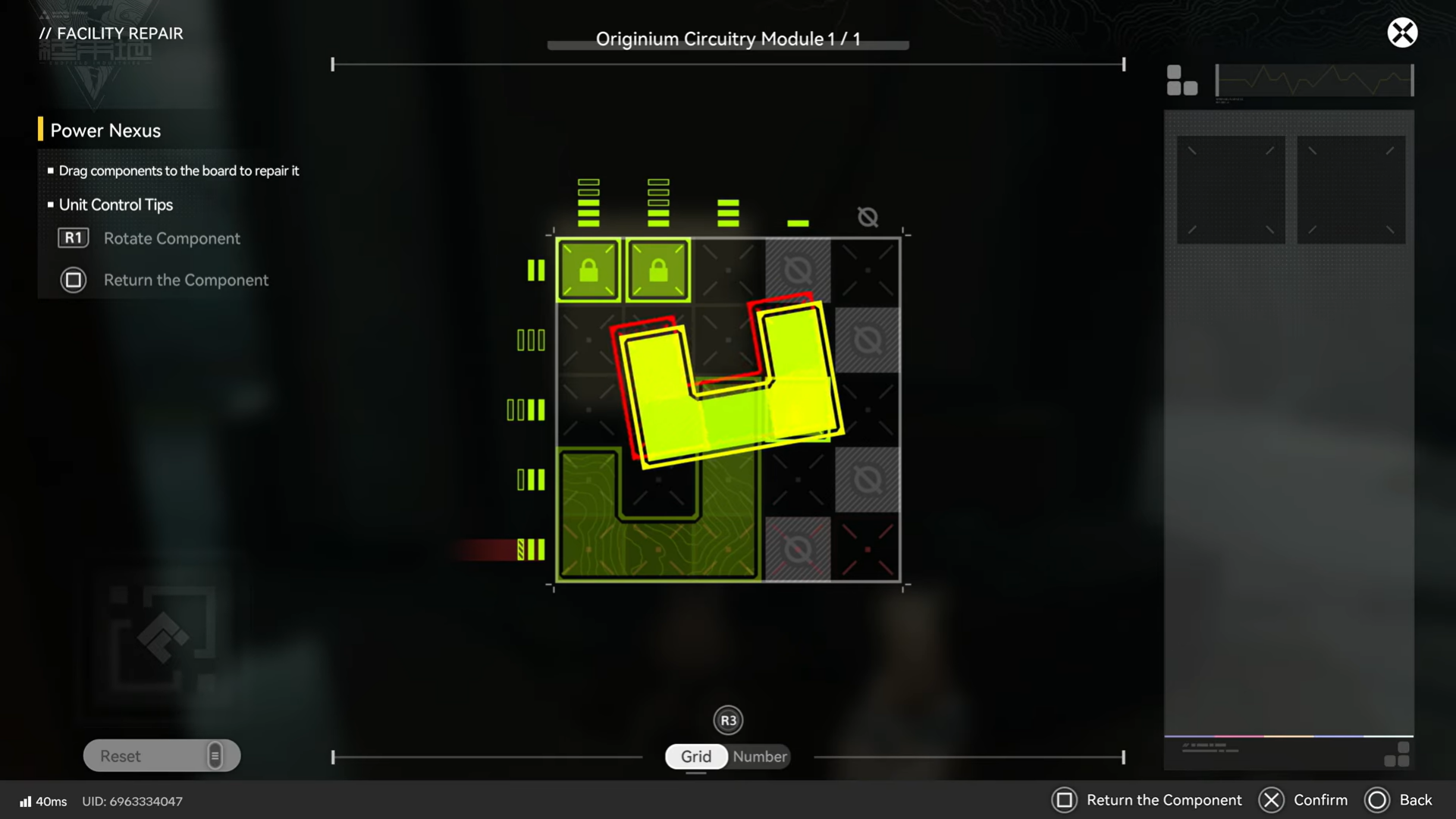
Large pieces have the fewest valid placements. Try rotating and positioning them so they contribute to:
- High-count rows
- High-count columns
At this stage, ignore overlaps—just focus on broad coverage.
Step 3: Check totals after every placement
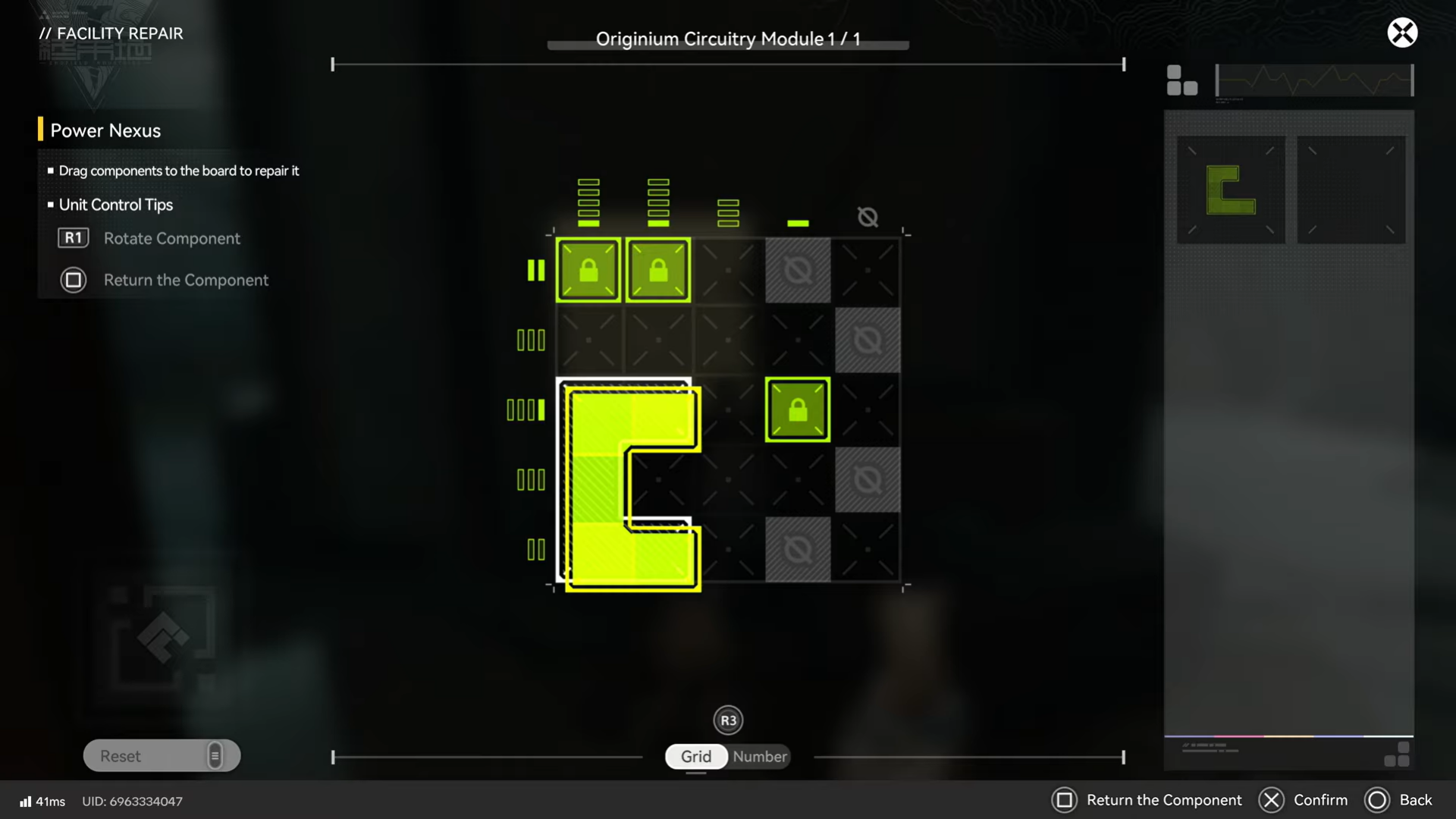
After placing a piece, quickly re-count affected rows and columns. If any line already exceeds its number, undo immediately. The puzzle is forgiving, so constant adjustment is expected.
Step 4: Introduce overlaps to correct overflows
When a row needs more tiles but a column is already full (or vice versa), overlapping becomes the solution. Place a shape so that:
- New tiles add coverage where needed
- Overlapping tiles avoid increasing completed lines
This is usually where the puzzle “clicks.”
Step 5: Resolve low-number rows last
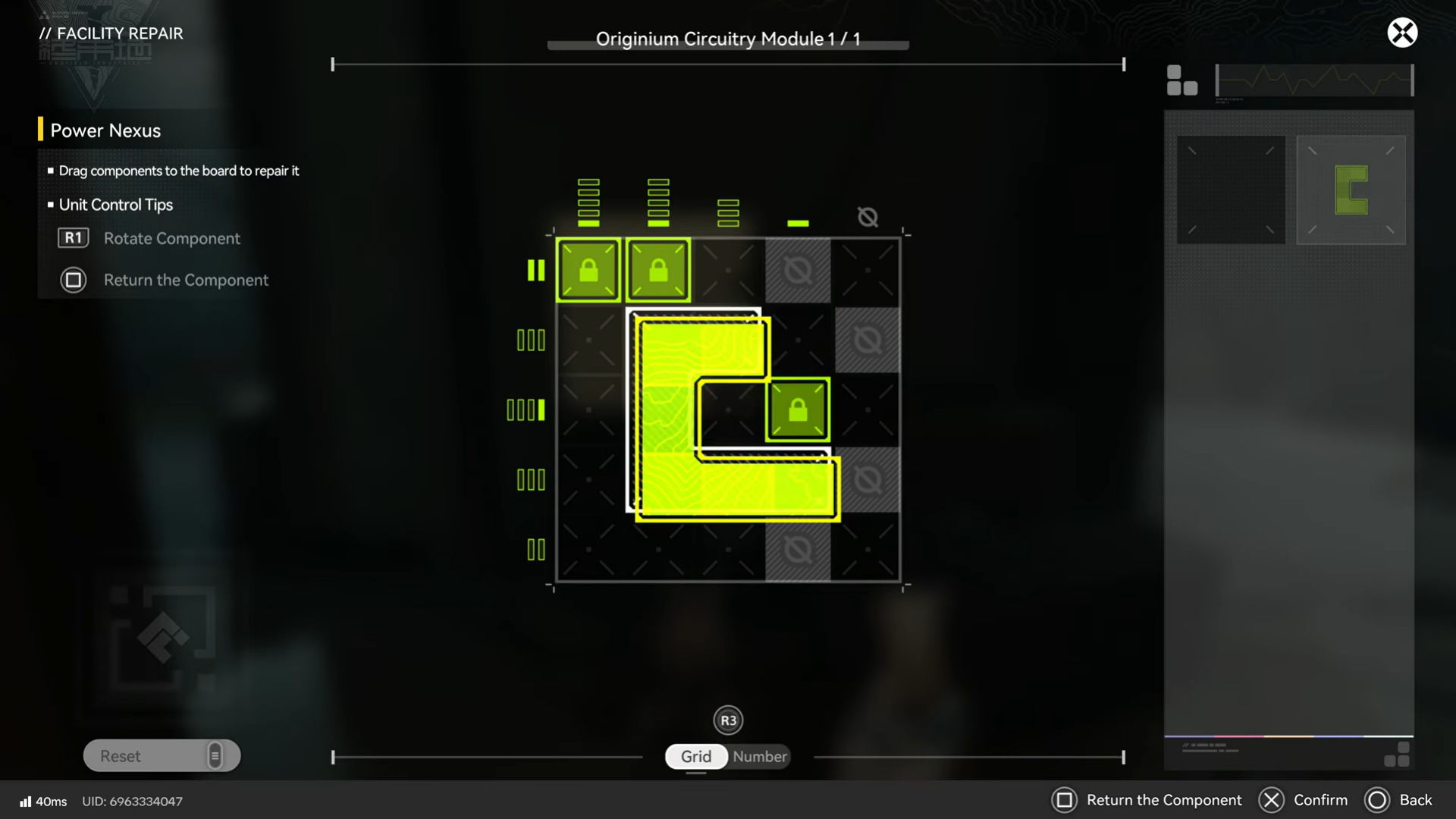
Rows or columns with small numbers (like 2 or 3) should be finalized near the end. They act as constraints that confirm whether your overlaps are correct.
Step 6: Final puzzle solution
Before confirming, manually verify:
- Every row matches its number exactly
- Every column matches its number exactly
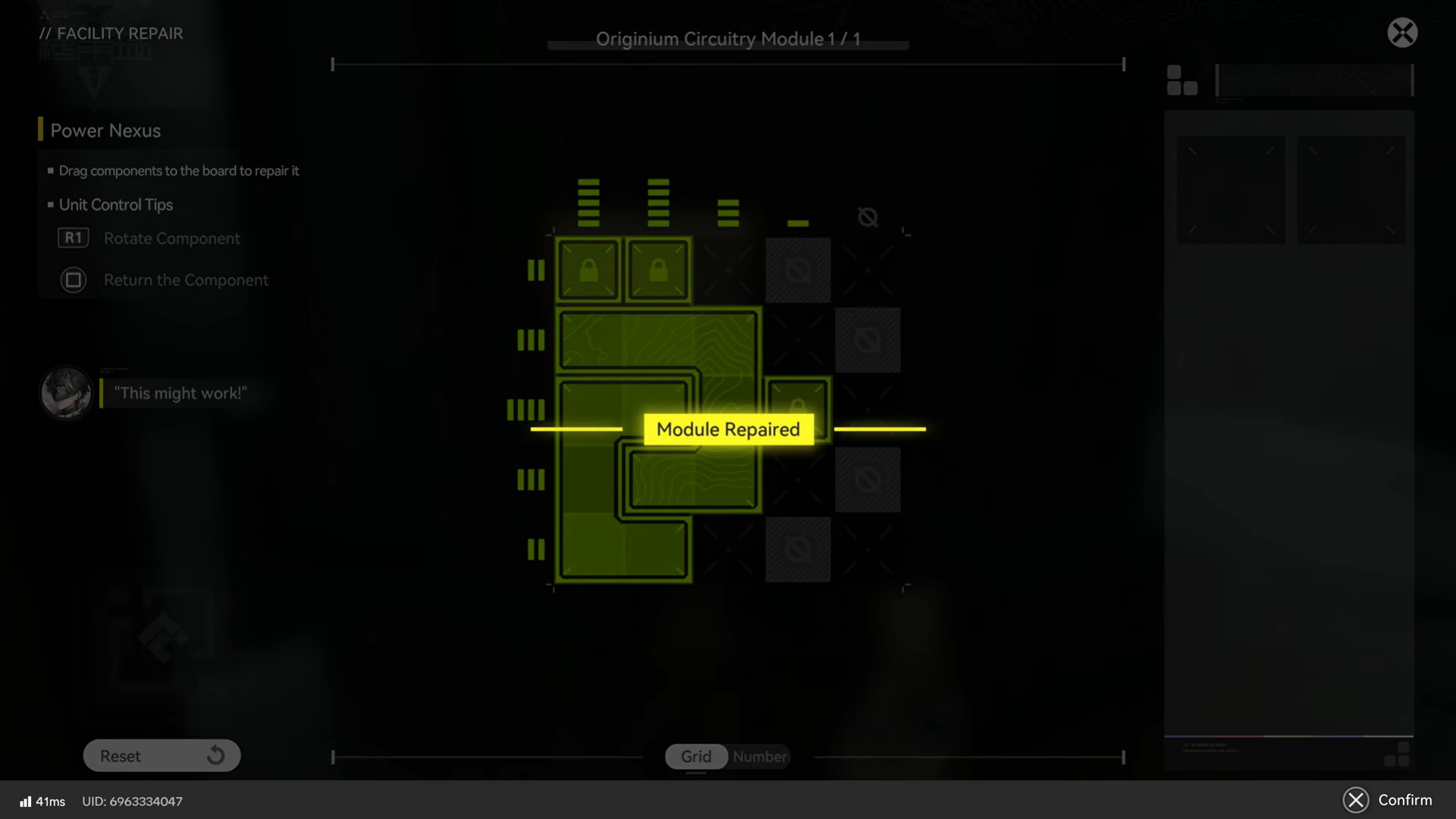
Once all values align, the elevator powers on automatically.
Common mistakes and how to avoid them
| Mistake | Why it causes failure |
|---|---|
| Avoiding overlap | Some layouts are mathematically impossible without it |
| Filling rows only | Columns overflow easily |
| Ignoring low-number rows | They restrict valid placements |
| Resetting too often | Small adjustments are faster than full resets |
Why this puzzle exists in Arknights Endfield
From a design standpoint, the elevator puzzle serves two purposes:
- It introduces players to overlap-based grid logic, which appears in later facility and systems-related mechanics
- It breaks up combat pacing after a story-heavy rescue sequence
The game deliberately allows unlimited retries to encourage experimentation rather than punishment.
What happens after fixing the elevator
Once solved:
- The elevator becomes fully operational
- You gain access to deeper facility sections
- No additional enemies or puzzles trigger immediately
This makes the puzzle a clean progression gate rather than a branching challenge.
Tips to solve it faster on repeat playthroughs
The Deep Management Post elevator puzzle looks intimidating at first, but it’s one of the most forgiving logic challenges in Arknights Endfield. Once you understand that overlapping is not a trick but a core mechanic, the solution becomes straightforward. Focus on exact counts, adjust incrementally, and let overlaps do the heavy lifting.
- Start with highest-number rows and columns
- Use overlaps early instead of “fixing later”
- Treat pieces as coverage tools, not fixed solutions
- Remember that visual neatness doesn’t matter—only numbers do
Thanks for taking the time to go through this Elevator Puzzle guide for Arknights Endfield. If it helped you understand things better, do share your thoughts, impressions, or doubts in the comments section. We keep a close watch and try to respond promptly to ensure you always get the support you need.