- What to know
- Stock Redistribution reference
- How to unlock Stock Redistribution (and start earning Stock Bills)
- Staple Goods vs Elastic Goods: the two ways Stock Bills “work”
- How to farm Stock Bills fast with the “buy low, sell high” daily loop
- Common mistakes that slow progress
- Rewards table (what Stock Bills farming “awards”)
- Stock Bills as a daily progression engine
What to know
- Stock Redistribution unlocks at Level 15, then a quest begins after a call; Lucky Carrot near The Hub starts the unlock flow.
- Stock Bills are the currency used in Stock Redistribution, and each region has its own variant (items require the matching regional Stock Bills).
- Staple Goods is a permanent “supply shop” that sells out when purchased; more items unlock as the Stock Terminal is upgraded.
- Elastic Goods is the stock-market-style mode where prices fluctuate daily; the core profit rule is buy low and sell high, including selling to friends for better prices.
In Arknights: Endfield, Stock Bills matter because they power the entire Stock Redistribution economy: upgrades, permanent shop purchases, and scalable daily profit via trading. With a tight daily routine (and smart friend-based selling), Stock Bills become one of the fastest ways to accelerate early and mid-game progression.

Stock Redistribution reference
| Item | Quick reference |
|---|---|
| Unlock requirement | Authority Level 15 |
| Where to start | The Hub (near Worker Dorms area in some guides), talk to Stock Redistributor Lucky Carrot |
| What happens early | Authorization/activation step costs 500 Stock Bills in the mission flow |
| What unlocks after | Stock Redistribution access; tutorial prompts; follow-up missions may appear depending on progress |
Stock Bills and Stock Redistribution in plain terms
Stock Redistribution is part of Regional Development Management and functions like a hybrid of a supply shop and a stock market. Stock Bills are the currency used inside this system, earned through trading and strengthened by better outposts and higher Development Level.
A key detail that prevents wasted time: every region has its own Stock Bills variant, and purchases are locked to the region’s currency (for example, Valley IV uses Valley Stock Bills, while other regions use their own).
What Stock Bills are used for
Stock Bills are primarily used for:
- Buying fixed inventory from Staple Goods (permanent items that sell out when bought)
- Upgrading Stock Terminals (which expands features and increases daily trading capacity)
- Funding trading loops in Elastic Goods (where Stock Bills are both the input and the profit output)
How to unlock Stock Redistribution (and start earning Stock Bills)
Stock Redistribution unlocks at Level 15. After reaching that milestone, a Stock Redistribution quest becomes available after a call, and Lucky Carrot near The Hub is the NPC used to start and progress the unlock instructions.
Step 1

Reach Level 15 as early as possible by completing node tasks and spending Sanity on Protocol Spaces.
Step 2
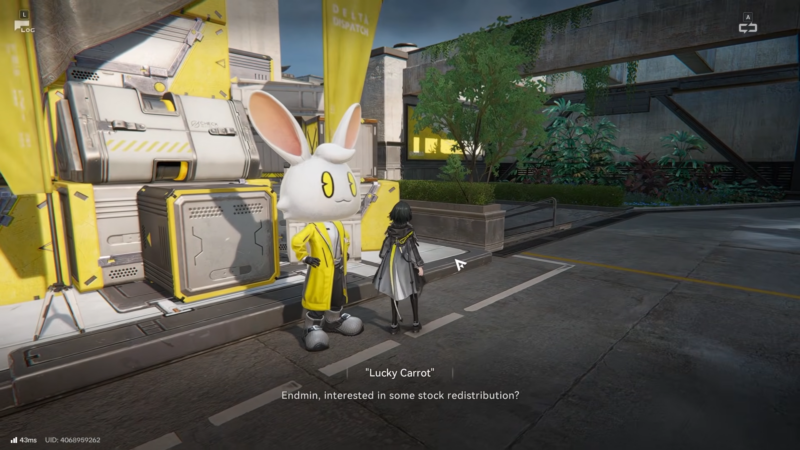
After the call triggers the quest, locate Lucky Carrot near The Hub and start the Stock Redistribution questline.
Step 3

Follow the quest instructions until Stock Redistribution becomes available, including interacting with the first terminal at The Hub (the quest-driven terminal that is hard to miss).
Step 4
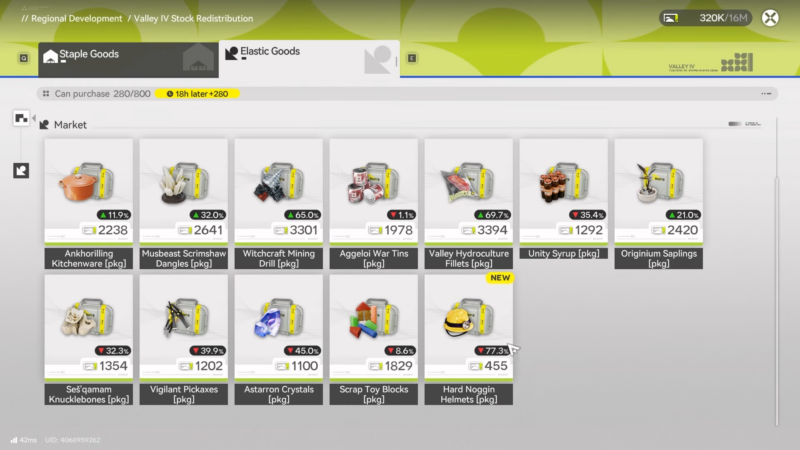
Confirm access to the terminal interface and identify the two core tabs/modes: Staple Goods (fixed shop) and Elastic Goods (market trading).
Staple Goods vs Elastic Goods: the two ways Stock Bills “work”
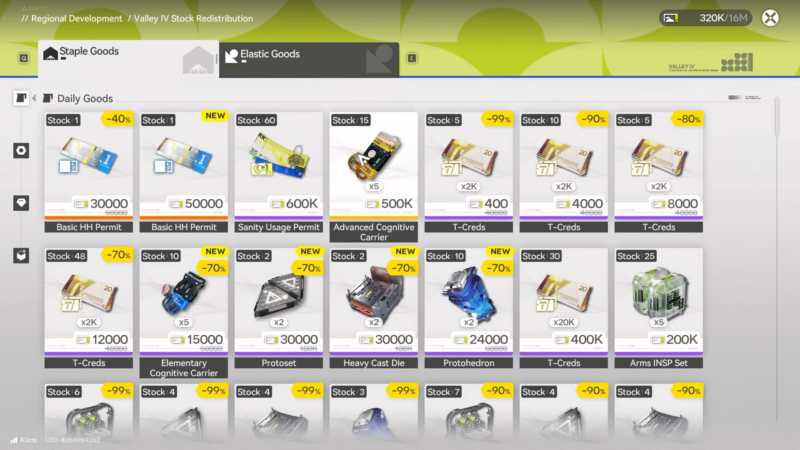
Staple Goods is a supply shop where fixed items are purchased with Stock Bills; items are permanent but can sell out once purchased. More items unlock as the Stock Terminal is upgraded, so buying priorities often change after each upgrade.
Elastic Goods is the profit engine. It’s a stock-market-style system where prices fluctuate and change every day; Stock Bills are earned by trading based on price differences and timing.
The core Elastic Goods rule set
Elastic Goods profits come from:
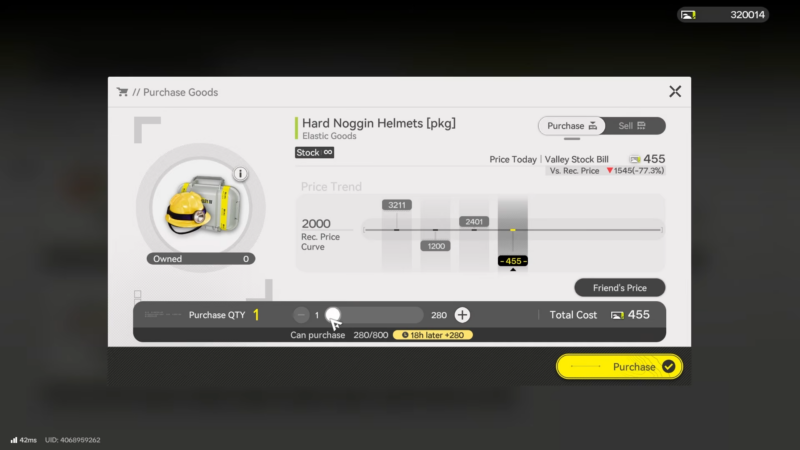
- Checking Total Cost and comparing it to the Recommended Price
- Buying when the item is “cheap” relative to the recommended baseline
- Selling later when the price rises (or selling to a better-priced friend market)
- Repeating daily because prices refresh every day
Friend trading is a major multiplier: selling to friends and checking their offered prices can improve profit, and having more friends increases the chance of finding a favorable sell price.
How to farm Stock Bills fast with the “buy low, sell high” daily loop
This is the tight routine that aligns with the video’s approach (market scanning, buying the cheapest item, then selling where the price is higher—often on a friend’s market).
Step 1
Visit a Stock Terminal and open Elastic Goods to scan for the best deals (items priced well below their recommended level).
Step 2
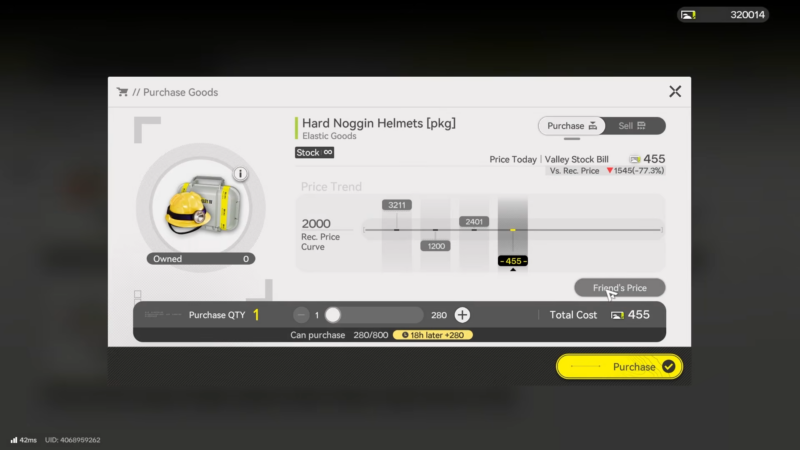
Buy the best-value item(s) within the daily purchase limit; do not spend everything if an upgrade is close or if better deals may appear.
Step 3
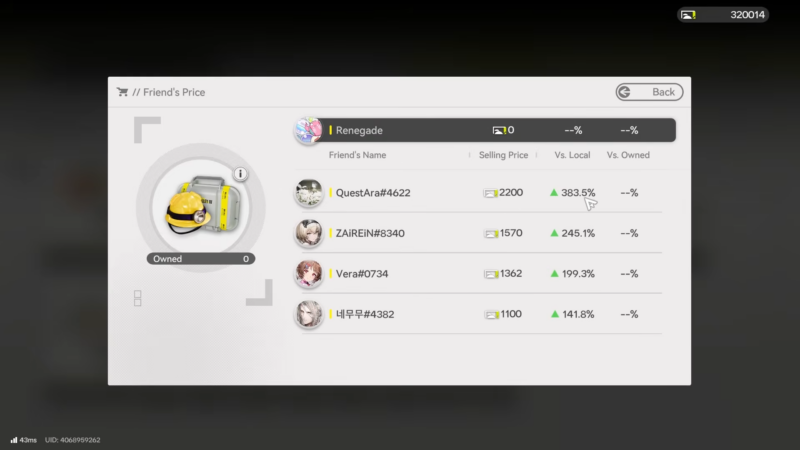
Check friend prices and sell to the highest offer when friend selling beats local selling; expand the friend list over time for more market variation.
Step 4
Reinvest profits into Stock Terminal upgrades first, because upgrades raise daily purchase/replenishment capacity and unlock more opportunities.
Step 5

Repeat each day after the price refresh, tracking a few commonly traded items to recognize what “cheap” looks like quickly.
Common mistakes that slow progress
- Spending Stock Bills down to zero and delaying terminal upgrades (upgrades increase the ceiling on daily profit).
- Ignoring friend selling opportunities (price variation across friends is a major edge).
- Treating Elastic Goods like a one-time shop instead of a daily refresh system.
Stock Terminal upgrades that matter (The Hub example)
Stock Terminal upgrades improve Stock Redistribution features, and it’s important to keep more than the required Stock Bills before upgrading so trading doesn’t stall. The Hub terminal provides a clear early-game example of how upgrades unlock Elastic Goods and increase daily limits.
| Terminal level | Stock Bill cost (Valley Stock) | What changes |
|---|---|---|
| 0 → 1 | 500 | Staple Goods supply restock |
| 1 → 2 | 4,500 | Staple Goods restock; unlocks Elastic Goods; Elastic Goods restock |
| 2 → 3 | 33,000 | Restocks; daily supplies purchase increase; daily supplies replenishment increase |
| 3 → 4 | 380,000 | Further improvements to restocks and daily limit-related upgrades |
Staple Goods purchases worth understanding (examples)
Staple Goods is “fixed inventory” and sells out when bought, so it’s best for targeted purchases rather than day-to-day profit. Items shown in the shop can include things like Basic HH Permit, T-Creds, exploration tools (like detectors/compasses), training materials, and small gift/utility items, with Stock Bill costs varying by item.
| Example item type | Example items that can appear | What it’s good for |
|---|---|---|
| Pull/permit style | Basic HH Permit | Limited availability purchase; depends on progression and priorities |
| Currency/material packs | T-Creds and other listed materials | Helps cover shortfalls without farming detours |
| Exploration tools | Valley detector/compass tools | Useful for exploration/quest utility when required |
| Training/utility | Training materials, gifts | Situational; buy when a specific need exists |
Rewards table (what Stock Bills farming “awards”)
Stock Bills farming is not a single quest with a fixed completion reward—its “reward” is the Stock Bills profit and what those bills unlock through purchases and upgrades.
| Activity completed | Rewards awarded after completion |
|---|---|
| Daily Elastic Goods trade cycle (buy low → sell high, including friend selling) | Net Stock Bills profit that can be reinvested into terminal upgrades and Staple Goods purchases |
| Stock Terminal upgrade | New Stock Redistribution features/unlocks (Elastic Goods access at early levels), plus higher daily purchase/replenishment capacity |
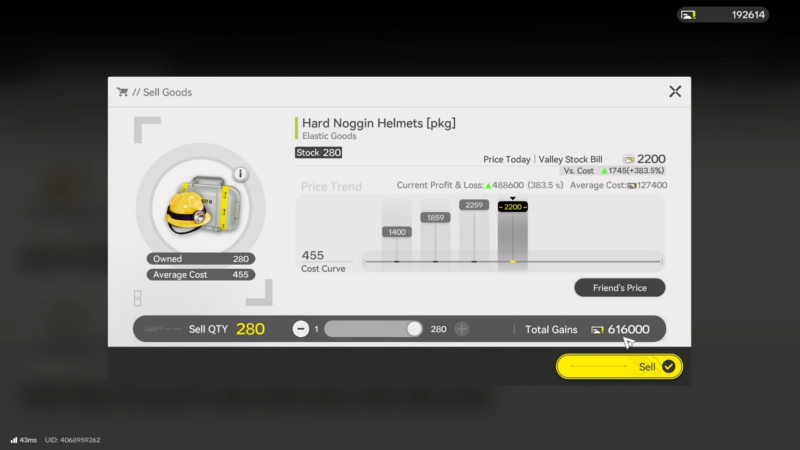
Stock Bills as a daily progression engine
Stock Bills are primarily a Stock Redistribution currency, and the fastest growth comes from Elastic Goods trading paired with friend selling and early Stock Terminal upgrades. Once the daily loop is established, Stock Bills become a consistent lever for accelerating purchases and expanding trading capacity.