What to know
- 5 Luck is neutral; every point above or below that changes how many times the game rolls and whether you pick the best or worst result.
- Positive Luck gives you advantage on rolls, making crits, event checks, and loot pulls more likely to go your way.
- Negative Luck gives you disadvantage, heavily punishing you on coin‑flip style checks and making bad outcomes more common.
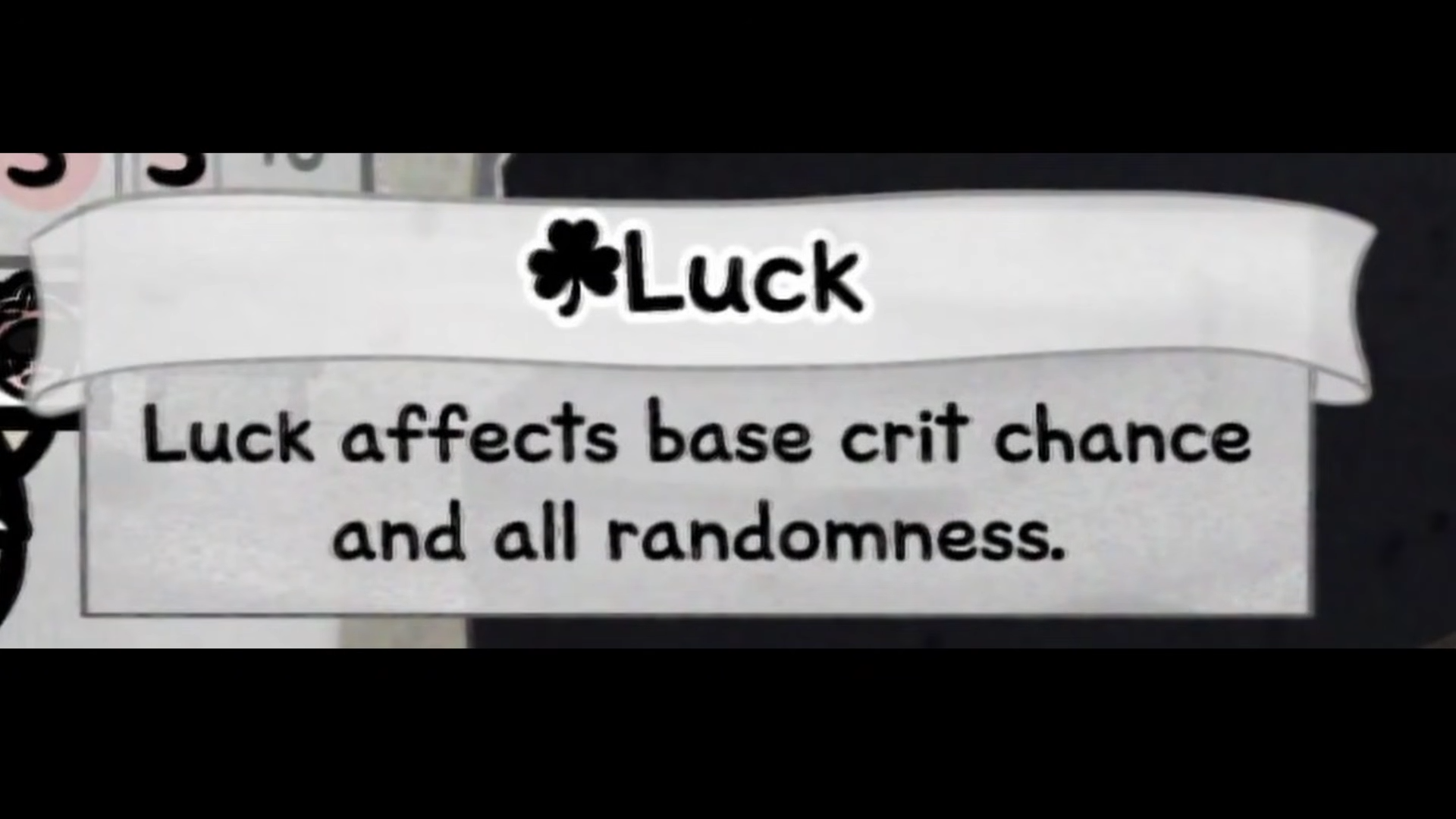
- Luck affects crit chance baseline and also touches loot tables, shops, and any system that uses weighted random selections.
In Mewgenics, luck can feel mysterious after only a few runs, but once you understand the math behind it, you can plan builds that squeeze far more value out of every random roll.
| Aspect | How Luck interacts |
|---|---|
| Neutral value | 5 Luck: one roll, no advantage or disadvantage. |
| Per point above 5 | +10% chance to roll one extra die and keep the best result. |
| Per point below 5 | +10% chance to roll one extra die and keep the worst result. |
| At 10 Luck | 50% chance to roll two dice, pick the best. |
| At 15 Luck | 100% chance to roll two dice, pick the best. |
| At 0 Luck | 50% chance to roll two dice, pick the worst. |
| Below –5 or above 15 | Likely adds a third die, exaggerating advantage or disadvantage further. |
| Main uses | Crit chance, event/stat checks, loot quality, item pools, shop inventory. |
| Tooltip summary | Affects base crit chance and all randomness in the game. |
How the core luck formula actually works
Luck in Mewgenics is built around rerolls rather than a flat percentage bonus, which is why even a couple of points can feel stronger than other stats.
At 5 Luck you are in a neutral state: whenever the game needs a random check that uses Luck, it rolls once and accepts the result.
For every point of Luck above 5, you gain a 10 percent chance for an extra roll and then the game keeps the better of the two results, effectively giving you advantage when Luck is high.
For every point of Luck below 5, you gain a 10 percent chance for an extra roll but this time the game keeps the worse result, giving you disadvantage as your Luck drops.
In practice, that means a small change in Luck bends the distribution of outcomes instead of simply pushing the percentage up or down in a linear way.
How luck changes your odds in real terms
To see what that actually does, imagine any Luck‑based check as rolling a number between 0 and 100 and comparing it to a threshold, like a 30 percent success chance.
- At 5 Luck, you get one roll and succeed 30 times out of 100 on average.
- At 6 Luck, you have a 10 percent chance of rolling twice and keeping the better roll; that nudges your success rate to about 32.1 percent on that same 30 percent check.
- At high Luck, the effect becomes most visible around coin‑flip situations: at 15 Luck, a 50 percent check effectively becomes about 75 percent because you are always rolling twice and keeping the best result.
The flip side is brutal when you go negative: at –5 Luck you always roll twice and keep the worst result, which drags that same 50 percent coin flip down to 25 percent, and if extra dice are added deeper into the negatives it can sink as low as around 12 percent with three dice.
Low‑base‑chance events (like 1 percent or 5 percent rolls) gain the biggest relative boost from advantage, even though the absolute increase is still small, so Luck is especially good at making rare things slightly less rare without completely breaking them.
How luck affects critical hits
In the stat screen, Luck is described as affecting your base crit chance along with other randomness, but the precise base crit number is not exposed.
Internal data files suggest that crit rate starts from a default value and then adds whatever you get from stats and other modifiers; however, you can see crits even without any obvious crit bonuses, so the true baseline is clearly non‑zero even if some files list it as zero by default.
Luck sits on top of this by feeding into crit chance rolls like any other Luck‑driven check, which means that at high Luck your crit odds on every eligible attack are rolled with advantage.
That leads to two big takeaways for your runs:
- Builds with frequent hits (multi‑hit skills, ranged attackers, or anything that swings often) scale extremely well with high Luck because every extra roll can turn a normal hit into a crit.
- Crit‑synergy passives and items stack multiplicatively in practice with Luck, since Luck boosts the chance to trigger those crit‑dependent effects in the first place.
How luck interacts with events and stat checks
Outside of combat, Luck is constantly involved in background checks the game uses to decide how events resolve.
When you see optional events, stat gates, or situations where a cat might gain a positive quirk, a nasty disorder, or some other swingy effect, the game is almost always performing a hidden roll that can use Luck.
At positive Luck, you are effectively being offered second chances to pass these checks, while at negative Luck you are more likely to whiff them and land on the harmful outcomes instead.
Because the advantage effect is strongest around mid‑range probabilities, coin‑flip moments are where you will feel the stat most: a 50:50 can start to feel heavily weighted in your favor with good Luck or terrifyingly stacked against you when you let Luck slip too low.
How luck shapes loot, item pools, and shop inventory
Under the hood, many of Mewgenics’ loot and shop systems are built from weighted item pools, and comments in the game’s code explicitly note that these pools are sorted from worst to best so that Luck can reshape the distribution.
Any time the game is choosing from a pool with weights, Luck can grant extra pulls and then pick from the better outcomes, meaning high Luck pushes you toward stronger gear, better consumables, and more valuable rewards over the course of a run.
Shop inventories, chapter rewards, and treasure pools all have references that indicate Luck is taken into account when rolling what you see, so your stat here is not just about combat; it influences the strategic layer of whether good items even appear for you to buy or pick up.
That also means negative Luck is more dangerous than it looks: you are not only failing more checks, you are also more likely to be stuck with weaker options when it comes time to upgrade your cats.
How to build around high luck
If you want to lean into Luck, you should think of it as a stat that improves the quality of everything your cats roll for rather than simply a crit toggle.
How to decide when to prioritize luck
You generally want to push Luck higher when:
- Your build relies on frequent attacks or multi‑hit moves, since more rolls means more crits over time.
- You have abilities, passives, or items that scale off crits or on‑hit effects, so each crit you gain from Luck is worth more than raw damage.
- You want more consistent event outcomes, especially on higher difficulties where bad disorders or failed checks can end a run.
- You care about long‑term scaling from loot quality, because advantage on item pools adds up over dozens of fights.
On the other hand, you can afford to deprioritize Luck when you are piloting slower, tank‑oriented cats that lean more on raw health, armor, and reliable utility rather than RNG‑driven spikes.
How to avoid the trap of negative luck
The reroll system makes negative Luck feel deceptively manageable at first, but its impact grows quickly as you drift away from the neutral 5.
Try to avoid stacking gear or traits that push you deep into the negatives unless you are absolutely certain the trade-off is worth it; even dropping to around 0 Luck already hits your 50:50 checks noticeably, and going lower can hollow out your whole run’s consistency.
Because advantage and disadvantage are applied on top of whatever base chances the game uses, even small penalties are magnified on those midrange checks that show up constantly during exploration and combat.
Keeping your key carries at or above neutral Luck is a simple rule that will stop many invisible problems before they start.
How to think about multiple dice and extreme luck values
The known formula from the developers covers the first layer clearly: every point away from 5 Luck adds a 10 percent chance to roll a second die and pick best or worst depending on the sign.
There are strong hints that this structure extends beyond the 5–15 and 5 to –5 bands by adding a third die when you go far enough into positive or negative territory, which would massively exaggerate outcomes.
With three dice and advantage, a 50 percent check can climb to roughly 87.5 percent, while with three dice and disadvantage it effectively crashes toward the low teens on that same coin flip.
Even though the exact thresholds for when the third die kicks in are not fully locked down yet, the takeaway for you is straightforward: extreme Luck values will make your run feel wildly different, either in your favor or against you.
How to integrate luck into your overall stat planning
When you plan a team, it helps to think of Luck as the stat that smooths or sharpens randomness, working alongside more direct stats like damage, health, and speed.
On most cats you will get the best results by balancing Luck around a target rather than maxing it blindly: enough to gain consistent advantage on the checks that matter to that cat, but not so much that you sacrifice core survivability or utility stats.
High‑impact roles like crit‑focused damage dealers, event‑facing explorers, or shop‑dependent scalers gain the most from being pushed above the neutral point, while backline support can often sit closer to 5 without issues.
Thinking in terms of which cats actually interact with the most rolls per turn or per floor is a helpful way to decide where your limited Luck boosts should go.
Luck in Mewgenics is more than just a number on your character sheet; it is a reroll engine that quietly biases almost every random system in the game toward better or worse outcomes depending on how you build.
By understanding that each point away from 5 changes how many dice you roll and whether you keep the best or worst results, you can make smarter decisions about when to chase high Luck and when to settle for neutral stability.