What to know
- Pull the choke fully before starting to enrich the fuel mix and stabilize the cold engine.
- Activate max blower and direct airflow right to defrost the windshield quickly.
- Wait 2-4 minutes until the temp gauge moves and ice clears before driving.
- Push choke back in once warm to save fuel and prevent damage.
In My Winter Car, warming up your starter car properly keeps your body temperature stable, clears frosty windows, and ensures reliable driving on icy roads. You face harsh survival mechanics where a cold engine leads to stalling, hypothermia, or worse. So it’s well worth knowing how long should you warm your car before heading out.
| Aspect | Details |
|---|---|
| Ideal Warm‑Up Time | 2–4 minutes idling until the temperature gauge starts rising |
| Choke Position | Fully pulled out at start, then gradually retract |
| Heater Settings | Blower on max (position 2), airflow fully to windshield |
| Signs It’s Ready | Clear windshield, moving temp needle, stable idle |
| Risks of Skipping | Engine stalling, poor visibility, hypothermia |
Preparing your Satsuma for cold starts
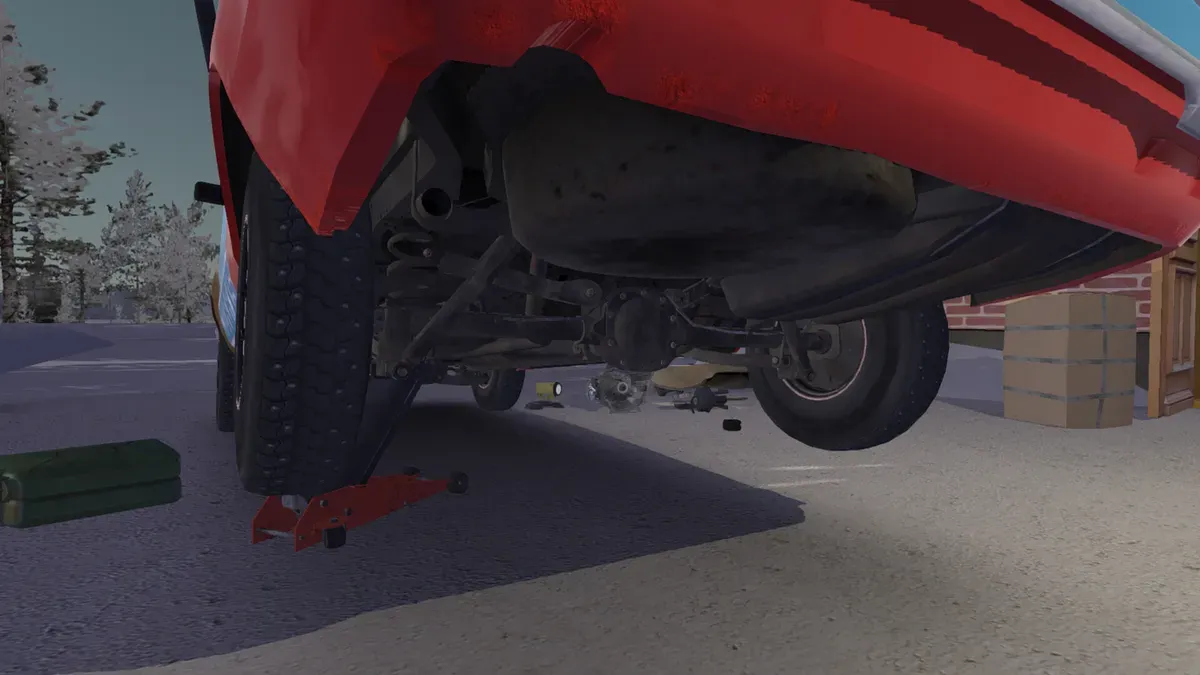
Before firing up the engine, unplug the block heater cord from the front grille to avoid ripping it out when you drive. Enter the car, close doors to trap emerging heat, and monitor your body temp gauge—pink means you’re getting too cold.
How to start and initially stabilize the engine
Follow these detailed steps to get the engine running in sub-zero conditions.
Step 1
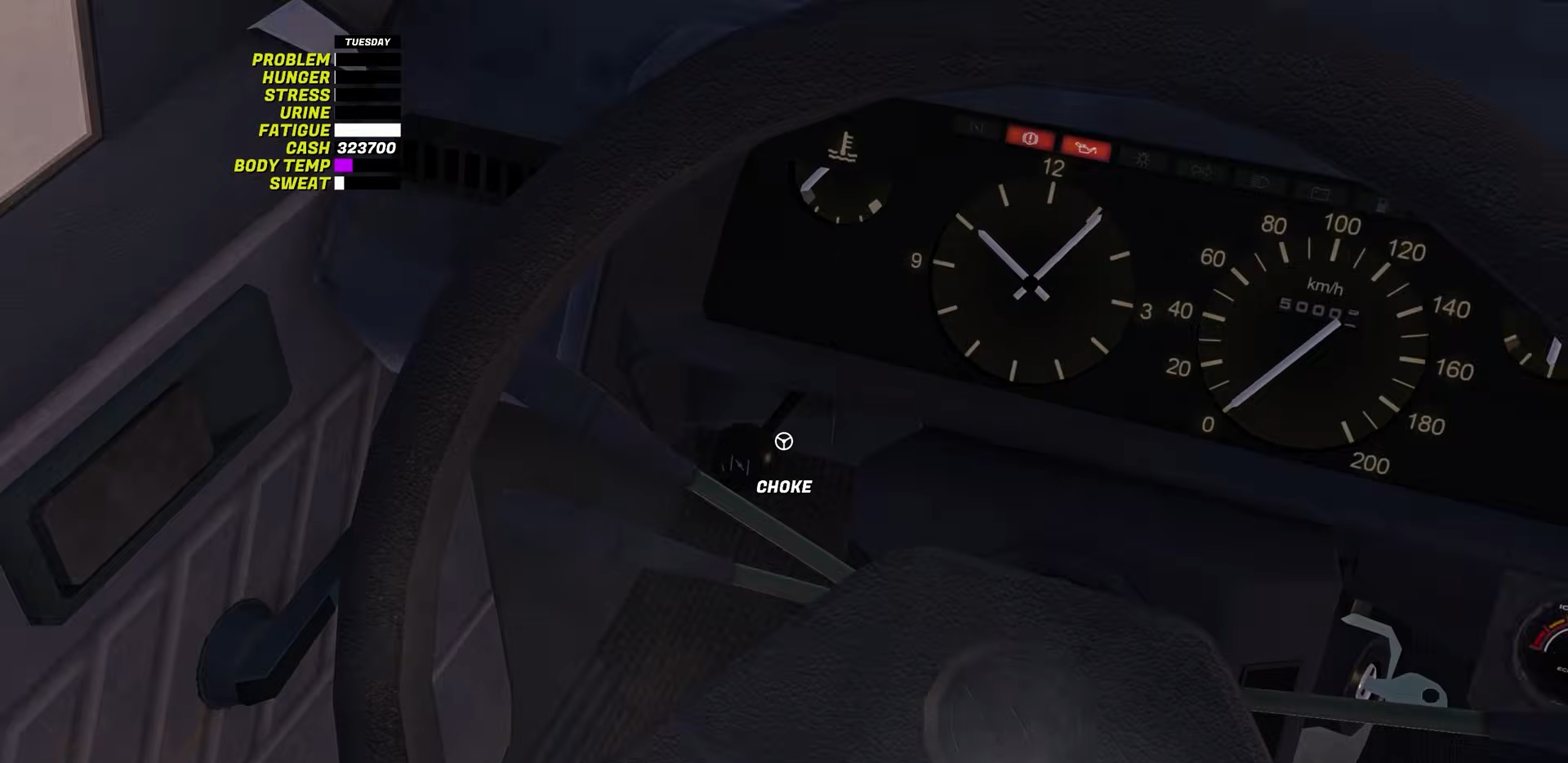
Pull the choke lever all the way out to enrich the fuel-air mixture for cold starts.
Step 2
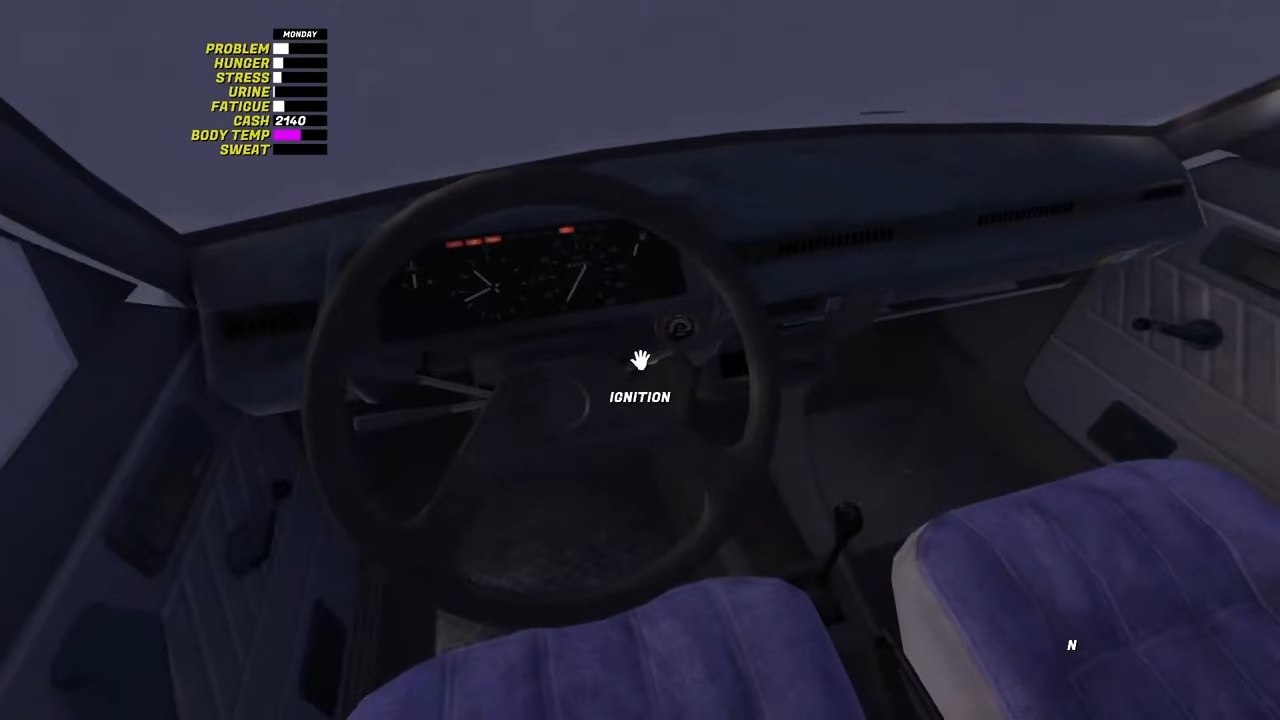
Turn the ignition key and crank until the engine fires; gently tap the accelerator (W key) if it struggles or RPMs drop.
Step 3
Once idling roughly but steadily, avoid heavy throttle—let it settle naturally.
How to activate defrost and cabin heat
Maximize the heater system right after starting to combat frost and chill.
Step 1
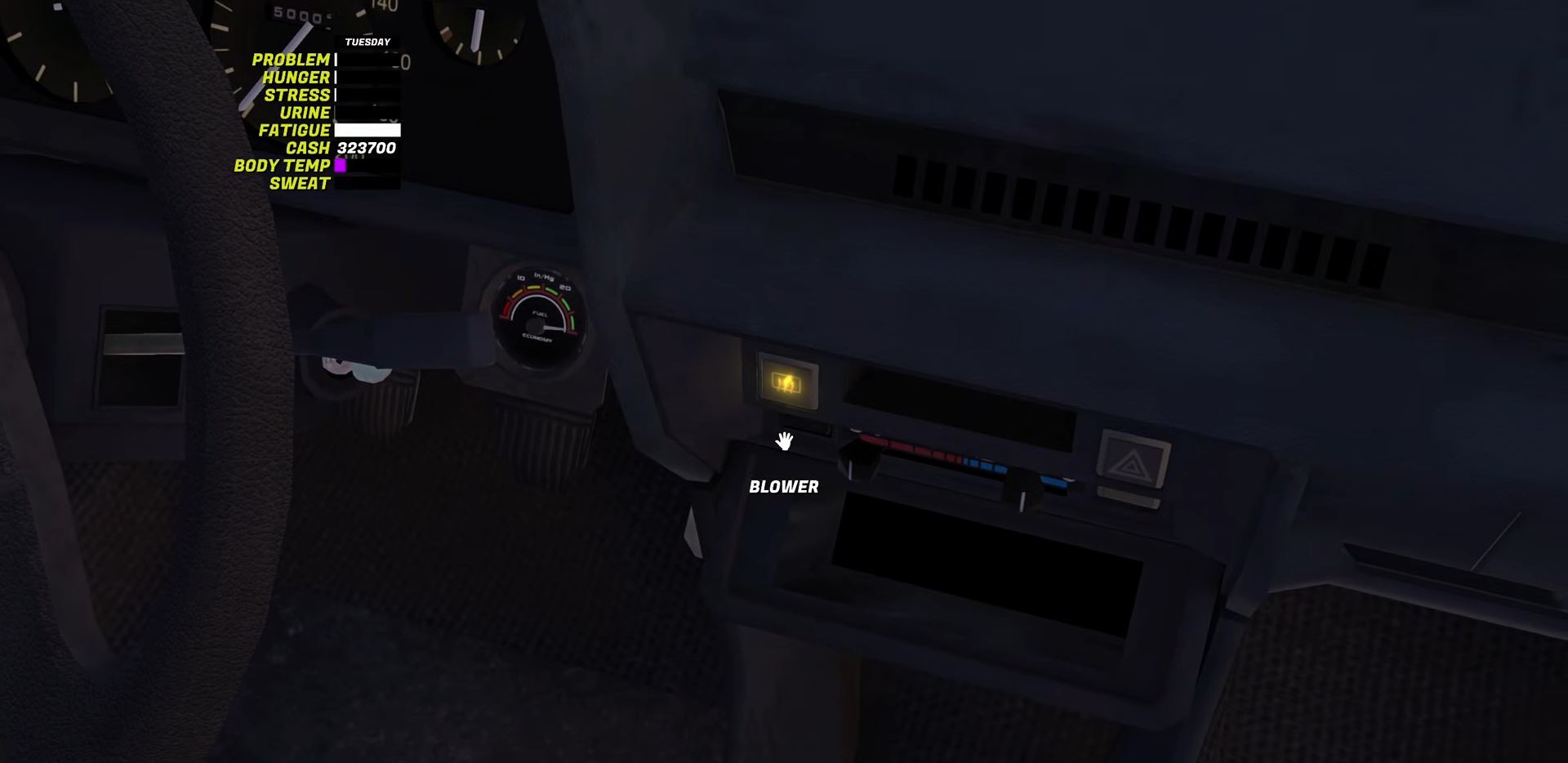
Click the blower knob twice to position 2 for maximum fan speed.
Step 2
Slide the direction lever fully right to blast air onto the windshield.
Step 3
Turn the rear window defroster on for mirror visibility.
Step 4
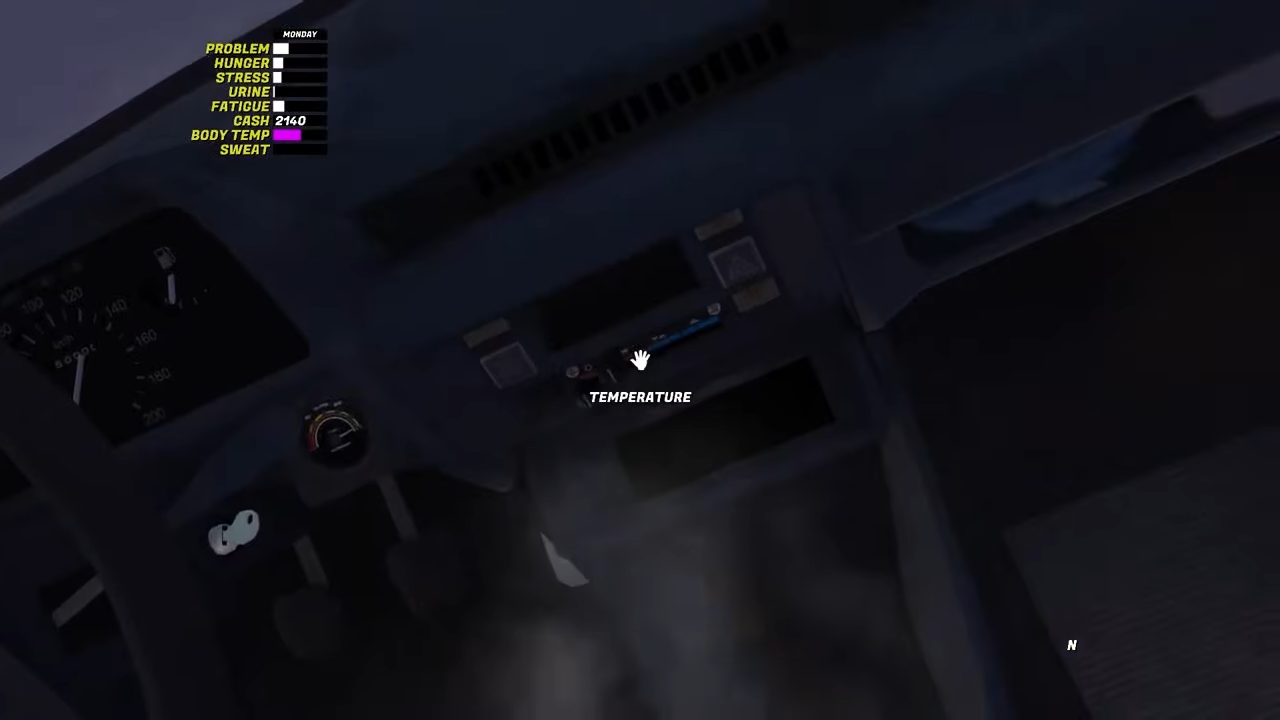
Set temperature knob to red zone (max hot) once coolant warms.
Monitoring progress and when to drive
Watch the dashboard temp gauge—it starts low but climbs after 2-4 real-time minutes of idling. Scrape stubborn ice manually by left-clicking and moving your mouse on the windshield.
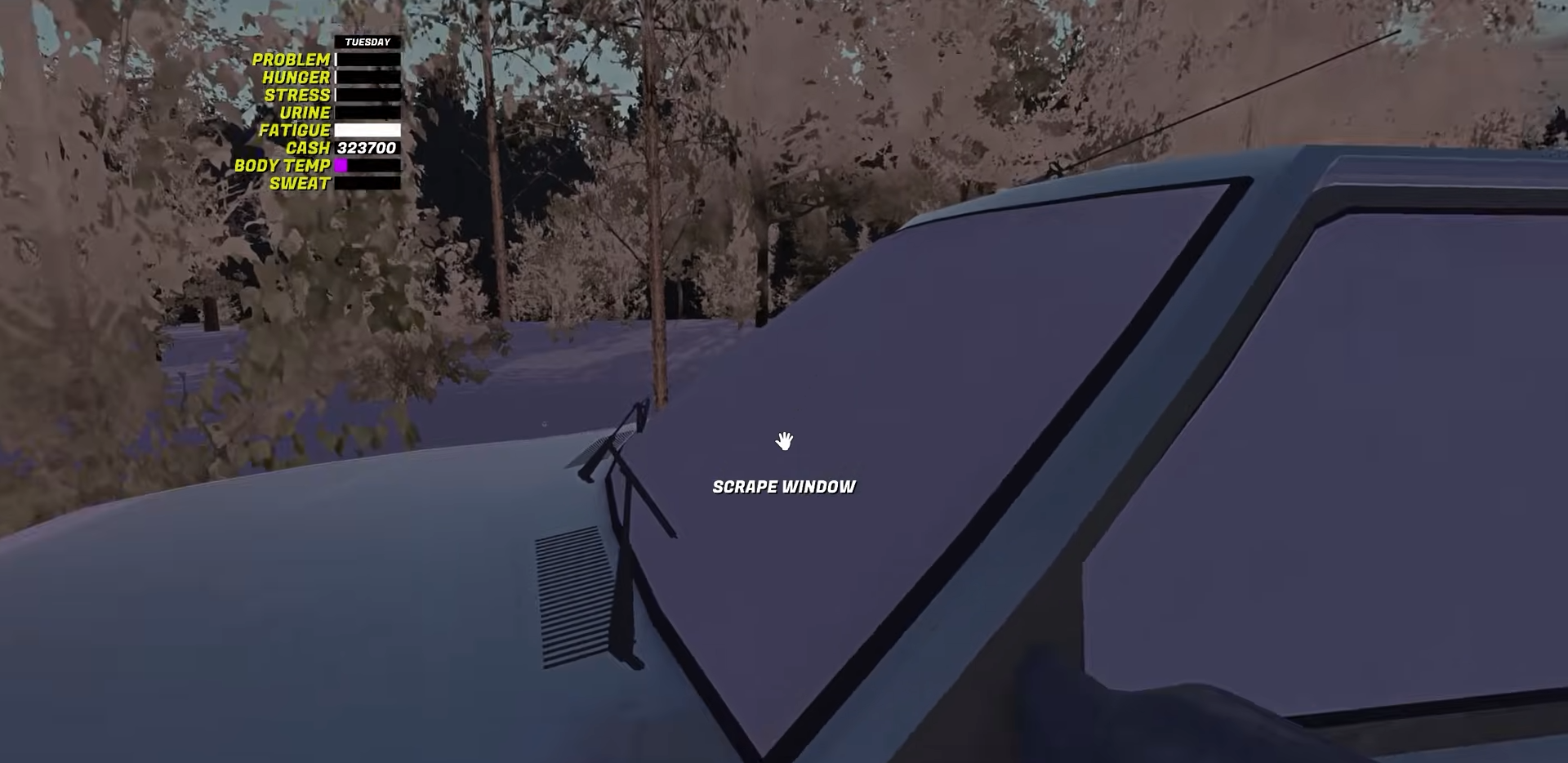
Your body temp stabilizes as cabin heat builds, but doors must stay closed. Driving too soon risks spinning out on uncleared ice.
| Issue | Fix |
|---|---|
| Engine won’t warm | Check the thermostat (buy a new one for ~60 mk at Fleetari). Drive gently with partial choke. |
| No cabin heat | Ensure the blower is on and let the engine run for 5–10 minutes before expecting heat. |
| Frost persists | Manually scrape the windshield, set defrost to max, and wait the full 2–4 minutes. |
| Stalling post‑start | Use light throttle taps and keep the choke fully out at startup. |
Managing longer warm-ups for project cars
The starter Satsuma warms faster, but your custom Rivett needs more time or load (gentle driving) if the thermostat fails. In extreme cold (-40+), plug in the block heater overnight to prevent oil freeze. Idling beyond 4 minutes wastes fuel without gain—drive easy to finish warming.
Mastering 2-4 minutes of proper warm-up turns freezing frustration into confident snowy adventures—stay patient, monitor gauges, and you’ll conquer My Winter Car’s brutal cold.