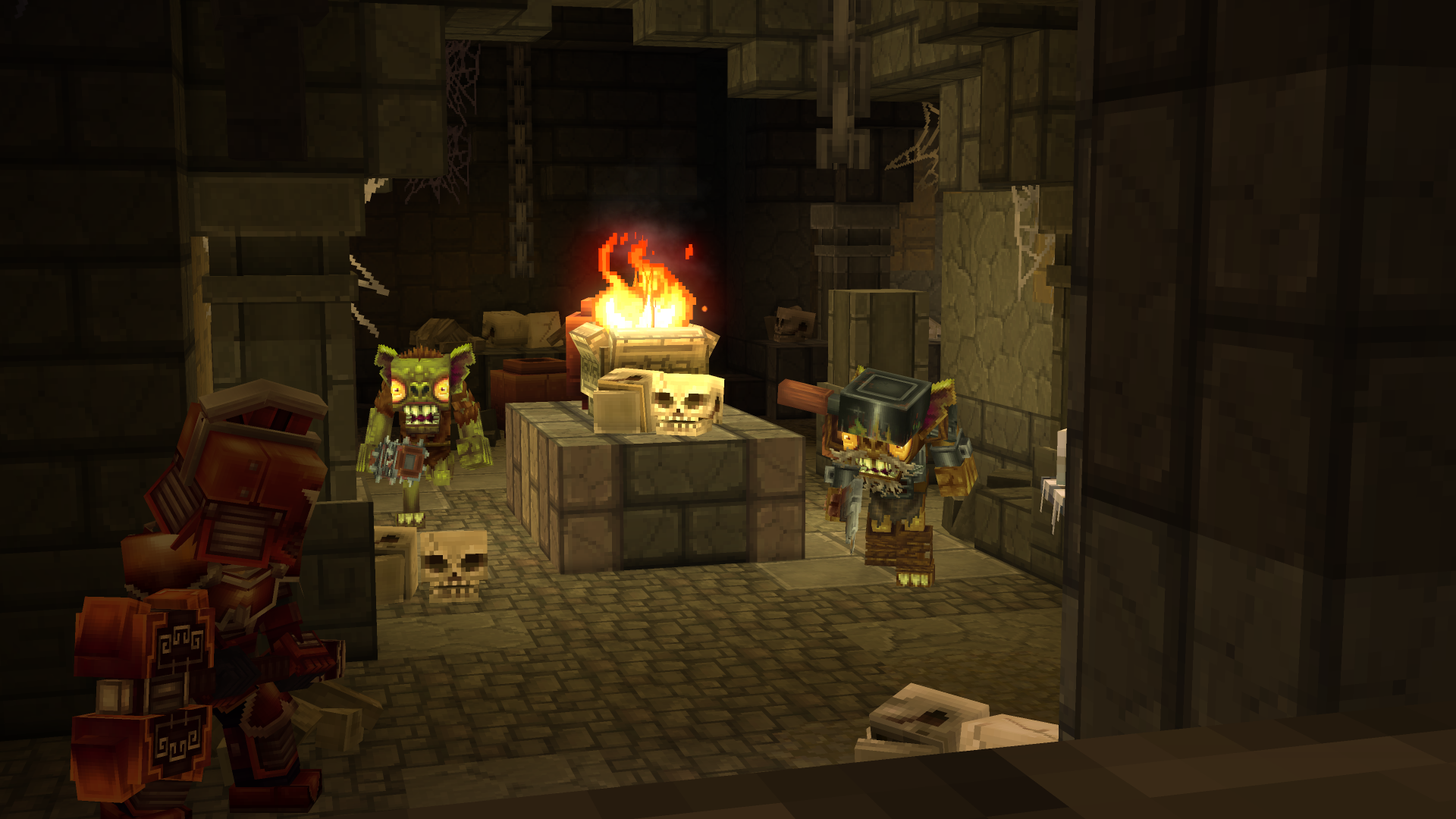
What to know
- The Salvager’s Workbench returns 20–30% of original materials from tools and gear.
- Item durability does not affect salvage returns.
- You can double rubble output by converting cobblestone to slabs first.
- Many myths about logs, leather, and magic staffs are incorrect.
In Hytale, progression is tied closely to material management. The Salvager’s Workbench appears straightforward at first glance, but its mechanics are deeper and occasionally counterintuitive. When used correctly, it becomes one of the most powerful early-to-mid game utility stations for material recovery, arrow production, and resource recycling. When misunderstood, it leads to wasted time and inefficient crafting loops.
Hytale Salvager’s Workbench overview
| Feature | Details |
|---|---|
| Unlock Requirement | Level 2 Crafting Bench |
| Crafting Materials (Tier 2 Bench) | 30 Copper, 20 Iron, 20 Linen Scraps |
| Workbench Craft Cost | 6 Iron + Wood + Stone |
| Resource Return Rate | 20–30% of original materials |
| Durability Impact | No effect on returns |
| Salvageable Materials | Stone types, tools, armor, select weapons |
The Salvager’s Workbench does not fully refund materials. Instead, it returns a fraction, typically rounded down. However, understanding rounding mechanics and transformation chains allows you to maximize efficiency.
Unlocking the Salvager’s Workbench
To craft the Salvager’s Workbench, you must first unlock a Level 2 Crafting Bench. This upgrade requires 30 copper, 20 iron, and 20 linen scraps. Once the Tier 2 bench is placed, crafting the Salvager’s Workbench itself requires additional iron, wood, and stone.
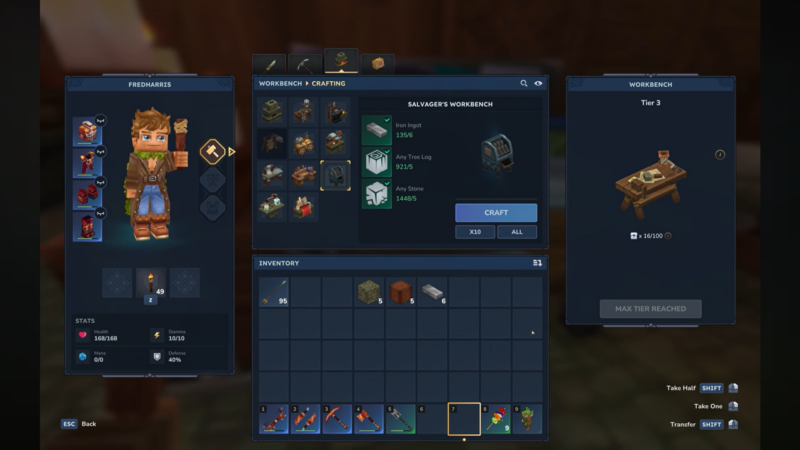
This progression ensures players engage in mining and exploration before accessing advanced recycling systems.
Renewable rubble and the arrow efficiency trick
One of the most powerful uses of the Salvager’s Workbench is converting stone-based materials into rubble, which can then be used to craft pebbles for arrows. Arrows are a constant resource sink in ranged builds, making renewable rubble extremely valuable.
The direct conversion process works as follows.
| Input | Salvage Output |
|---|---|
| Cobblestone | Pebbles (Rubble) |
| Stone Slabs | More rubble than full cobblestone block |
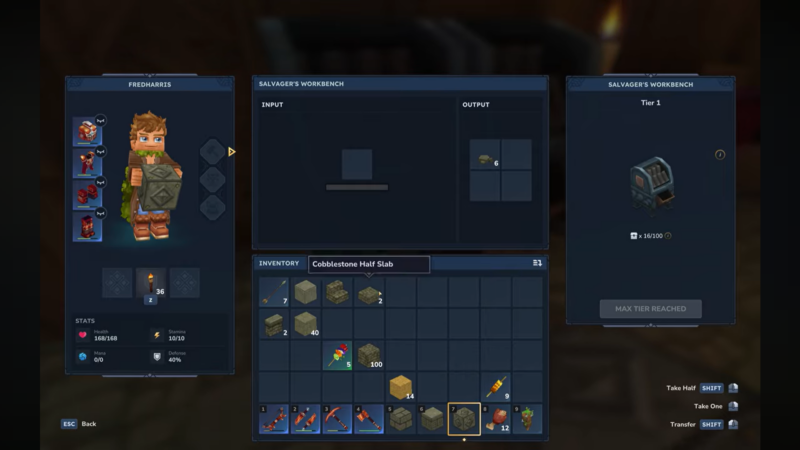
The key efficiency trick involves first converting cobblestone into slabs at the Builder’s Bench, then salvaging the slabs. Because slabs effectively split the block into multiple salvageable units, you can produce approximately double the rubble output compared to salvaging full cobblestone directly.

This method transforms stone mining into a scalable arrow production loop, especially useful for combat-focused players.
Salvaging tools and armor mechanics
Salvaging tools and armor returns approximately 20–30% of the materials originally used to craft them. The system rounds values down, meaning you may lose fractional returns in small crafts.
The durability of an item has no impact on the amount of material returned. Whether an item is at full durability or nearly broken, the salvage yield remains the same. This debunks a common myth that repairing items before salvaging increases returns.
The return structure is summarized below.
| Item Type | Return Percentage |
|---|---|
| Stone Tools | ~20–30% |
| Iron Gear | ~20–30% |
| Armor Sets | ~20–30% |
| Damaged Items | Same as full durability |
This mechanic encourages salvaging unused equipment rather than discarding it.
Unexpected recipes and mythbusting
The Salvager’s Workbench includes unusual conversion behaviors that surprise many players.
Scrapping certain maces yields books, demonstrating that salvage outcomes are not always tied directly to visible crafting ingredients. However, magic staffs cannot be salvaged for crystals, contrary to expectations.
A common myth suggests that logs can be salvaged into sticks. This is false. Logs cannot be placed into the Salvager’s Workbench for stick recovery. Similarly, leather cannot be salvaged back into hide, preventing reverse crafting loops.
Additionally, some NPC weapon drops can be salvaged into ores. While technically viable, this is an extremely slow farming method compared to direct mining and should not be considered a primary resource strategy.
The following table clarifies common misconceptions.
| Myth | Reality |
|---|---|
| Repairing items increases salvage yield | False |
| Logs can be salvaged into sticks | False |
| Magic staffs return crystals | False |
| Leather returns hide | False |
| Slabs yield more rubble than blocks | True |
Understanding these mechanics prevents inefficient experimentation.
Salvage material restrictions
Only stone types can be inserted for rubble conversion. Dirt, gravel, and wood-based blocks cannot be salvaged. Different stone variants yield different rubble types, allowing minor specialization in crafting inputs.
This limitation reinforces the Salvager’s identity as a refinement tool rather than a universal recycling station.
The restriction summary is shown below.
| Material Type | Salvageable |
|---|---|
| Stone Blocks | Yes |
| Stone Slabs | Yes |
| Dirt | No |
| Gravel | No |
| Wood Blocks | No |
Recognizing these boundaries prevents wasted attempts at recycling incompatible materials.
Maximizing efficiency from the Salvager’s Workbench
The true value of the Salvager’s Workbench lies in strategic planning. Converting cobblestone into slabs before salvaging doubles rubble yield. Salvaging unused armor recovers partial iron or copper instead of losing it entirely. Ignoring durability myths saves time and repair materials.
For ranged players, renewable rubble production supports sustained arrow crafting. For builders, salvaging surplus gear offsets resource costs from experimentation. For explorers, reclaiming materials from outdated tools smooths progression.
The workbench rewards knowledge more than brute force resource gathering.