
What to know
-
Goldman Sachs says AI investment added “basically zero” to US GDP growth in 2025, despite massive spending by major tech companies.
-
The key reason given: much of the hardware powering AI is imported, which limits how much that spending counts toward US GDP.
-
Economists are also questioning earlier estimates that suggested AI‑linked investment explained a large share of US growth earlier in 2025.
-
Separately, many executives say AI has not yet delivered measurable productivity or employment impacts, even as adoption spreads.
Goldman Sachs Chief Economist Jan Hatzius has said AI‑related investment contributed “basically zero” to US economic growth last year, directly challenging the idea that the AI buildout is already lifting national output. This comes at a time when big technology firms continue to pour billions into AI infrastructure, including data centers, specialized chips, and cloud capacity, in a way that has fed a narrative of AI as a near‑term growth engine.
Hatzius argues that the headline figures give a misleading picture because much of the AI‑linked spending is not creating domestic value in the way GDP accounts recognize. Instead, the wave of investment is being channeled overseas through imported hardware, which subtracts from the net contribution to US GDP even as it drives orders for chipmakers and equipment suppliers abroad.
Why imports and measurement matter
A central point in Goldman’s analysis is how GDP accounting treats imports. When companies buy AI chips and servers from foreign manufacturers, the value added in Taiwan, South Korea, and other production hubs shows up in those countries’ GDP, while the import component dampens the US tally.
Hatzius has described this as AI investment that boosts South Korean and Taiwanese output more than American output, because the core semiconductor value chain lies outside the US. That structure creates a gap between the perception of a domestic AI boom and the actual contribution recorded in national‑income statistics. At the same time, he notes that there is no good way to capture how everyday AI use inside firms and by consumers translates into measurable productivity or growth, which adds another layer of uncertainty to the numbers.
Goldman’s view also pushes back against earlier estimates suggesting that AI‑adjacent categories made up a large share of US growth during parts of 2025. Those figures were widely cited in policy, market, and media circles as evidence that AI infrastructure spending had become a major driver of the economy.
Hatzius argues that the story was “misreported” and that the reported numbers overstated the true impact of AI investment because they did not fully account for imports and measurement quirks. The plausibility of a big AI effect apparently made it easier to accept the higher estimates without closer scrutiny, reinforcing a narrative that the AI boom was already showing up in the macro data.
Where AI’s real‑world impact stands today
Survey evidence from executives across the US, Europe, and Australia reveals that most say AI tools have not yet altered productivity or employment in a measurable way, even as the majority report using AI in some business functions. The gap between rapid experimentation and visible efficiency gains is one of the biggest open questions heading into 2026.
This mismatch between capital spending, hype, and tangible output raises the risk that markets and policymakers may be overestimating how much AI is already contributing to the real economy. The next phase will depend on whether AI moves beyond infrastructure and experimentation into broad productivity gains that actually show up in output, revenue, and efficiency metrics.
What this means for policy and investment
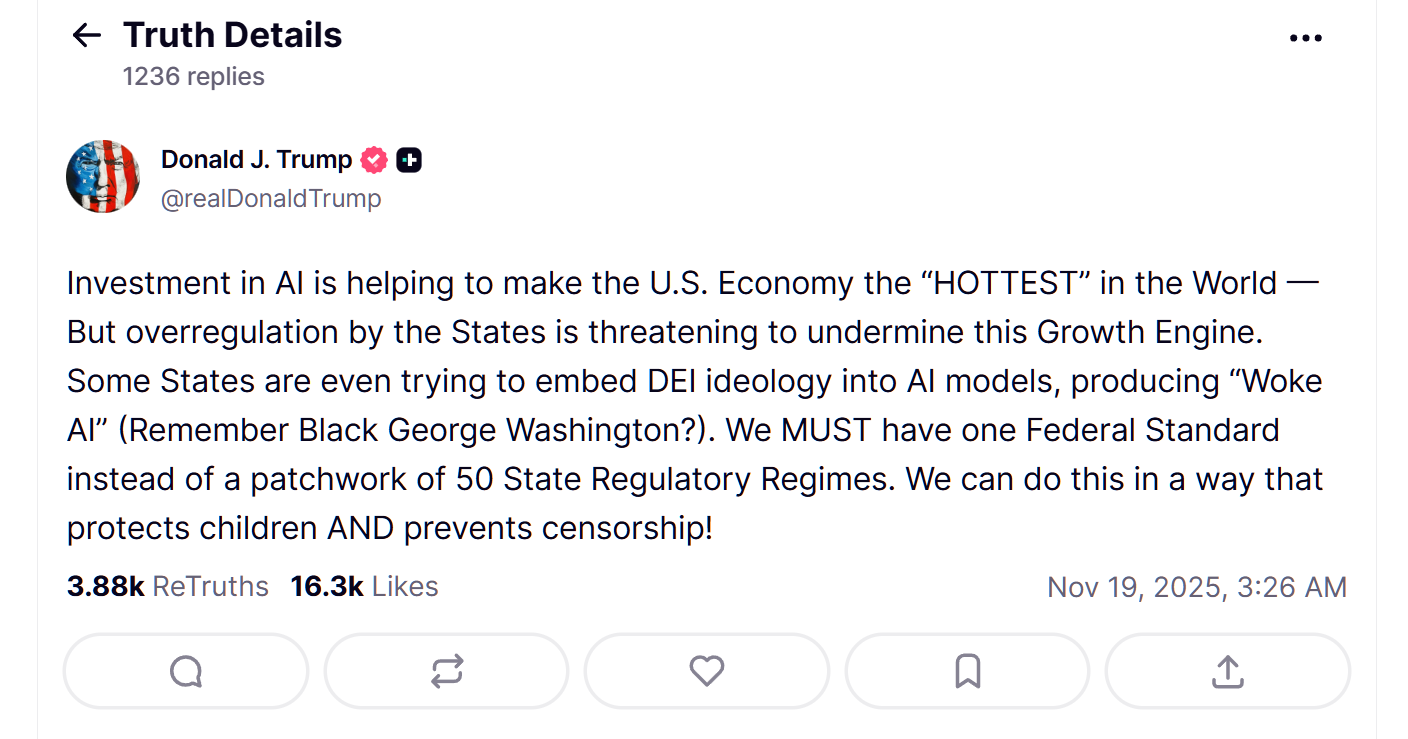
The claim that AI investment is already boosting growth has become politically salient, featuring in debates about regulation and industrial policy. President Donald Trump has framed AI spending as a key pillar of US economic strength and used that argument to push for federal rules rather than a patchwork of state‑level regulation.
Goldman’s analysis does not deny AI’s long‑term potential, but it does challenge the idea that today’s spending wave is already generating a meaningful lift in national growth. The implication is that the early economic benefits may be accruing more to the countries that supply the hardware and semiconductors than to US GDP, and that the broader payoff for businesses and workers is still to come.
The road ahead for the AI‑growth story
The debate will likely sharpen around two questions: how much AI investment is truly domestic value‑added, and when measurable productivity gains begin to clearly outpace the costs of deploying the technology at scale. Until then, the US may continue to see outsized AI spending and high expectations while macro data remains much more muted—an outcome Goldman now says is exactly what happened in 2025.
For companies and investors, the lesson is to separate enthusiasm about AI from claims about what it has already done to economic growth. The true test will be whether the current wave of capex leads to sustained, measurable improvements in output and efficiency, not just bigger balance‑sheet commitments and higher valuations.