The New York Times Connections puzzle challenges players to sort 16 seemingly unrelated words into four connected groups. Each group shares a hidden link. Today’s grid blends physical actions, clever rearrangements, and nostalgic references, making it both playful and slightly deceptive. Below you’ll find gentle hints to guide your thinking, followed by the complete solutions once you’re ready to check your work.
NYT Connections Puzzle Overview: 10 June 2026
Today’s Connections puzzle leans heavily into verb-based thinking and lateral associations. Some groupings feel intuitive, while others rely on spotting patterns beyond surface meanings. The anagram set is especially tempting early on, while the final category rewards solvers who recall classic childhood games.
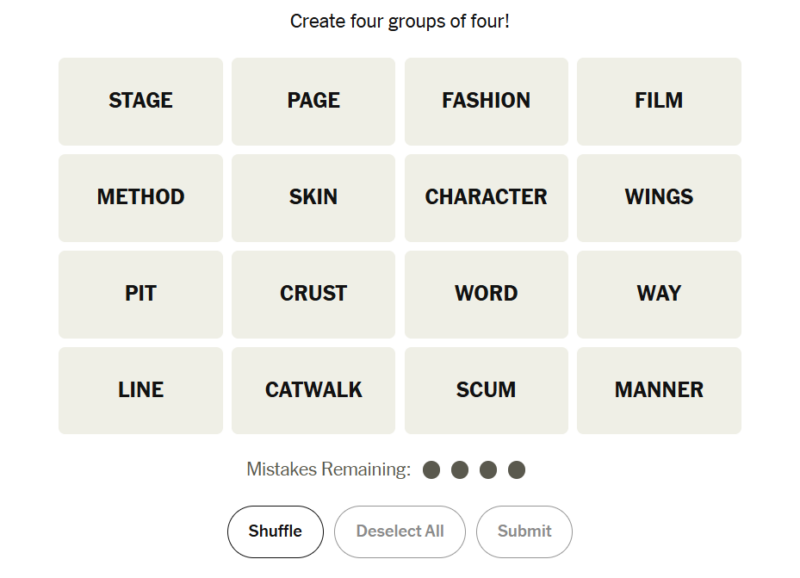
NYT Connections Hints: 10 June 2026
Category 1:
- Think about the way something is done.
- These words can describe an approach.
- They are often used when explaining procedures.
- All can refer to a particular style of execution.
Category 2:
- These are unpleasant things you may notice on damp surfaces.
- They often appear after moisture is left unattended.
- Cleaning products are frequently used to remove them.
- They form as layers or coatings.
Category 3:
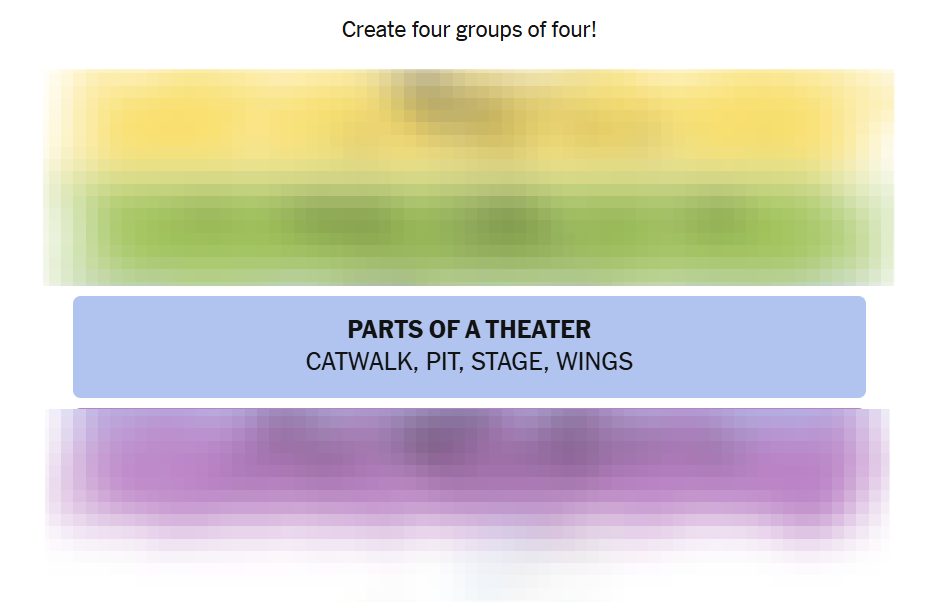
- All four belong in a live performance venue.
- Actors and stage crews interact with these areas.
- Some are visible to the audience.
- Think of theater architecture and production spaces.
Category 4:
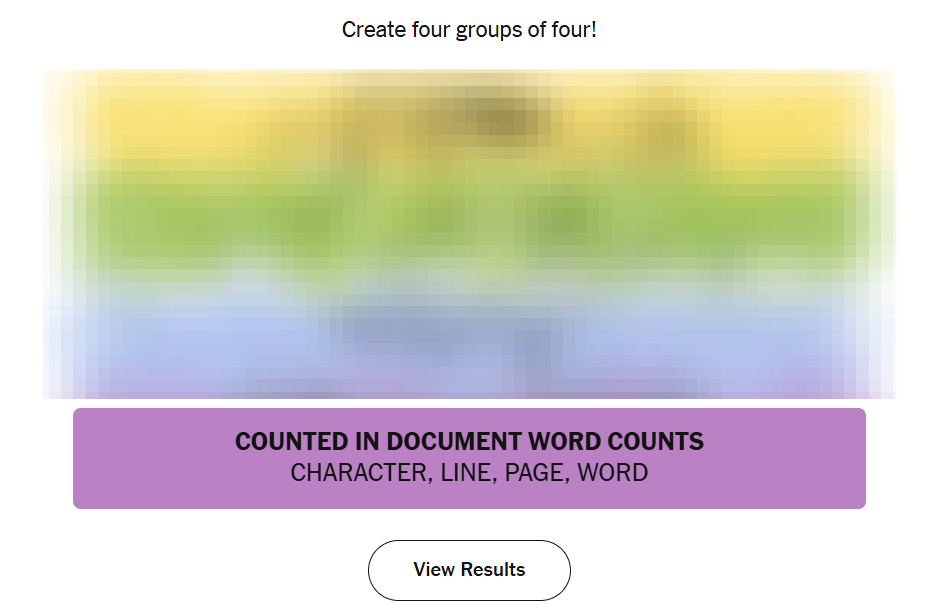
- These can be tracked automatically by writing software.
- Writers often check these statistics.
- They appear in document analysis tools.
- They measure portions of written content.
NYT Connections Answers: 10 June 2026
Here are the answers, grouped by category.
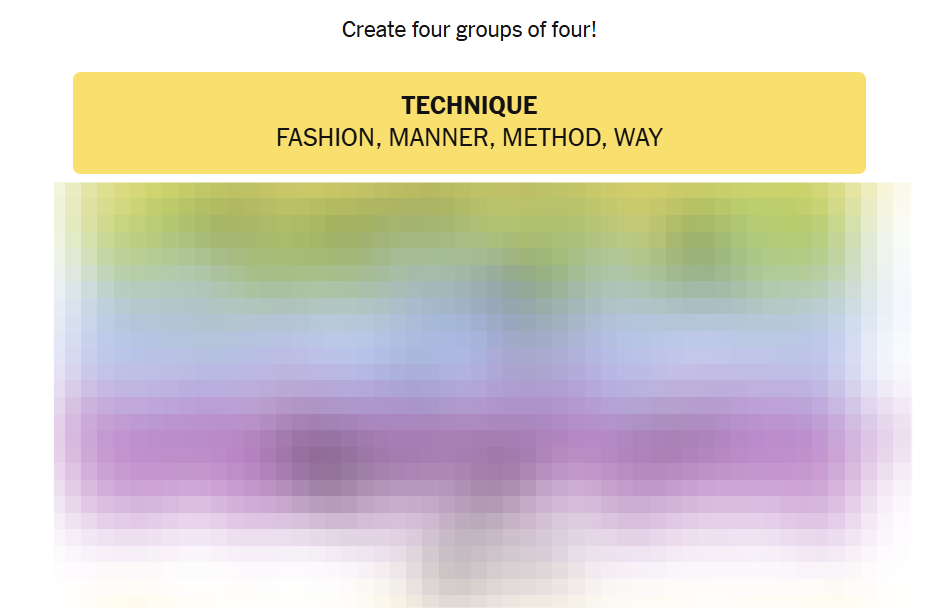
Category 1:
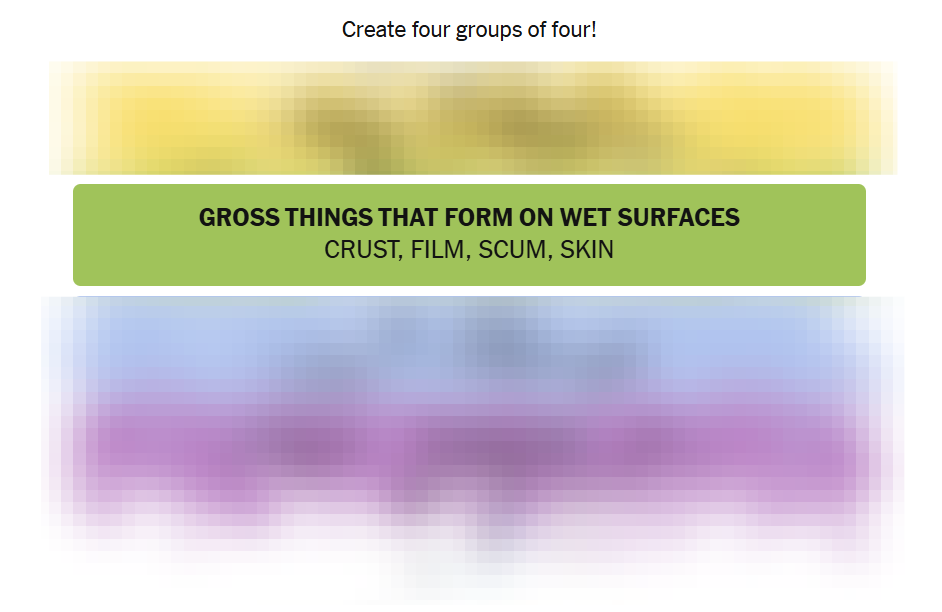
Category 2:
Category 3:
Category 4:
Conclusion & Quick Strategy Tip
The 10 June 2026 Connections puzzle balances straightforward action words with trickier conceptual links, making it satisfying once everything clicks. Quick strategy tip: lock in obvious verb groups early, then examine remaining words for structural patterns or shared cultural references.