The New York Times Connections puzzle challenges players to sort 16 seemingly unrelated words into four connected groups. Each group shares a hidden link. Today’s grid blends physical actions, clever rearrangements, and nostalgic references, making it both playful and slightly deceptive. Below you’ll find gentle hints to guide your thinking, followed by the complete solutions once you’re ready to check your work.
NYT Connections Puzzle Overview: 08 June 2026
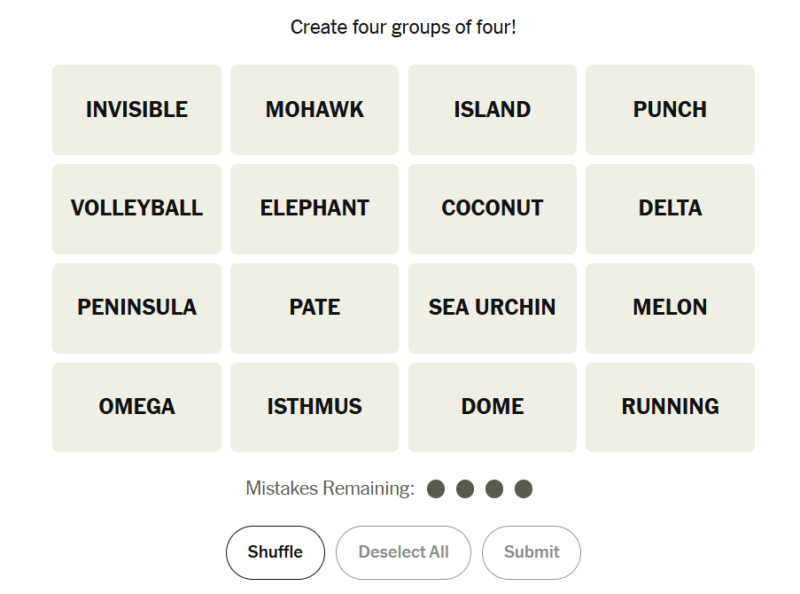
Today’s grid felt balanced between accessible and tricky. A few words naturally clustered together, but several others seemed capable of fitting multiple themes. The movie-related category was likely the toughest for many solvers, while the geography group provided a useful starting point. Overall, it was a satisfying puzzle that rewarded careful elimination.
NYT Connections Hints: 08 June 2026
Category 1:
- Think about geographic features connected to large bodies of water.
- These are commonly studied in school geography classes.
- Some extend into water while others are surrounded by it.
- All four describe natural land formations.
Category 2:
- These are informal terms used in everyday speech.
- They all refer to part of the human body.
- None of them are anatomical or medical terms.
- Friends might jokingly use these words in conversation.
Category 3:
- The connection involves adding intensity or sharpness.
- Some are objects, while one is a hairstyle.
- A sporting item belongs in this group.
- The shared action is the key.
Category 4:
- Each phrase becomes a famous title when the same word is inserted.
- The connection is rooted in cinema.
- Think of well-known films featuring a mysterious character type.
- One answer relates to science fiction, another to action.
NYT Connections Answers: 08 June 2026
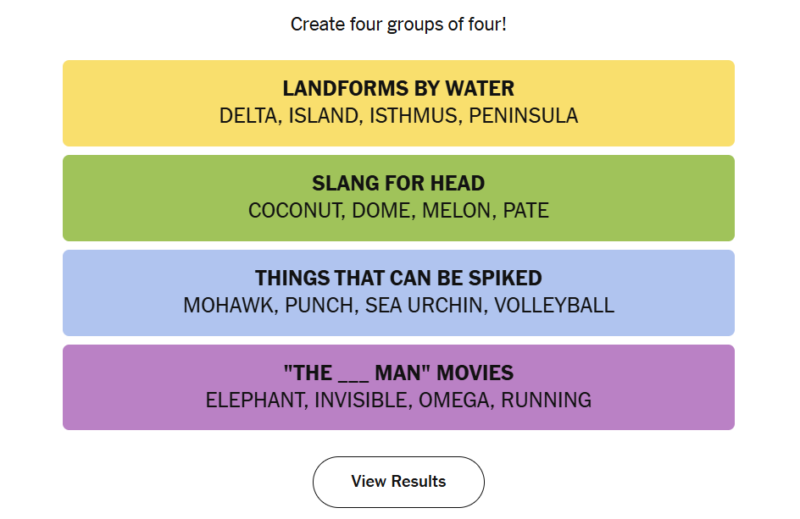
Here are the answers, grouped by category.
Category 1:
Category 2:
Category 3:
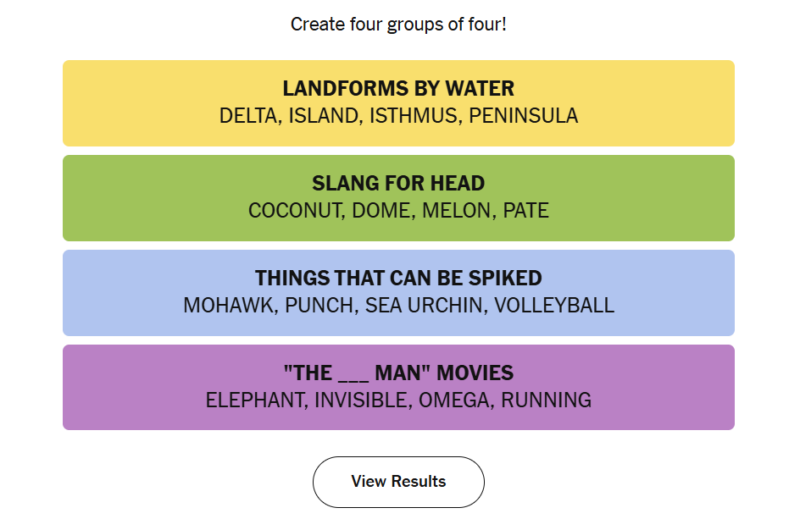
Category 4:
Conclusion & Quick Strategy Tip
The 08 June 2026 Connections puzzle balances straightforward action words with trickier conceptual links, making it satisfying once everything clicks. Quick strategy tip: lock in obvious verb groups early, then examine remaining words for structural patterns or shared cultural references.