What to know
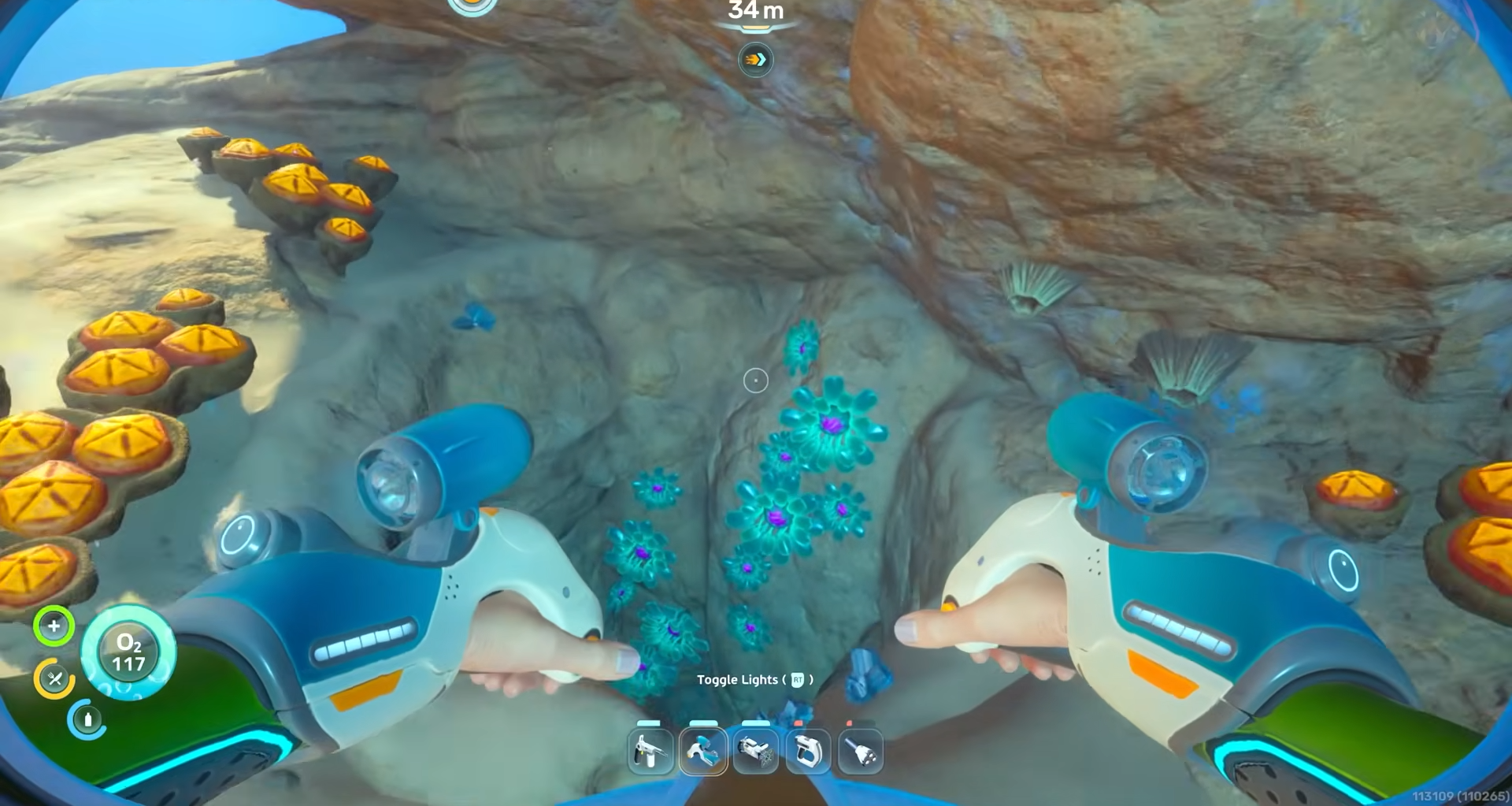
- Gold ore is located roughly 360 meters east of the Life Pod at around 100m depth.
- You need the Heat Adaptation upgrade to survive the geothermal vent zone safely.
- Large gold deposits require the Sonic Resonator for mining.
- The nearby cave system contains additional high-yield gold nodes deeper underground.
Gold is one of the most important crafting materials in Subnautica 2, especially once you begin expanding your base systems, advanced electronics, and late-game fabrication upgrades. While small surface nodes are useful early on, the real payoff comes from locating the larger gold deposits hidden inside the geothermal vent caves east of the Life Pod.
This area can be dangerous due to aggressive fauna and thermal hazards, but with the right preparation, it becomes one of the best reliable gold farming spots currently known in the game.
Quick overview of the Subnautica 2 gold farming route
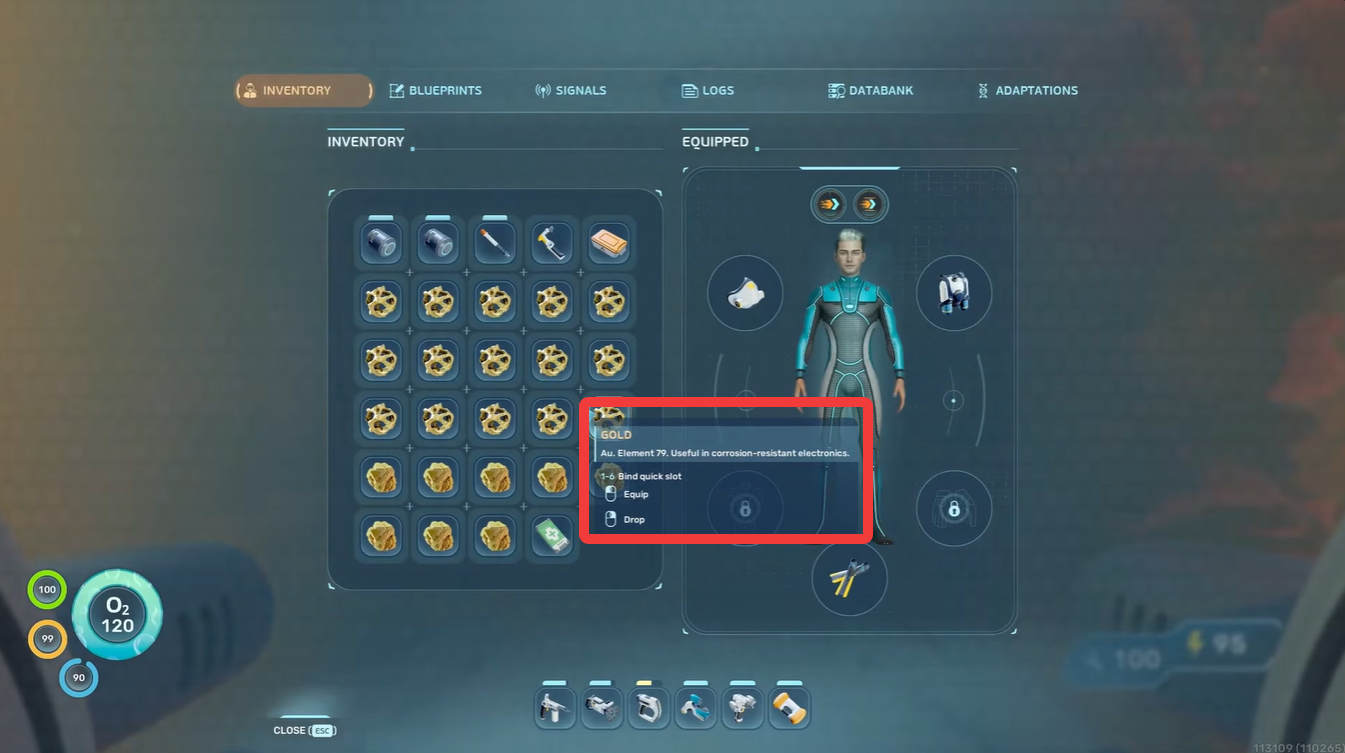
Gold is heavily tied to progression crafting recipes in Subnautica 2. Once you start unlocking advanced modules, scanning technology, fabrication upgrades, and power systems, your gold supply disappears very quickly.
| Requirement | Details |
|---|---|
| Main Resource | Gold Ore |
| Recommended Depth | ~100 meters |
| Direction From Life Pod | East |
| Distance | ~360 meters |
| Required Upgrade | Heat Adaptation |
| Recommended Tool | Sonic Resonator |
| Recommended Vehicle | Tadpole |
| Major Threat | Marrow Breaches |
| Best Farming Method | Mine large deposits inside caves |
Unlike titanium or copper, gold is not consistently available in large quantities near the starting biome. Because of that, finding a dependable farming route early can significantly reduce resource bottlenecks later.
The geothermal vent biome east of the Life Pod currently offers one of the most efficient early-to-mid game gold gathering locations discovered so far.
The geothermal vent gold zone explained
The primary gold farming area is located approximately 360 meters east of the Life Pod at around 100 meters below sea level. The zone is recognizable by its heated vents, rocky terrain, and cave openings leading deeper underground.

This biome contains both:
- Small gold outcrops that can be collected manually
- Large gold nodes that require specialized mining equipment
The cave entrances south of the main vent field contain the highest concentration of larger deposits currently identified.
What you need before farming gold
Before entering the area, you should prepare carefully because the environment can quickly become lethal without proper upgrades.
| Item | Why It Matters |
|---|---|
| Heat Adaptation | Prevents thermal damage from vents |
| Sonic Resonator | Required for large gold deposits |
| Extra Air Tanks | Helpful during deep cave exploration |
| Flares | Improves cave visibility |
| Tadpole Vehicle | Faster travel and safer navigation |
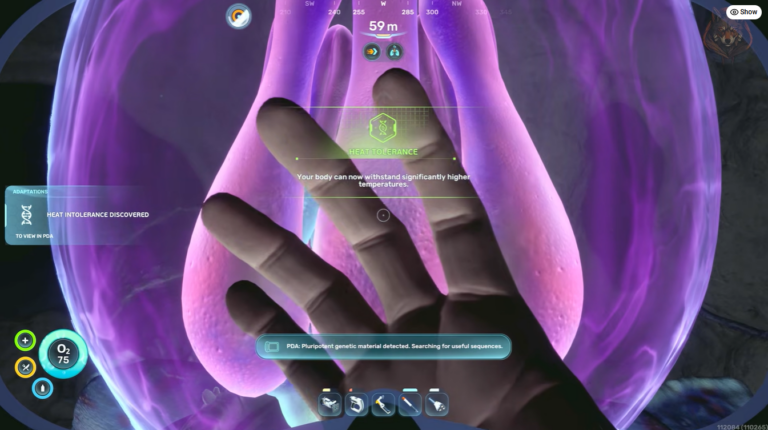
Heat tolerance adaptation
The geothermal vent area generates continuous heat damage. Without Heat Adaptation, you can die very quickly while exploring or mining near the vents.
This upgrade is effectively required before attempting extended farming sessions.
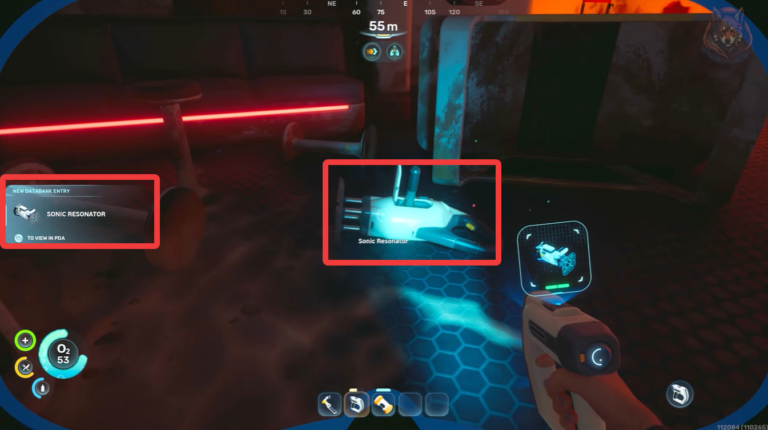
Sonic resonator
While you can pick up smaller surface gold manually, the real value comes from the larger mineral deposits scattered throughout the cave systems.
The Sonic Resonator breaks these massive nodes apart, yielding significantly more gold per run.
How to get gold in Subnautica 2
Step 1
Start from your Life Pod and travel directly east.
Use your compass to maintain direction because visibility can become inconsistent as terrain density increases.

Step 2
Continue for approximately 360 meters until the environment changes into a rocky geothermal biome filled with thermal vents.
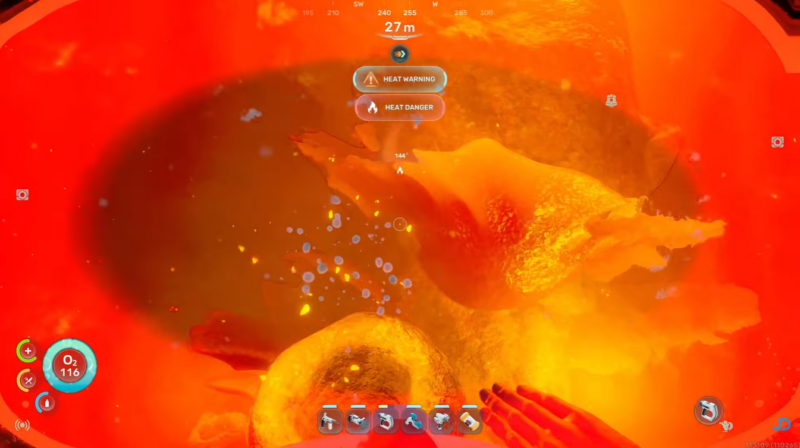
You should begin seeing steam activity and uneven volcanic terrain.
Step 3
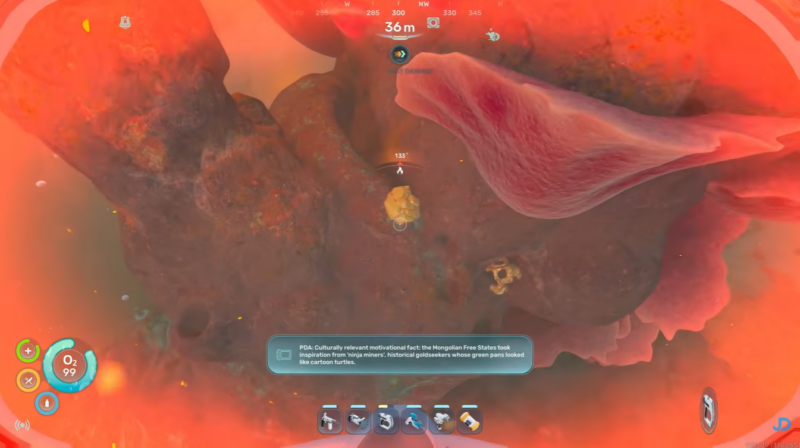
Descend to roughly 100 meters depth while staying alert for hostile fauna.
The biggest threat here comes from Marrow Breaches, aggressive creatures known to attack in pairs.
Step 4
Park your Tadpole vehicle near the cave entrance instead of taking it too deep underground.
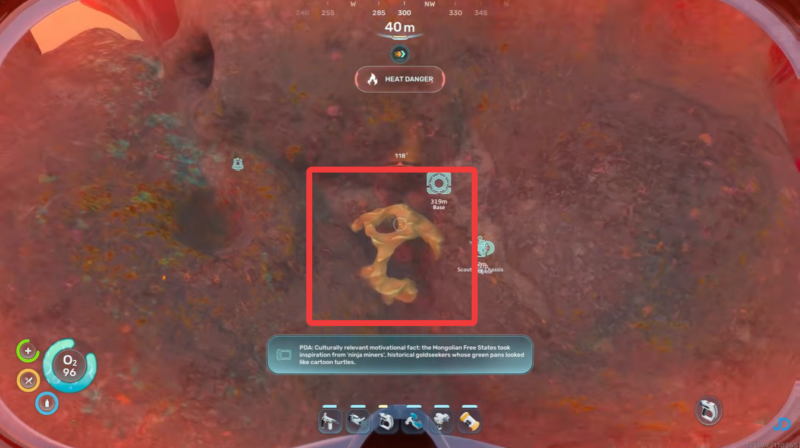
This gives you a safe retreat point if creatures become aggressive.
Step 5
Search the outer vent field first for smaller hand-minable gold outcrops.
These are scattered across rocky surfaces and can be collected without tools.

Step 6
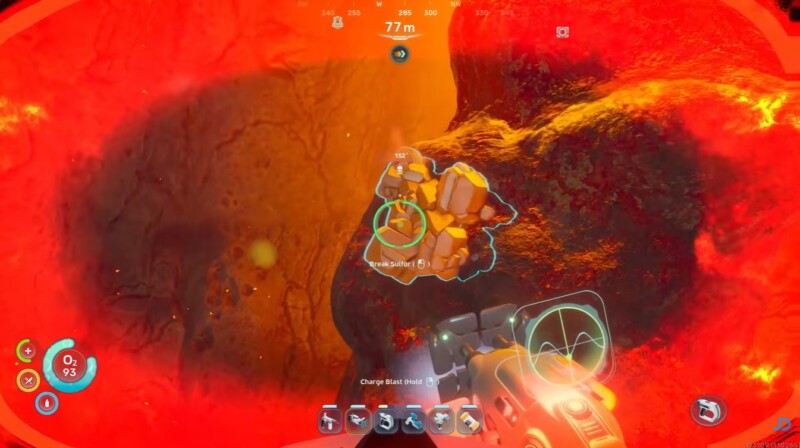
Move toward the southern cave entrance to locate the larger gold deposits.
The deeper cave walls on both sides contain multiple large nodes that can be mined using the Sonic Resonator.
Best strategy for efficient gold farming
The safest and fastest method is to perform short extraction runs rather than extended cave exploration sessions.
A good farming loop looks like this:
| Farming Phase | Recommended Action |
|---|---|
| Arrival | Scan surroundings for threats |
| Surface Mining | Collect easy hand nodes first |
| Cave Mining | Break large deposits quickly |
| Retreat | Return to vehicle before oxygen runs low |
| Storage | Deposit ore immediately at base |
Using the Tadpole as a mobile oxygen checkpoint makes the route substantially easier.
You should also avoid lingering near Marrow Breaches because they tend to patrol in pairs and can quickly overwhelm you during mining animations.

Small gold nodes vs large gold deposits
| Type | Mining Method | Yield Potential |
|---|---|---|
| Small Outcrop | Hand collection | Low |
| Large Deposit | Sonic Resonator | High |
The large deposits are far more efficient for crafting progression because a single mining session can provide enough gold for multiple advanced fabrication recipes.
That makes unlocking the Sonic Resonator a major priority if you plan to build advanced infrastructure early.
The geothermal vent biome east of the Life Pod is currently one of the strongest gold farming locations in Subnautica 2. With Heat Adaptation, a Sonic Resonator, and careful navigation around hostile fauna, you can gather large amounts of gold surprisingly early in progression.
The combination of shallow access depth, large deposit density, and nearby cave systems makes this area ideal for both early-game crafting and long-term resource farming.