What to know
- OpenAI is acquiring Python startup Astral to boost its AI coding tools
- Astral’s tools are widely used by millions of Python developers
- The deal targets stronger competition with Anthropic’s Claude Code
- Codex will integrate Astral to expand beyond simple code generation
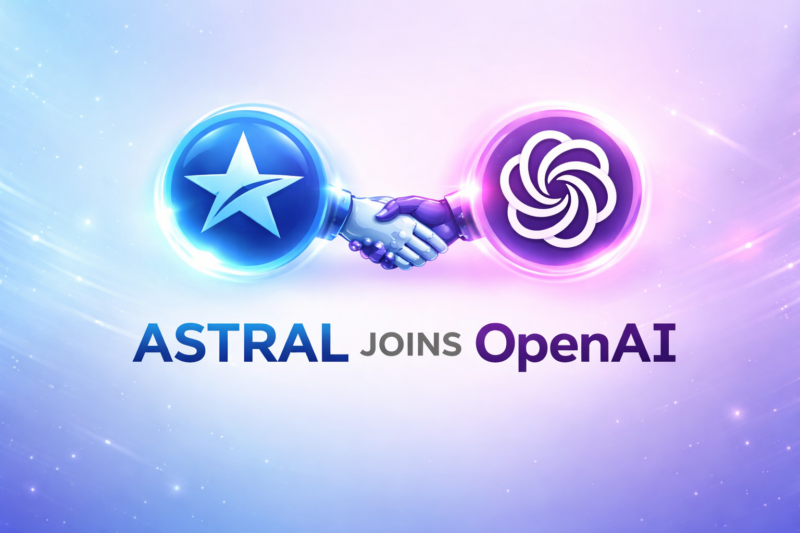
OpenAI has confirmed it will acquire Astral, a fast-growing Python developer tools company, in a move that directly impacts how you may use coding features inside ChatGPT and its broader ecosystem.
The deal, announced on March 19, 2026, is part of OpenAI’s effort to strengthen its AI coding platform, Codex, and compete more aggressively with rivals like Anthropic.
Astral is not a niche player. Its tools are already embedded in workflows used by millions of Python developers, focusing on improving speed, reliability, and efficiency in software development.
By acquiring Astral, OpenAI is effectively buying into the everyday tooling layer that developers rely on—not just the AI layer that generates code.
For you, this signals a shift in how AI coding assistants may evolve. Instead of only suggesting snippets or completing functions, systems like Codex are being designed to participate in the full software development lifecycle—planning, editing, testing, and maintaining codebases.
OpenAI has made that intention clear. The company wants Codex to move beyond simple code generation into a more integrated “software engineering agent” that works alongside developers in real workflows.
This acquisition also comes at a competitive moment. Anthropic’s Claude Code has been gaining traction among professional developers, pushing OpenAI to deepen its tooling rather than just expand features.
In practical terms, bringing Astral into OpenAI means tighter integration between AI models and the tools developers already use daily. OpenAI has indicated that Astral’s open-source tools will continue to be supported after the acquisition, which helps maintain continuity for existing users.
The timing also reflects rapid growth in OpenAI’s coding ecosystem. Codex reportedly has more than 2 million weekly active users, with usage increasing sharply in recent months.
This suggests that coding is becoming one of the most important use cases for AI platforms like ChatGPT—and a key battleground for competition.
For you as a user or developer, the broader takeaway is clear: AI coding tools are shifting from assistants to collaborators. OpenAI’s move to acquire Astral shows that control over developer tooling—not just AI models—will shape how powerful and useful these systems become.