What to know
- Google’s Personal Intelligence is now rolling out to all U.S. users, including free-tier accounts
- It connects apps like Gmail, Photos, and YouTube for personalized AI responses
- The feature is opt-in and gives you control over connected data
- It works across Search AI Mode, Chrome, and the Gemini app
Google has begun rolling out its Personal Intelligence feature across the United States, significantly expanding access to its most personalized AI experience yet. Previously limited to paid subscribers, the feature is now reaching free users with personal Google accounts.
You now get a version of AI that does not just answer questions—it understands context from your own digital life.
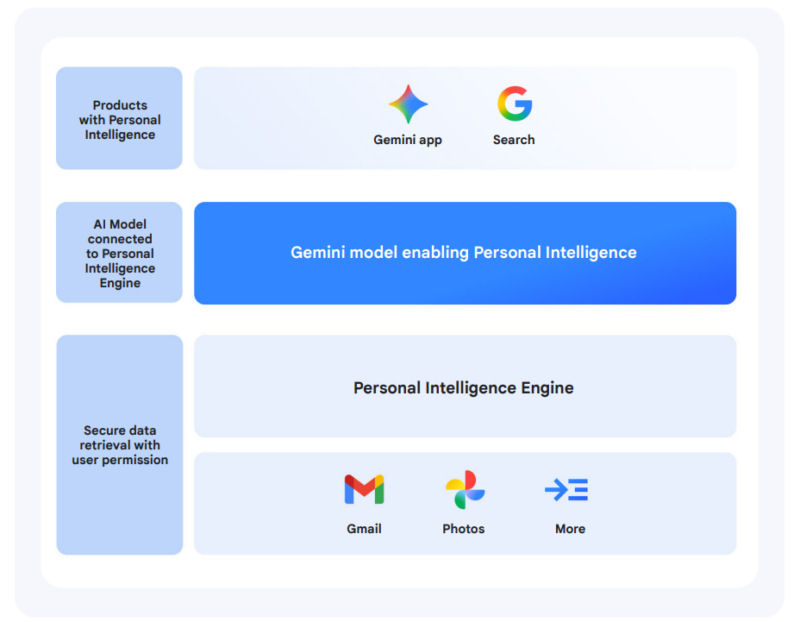
At its core, Personal Intelligence connects Google’s AI model, Gemini, with your apps like Gmail, Google Photos, and YouTube. This allows the system to deliver responses tailored specifically to your habits, interests, and past activity.
For example, you might receive shopping suggestions based on past purchases or troubleshooting help based on your device usage history.
The rollout spans multiple platforms. You can use it inside AI Mode in Google Search, the Gemini app, and Gemini in Chrome, creating a consistent personalized experience across devices.
Importantly, Google is positioning this as a privacy-conscious feature. You must explicitly enable Personal Intelligence, and you can disconnect any app at any time. The company also states that it does not directly train its AI models on sensitive data like your Gmail inbox or photo library, instead using limited interaction data such as prompts and responses.
However, the feature is currently restricted to personal accounts. If you use a work, enterprise, or education Google account, you will not have access yet.
This move places Google more directly in competition with other AI systems that focus on memory and personalization. By leveraging its ecosystem of apps, Google is attempting to create an assistant that feels less generic and more like it actually “knows” you.
At the same time, the expansion raises ongoing questions about how much personal data users are willing to share with AI systems, even with opt-in controls in place.